• Skip to primary navigation
  • Skip to main content
Cleared Cyber Security Jobs | CyberSecJobs.com

Cleared Cyber Security Jobs | CyberSecJobs.com

Cleared Cyber Security Jobs

  • Home
  • Search Cleared Cyber Jobs
  • Job Fairs
  • Career Resources

Uncategorized

Cleared Malware Analyst Jobs Complete Career Guide

CyberSecJobs Editorial · March 29, 2026 ·

Cleared malware analysts play a critical role in national security, focusing on identifying, analyzing, and mitigating malware threats targeting government systems. These positions require a security clearance (Secret, Top Secret, or TS/SCI) and technical expertise in reverse engineering, programming, and operating system internals. Salaries range from $60,751 for entry-level roles to over $195,750 for senior positions. The field is growing rapidly, with demand expected to increase by 35% by 2030, driven by rising cyber threats.

Key Takeaways:

  • Education: A bachelor’s degree in Computer Science, Cybersecurity, or related fields is standard; experience can sometimes substitute for formal education.
  • Skills: Proficiency in tools like IDA Pro, Ghidra, and programming languages (C, C++, Python) is essential.
  • Certifications: GIAC Reverse Engineering Malware (GREM) and CISSP are highly valued.
  • Clearance Process: U.S. citizenship and sponsorship by a federal agency or contractor are required; clearance levels vary by role.
  • Job Market: Over 56,500 new roles are expected by 2030, with salaries reflecting the high demand for cleared professionals.

This guide outlines the steps to enter this field, from education and certifications to job search strategies, helping you build a career in malware analysis.

Education and Security Clearance Requirements

Degree Requirements and Educational Background

For malware analyst roles requiring security clearance, a Bachelor’s degree in fields like Computer Science, Computer Engineering, Information Technology, or Cybersecurity is essential. These programs provide a solid foundation in areas such as programming, operating systems, and network architecture [5].

If you’re aiming for leadership or highly specialized positions, a Master’s degree in Cybersecurity, Information Assurance, or a related discipline can give you an edge [5].

However, if you don’t have a degree, there’s still a path forward. Two years of experience in roles like System Administrator, Network Administrator, or Software Programmer can often serve as an alternative qualification [5].

In addition to academic or professional experience, obtaining the appropriate security clearance is a key requirement for these roles.

Security Clearance Levels and Eligibility

Cleared positions require one of three security clearance levels: Secret, Top Secret, or TS/SCI. Each level corresponds to the sensitivity of information you’ll handle:

  • Secret clearance: Grants access to information that could cause serious damage if disclosed.
  • Top Secret clearance: Covers access to information that could cause exceptionally grave harm.
  • TS/SCI clearance: Requires a Single Scope Background Investigation (SSBI) along with special adjudication [4].

The need for clearance is tied to the sensitivity of the information you’ll work with, not the specific job description [4].

By 2026, the Trusted Workforce 2.0 initiative will replace periodic clearance reinvestigations with Continuous Vetting. This system monitors factors like criminal records and credit activity in real time [6]. Clearance processing times vary widely, ranging from 10–30 days for an Interim Secret clearance to over 365 days for TS/SCI with a polygraph, often due to appointment backlogs [6].

To be eligible for clearance, you must meet these requirements:

  • Be a U.S. citizen.
  • Secure sponsorship from a federal agency or cleared contractor, typically after receiving a conditional job offer.

The adjudication process evaluates candidates across 13 guidelines, with financial issues being the most common reason for denial [4][6]. To prepare, gather 10 years of records covering your residence, employment, and foreign contacts. Reviewing your credit report early can help you address any potential red flags [6].

Clearance Level Investigation Type Average Processing Time Vetting Frequency
Secret (Tier 3) NACLC & Credit Investigation 60–150 days Continuous Vetting
Top Secret (Tier 5) Single Scope Background Investigation 120–240 days Continuous Vetting
TS/SCI with Polygraph SSBI + Special Adjudication 180–365+ days Continuous Vetting + Polygraph
sbb-itb-bf7aa6b

Technical Skills and Analysis Tools

Core Technical Skills

Reverse engineering lies at the heart of malware analysis. This involves breaking down binaries to understand how they operate, using tools like IDA Pro, Ghidra, and Radare2. To excel here, you’ll need a strong command of x86/x64 and ARM assembly languages, which help you decode the low-level instructions malware relies on.

Proficiency in programming languages like C, C++, and scripting languages such as Python, Perl, or Go is equally important. These skills allow you to automate repetitive tasks and create custom tools. With the cybersecurity industry projected to hit $273.6 billion by 2028, these technical abilities are more in demand than ever [1].

A thorough understanding of operating system internals – spanning Windows, Linux, and macOS – is crucial. Knowing how processes are initiated, how memory is allocated, and how file systems operate gives you the ability to spot malware’s manipulative techniques. You’ll also need expertise in sandboxing, which involves setting up isolated environments to safely analyze malicious code without risking broader contamination.

Your analytical approach will blend static analysis (reviewing code without running it) and dynamic analysis (observing how it behaves when executed). Tools like Wireshark and Process Hacker are invaluable for dynamic analysis, while you’ll also work on developing YARA or Snort signatures to detect and mitigate threats across networks.

With these foundational skills in place, the next step is mastering the tools that support a comprehensive analysis workflow.

Software Tools and Platforms

A well-equipped malware analysis setup starts with pre-configured virtual machines like REMnux and FlareVM. REMnux is a Linux distribution packed with over 100 security tools, while FlareVM offers a Windows-based environment loaded with resources like IDA Free and x64dbg [8]. These virtual machines provide a safe space to execute and study malware.

For disassembly and debugging, tools such as IDA Pro, Ghidra, x64dbg, WinDbg, and OllyDbg are indispensable. Static analysis tools like PEStudio, BinText, and PE-bear help you inspect file structures, while dynamic analysis tools like Process Monitor, Process Explorer, and Regshot allow you to track system and registry changes during execution [8][9].

Network monitoring tools are another key part of your arsenal. Programs like Wireshark, tcpdump, and Fiddler let you observe external traffic, while tools such as FakeNet-NG and INetSim create simulated network environments for testing. Automated sandboxes, including Cuckoo Sandbox, Any.Run, and Joe Sandbox, enable you to safely analyze malware behavior. Depending on the complexity, a complete analysis can take anywhere from 5 to 15 hours, though investigating Advanced Persistent Threats (APTs) may stretch into weeks [8].

To complement your findings, threat intelligence platforms like VirusTotal, Hybrid Analysis, and MalwareBazaar provide additional detection and behavioral insights. Tools like Microsoft Defender and SIEM platforms help you craft detection rules and monitor for threats across enterprise networks.

"SOC analysts who excel at malware analysis are the last line of defense, capable of stopping attacks before they spiral out of control."

  • CyberDefenders Team [9]
Category Common Tools Primary Purpose
Reverse Engineering Ghidra, IDA Pro, Radare2, x64dbg Disassembling and decompiling binaries
Analysis Platforms FlareVM (Windows), REMnux (Linux) Pre-configured environments with security tools
Dynamic Analysis Wireshark, Process Hacker, Procmon Monitoring network traffic and system behavior
Sandboxing Cuckoo Sandbox, Any.Run, Joe Sandbox Automated execution in safe environments
Static Analysis PEStudio, Exeinfo PE, BinText Examining file structures without execution

Professional Certifications

Industry-Recognized Certifications

If you’re diving into malware analysis, the GIAC Reverse Engineering Malware (GREM) certification is a must-have. It’s widely regarded as the top credential for proving your ability to reverse-engineer malicious software targeting Windows systems and web browsers. This certification focuses on areas like assembly language, memory forensics, and identifying Advanced Persistent Threats (APTs) [11][12]. To earn it, you’ll face a challenging exam with 66–75 questions over three hours, requiring a minimum score of 73% [11][13]. What sets GREM apart is its CyberLive component – a hands-on test environment where you tackle real-world tasks using actual code and virtual machines [12][13].

On the broader side of security, the Certified Information Systems Security Professional (CISSP) certification is a staple for roles in security architecture, engineering, and management [3]. While it’s not as specialized as GREM, CISSP often serves as a prerequisite for senior-level or management positions, especially in environments requiring security clearances. Another key certification is the Certified Ethical Hacker (CEH), which introduces you to offensive techniques, giving you a solid understanding of the tools and methods attackers use [3].

For those aiming to work in Department of Defense (DoD) or government contracting roles, certifications like GREM, CISSP, and CEH are essential because they comply with DoD 8570/8140 requirements.

However, these credentials come with a financial commitment. The GREM exam alone costs about $1,299, and if you include the recommended SANS FOR610 training course, the total investment can climb to around $7,000 [12]. Practice exams, priced at approximately $399 each, add to the expense [12]. That said, the payoff is substantial – GREM-certified professionals in the U.S. earn an average salary of $124,000 annually, significantly higher than the $86,474 average for general malware analysts [12][3].

These certifications not only validate your skills but also position you for faster career advancement.

How Certifications Advance Your Career

Certifications do more than just verify your skills – they serve as a badge of credibility, boosting your career prospects and professional growth. They offer tangible proof of your technical expertise, which is especially critical for cleared roles. Hands-on components, like GREM’s CyberLive, ensure you’re prepared to handle real-world challenges [12][13].

Specialized certifications can set you apart from general security professionals. While broad credentials like CISSP can lead to management opportunities, niche certifications such as GREM make you highly desirable for roles in threat hunting and APT detection. This level of expertise can translate into higher salaries, with top malware analysts earning over $150,000 annually and some specialized positions offering up to $198,160 [12].

Staying certified is just as important as earning the credential. For instance, GREM requires recertification every four years, which involves earning 36 Continuing Professional Education (CPE) credits [12]. Letting certifications lapse could jeopardize your eligibility for certain roles, so maintaining them is crucial. Employers value certified professionals for their proven ability to protect critical infrastructure and secure classified systems.

Certification Focus Area Average Salary Impact DoD 8570/8140 Approved
GREM Reverse Engineering & APT Analysis $124,000/year [12] Yes [11]
CISSP Security Architecture & Management Required for senior roles [3] Yes [11]
CEH Offensive Tactics & Attack Vectors Foundation for advancement [3] Yes [11]

These certifications equip cleared malware analysts with the expertise needed to excel in high-stakes national security roles.

What is a Malware Analyst and How do you get a Junior Malware Analyst Role | TJ Nelson Interview

Job Duties and Career Growth
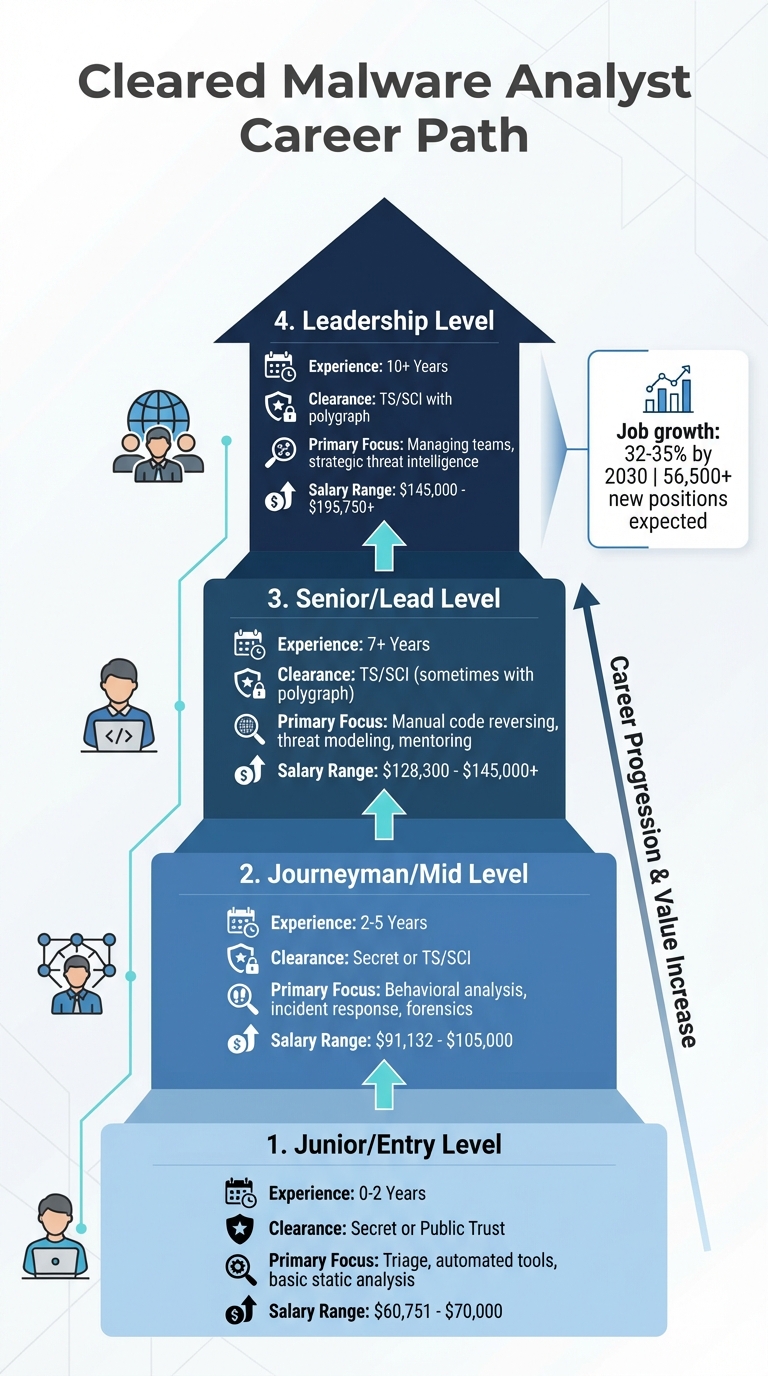
Cleared Malware Analyst Career Progression: Salary, Experience & Clearance Levels

Cleared Malware Analyst Career Progression: Salary, Experience & Clearance Levels

Daily Work Responsibilities

As a cleared malware analyst, your day kicks off with incident response and triage. Using automated tools, you quickly evaluate suspicious files to identify which ones need further scrutiny. This initial step is critical because thousands of new malware samples surface daily, and your ability to separate false alarms from real threats keeps systems secure.

When a legitimate threat is flagged, you dive into both static and dynamic analysis. Static analysis involves examining file properties, while dynamic analysis uses isolated sandboxes to observe how the malware behaves in action. For particularly complex threats, you take it a step further with reverse engineering, employing tools like WinDbg, OllyDbg, and IDA Pro to uncover hidden functions and encryption methods.

After completing your analysis, you document your findings, create detection signatures, and collaborate with response teams. This job requires not only technical accuracy but also the ability to explain intricate details to people who may not have a technical background. These responsibilities lay a solid foundation for advancing in the field of malware analysis.

Career Advancement Paths

The journey to career growth in malware analysis builds on your technical skills and security clearance levels. At the entry level (0–2 years of experience), you’ll focus on triage, automated tools, and basic static analysis. Most entry-level roles require a Secret or Public Trust clearance. After gaining 2–5 years of experience, you can move into mid-level positions, where responsibilities expand to include behavioral analysis, incident response, and forensics. These roles often require a Secret or TS/SCI clearance.

Senior roles, typically achieved after 7+ years of experience, demand expertise in low-level assembly languages like x86/x64 and ARM. You’ll tackle advanced tasks such as identifying and mitigating zero-day malware, leading investigations, mentoring junior analysts, and even developing custom detection tools. These positions usually require a TS/SCI clearance, sometimes with a polygraph. Strong communication and leadership skills are essential for standing out at this level.

Career Level Typical Experience Primary Focus Annual Salary Range
Junior / Entry 0–2 Years Triage, automated tools, basic static analysis $60,751 – $70,000
Journeyman / Mid 2–5 Years Behavioral analysis, incident response, forensics $91,132 – $105,000
Senior / Lead 7+ Years Manual code reversing, threat modeling, mentoring $128,300 – $145,000+
Leadership 10+ Years Managing teams, strategic threat intelligence $145,000 – $195,750+

The demand for malware analysts is on the rise. According to the U.S. Bureau of Labor Statistics, information security analyst roles are expected to grow by 32% from 2022 to 2032 [7]. Globally, malware analysis positions have seen about 22% annual growth [2]. Skills in programming can further enhance your ability to dissect and understand malicious code. Pursuing certifications, contributing to open-source projects like MalwareBazaar, and gaining hands-on experience with tools like REMnux or FLARE VM can accelerate your path to leadership roles in this thriving field.

Salary Ranges and Job Market Trends

After exploring career paths and responsibilities, it’s time to dive into the compensation and market trends shaping the field of cleared malware analysis.

Salary Expectations by Experience Level

Salaries for cleared malware analysts depend on factors like experience, security clearance level, and location. For those just starting out, salaries begin around $60,751 per year, with an average of $86,474 annually[3]. Mid-level professionals typically earn between $91,132 and $145,500, while seasoned analysts working on advanced threat intelligence and zero-day malware can earn $195,750 or more[1]. Government agencies and defense contractors are known for offering competitive pay.

In regions like the Washington, D.C. metro area, Northern Virginia, and Maryland, salaries tend to be higher due to the concentration of federal agencies and contractors. Remote positions are becoming more common as well, though they often require occasional on-site work for handling classified systems. These salary figures not only highlight earning potential but also reflect the demand in these key hubs.

Current Job Market Demand

The demand for cleared malware analysts is on the rise. According to the U.S. Bureau of Labor Statistics, roles for information security analysts are expected to grow by 32% to 35% from now until 2030–2032, adding approximately 56,500 new positions[7]. This surge is fueled by the increasing complexity of cyber threats – 560,000 new malware samples are detected daily, adding to an already staggering total of over 1 billion[1].

Ransomware attacks in the U.S. saw a 74% increase between 2022 and 2023[7]. At the same time, a global shortage in cybersecurity professionals is creating opportunities for those transitioning from programming or related fields into security roles.

Looking ahead, the cybersecurity market is projected to reach $273.6 billion by 2028, growing at an annual rate of 10.56%. Government contracting remains the largest employer of cleared malware analysts, with many roles requiring TS/SCI clearances for sensitive work. Beyond government, industries like healthcare and finance are ramping up hiring as they face increasingly sophisticated attacks on private data. Meanwhile, the rise of generative AI in malicious activities is pushing analysts to continually refine their skills, emphasizing the importance of staying ahead in this evolving field.

How to Find and Land Cleared Malware Analyst Jobs

Landing a cleared malware analyst job involves a focused strategy that blends technical expertise with an active security clearance.

Job Search Methods for Cleared Positions

Start by leveraging specialized job boards that cater exclusively to cleared positions. These platforms allow you to set up daily alerts based on your clearance level, location, and technical focus. Plus, they connect you directly with hiring managers. Make sure your profile is up-to-date with your resume, certifications, and current clearance status to increase your visibility for new opportunities.

Another effective method is attending cleared job fairs, whether virtual or in-person. These events give you the chance to network with recruiters from top defense contractors and intelligence agencies. They’re a great way to showcase your technical skills and clearance credentials face-to-face, often speeding up the hiring process.

Once you have job leads, it’s time to focus on acing both technical and clearance interviews.

Preparing for Technical and Clearance Interviews

Technical interviews test your practical expertise, so be ready for detailed questions on topics like x86 assembly, C/C++, Windows API, and operating system internals[3][10]. Employers will likely ask you to explain the four key stages of malware analysis: fully-automated analysis, static properties examination, interactive behavioral analysis, and manual code reversing[14]. Structuring your answers around these stages shows your methodical approach and depth of knowledge.

"The closer you get to the top [of the analysis pyramid], the more burdensome the effort and the less common the skill set." – Lenny Zeltser, Cybersecurity Executive[14]

Expect in-depth discussions about Indicators of Compromise (IOCs), such as file-based hashes, network-based command-and-control (C2) domains, host-based registry changes, and email-based spoofed headers[15][16]. If presented with active infection scenarios, emphasize the importance of immediate isolation before moving to triage[15][16].

To stand out, prepare to walk interviewers through workflows and troubleshooting steps using industry-standard tools. Building a home lab with virtual machines and tools like REMnux can give you hands-on experience. Use your lab work to create concrete examples that demonstrate your skills and problem-solving abilities during interviews[10][14].

Conclusion

Breaking into the field of cleared malware analysis requires a mix of education, technical expertise, and certifications. A bachelor’s degree in Computer Science or Cybersecurity provides a solid starting point. From there, honing your skills with tools like IDA Pro and Ghidra, along with gaining proficiency in x86/x64 assembly and C/C++, helps set you apart in this competitive field [2]. These skills not only prepare you for advanced roles but also position you for attractive salaries. With the job market expected to grow by 35% by 2030, your expertise will remain highly sought after [1].

Certifications such as GIAC Reverse Engineering Malware (GREM) and Certified Reverse Engineering Analyst (CREA) are excellent ways to showcase your dedication and expertise. Entry-level roles in this field often start at around $70,000 annually, while senior positions can command salaries ranging from $145,000 to $195,750 [1][2].

Building practical experience is essential. Setting up a home lab allows you to practice and refine your skills. For those just starting out, gaining experience in a Security Operations Center (SOC) or in system administration can provide a strong foundation before moving into malware analysis [1][2]. Staying active in open-source communities like MalwareBazaar and contributing to platforms such as VirusTotal Intelligence can also help you stay updated on the latest threats [2].

A career as a cleared malware analyst not only offers job security but also the chance to tackle the challenges of safeguarding national security. As AI-driven cyber threats continue to emerge [1], organizations need skilled analysts to counter these evolving risks. Update your resume with relevant certifications and clearance status, and use cleared cyber security job boards to connect with potential employers.

Whether you’re signing up for a new certification, building your analysis lab, or applying for your first cleared role, every step brings you closer to joining the mission of protecting critical systems. The demand is there, the growth opportunities are clear, and with determination, you can carve out a successful path in this vital field.

FAQs

How can I get a security clearance if I don’t already have one?

To get a security clearance, you’ll need sponsorship from a qualified employer or government agency. The process involves a few key steps: completing the e-QIP questionnaire, going through a background investigation, and an adjudication phase. During adjudication, factors like your finances, criminal record, and personal conduct are carefully reviewed. It’s crucial to be honest and upfront throughout the process, as it can take months to complete, depending on the level of clearance required and the details of your background.

What should I build in a home malware-analysis lab to prepare for interviews?

To get ready for malware analysis interviews, start by creating a secure, isolated lab environment. Use virtual machines (VMs) to simulate different operating systems, and equip them with tools like FLARE-VM and REMnux. Make sure to configure network containment to block any external communication – this is crucial for safety. Taking snapshots of your VMs is also a smart move, as it lets you quickly restore your setup if needed. This approach ensures you can practice safely and effectively while preparing for your interviews.

What does a cleared malware analyst do differently than a SOC analyst?

A cleared malware analyst works on highly specialized tasks such as reverse engineering malicious software, conducting detailed malware analysis, and performing threat research. These roles often operate in environments that require security clearances, such as Secret or Top Secret levels. Analysts in these positions deal with classified information and focus on addressing nation-state-level threats.

On the other hand, SOC (Security Operations Center) analysts are primarily tasked with monitoring and responding to threats as they happen. They rely heavily on automated tools to identify and mitigate risks. Unlike cleared malware analysts, SOC analysts typically do not require the same level of security clearance. Their work is more centered on real-time threat detection and response rather than deep-dive research or analysis.
Related Blog Posts

  • Malware Analyst Career Path for Cleared Reverse Engineers
  • Threat Intelligence Analyst Career Path for Cleared Professionals
  • Cryptanalyst Career Path for Cleared Intelligence Professionals
  • Cleared SOC Analyst Jobs Complete Career Guide

Cleared Forensic Analyst Jobs Complete Career Guide

CyberSecJobs Editorial · March 28, 2026 ·

A cleared forensic analyst is a digital investigator with government security clearance, specializing in analyzing evidence like file systems, memory dumps, and network traffic to solve cybercrimes or breaches. These roles require a mix of education, certifications, and technical skills, offering competitive salaries and career growth opportunities in government and private sectors.

Key Takeaways:

  • Security Clearance: Essential for handling sensitive cases; makes candidates highly sought after.
  • Education: Bachelor’s degree in computer science, cybersecurity, or related fields is standard; advanced degrees can provide an edge.
  • Certifications: GCFA, GCFE, CCFP, and others validate expertise and align with Department of Defense standards.
  • Skills: Proficiency in forensic tools (e.g., EnCase, Autopsy), file system analysis, memory forensics, and network forensics.
  • Salary Ranges: Entry-level starts at $60,000-$80,000; senior roles can exceed $145,000 annually.
  • Job Market: High demand due to increasing cybercrime; federal agencies and contractors are primary employers.

This guide provides detailed insights into qualifications, certifications, tools, and strategies to excel in this field.

Education and Experience Requirements

Educational Background

For most positions, a bachelor’s degree is the standard requirement. Degrees in fields like computer science, cybersecurity, digital forensics, IT, engineering, or mathematics are often preferred for cleared roles[1]. In laboratory-based positions, degrees in chemistry, biochemistry, biology, or forensic science are typically necessary[5][6].

Federal agencies, such as the FBI, often have specific academic requirements. For example, digital forensic examiners are usually required to complete at least 24 college semester hours in a relevant subject area[1]. The National Institute of Justice emphasizes the importance of academic integrity and suitable educational qualifications:

A model candidate for all forensic science practices possesses personal integrity, holds a baccalaureate degree (at a minimum) in the natural sciences[5].

For those aiming for senior, research, or teaching roles, a master’s degree in digital forensics or a related discipline can offer a competitive edge[7]. When choosing a degree program, it’s wise to look for accreditation by respected organizations such as The Chartered Society of Forensic Sciences[4].

Experience Expectations

Education alone isn’t enough – practical, role-specific experience is essential.

For entry-level forensic science technician roles, prior work experience is often not required beyond holding a bachelor’s degree. However, on-the-job training is common and may last anywhere from six months to three years[5][6].

Mid-level positions usually demand at least two years of relevant experience in areas like forensic science, biology, or chemistry, in addition to a bachelor’s degree[8]. Advanced or specialized roles require even more extensive experience. For instance, the FBI prefers forensic accountants to have three to five years of experience in fields such as public accounting, internal audit, or forensic audit[1]. For Digital Forensic Examiner positions, the FBI may accept four years of full-time professional experience in digital forensics as a substitute for a bachelor’s degree[1].

To stand out, candidates should highlight hands-on investigative skills, such as participating in Capture The Flag challenges on platforms like CyberDefenders[2].

sbb-itb-bf7aa6b

Digital Forensics Analyst Job? | Salary, Certifications, Skills & Tools, Bootcamp, Education, etc.

Required Certifications for Cleared Forensic Analysts

Once you’ve established a strong educational and practical foundation, certifications are the next step to proving your expertise in sensitive investigations. For cleared roles, certain credentials stand out because they align with Department of Defense (DoD) workforce standards and validate your ability to operate in high-stakes scenarios.

GCFA (GIAC Certified Forensic Analyst)

The GCFA is often considered the "gold standard" for advanced digital forensics and incident response [9][10]. It prepares professionals to tackle sophisticated threats and data breaches across both Windows and Linux platforms, with a particular focus on threat hunting.

The exam includes 82 questions, a 3-hour time limit, and requires a passing score of 71% (as of March 18, 2023) [9]. It features a CyberLive environment where candidates perform real-world tasks using programs, code, and virtual machines [9][11]. This hands-on approach ensures that candidates demonstrate both practical and theoretical expertise. Rob Lee from the SANS Institute highlights the critical need for skilled professionals:

We need lethal digital forensics experts who can detect and eradicate advanced threats immediately. A properly trained incident responder could be the only defense your organization has left during a compromise. [9]

The GCFA is recognized by the DoD Credentialing Opportunities On-Line (DoD COOL) and is accredited by the ANSI National Accreditation Board under ISO/IEC 17024 [10][13]. The exam costs $999, with renewal fees of $499 every four years [9][10]. GCFA-certified professionals earn an average base salary of $106,000 per year, with consulting roles reaching up to $130,000 [12].

CCFP (Certified Cyber Forensics Professional)

The (ISC)² CCFP takes a broader approach, covering the entire forensics lifecycle from discovery to reporting [12]. While the GCFA focuses on advanced system-level forensics and incident response, the CCFP emphasizes managing investigations in a way that’s both legally sound and court-defensible. This certification is particularly useful for cleared professionals who need to ensure the integrity of their findings.

Additional Certifications

Other certifications can also help bolster your credentials:

  • GIAC Certified Forensic Examiner (GCFE): Specializes in Windows forensic analysis, including areas like the Windows Registry, USB device analysis, and email forensics. It’s tailored for federal agents, media exploitation analysts, and law enforcement officers working with Windows-based systems. A 70% score is required to pass, and GCFE-certified professionals earn between $86,000 and $108,162 annually [10][11].
  • Computer Hacking Forensic Investigator (CHFI): Validates expertise in core digital forensics skills like forensic imaging and chain-of-custody procedures [2].
  • EnCase Certified Examiner (EnCE): Focuses on proficiency with EnCase, a widely used forensic software tool in government investigations [2].
  • CompTIA Security+: Covers cybersecurity fundamentals and incident response basics, making it a great starting point for those new to the field [2].

Before committing to costly certifications, consider gaining experience with open-source tools such as Autopsy, FTK Imager, and Volatility [2]. Document your work on forensic challenges through platforms like CyberDefenders to build a portfolio that demonstrates your practical skills [2]. Since SANS training and GIAC exams can cost between $8,000 and $10,000, look into employer sponsorship or DoD Credentialing Assistance if you’re in the military [10][12]. With the right certifications in hand, you’ll be well-positioned to compete in the job market, as discussed in the next section.

Technical Skills and Tools

To excel as a cleared forensic analyst, technical expertise is a must. While certifications and experience lay the groundwork, hands-on skills set top-tier professionals apart. Proficiency in investigative techniques and specialized tools is essential, spanning everything from traditional hard drives to modern cloud platforms. These capabilities ensure compliance with strict clearance protocols often required in sensitive government investigations.

Core Technical Skills

At the heart of forensic analysis lies data acquisition. Analysts must create exact, forensically sound copies of data using write blockers and validated tools, followed by integrity verification with cryptographic hashes like MD5 or SHA256. Skipping this step can make evidence inadmissible in court or government proceedings.

File system analysis is another cornerstone skill. Analysts need a thorough understanding of file systems such as NTFS, ext4, APFS, and FAT32 to uncover critical artifacts. This includes examining registry hives, event logs, and browser histories. Memory forensics is equally vital, focusing on volatile data in RAM to identify running processes, network activity, and malicious code that might never touch a hard drive. Meanwhile, network forensics involves analyzing packet captures, flow data, and firewall logs to trace intrusions and detect data breaches.

Programming knowledge is increasingly indispensable. As Raymond Musumba, CFE, puts it:

A strong foundation in programming is essential for computer forensic investigators… It helps professionals understand how software and scripts operate, identify suspicious code, and even recover deleted or hidden data [14].

Python stands out as a valuable tool for automating repetitive tasks and creating custom solutions for investigations.

Another critical skill is correlating timestamps from metadata, logs, and other artifacts to establish a clear timeline. This ability is crucial for presenting findings in a way that attorneys, executives, or juries can understand without sacrificing technical accuracy [2]. The Bureau of Labor Statistics anticipates a 13% growth in jobs for forensic science technicians between 2024 and 2034, with around 2,900 openings annually [6].

Mastering these skills sets the stage for effectively leveraging the right tools during investigations.

Forensic Tools

Starting with open-source tools is a great way to build foundational skills before moving on to advanced commercial platforms. For example:

  • Autopsy: A free tool for comprehensive file system and artifact analysis.
  • FTK Imager: Ideal for forensic imaging and data acquisition.
  • Volatility and Volatility Workbench: Widely used for memory forensics.
  • KAPE (Kroll Artifact Parser and Extractor): Speeds up triage across large datasets to pinpoint key evidence.

For more advanced needs, commercial tools like EnCase and Magnet AXIOM offer robust capabilities, particularly suited for government and law enforcement work. These platforms, along with tools like Plaso for timeline reconstruction, help analysts meet the stringent standards of cleared environments.

As cloud adoption grows, analysts increasingly deal with APIs and snapshots from services like AWS, Azure, and GCP instead of relying solely on physical imaging. Mobile forensics has also become crucial, requiring expertise in extracting data from iOS and Android devices, including encrypted apps and location histories.

Finally, meticulous documentation is non-negotiable. Real-time notes and screen captures during analysis ensure findings can be reproduced by another examiner. Even a small lapse in the chain of custody can jeopardize an entire investigation.

Job Market and Salary Information

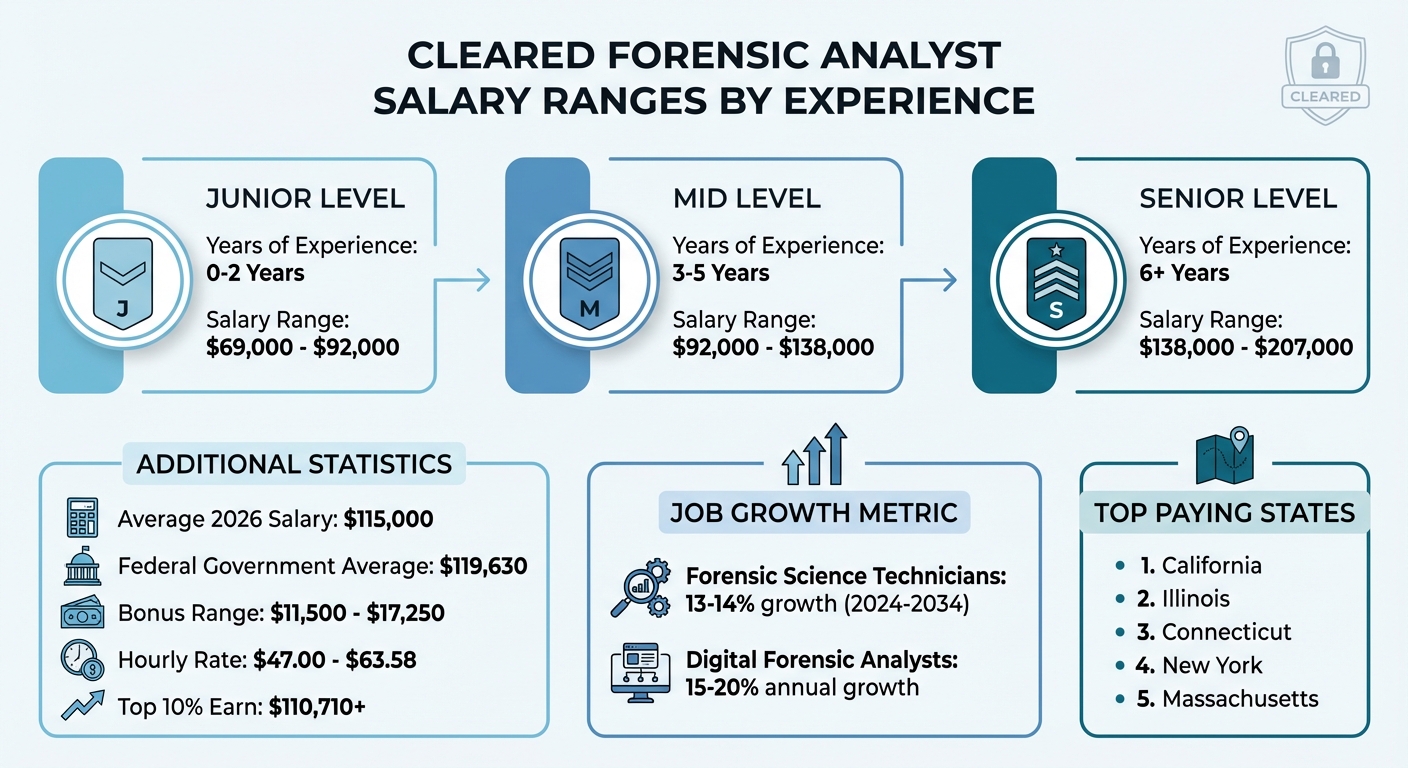
Cleared Forensic Analyst Career Path: Salary Ranges by Experience Level

Cleared Forensic Analyst Career Path: Salary Ranges by Experience Level

Demand for Cleared Professionals

Building on the qualifications and certifications mentioned earlier, the job market for cleared forensic analysts is thriving. Employment for forensic science technicians is expected to grow by 13%-14% between 2024 and 2034 [15][6]. Meanwhile, the demand for digital forensic analysts is projected to climb even higher, with annual growth rates of 15%-20% driven by the surge in cybercrime [15][18].

Security clearances are now a baseline requirement for many federal roles, particularly in agencies like the FBI, DEA, and ATF. The process to obtain clearance is rigorous, as highlighted by the UC Davis Master’s Program in Forensic Science, which advises:

If you are seeking employment in forensic science do not use drugs, do not break the law, and do not have bad credit [16].

Geography plays a major role in job availability. California leads the nation with 2,050 forensic technicians employed, followed by Florida (1,420) and Texas (1,100) [15][17]. Virginia and Maryland, with 430 and 420 positions respectively, benefit from their proximity to Washington, D.C., home to numerous federal agencies and contractors [17]. Areas in the Northeast and along the West Coast also offer strong opportunities due to their concentration of federal agencies and specialized forensic labs [15].

This high demand translates into competitive salaries, as detailed below.

Salary Ranges by Experience and Location

The salary landscape for cleared forensic analysts underscores the value of experience and location. By 2026, the average annual salary for a digital forensics analyst in the United States is projected to reach $115,000 [18]. Federal government roles often pay a premium, with an average annual salary of $119,630, compared to $73,860 for local government positions and $69,540 for state government roles [16].

Experience Level Years of Experience Salary Range (Annual)
Junior 0-2 Years $69,000 – $92,000
Middle 3-5 Years $92,000 – $138,000
Senior 6+ Years $138,000 – $207,000

Additional compensation can include bonuses ranging from $11,500 to $17,250, and hourly rates typically fall between $47.00 and $63.58 [18]. Remote work is also widely available in this field [18]. The top 10% of forensic science technicians earn more than $110,710 annually [6], with the highest-paying states being California, Illinois, Connecticut, New York, and Massachusetts [16].

How to Secure Cleared Forensic Analyst Positions

Resume Optimization

Your security clearance is a major advantage when applying for cleared forensic analyst roles. Make sure it stands out by placing it prominently in your resume – either in the summary or a dedicated section. Since recruiters typically spend less than a minute reviewing resumes[19], this visibility can make all the difference.

Be specific about your clearance details: include the level, granting agency, and current status. Trevor Richfield, a Career Coach and Professional Resume Writer, emphasizes:

Putting security clearance on your resume is an important step in making yourself a competitive candidate for positions requiring access to sensitive information.[3]

When describing your experience, focus on measurable achievements rather than generic job duties. For instance, instead of saying "performed digital forensics", highlight results like "identified the root cause of a data breach within 48 hours" or "recovered critical evidence in 20+ investigations." Group your technical skills into clear categories such as:

  • Forensic Tools: EnCase, FTK, Autopsy, Volatility
  • Operating Systems: Windows, Linux, MacOS
  • Programming Languages: Python, C++

Tailor your resume to the job description by incorporating relevant keywords like "incident response", "chain of custody", and "timeline reconstruction." This approach not only strengthens your resume but also helps it pass applicant tracking systems.

If you’re light on professional experience, consider including volunteer work, case studies, or personal projects. Linking to forensic write-ups or contributions to open-source tools like Volatility adds credibility to your skills. Use your clearance to position yourself as ready to handle sensitive and high-stakes investigations.

This solid resume framework will set you up for success in the interview process.

Interview Preparation

Interviews for forensic analyst roles require you to explain complex processes in a way that’s easy to understand. Be ready to discuss the entire digital evidence lifecycle – from identifying and preserving evidence to analyzing and reporting findings.

Thomas W. Adair, a retired Senior Criminalist from the Westminster Police Department, advises:

Your knowledge base must mirror your resume.

He also notes:

Oral boards like to ask questions such as, ‘What can you tell us about our agency?’[20]

Given the competitive nature of forensic science positions, with hundreds of applicants for each role[20], thorough preparation is critical.

Be transparent about your clearance during the interview. As the UC Davis Master’s Program in Forensic Science points out:

Be honest during the application process – some agencies might overlook prior mistakes… but dishonesty during the process will disqualify an applicant.[16]

If you’re stumped by a technical question, admit it rather than guessing. Employers value honesty, especially in roles that require high levels of trust.

Bring a professional portfolio to showcase your expertise. Include redacted forensic reports, investigation methodologies, and technical write-ups. Be ready to explain how you maintain the chain of custody, conduct unbiased analyses, and ensure that your findings are legally admissible. Demonstrating this level of preparation will help you stand out.

Using Cleared Cyber Security Jobs

Cleared Cyber Security Jobs

Cleared Cyber Security Jobs is a platform tailored specifically for professionals with active security clearances. Its tools allow you to filter job listings by clearance level, location, and forensic specialization, ensuring you only see roles you’re qualified for.

Uploading your resume to the platform’s database gives employers direct access to your profile. You can also set up job alerts for new forensic analyst openings. Additionally, the platform hosts job fairs where you can connect with hiring managers from federal agencies and defense contractors, making the hiring process more direct.

Since an active clearance can speed up your job search[3], using a platform dedicated to cleared professionals helps you target roles that align with your expertise and credentials efficiently.

Conclusion

Pursuing a career as a cleared forensic analyst requires a combination of specialized certifications, advanced technical expertise, and an active security clearance. Certifications like GCFE and GCFA, which align with DoD standards, demonstrate your qualifications to potential employers[13]. Mastery of areas such as file systems, memory analysis, and timeline reconstruction is key to excelling in this field. A security clearance further opens doors to impactful roles within organizations like the FBI, Secret Service, and Department of Defense[2]. Together, these elements position you strongly in an ever-growing job market.

The increasing prevalence of cybercrime continues to drive demand for forensic analysts. Having both verified credentials and a security clearance gives you a distinct edge in securing roles that require a high level of trust and expertise.

To thrive in this field, prioritize ongoing education. As technology evolves, so do forensic techniques and tools. Operating systems and applications are constantly updated, introducing new digital artifacts to analyze. Stay ahead by reading DFIR blogs, participating in CTF challenges, and building a portfolio that showcases your hands-on experience[2].

As emphasized throughout this guide, maintaining your clearance, updating certifications, and refining your technical skills are essential for long-term success. The demand for skilled forensic analysts remains strong, and those who commit to continuous growth will find a wealth of opportunities in digital forensics.

FAQs

How do I get a security clearance for forensic analyst roles?

To obtain a security clearance, you’ll need to navigate the U.S. government’s process, which involves several key steps: completing an application, undergoing a thorough background check, and having various factors assessed – such as your criminal history, financial records, and personal conduct. Generally, this process is started by your employer or sponsor if the role you’re pursuing requires clearance. Properly showcasing your clearance on your resume can also boost your prospects for positions that demand heightened security awareness.

Which certification should I get first: Security+, GCFE, or GCFA?

Begin with Security+ to establish a solid understanding of cybersecurity fundamentals. This certification covers the essential principles and practices needed to navigate the cybersecurity landscape effectively. Once you’ve got the basics down, consider advancing to certifications like GCFE or GCFA. These are tailored for professionals aiming to specialize in digital forensic analysis, equipping you with in-depth skills for conducting forensic investigations and handling complex cases.

What projects can I do to prove DFIR skills without job experience?

If you’re looking to showcase your Digital Forensics and Incident Response (DFIR) skills but lack formal work experience, practical projects are a great way to start. For example, you can try building tools like a keylogger, developing a backdoor, or creating a port scanner. These hands-on activities not only teach you technical skills but also demonstrate your ability to tackle real-world challenges.

Platforms like TryHackMe and HackTheBox are excellent for practicing. They offer scenarios where you can analyze filesystems, logs, and memory to uncover forensic details. By diving into these exercises, you’ll strengthen essential skills such as malware analysis and evidence collection.

The best part? These projects and platforms allow you to build a portfolio that highlights your capabilities, even if you haven’t had formal DFIR job experience yet.

Related Blog Posts

  • GCFA Certification Career Guide for Cleared Forensic Analysts
  • Digital Forensics Examiner Career Path for Cleared Professionals
  • Threat Intelligence Analyst Career Path for Cleared Professionals
  • Cryptanalyst Career Path for Cleared Intelligence Professionals

Cleared Security Architect Jobs Complete Career Guide

CyberSecJobs Editorial · March 28, 2026 ·

Cleared Security Architects are highly specialized professionals responsible for designing secure systems that protect classified government data. These roles require security clearances like Secret or Top Secret and involve navigating federal compliance standards such as NIST 800-53 and FISMA.

Key Takeaways:

  • Salary: Median pay is $223,000 annually.
  • Demand: Information security analyst roles are projected to grow by 29% from 2024 to 2034.
  • Clearance Levels: Secret, Top Secret, and TS/SCI are the most common clearance types, with timelines for approval ranging from 2 months to over a year.
  • Required Certifications: CISSP is required in 80% of listings, along with others like CISM, TOGAF, and cloud-specific credentials.
  • Core Skills: Expertise in Zero Trust Architecture, cloud platforms (AWS GovCloud, Azure Government), and compliance frameworks.

This guide outlines the career path, required skills, certifications, and strategies to secure these high-paying and impactful roles.

Cloud Security Architect Skills: Must-Know Technical Skills for Security Architect Careers

sbb-itb-bf7aa6b

What Cleared Security Architects Do

In the cleared sector, Security Architects play a pivotal role in safeguarding classified government information. Their work goes beyond just building secure systems – they also ensure compliance with strict federal standards. Operating at a strategic level, these professionals design security frameworks that not only protect sensitive data but also guide an organization’s approach to security from initial setup to ongoing operations [1][2].

Cleared Security Architects balance technical expertise with a strategic outlook. They spend about 25% of their time on architecture reviews and design sessions, another 20% in stakeholder meetings to translate technical risks into business terms for executives, and an additional 20% developing documentation and standards [2]. Their responsibilities also include evaluating new security technologies, taking into account integration challenges and long-term costs, all while ensuring alignment with federal compliance guidelines.

In cleared environments, architects must integrate Continuous Vetting (CV) processes – automated systems that track criminal records, credit activity, and foreign travel for cleared personnel in real time [4]. They also build secure infrastructures for classified networks like SIPRNet and use government-specific cloud platforms such as AWS GovCloud and Microsoft Azure Government [4].

Designing Secure Architectures

At the heart of their work is the implementation of Zero Trust Architecture – a model that assumes breaches are inevitable and focuses on continuous verification [2]. This approach includes strategies like micro-segmentation to isolate sensitive systems, continuous monitoring to detect anomalies, and robust identity verification for users and devices. This replaces outdated perimeter-based security models, which are less effective in today’s cloud-driven and remote work environments.

Another key responsibility is Security by Design. Architects embed security into every stage of the system development lifecycle (SDLC), from secure coding practices to early-stage threat modeling [2]. This proactive "shift-left" approach addresses vulnerabilities early, preventing issues from reaching production systems. Additionally, they assess new technologies to determine their operational fit, integration complexity, and long-term costs.

Compliance and Regulatory Responsibilities

Every decision a cleared Security Architect makes is influenced by federal compliance standards. They map system components to NIST controls, document how architectures meet FISMA requirements, and ensure any cloud services used are FedRAMP-authorized. A major focus is supporting the Trusted Workforce 2.0 initiative, which aims for seamless clearance reciprocity across federal agencies under the principle of "clear once, trusted everywhere" [4]. Architects must design systems that uphold this standard while meeting the unique security needs of various agencies.

This compliance-driven approach also shapes how monitoring systems are designed, ensuring they support effective and timely incident responses.

Monitoring and Incident Response

While architects don’t handle daily security operations, they lay the groundwork for effective monitoring and incident handling. They establish continuous monitoring frameworks to provide real-time insights into system health and security. This includes defining what data is logged, how long it is retained, and how alerts are routed to ensure swift action by security teams.

Architects also oversee penetration testing programs, working with red teams to uncover weaknesses before attackers can exploit them. When incidents occur, they analyze root causes to determine if adjustments to the architecture are needed. For example, they may evaluate whether micro-segmentation should be tightened or if identity verification processes require enhancement. These evaluations ensure that incidents lead to long-term architectural improvements, not just short-term fixes.

Clearance Levels and Federal Frameworks

For those in cleared Security Architect roles, understanding security clearances and federal frameworks isn’t just helpful – it’s essential. These elements dictate the systems you can access, the projects you’ll tackle, and the way you design solutions that align with government standards.

Types of Security Clearances

Security clearances are the backbone of compliance in government-related roles, especially when designing systems that meet strict federal requirements. These clearances come in three main levels, each corresponding to different degrees of access:

  • Secret: The most common clearance level for defense contractors. It covers information that, if disclosed, could cause "serious damage" to national security. This is often the baseline for IT and engineering roles in defense work [5].
  • Top Secret (TS): Required for accessing information that could cause "exceptionally grave damage" to national security. Senior architects working on critical national security programs often need this level [5].
  • Sensitive Compartmented Information (SCI): A subset of Top Secret, this clearance deals with intelligence sources and methods. It requires additional screening, which may include polygraph tests [5].

As of 2025, over 4.2 million individuals, including government and contractor employees, hold security clearances across 80 executive branch agencies [5]. The timeline for obtaining a clearance varies by level: Secret clearances typically take 60 to 150 days, Top Secret can take 120 to 240 days, and TS/SCI may require 180 to 365 days or longer [4].

Higher clearance levels come with heightened responsibilities. These include designing systems for classified networks like SIPRNet, managing accredited systems as an ISSM (Information System Security Manager) or ISSO (Information System Security Officer), and working within government-only cloud environments [4].

Under the Trusted Workforce 2.0 initiative, the federal government has adopted Continuous Vetting (CV) as the standard by 2026. CV uses automated, real-time monitoring of criminal, financial, and travel records to replace periodic reinvestigations [4]. This approach, described as "clear once, trusted everywhere", simplifies clearance reciprocity across agencies. Additionally, a clearance remains active for 24 months after leaving a position, allowing for a smooth transition to a new sponsor within that timeframe [4].

Federal Frameworks You Need to Know

Beyond clearances, federal frameworks play a crucial role in shaping every decision Security Architects make. These frameworks ensure that systems meet strict government security and privacy standards:

  • NIST 800-53: A comprehensive catalog of security and privacy controls that architects must map to system components [1].
  • FISMA (Federal Information Security Management Act): This law mandates that government agencies and contractors implement risk-based security programs aligned with NIST guidelines. Architects must document how their systems meet FISMA requirements and ensure any cloud services used are FedRAMP-authorized, which standardizes security assessments for cloud providers working with federal agencies.

For roles in the intelligence community, ICD 503 (Intelligence Community Directive for Risk Management) is key. It governs how architects approach risk assessment and mitigation [1]. These frameworks influence everything from data classification and storage to monitoring system configurations and incident response strategies.

Mastering these frameworks doesn’t just enhance your technical skills – it positions you as a critical player in high-stakes, clearance-driven roles where precision and compliance are non-negotiable.

Required Skills and Certifications

Landing a cleared Security Architect role requires 7–10 years of experience in security, combining technical expertise, key certifications, and the ability to communicate complex risks to non-technical leaders effectively [2][6]. These roles demand a unique skill set tailored to environments where federal compliance and strategic security design come together.

Core Technical Skills

The technical foundation for this role involves mastering enterprise frameworks like TOGAF, Zachman, and SABSA. These frameworks help structure large-scale IT systems and align business processes with security controls [2]. Expertise in cloud security is critical, especially across platforms like AWS, Azure, and Google Cloud Platform, with a focus on their government-specific environments (e.g., AWS GovCloud, Azure Government) [2][4].

Proficiency in Zero Trust Architecture is essential, emphasizing continuous verification, micro-segmentation, and least privilege access [2]. You’ll also need strong Identity and Access Management (IAM) skills to design scalable identity architectures, including federation, single sign-on (SSO), and privileged access management (PAM) [2][7].

Another key area is Security by Design, which involves secure coding practices, threat modeling, and integrating security into CI/CD pipelines [2][7]. Skills in Python and PowerShell scripting are invaluable for automating tasks and developing custom security tools [7]. In fact, expertise in cloud security alone can boost your salary by over $15,000 [7].

Top Certifications for Cleared Security Architects

Certifications play a critical role in validating your expertise. The CISSP (Certified Information Systems Security Professional) is a staple in nearly 80% of Security Architect job listings, proving broad knowledge of security domains [2]. For those aspiring to management roles, the CISM (Certified Information Security Manager) focuses on governance, risk management, and leadership skills [8].

Specialized certifications like SABSA (Sherwood Applied Business Security Architecture) demonstrate your ability to design enterprise security programs [2]. Similarly, TOGAF (The Open Group Architecture Framework) is vital for understanding how large organizations structure IT systems [2]. Cloud-specific certifications, such as AWS Solutions Architect Professional, Azure Solutions Architect Expert, and Google Professional Cloud Architect, are increasingly important for leading secure cloud transformations [2].

Certification Primary Focus Career Impact
CISSP Broad Security Domains Required for 80% of senior architect roles [2]
CISM Management & Governance Prepares for leadership positions [8]
SABSA Architecture Methodology Validates enterprise security design skills [2]
TOGAF Enterprise Architecture Structures large-scale IT systems [2]
Cloud Architect AWS/Azure/GCP Essential for secure cloud transformations [2]

These certifications not only enhance your technical credibility but also position you for leadership opportunities.

Leadership and Communication Skills

Technical expertise is just one part of the equation. To truly excel, you need strong leadership and communication skills to bridge the gap between technical complexities and strategic business goals. Security Architects often spend about 20% of their time in stakeholder meetings and presentations, and another 10% mentoring junior team members [2].

Translating technical vulnerabilities into business terms is crucial. For example, you might need to explain risks in financial or operational terms to justify security investments to CISOs, CTOs, or board members. Stakeholder management is equally important, requiring you to build trust across teams with differing priorities. Rather than simply saying "no", you’ll need to offer secure solutions that align with business objectives.

In cleared environments, integrity and sound judgment are non-negotiable. Continuous Vetting processes require you to self-report events like arrests, significant financial issues, or international contacts to your Facility Security Officer [4]. Adjudicators also evaluate your digital footprint, including GitHub activity and professional networking profiles, to assess your operational security awareness and overall suitability for clearance [4]. Your online presence becomes a reflection of your reliability and adherence to the "grant of trust" that clearance entails.

Career Progression and Advancement

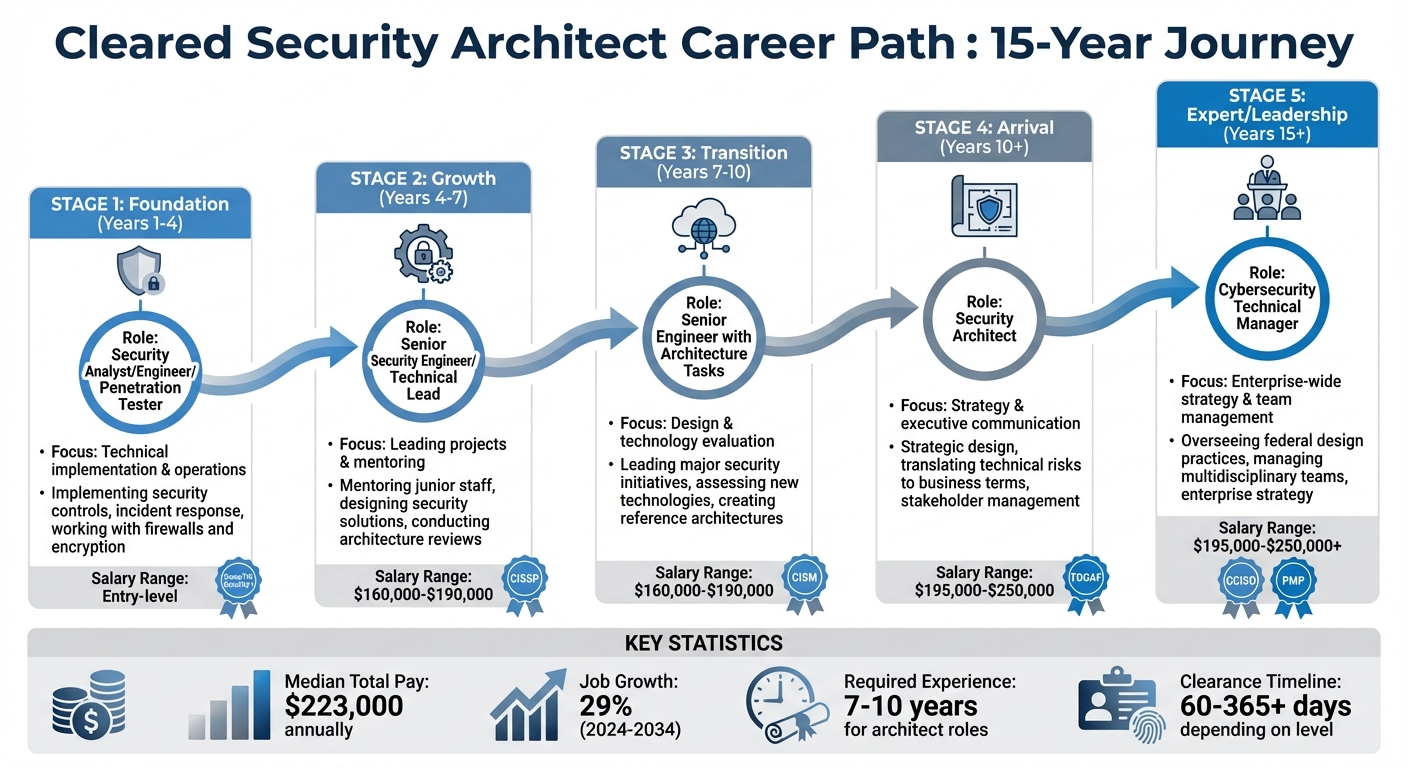
Cleared Security Architect Career Path Timeline and Salary Progression

Cleared Security Architect Career Path Timeline and Salary Progression

Typical Career Path

Building a career as a cleared Security Architect is a journey that typically spans 10–15 years, starting with technical roles like Security Analyst, Engineer, or Penetration Tester. Along the way, you’ll develop a mix of technical expertise and federal compliance knowledge, gradually stepping into more strategic roles [2].

In the foundation stage (years 1–4), your focus is on mastering the basics – implementing security controls, responding to incidents, and working with tools like firewalls and encryption systems [2].

From years 4–7, as a Senior Security Engineer or Technical Lead, your responsibilities expand to include mentoring junior staff, designing security solutions, and conducting architecture reviews. This is when you start to shift from just configuring systems to understanding the reasoning behind their design [2].

In the transition stage (years 7–10), you may still hold senior engineering titles but begin taking on architecture-related tasks. These include leading major security initiatives, assessing new technologies, and creating reference architectures to guide teams. By the arrival stage (10+ years), you officially step into a Security Architect role, focusing on strategic design rather than hands-on implementation [2]. After 15+ years, senior roles like Cybersecurity Technical Manager emerge, where you oversee federal design practices and manage multidisciplinary teams [9].

Career Phase Typical Years Key Focus Area 2026 Salary Range
Foundation 1–4 Technical implementation & operations Entry-level roles
Growth 4–7 Leading projects & mentoring $160,000–$190,000 [2]
Transition 7–10 Design & technology evaluation $160,000–$190,000 [2]
Arrival 10+ Strategy & executive communication $195,000–$250,000 [2]
Expert/Leadership 15+ Enterprise-wide strategy & team management $195,000–$250,000+ [2][9]

At each stage, sharpening your expertise and leadership abilities becomes increasingly important.

Building Your Expertise

To advance in this field, you need a deep understanding of federal frameworks. Proficiency in NIST SP 800-53, NIST SP 800-37 (RMF), and Unified Facilities Criteria (UFC) is essential. These frameworks act as the backbone of cleared security architecture [9].

Creating a portfolio of your work is another critical step. While ensuring all classified or sensitive information is removed, document architecture diagrams, security standards, and frameworks you’ve designed. This sanitized portfolio provides tangible proof of your skills during interviews [2]. Taking on leadership opportunities, such as chairing an Architecture Review Board (ARB) or mentoring junior engineers, adds valuable strategic experience that hiring managers look for in senior candidates [2].

Under the Trusted Workforce 2.0 framework, maintaining your clearance through Continuous Vetting is non-negotiable. Adjudicators may review your online presence, including GitHub activity and professional networking profiles, so practicing strong operational security is crucial [4].

Transitioning from an engineering mindset to an architectural one means focusing on the big picture. Instead of just solving technical issues, you’ll need to align security solutions with business goals and communicate risks in terms that executives can understand. This ability to bridge technical details with strategic objectives is a key skill for leadership roles [8].

How to Find and Land Cleared Security Architect Jobs

Once you’ve built your skills and credentials, the next step is showcasing them effectively during your job search.

How to Write Your Resume for Cleared Roles

Start by listing your clearance level prominently at the top, alongside your name and contact details. In your technical summary, highlight measurable achievements and relevant certifications like CISSP or CISM. Use the STAR method (Situation, Task, Action, Result) to detail your accomplishments. For instance, instead of saying "improved security posture", specify how your redesign reduced incident response times by a certain percentage or helped secure a contract renewal [10].

Avoid vague language – be specific and focus on results.

Operational security is critical. Never include classified information or sensitive names on your resume. While you should list your clearance level on resumes submitted through secure channels, avoid posting it on public platforms like LinkedIn, as this could pose a security risk. Keep your resume concise – one to two pages – and use a simple format that works with Applicant Tracking Systems. Tailor your keywords to match each job description [10].

Once your resume is ready, it’s time to explore platforms tailored for cleared professionals.

Using Cleared Cyber Security Jobs to Find Opportunities

Cleared Cyber Security Jobs

The Cleared Cyber Security Jobs platform is a great resource for finding roles. It allows you to filter job listings by clearance level, location, and specialization, connecting you directly with employers actively seeking cleared Security Architects. Upload your resume to boost visibility with hiring managers, and set up job alerts to stay updated on new opportunities that match your skills.

The platform also hosts job fairs, offering a chance to meet recruiters face-to-face, share your experience, and demonstrate your knowledge of federal frameworks. Beyond job postings, it provides resources for cleared professionals, including advice on maintaining your clearance and navigating transitions between agencies [4].

Once you’ve applied for roles, the next step is preparing for interviews.

Preparing for Interviews

Interviews for cleared Security Architect positions often test your ability to balance strategic vision with tactical execution. Be ready to explain your approach to designing security architectures and anticipating threats, rather than just focusing on tool configurations. Employers want to see that you can differentiate between creating a security framework and implementing it [1].

Showcase your expertise in frameworks like NIST 800-53, ISO/IEC 27001, and GDPR. Use the STAR method to provide examples of how you’ve aligned security strategies with business goals and communicated risks to non-technical stakeholders [1][10].

As AI becomes more integrated into security systems by 2026, expect questions about securing AI-powered tools and using AI for threat detection [3].

Throughout the interview, maintain strict operational security. Avoid mentioning classified projects or sensitive financial details. Instead, articulate your architectural vision in business terms and discuss how you’ve used automation tools like Python or PowerShell to enhance security [1][10].

Conclusion

Becoming a cleared Security Architect requires a mix of technical expertise and strategic insight, often gained over 7–10 years of experience[2]. A security clearance is not a permanent credential but rather a conditional trust tied to specific roles. Under the Trusted Workforce 2.0 framework launched in 2026, Continuous Vetting has replaced periodic reinvestigations, meaning your financial habits and online presence are now monitored in real time[4].

Success in this field goes beyond technical skills. Certifications like CISSP demonstrate your qualifications, while understanding frameworks like Zero Trust helps you communicate risks in terms that resonate with business leaders[2]. With information security analyst roles expected to grow by 29% from 2024 to 2034 and median total pay reaching $223,000 annually, the demand for cleared architects is strong and steady[1]. These qualifications not only open doors to top-tier roles but also highlight the need to protect your clearance throughout your career.

To maintain your clearance, report significant life events promptly and create a sanitized portfolio to showcase your design skills. Focus on states with cybersecurity talent shortages, such as Virginia, Maryland, Texas, and California, to enhance your job prospects[1].

Plan career moves carefully, as clearance becomes inactive 24 months after leaving a sponsored position[4]. Expanding your knowledge in cloud platforms like AWS GovCloud and frameworks such as TOGAF and SABSA can qualify you for senior roles offering salaries between $195,000 and $250,000 annually[2]. While this career path demands ongoing education and strict operational security, it offers strategic influence and highly competitive compensation.

FAQs

Can I get hired as a cleared Security Architect without already having a clearance?

Most of the time, no. Security Architect roles that require a clearance usually expect candidates to already possess one. This is because holding a security clearance is a key qualification for these jobs, and employers often focus on hiring individuals who meet this requirement to align with strict security protocols.

What should I include in a sanitized portfolio for cleared architecture work?

When creating a polished portfolio, ensure it presents a professional image while showcasing your expertise in security architecture. Here’s what to include:

  • Name, City, and State: Clearly state your name and location, but avoid listing your full address for privacy.
  • Contact Information: Provide your email address and phone number for easy communication.
  • Security Clearance Level: Highlight your clearance level prominently, as it’s a critical qualification in the field.

Next, include a concise summary of your experience. For instance, summarize your background in implementing security measures, designing enterprise architecture frameworks, and leading cloud security initiatives. Mention any certifications you hold, such as CISSP (Certified Information Systems Security Professional) or SABSA (Sherwood Applied Business Security Architecture), which validate your expertise.

Don’t forget to list your technical skills. This could include proficiency in zero trust models, cloud platforms, and specific tools or programming languages relevant to security architecture.

Finally, emphasize your key accomplishments. For example, highlight successful projects involving enterprise architecture frameworks, implementing zero trust security models, or optimizing cloud security protocols. Tailor these achievements to align with the skills and qualifications sought in your field.

A well-organized, professional portfolio not only underscores your technical expertise but also draws attention to your qualifications and clearance level, making you stand out in a competitive industry.

How do I protect my clearance under Continuous Vetting (CV)?

To keep your clearance secure under Continuous Vetting (CV), it’s crucial to practice good personal conduct and stick to security guidelines. CV includes regular reviews of your background, financial status, and criminal history. To avoid potential issues, steer clear of actions that might raise red flags, like financial troubles or legal problems. Be upfront about any changes in your circumstances and follow established security protocols to stay compliant and protect your clearance during these ongoing evaluations.

Related Blog Posts

  • Zero Trust Cleared Positions – The $200K Architect Skill Set
  • Cisco CCIE Security Career Guide for Cleared Expert Engineers
  • Security Architect Career Path for Cleared Professionals
  • Cloud Security Engineer Career Path for Cleared Professionals

Cleared Security Engineer Jobs Complete Career Guide

CyberSecJobs Editorial · March 27, 2026 ·

Cleared Security Engineers protect classified systems for national security. These roles require U.S. citizenship, a security clearance, technical skills, and certifications like CISSP or Security+. Here’s what you need to know:

  • Clearance Levels: Secret, Top Secret, or TS/SCI with processing times from 10 days to over a year.
  • Certifications: Start with Security+; move to advanced ones like CISSP or CEH.
  • Skills: Knowledge of NIST 800-53, RMF, cloud security (AWS GovCloud, Azure Government), and SIEM tools.
  • Salary: $100,000–$220,000 depending on clearance and experience.
  • Career Path: From Junior Engineer to senior roles like ISSM or Vulnerability Researcher.

Prepare by ensuring your clearance eligibility, gaining relevant certifications, and networking within the cleared cybersecurity community. This guide provides everything you need to start or advance your career in this high-demand field.

Can the Security+ Land You an IT Job? Why the Sec+ Is Important in GovTech (DoD 8570/8140)

sbb-itb-bf7aa6b

Required Qualifications and Certifications

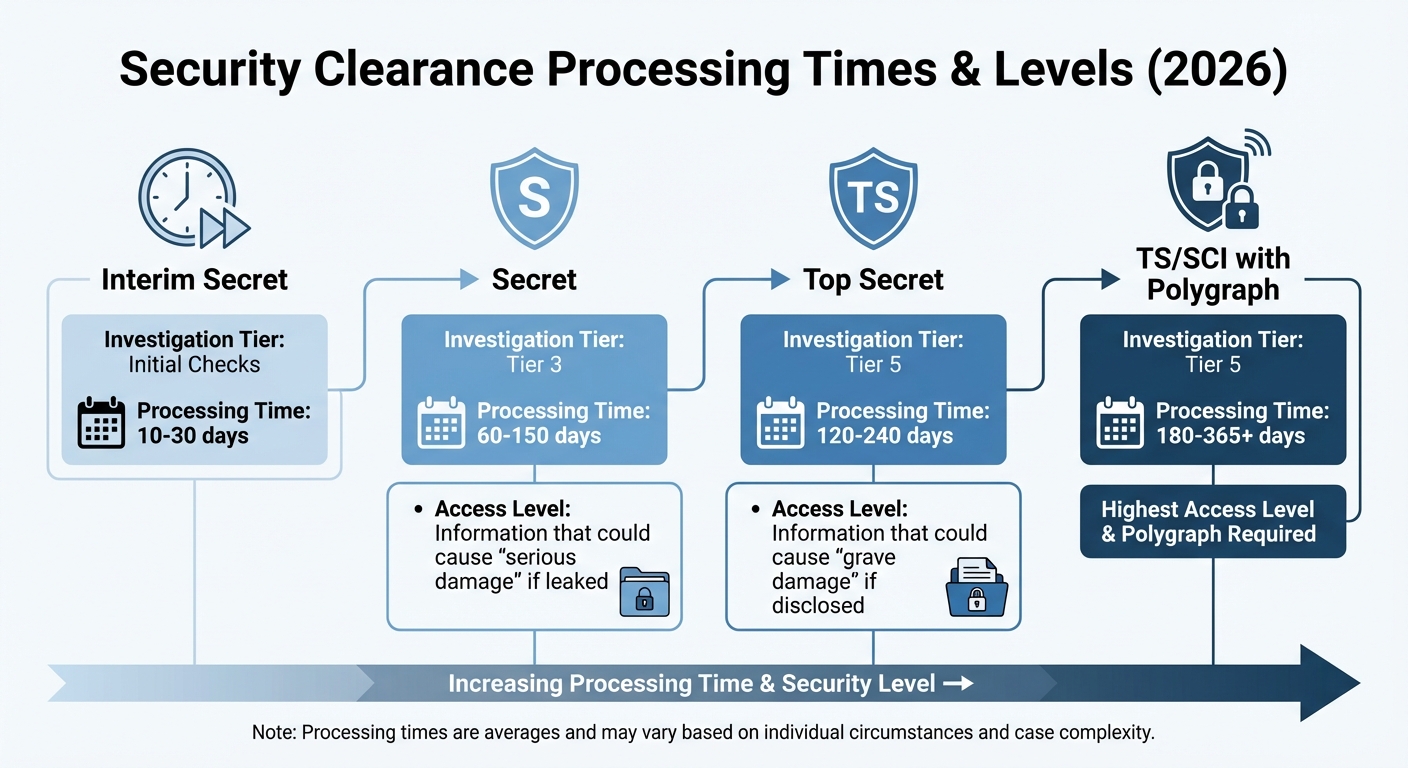
Security Clearance Processing Times and Levels 2026

Security Clearance Processing Times and Levels 2026

U.S. Citizenship and Security Clearance Requirements

If you’re aiming for a cleared Security Engineer position, U.S. citizenship is non-negotiable. According to Executive Order 12968, only U.S. citizens can access classified information. Green card holders and other non-citizens are excluded unless they qualify for a Limited Access Authorization (LAA). Even then, LAA approvals are rare and granted only when a specific skill is urgently needed, and no cleared U.S. citizen is available.

To begin the clearance process, you’ll need sponsorship from a federal agency or a cleared government contractor, typically after receiving a conditional job offer. The level of clearance you obtain determines the kind of information you can access. For example:

  • Secret (Tier 3): Grants access to information that could cause "serious damage" if leaked.
  • Top Secret (Tier 5): Allows access to information that could result in "grave damage" if disclosed.

Here’s a breakdown of current clearance processing times:

Clearance Level Investigation Tier 2026 Avg. Processing Time
Interim Secret Initial Checks 10 – 30 days
Secret Tier 3 60 – 150 days
Top Secret Tier 5 120 – 240 days
TS/SCI with Polygraph Tier 5 180 – 365+ days

Before applying, it’s smart to review your credit report and resolve any delinquencies. Additionally, document all foreign contacts and travel for the past decade in a single, organized record. With the advent of Continuous Vetting, your history is monitored in real time. This includes criminal records, financial irregularities, and international travel. Accuracy is key – falsifying information on the SF-86 form (submitted via eApp) can lead to clearance denial. Be transparent and include any mitigating factors to avoid complications[3].

Once you’ve addressed clearance requirements, it’s time to focus on the certifications that showcase your technical expertise.

Key Certifications for Security Engineers

The DoD 8140 Workforce Qualification Program serves as a guide for certifications required in various cybersecurity roles within the Department of Defense and its contractors. For many positions, these certifications are not optional – they’re mandatory[4].

  • Entry-Level Certification: Security+ is widely recognized as the starting point for cybersecurity professionals.
  • Advanced Certifications: For higher-level roles, certifications like CISSP (Certified Information Systems Security Professional), CEH (Certified Ethical Hacker), or CISM (Certified Information Security Manager) are often required.
    • The CISSP, often considered the industry standard, requires at least five years of full-time experience in two or more cybersecurity domains. A four-year degree can substitute for one year of experience[6].

Certifications are often viewed as "Capability Indicators", demonstrating your proficiency level – whether beginner, intermediate, or expert. Before pursuing a specific certification, consult the DoD Cybersecurity Qualification Matrix to confirm that it aligns with your career goals. For further guidance, tools like the Cyber Career Pathways Tool can help you identify certifications relevant to Security Engineer roles[4].

Certifications are only part of the equation. Your education and hands-on experience play a crucial role in building your qualifications.

Education and Experience Requirements

For most Security Engineer positions, employers expect candidates to have at least a bachelor’s degree in fields like computer science, information security, or cybersecurity[5]. While an associate degree paired with significant experience can sometimes suffice, it may limit your earning potential. Many government agencies actively recruit students through cybersecurity internships, often targeting those in the final two years of their degree programs[5].

Experience requirements vary by role:

  • Mid-Level Roles: Typically require 1 to 5 years of professional experience.
  • Senior and Executive Roles: Often demand 10 or more years in positions like security architect or information security analyst[5].

Before starting the eApp process, gather all necessary documentation. This includes 10 years of residential, employment, and education history, as well as details about foreign contacts and relationships. Items like old leases, passport stamps, and detailed records of foreign associations will help streamline the process[3].

Finally, remember that while some states have legalized marijuana, it remains illegal at the federal level. Any recent or current use is a red flag for security clearance eligibility[3].

Skills and Job Responsibilities

Technical Skills for Cleared Environments

As a Cleared Security Engineer, you’ll need a firm grasp of federal compliance frameworks. A key one is NIST Special Publication 800-53, which details 20 security control families critical for securing federal information systems [7]. Familiarity with the Risk Management Framework (RMF) is also essential for protecting government systems [8].

Your responsibilities go beyond just understanding frameworks – you’ll also document detailed security protocols. Expect to create System Security Plans (SSP), Plan of Action and Milestones (POA&M), Security Concepts of Operations (CONOP), and Security Requirements Traceability Matrices (SRTM) [8]. This means technical writing skills are just as important as configuring firewalls or deploying intrusion detection systems.

Cloud security knowledge is another must-have. Since FedRAMP enforces FISMA standards for cloud systems, you’ll need to secure cloud environments while meeting compliance requirements [7][8]. For identity and access management, expertise in Public Key Infrastructure (PKI), identity systems, and cryptographic testing is vital [8]. Additionally, proficiency with SIEM tools like Splunk is critical for monitoring and responding to incidents [2].

"FISMA mandates that federal agencies follow NIST’s cybersecurity standards and guidelines when creating and maintaining their security programs." – 6clicks [7]

These skills form the backbone of your role, enabling you to protect federal systems effectively.

Daily Tasks and Responsibilities

Your technical expertise will guide your daily responsibilities. You’ll spend time monitoring security logs, analyzing network traffic, and reviewing threat intelligence feeds to identify unusual activity or potential breaches [10]. Regular vulnerability scans are part of the job, as is working with system administrators to address any weaknesses [10].

Incident response is a significant part of your role. When a security event occurs, you’ll lead efforts to contain the threat and conduct digital forensic investigations to uncover its origin [10]. You’ll also manage patching cycles, ensuring operating systems and firmware stay updated by tracking vendor advisories [10]. In cleared environments, you’ll collaborate with Information System Security Officers (ISSOs) to ensure all updates meet federal standards [8].

"There is no typical day. You have to be fluid, adaptable and willing to change gears based on customer needs." – Charles Feller, Solution Engineer, Varonis [9]

The job demands a calm demeanor, even during high-pressure situations. You’ll need to explain complex technical issues in simple terms for non-technical stakeholders [9]. Whether your clearance is Secret or Top Secret/SCI, the role requires a problem-solving mindset and the ability to work within strict regulatory frameworks [9].

Career Advancement and Salary Information

Career Path from Entry-Level to Senior Roles

Starting out in cybersecurity often involves roles like Cybersecurity Analyst or Junior Security Engineer, where you’ll be tasked with protecting classified networks like SIPRNet. These positions offer valuable, hands-on experience with federal security protocols and compliance frameworks.

As you gain expertise, mid-level positions such as Information Systems Security Officer (ISSO) or Cloud Security Engineer become accessible. These roles, often in environments like AWS GovCloud, demand a deeper understanding of security controls across multiple systems. At the senior level, you might move into positions like Information Systems Security Manager (ISSM), Vulnerability Researcher, or Cyber Threat Intelligence Analyst, where the focus shifts to strategic oversight and leadership in security operations.

The Trusted Workforce 2.0 initiative also plays a key role in career progression. This framework promotes seamless reciprocity between federal agencies, allowing professionals to transition without restarting the clearance process. As Kevin James puts it, the goal is "clear once, trusted everywhere"[3], broadening opportunities for career advancement across agencies.

With each step up the ladder, salary expectations naturally increase.

Salary Ranges by Clearance Level and Experience

In cybersecurity, salaries vary based on clearance level, experience, and location. For example, in the Washington D.C. metro area, salaries for infrastructure and security-related engineering roles range from $100,000 to $220,000[11]. Experienced engineers typically see median salaries between $140,000 and $160,000[11].

Clearance level is a major factor in earning potential. Professionals with Top Secret/SCI clearances earn more than those with Secret clearances due to the additional vetting required and the smaller pool of qualified candidates. Entry-level roles tend to start at the lower end of the scale, while those with 5–10 years of experience and specialized certifications can command salaries at the higher end.

Several elements influence where you fall within these salary ranges.

What Affects Your Salary

Location plays a big role in salary differences. High-cost areas like Washington D.C. or Colorado tend to offer higher pay. Expertise in niche technologies, such as Splunk or AWS/Azure, also increases earning potential[11]. A contributor on a cybersecurity forum, clearedrob, explains:

"If I will be working on a niche technology (ex: splunk), or a critical system, or on a small team (they might be desperate), then I ask for premium"[11].

Other factors include the nature of the role. On-site SCIF (Sensitive Compartmented Information Facility) positions generally pay more than remote ones[11]. Advanced degrees and certifications can also push you into higher salary brackets, especially when paired with active clearances[11]. While large defense contractors often have strict pay bands, senior positions in high-cost regions typically top out between $170,000 and $190,000[11].

How to Apply for Cleared Security Engineer Jobs

After assessing your qualifications and skills, the next step to landing a cleared Security Engineer job is crafting a compelling resume and preparing thoroughly for the interview process.

Writing Your Resume

Think of your resume as your ticket to an interview. Highlight your clearance level prominently – either in your contact details or professional summary. Include a dedicated technical skills section listing tools and frameworks relevant to the job, such as SIEM platforms, NIST, or ISO 27001.

Avoid sharing classified project details. While it’s crucial to mention your clearance level, do not include classified project names, office specifics, budgets, or colleagues’ names. Keep sensitive information limited to cleared job boards.

Focus on measurable achievements by using the STAR method (Situation, Task, Action, Result). Instead of vague statements like "responsible for network security", provide specific examples, such as "reduced system vulnerabilities by 35% through proactive monitoring." Numbers speak volumes, whether it’s uptime percentages or the number of users supported. As Bill Branstetter from 9th Way Insignia advises:

"Keep subjective self-descriptions out of your summary section. I’m looking at you, Results-Oriented Team Players."

Keep your resume concise – one to two pages is ideal – and consider leaving out graduation years to avoid potential age bias. Make sure to showcase key certifications like CISSP, CEH, or Security+. If you’re working toward a required certification, include it with an expected completion date.

Once your resume is polished, shift gears to prepare for interviews.

Preparing for Interviews

Cleared Security Engineer interviews often combine technical challenges with behavioral questions that assess trustworthiness and reliability. For the technical portion, expect to discuss systems architecture, coding tasks, and your hands-on experience with the tools listed in the job description.

Use the STAR method to present your accomplishments. Walk through examples where you identified vulnerabilities, implemented security measures, or improved system performance. Back your stories with concrete data – percentages, timeframes, or other measurable results make your experience more impactful.

When discussing your clearance, be direct about your current level and any prior investigations. Employers value cleared candidates not just for passing rigorous background checks but also for their understanding of secure environments. If you’re transitioning from the military, clearly state your availability and any relocation plans.

Customize your preparation for each employer. Research the company’s contracts, technologies, and security priorities. Align your experience with the job’s specific requirements, whether it’s penetration testing, AWS GovCloud security, or compliance with federal frameworks. Reading your resume aloud before the interview can help you catch errors and ensure your responses sound polished and professional.

Networking in the Cleared Cybersecurity Community

As you climb the ladder from entry-level to senior roles, building a strong professional network becomes a must. Why? Because in the world of cleared cybersecurity, landing a role like a Security Engineer often hinges on trusted connections rather than simply applying online [13]. This community thrives on relationships grounded in trust and shared experiences, making networking your ticket to uncovering opportunities that never make it to public job boards.

Networking isn’t just about asking for favors – it’s about giving back, too. Share job leads or offer technical advice to your peers, even when you’re not actively job hunting. This kind of mutual exchange builds lasting relationships. If you have military experience, don’t overlook those connections – they carry significant weight in the cleared defense world [13]. Another smart move? Prepare a quick elevator pitch that highlights your skills and career goals for those brief but impactful conversations at meetups or conferences. And when you want to dig deeper, request short informational interviews (15–20 minutes) to gain insights without pressuring someone for a job [24,25]. These strategies not only grow your network but also set the stage for using targeted job platforms effectively.

Using Cleared Cyber Security Jobs

Platforms like Cleared Cyber Security Jobs are a goldmine for finding roles tailored to specific clearance levels, locations, and technical requirements. By uploading your resume, you make yourself visible to employers actively searching for candidates with clearances.

Job fairs are another powerful tool, especially for cleared professionals. G.B., a Technical Project Manager at CACI, shares their experience:

"I recently transitioned out of the military and started attending Cleared Job Fairs to get comfortable speaking to potential employers, to network, and to learn about the market… For veterans especially, attending Cleared Job Fairs can be critical to a successful career transition" [15].

Whether virtual or in-person, these events let you connect with multiple recruiters in one place. To make the most of them, research the participating companies ahead of time and tailor your pitch for those quick but meaningful conversations [15].

While online tools are helpful, in-person events and professional associations can take your networking to the next level.

Connecting with Other Cleared Professionals

Industry conferences like RSA, Black Hat, DEF CON, and BSides are treasure troves of networking opportunities [12]. Sometimes, the most valuable connections happen during informal chats between sessions.

Professional groups such as SANS, ISACA, CompTIA, and (ISC)² also offer structured networking through local chapters and online forums. Volunteering at cybersecurity events is another great strategy – it not only gives you free access to sessions but also naturally connects you with organizers and industry leaders [12]. Online spaces like Reddit’s r/netsec, Stack Overflow, and GitHub are excellent for showcasing your expertise and building relationships.

After meeting new contacts, follow up with a personalized thank-you email within 24–48 hours. Keep your network in the loop about your career progress [24,25]. When attending events, don’t forget about operational security: use a VPN, disable Bluetooth, and steer clear of public USB charging stations [16]. To keep those connections alive, occasionally share relevant industry news or updates with your network [12].

Conclusion

The demand for Cleared Security Engineers is growing fast, with cybersecurity jobs expected to increase by 29% between 2024 and 2034 [14]. This surge highlights the need for professionals who can safeguard classified systems, work with sensitive threat intelligence, and operate within government-exclusive environments [3]. A security clearance is your ticket to these high-stakes roles.

Today’s updated clearance processes make it easier and faster to enter the field. For example, an Interim Secret clearance can be issued in just 10 to 30 days, allowing you to start working while your full investigation is underway [3]. Additionally, the industry’s push for "clear once, trusted everywhere" reciprocity simplifies transitions between federal agencies and contractors [3].

To prepare, gather your 10-year history of residences and employment, review your finances to resolve any credit issues, and ensure full transparency when completing your SF‑86/eApp. Keep in mind, you’ll need a conditional job offer from a federal agency or defense contractor to sponsor your clearance application [1][3].

The financial rewards in this field are impressive. Security Engineers earn an average of $155,000 nationwide, with senior roles reaching up to $200,000 [17]. These salaries reflect the critical responsibilities involved. Whether you’re transitioning from the military or coming from an IT background, combining your technical expertise with a dedication to national security can open doors to challenging and rewarding opportunities.

Ready to take the next step? Look for cleared Security Engineer roles that align with your skills and clearance level.

FAQs

Can I get a clearance without a job offer?

No, you generally can’t get a security clearance without a job offer or sponsorship from an authorized employer. The process requires a government agency or contractor to sponsor you for a role that involves access to classified information. While you can take steps like gathering necessary documents or completing background forms, the actual clearance is typically issued only after you’re hired for a position that justifies the need for it.

What issues most often delay or deny a clearance?

The most frequent reasons for delays or denials of a security clearance often revolve around financial instability, personal conduct, foreign influence, and criminal history. Issues like significant debt, questionable behavior, or connections to foreign entities can lead to doubts about an individual’s trustworthiness and reliability.

Other contributing factors might include substance abuse or a history of poor decision-making. To prevent setbacks or a denial during the process, it’s critical to approach these concerns with transparency, honesty, and a proactive effort to address any red flags.

How do I prove impact on my resume without sharing classified details?

When showcasing your achievements, focus on measurable outcomes like streamlining workflows or cutting expenses, while keeping classified details private. Highlight your technical expertise, relevant certifications, and key responsibilities. Use phrases like "managed secure systems" or "implemented security protocols" to illustrate your capability in handling sensitive information responsibly. This approach allows you to demonstrate your contributions effectively while respecting confidentiality and adhering to OPSEC standards.

Related Blog Posts

  • Cisco CCIE Security Career Guide for Cleared Expert Engineers
  • Threat Intelligence Analyst Career Path for Cleared Professionals
  • Cloud Security Engineer Career Path for Cleared Professionals
  • Network Security Engineer Career Path for Cleared Professionals

Cleared Vulnerability Analyst Jobs Complete Career Guide

CyberSecJobs Editorial · March 27, 2026 ·

Cleared Vulnerability Analysts are cybersecurity professionals who protect sensitive government and defense systems by identifying and addressing system vulnerabilities. These roles require a mix of technical expertise, certifications, and active security clearances, offering access to high-paying, in-demand positions. Here’s what you need to know:

  • Key Responsibilities: Identifying vulnerabilities, conducting risk assessments, ensuring compliance with frameworks like NIST, and collaborating with teams to implement security measures.
  • Required Skills: Proficiency in tools like Nessus, Qualys, and ACAS, scripting languages (Python, PowerShell), and frameworks such as RMF and CVSS.
  • Certifications: Start with CompTIA Security+ and progress to CEH or CISSP for advanced roles.
  • Clearance Impact: Active security clearances (Secret, Top Secret, TS/SCI) significantly boost earning potential and job eligibility.
  • Salaries: Ranges from $95,000 to $170,000, with higher pay for advanced clearances and senior roles.
  • Job Search Tips: Use specialized job boards, highlight clearances on your resume, and network at industry events.

Demand for these roles is growing, driven by increasing cybersecurity threats and investments in national security. With the right skills and certifications, cleared professionals can secure lucrative and impactful careers in this field.

Security Clearance Levels and Certification Requirements for Vulnerability Analysts

Security Clearance Levels and Certification Requirements for Vulnerability Analysts

Cyber Security Careers: How to get started in Vulnerability Management

sbb-itb-bf7aa6b

What Does a Cleared Vulnerability Analyst Do?

Cleared Vulnerability Analysts play a critical role in protecting government and defense systems by identifying and addressing vulnerabilities before they can be exploited. These professionals work in secure environments, managing sensitive national security information, and performing advanced technical assessments that go beyond what is typically encountered in corporate settings. Their security clearance gives them access to systems and data that are off-limits to most cybersecurity professionals.

Here’s a closer look at their main duties and responsibilities.

Core Responsibilities

On a daily basis, Cleared Vulnerability Analysts scan systems and networks to uncover vulnerabilities, prioritizing them based on severity and potential impact. To do this, they rely on the Common Vulnerability Scoring System (CVSS) to evaluate which issues pose the highest risk. Their work spans a variety of environments, including Windows, Linux, enterprise networks, cloud platforms, and web applications. Common challenges include addressing SQL injection vulnerabilities and fixing configuration errors.

These analysts also develop cybersecurity risk profiles, conduct threat modeling, and assess how security incidents could disrupt operations. Based on their findings, they recommend cost-effective security measures and remediation strategies. They then track the implementation of these measures, reporting progress and key metrics to organizational leadership.

Compliance and auditing are also central to the role. Analysts ensure adherence to cybersecurity frameworks and standards such as NIST, ISO 27001, and CIS Controls. They prepare detailed audit reports and manage specialized tools to evaluate and strengthen high-security defenses.

Collaboration is another vital aspect. Cleared Vulnerability Analysts work closely with SecOps and DevOps teams to ensure that patches and updates are thoroughly tested and deployed without disrupting operations. They also perform root cause analyses for security incidents and coordinate with external partners for controlled penetration testing and third-party assessments. As CompTIA puts it, "A vulnerability analyst must think like a hacker to protect against them."

How Security Clearance Affects the Role

Security clearance adds another layer of responsibility and influence to this role. Cleared positions involve specialized tasks, such as using tailored audit tools and conducting advanced evaluations of multi-layered defense strategies. As the New York City Office of Technology and Innovation explains, their mission is to "lead and execute an innovative, intelligence-driven, risk-informed cyber defense and response strategy – with the support of key partners and allies – that enables the city government to properly function and provide services."

This elevated responsibility often comes with higher pay. For example, in New York City, Vulnerability Management Analysts typically earn between $86,101 and $101,295, while senior roles can command salaries ranging from $110,000 to $160,000 [4][5].

The demand for cleared professionals is also fueled by a growing talent shortage in cybersecurity. With 68% of business executives reporting an increase in cyber threats against their organizations [5], the need for skilled analysts continues to rise. Employers generally prefer candidates with 2 to 6 years of experience in fields like information systems, infrastructure design, or network security [1]. Holding an active clearance can significantly enhance career prospects, offering opportunities for faster advancement in this high-demand field.

Required Skills and Tools for Cleared Vulnerability Analysts

Becoming a successful Cleared Vulnerability Analyst demands a mix of technical know-how, strategic insight, and the ability to communicate effectively. While technical expertise helps you identify and mitigate risks, soft skills ensure you can translate those findings into actionable steps that resonate across teams and leadership.

Technical Skills

At the core of your technical toolkit is expertise in vulnerability assessment and scanning. Tools like Nessus, Qualys, and Rapid7 are essential for pinpointing security risks and policy violations [2][7]. If you’re working in government settings, proficiency with the Department of Defense’s Assured Compliance Assessment Solution (ACAS) is non-negotiable.

You’ll also need scripting skills to automate tedious tasks and create custom solutions. Languages like Python, PowerShell, and Bash are key here [2][6]. A solid grasp of compliance frameworks such as NIST SP 800-53, the Risk Management Framework (RMF), CVSS scoring, and STIGs is equally important, especially for meeting DoD compliance standards [2][7].

For more specialized roles, familiarity with managing NSA-certified Type 1 encryption devices (like TACLANE) is crucial. Additionally, you’ll rely on the MITRE ATT&CK framework to analyze threats and prioritize risks based on potential attack paths.

Soft Skills

Technical expertise is only part of the equation. A problem-solving mindset and the ability to think like a hacker are critical for anticipating attack vectors and securing systems. Communication skills are equally important – you’ll need to explain vulnerabilities and mitigation strategies in ways that non-technical stakeholders can understand. This includes writing policies, creating training materials, and presenting complex security concepts in simple terms.

Strategic thinking is another must-have. You’ll develop risk-based mitigation plans and measure the effectiveness of security programs to demonstrate their value to leadership. These soft skills ensure that your technical efforts translate into meaningful, actionable outcomes.

Tools and Technologies You’ll Use

Your everyday tools will include vulnerability scanning platforms like Tenable Nessus Professional and Nessus Expert, which help identify risks in web applications and external attack surfaces. These tools use extensive plugin libraries from Tenable Research to uncover vulnerabilities that could impact your organization [8].

For data analysis and reporting, platforms like Splunk are invaluable for incident response and log analysis. Tenable One offers a unified view of IT, OT, and cloud environments, while Power BI helps you present findings in a way that’s easy for leadership to digest.

The field is also embracing AI-driven solutions. Tools like Tenable ExposureAI are designed to reveal hidden risks and provide detailed remediation guidance. Additionally, you’ll work with Cloud-Native Application Protection Platforms (CNAPP) and Cloud Security Posture Management (CSPM) solutions to manage risks in hybrid and cloud environments. Attack path mapping technologies, which visualize cross-domain relationships, are becoming increasingly important for blocking critical attack vectors.

Top Certifications for Cleared Vulnerability Analysts

Certifications play a crucial role in showcasing your expertise and readiness for roles in cleared cybersecurity. For professionals working with national security infrastructure, certifications act as proof of your ability to handle classified networks and sensitive threat data effectively [9]. In fact, many cleared vulnerability analyst positions explicitly require certifications like CEH or CISSP as part of their qualifications [3].

Here’s how certifications are typically categorized and what they offer:

For those just starting out, CompTIA Security+ is an excellent entry point. Priced at $425, it can be earned within 8–12 weeks and meets the Department of Defense (DoD) baseline requirements. It’s widely recognized across government and contractor roles. Once you’ve earned Security+, the CySA+ (Cybersecurity Analyst) certification, costing $392, provides deeper knowledge in vulnerability management and threat hunting, which are core responsibilities for vulnerability analysts [10].

If your focus leans toward offensive security and vulnerability research, the Certified Ethical Hacker (CEH) certification from EC-Council is a strong choice. With costs ranging between $950 and $2,000, CEH emphasizes offensive security strategies and helps you develop the mindset needed for identifying system vulnerabilities [10]. At the senior level, the CISSP (Certified Information Systems Security Professional) from (ISC)² is often considered the top credential. Priced at $749, it requires five years of experience and is frequently mandatory for high-level government contractor roles. A CISSP certification can also open the door to higher salary opportunities [10].

Certification Comparison Table

Certification Issuing Body Focus Area DoD 8570/8140 Level Renewal Requirements
Security+ CompTIA Broad security foundations, DoD entry IAT Level II CEUs every 3 years
CySA+ CompTIA Vulnerability management, threat hunting IAT Level II, CSSP Analyst CEUs every 3 years
CEH EC-Council Offensive methodologies, vulnerability research IAT/IASAE Level III, CSSP Analyst Annual renewal fees
CISSP (ISC)² Security management, architecture IAM Level I-III, IASAE Annual fees + CPE credits

For those new to the field, starting with Security+ is a smart move, especially if you have less than two years of experience. From there, you can build on your skills with CySA+ for more analyst-specific expertise. As you gain experience (around five years or more), pursuing CISSP can help you qualify for higher-level roles.

It’s also worth noting that 70% of vulnerability analyst positions require hands-on experience with tools like Nessus and Qualys. Certifications are most impactful when paired with practical, real-world experience [3]. Combining both will not only enhance your qualifications but also accelerate your career in cleared cybersecurity positions.

Using Your Security Clearance to Find Better Jobs

An active security clearance can be a game-changer for vulnerability analysts. For cybersecurity professionals tasked with safeguarding national security infrastructure, a U.S. government security clearance is essential. It’s a requirement for roles that involve securing classified networks like SIPRNet, analyzing sensitive threat data, or uncovering vulnerabilities in critical systems and infrastructure [9].

Employers actively seek candidates with clearances because obtaining one is both expensive and time-consuming. A Top Secret clearance, for example, can cost between $3,000 and $15,000, with processing times stretching up to a year [11]. As Brad Thompson, Founder of Best Military Resume, points out:

Every month a position sits empty because a clearance investigation is in progress costs the company money. A veteran who walks in the door with an active clearance fills that seat immediately [11].

This demand translates into better opportunities for you. An active clearance not only gives you an edge in salary negotiations but also opens doors to roles requiring specialized skills like vulnerability research [11]. It also grants access to exclusive positions at top defense contractors like Lockheed Martin and Northrop Grumman, as well as intelligence-focused firms such as Palantir and Booz Allen Hamilton [11].

Let’s take a closer look at clearance levels and how they impact job eligibility.

Clearance Levels and Job Eligibility

Knowing the different clearance levels can help you target the right positions. Secret clearance (Tier 3) is the entry-level requirement for most government cybersecurity roles, covering tasks like IT support, network defense, and maintaining government systems. The average processing time for this clearance ranges from 60 to 150 days, with an investigation cost of approximately $400–$600 [9][11].

Top Secret (Tier 5) clearance is required for roles involving classified programs, senior-level threat analysis, and cybersecurity operations. Processing typically takes 120 to 240 days [9]. For even more sensitive positions, TS/SCI (Top Secret/Sensitive Compartmented Information) clearance is needed, particularly for intelligence community roles and advanced vulnerability research. The highest level, TS/SCI with polygraph, is reserved for national intelligence agencies like the NSA, CIA, and NRO. These clearances can take anywhere from 180 to over 365 days to process due to polygraph scheduling delays [9].

It’s important to note that you cannot apply for a clearance on your own; a federal agency or authorized contractor must sponsor you for a specific position [9][11]. This makes having an active clearance a major advantage – you’re ready to step into a role without delay.

These clearance levels not only determine the types of jobs you’re eligible for but also influence salary potential and hiring speed.

Benefits of Security Clearance in Job Applications

Having a clearance boosts both your earning potential and job prospects. A Secret clearance can add $10,000–$20,000 to your annual salary [11]. For Top Secret holders, the premium jumps to $15,000–$30,000. In high-demand markets like the DC metro area, professionals with TS/SCI clearance and technical expertise often earn between $120,000 and $180,000, with senior roles exceeding $200,000 [11]. The highest tier, TS/SCI with polygraph, can command an additional $30,000–$50,000 compared to non-polygraph positions [11].

Beyond higher pay, clearances streamline the hiring process and grant access to exclusive roles that are rarely advertised publicly. Many cleared positions are filled through direct recruitment of professionals who already have active clearances.

Keep in mind the 24-month rule: if you leave a cleared position, your clearance remains valid for two years and can be reactivated without a full reinvestigation [9][11]. Brad Thompson cautions:

Letting a TS/SCI lapse because you took a non-cleared position is one of the most expensive mistakes a transitioning veteran can make [11].

To maximize the value of your clearance, prominently display your clearance level and status (e.g., "Top Secret/SCI (active)") at the top of your resume – recruiters for these roles often look for it first [11]. Under the Continuous Vetting system, you must also promptly report any adverse events, such as arrests or significant financial changes, to your Facility Security Officer to maintain eligibility [9]. Pairing your clearance with in-demand certifications like CISSP or CySA+ can further enhance your appeal in the cleared job market [11].

Job Search Strategies for Cleared Vulnerability Analysts

If you’re a cleared vulnerability analyst, having a focused job search strategy can make all the difference in landing the right role. With your clearances and certifications, you’re already positioned for opportunities in the highly competitive cleared cybersecurity field. Specialized job boards for the cleared community are a great starting point. These platforms compile listings from top defense contractors like Leidos, Peraton, CACI, and SAIC, as well as government agencies, offering roles that specifically require active security clearances [12].

Using Job Search Filters

To make your search more effective, take advantage of filters. Narrow down options by clearance level (Secret, Top Secret, TS/SCI, or TS/SCI with Polygraph) and include technology-specific terms like Tenable, Nessus, Qualys, Nexpose, and ACAS. For example, as of March 26, 2026, searching for "Vulnerability Assessment Analyst" on a cleared job board yielded 276 active listings [12].

Geographic filters are just as important. Many roles are located in defense hotspots like Fort Meade, Maryland; Ashburn and Reston, Virginia; and Tampa, Florida. These areas often require on-site work due to the classified nature of the projects [12]. Once you’ve refined your search, stay organized and proactive with your applications.

Uploading Resumes and Setting Alerts

Your resume should immediately showcase your highest clearance level at the top. When setting up job alerts, avoid broad terms like "Cybersecurity." Instead, use specific titles such as "Vulnerability Assessment Analyst" or "Vulnerability Management" paired with your clearance level. This approach ensures you receive relevant notifications as soon as new positions are posted [12][13].

Make your resume stand out by including measurable achievements, such as:

  • "Performed over 100 vulnerability assessments annually, reducing security breaches by 20%" [14]

Setting alerts for immediate updates and tailoring your resume with clear, quantifiable results will help you stay ahead in the application process.

Attending Job Fairs

Job fairs are another excellent way to connect directly with hiring managers from major defense contractors. For instance, SOSi recently sought a Vulnerability Assessment Team Lead in Ashburn, Virginia, requiring a DHS clearance, while Peraton was hiring a Malware Analyst in Fort Meade, Maryland, with TS/SCI with Polygraph requirements [12]. These events allow you to present yourself beyond your resume, often speeding up the hiring process and giving you a chance to make a lasting impression.

How to Optimize Your Resume for Cleared Vulnerability Analyst Roles

Your resume needs to immediately highlight your technical skills and active clearance to get through ATS filters. As Brad Tachi, CEO and Founder of Best Military Resume, explains:

I’ve talked to defense contractor recruiters who told me they literally search their ATS for ‘TS/SCI’ as their first filter before looking at anything else. If your clearance isn’t in a searchable text field on your resume… you’re invisible to these recruiters. [18]

This means your clearance level should be prominently displayed at the very top of your resume, not buried in a paragraph.

Highlighting Technical Expertise and Clearance

For cleared roles, it’s essential to showcase both your clearance and technical expertise clearly. Start by placing your active clearance level directly under your contact information in the header. Use concise, standardized terms like "Active TS/SCI" or "Active Secret Clearance – Current" to ensure recruiters and ATS filters can spot it immediately [18]. Mention your clearance again in your Skills section. If you hold a polygraph, note it explicitly – for example, "CI Polygraph" or "Full-Scope Polygraph" – as these credentials can boost your earning potential by $15,000 to $30,000 in cybersecurity roles [18].

Highlight your technical skills by listing tools like Nessus, ACAS, Nexpose, Qualys, and frameworks such as STIGs, SCAP Compliance Checker, RMF, and NIST SP 800-53. Include scripting languages like Python, PowerShell, and Bash, emphasizing measurable outcomes [15]. Specify the IAT level you meet under DoD 8570/8140 guidelines (e.g., IAT Level II or III) to signal your readiness for government contract roles.

When describing your achievements, use quantifiable results. Replace generic statements like "Conducted vulnerability assessments" with specifics such as "Performed over 100 vulnerability assessments annually, reducing security breaches by 20%" or "Decreased system vulnerabilities by 35% through proactive threat monitoring" [17]. Structuring your accomplishments with the STAR method can help you present them more effectively [19].

Once your clearance and technical expertise are clearly outlined, the next step is to focus on certifications and tool proficiencies.

Emphasizing Certifications and Tools

Certifications are crucial for meeting job requirements and proving your expertise. Highlight DoD 8570-compliant certifications such as CompTIA Security+, CEH, CISSP, CASP+ CE, and CySA+. If you’re pursuing a certification, include it with the expected completion date [15][16]. These credentials not only validate your skills but also show employers your dedication to ongoing professional growth [16].

Organize your technical skills into a dedicated section, grouping tools, frameworks, and languages together. Use the exact wording from job postings (e.g., "penetration testing" or "SIEM solutions") to ensure your resume aligns with ATS filters [19]. Keep the design clean and simple – avoid flashy graphics that might confuse scanning software – and limit your resume to one or two pages, focusing on the last decade of relevant experience [19].

Networking in the Cleared Cybersecurity Community

Boost your job search by focusing on strategic networking to uncover opportunities that aren’t listed online. If you have an active security clearance and technical expertise, expanding your professional network is a must. In the cleared cybersecurity world, many positions are filled through personal connections rather than traditional applications. As CyberSecJobs.com puts it:

"In the security-cleared cyber security community, landing your dream job often requires more than just submitting your resume online. Whether you’re happy to hear it or not, networking is key." [20]

Washington D.C. is a prime location to focus on, with over 7,000 vulnerability analyst openings reported in 2023 [3]. Attending local events in this area can help you connect directly with defense contractors and government agencies. These interactions can lead to introductions to professional groups and online communities that are integral to the cleared cybersecurity field.

Joining Industry Organizations

Associations like (ISC)² and ISACA offer resources specifically tailored to professionals with security clearances. These include government-focused special interest groups and certification programs [21]. Membership in these organizations gives you access to directories that can help you find mentors already working in senior roles within the cleared cybersecurity space. The SANS Institute also caters to cleared professionals by hosting government-focused tracks at its conferences, offering a chance to network in a more specialized setting [21]. If you’re working toward certifications like CISSP-ISSEP or SSCP, these organizations can connect you with seasoned professionals who can guide you.

Engaging in Online Communities

In addition to formal industry groups, online platforms are valuable tools for connecting with experienced professionals. LinkedIn is an excellent place to network with alumni from defense contracting firms, while GitHub allows you to showcase your cybersecurity projects [20]. Make sure your LinkedIn profile highlights your clearance, technical skills, and vulnerability analysis expertise. Participating in forums like Reddit’s r/netsec and Stack Overflow can also help you build your professional reputation.

Conferences such as Black Hat, RSA, and DEF CON are ideal for informal networking. Events often include what’s known as "HallwayCon", where you can meet peers and recruiters in a casual setting [20]. Many conferences also offer volunteer roles, which can provide free access to sessions and direct interaction with industry leaders [20]. After meeting new contacts, follow up with personalized messages within a few days to keep the connection alive [20].

Conclusion

To excel as a cleared Vulnerability Analyst, focus on building a strong foundation of technical skills, earning relevant certifications, and expanding your professional network. Proficiency with tools like Nessus and Qualys is essential, as is validating your expertise through certifications such as CompTIA Security+ or CEH early in your career [1]. The growing demand for cleared professionals, highlighted by specific market trends and job boards, underscores the opportunities in this field.

Your security clearance is a powerful advantage. Use specialized job boards to filter roles by clearance level and set up automated alerts to stay ahead of new opportunities [12]. This approach not only simplifies your job search but also helps you tailor your resume to stand out in a competitive market.

Soft skills and continuous learning are just as important as technical expertise. Develop the ability to communicate technical vulnerabilities in terms of business risks [1], and stay informed about emerging threats, including those related to AI security challenges [2]. Whether your goal is to manage a Security Operations Center or transition into penetration testing, this role provides a solid platform for career growth [1].

Maximize your potential by emphasizing both your clearance and technical skills on your resume. Take advantage of resources like Cleared Cyber Security Jobs to connect with employers, especially in high-demand areas like Washington D.C. With these strategies, you’ll be well-positioned to secure and thrive in top opportunities.

FAQs

Can I get a security clearance without a job offer?

No, you typically can’t get a security clearance without a job offer. Security clearances require sponsorship from an employer or a government agency. This sponsorship is what initiates the process, which includes thorough background checks on your finances, criminal history, and personal conduct. Without a job offer or a sponsoring organization, you won’t be able to begin or obtain a clearance.

What should I do if my clearance is about to lapse?

If your security clearance is nearing expiration, it’s time to gear up for a periodic reinvestigation to keep your clearance active. This review typically involves checks on areas like your finances, criminal record, and personal behavior. To stay ahead of the process, make sure all your required documents are current and work closely with your sponsoring employer or security officer to streamline the steps.

How do I get hands-on experience with Nessus, Qualys, or ACAS?

Gaining hands-on experience with tools like Nessus, Qualys, or ACAS can be as simple as working with them in a lab or test environment. This allows you to explore their features and functionality in a controlled setting. You can also build your skills through training courses, online tutorials, or even simulations designed to mimic real-world applications.

If you’re aiming for practical, on-the-job experience, roles like Junior Vulnerability Analyst often include training or supervised use of these tools. This kind of role not only helps you learn the tools but also gives you exposure to applying them in real-world scenarios.

Related Blog Posts

  • CySA Plus Certification Career Guide for Cleared SOC Analysts
  • Threat Intelligence Analyst Career Path for Cleared Professionals
  • Vulnerability Analyst Career Path for Cleared Professionals
  • Cryptanalyst Career Path for Cleared Intelligence Professionals

  • « Go to Previous Page
  • Go to page 1
  • Interim pages omitted …
  • Go to page 16
  • Go to page 17
  • Go to page 18
  • Go to page 19
  • Go to page 20
  • Go to page 21
  • Go to Next Page »
  • Facebook
  • Instagram
  • LinkedIn
  • Twitter
  • YouTube

Cleared Cyber Security Jobs | CyberSecJobs.com

  • Contact
  • About
  • Privacy Policy