• Skip to primary navigation
  • Skip to main content
Cleared Cyber Security Jobs | CyberSecJobs.com

Cleared Cyber Security Jobs | CyberSecJobs.com

Cleared Cyber Security Jobs

  • Home
  • Search Cleared Cyber Jobs
  • Job Fairs
  • Career Resources

Uncategorized

Cyber Range Operator Career Path for Cleared Professionals

CyberSecJobs Editorial · March 25, 2026 ·

Cyber Range Operators play a critical role in cybersecurity, especially for professionals with security clearances. They manage simulated IT environments that mimic real-world networks for training, testing, and mission rehearsals. This career is in high demand across the Department of Defense (DoD) and Intelligence Community due to increasing investments in cybersecurity infrastructure, like Georgia’s $35 million facility and the National Cyber Range Complex.

Key Highlights:

  • Role Overview: Set up and manage virtual environments for offensive and defensive cybersecurity exercises, mission rehearsals, and malware analysis.
  • Skills Needed: Proficiency in tools like Terraform, Ansible, and VMware; expertise in penetration testing, incident response, and network management.
  • Certifications: Start with CompTIA Security+, CISSP, and CEH. Advanced options include GIAC Red Team Professional (GRTP) and Offensive Security Certified Professional (OSCP).
  • Salary: Entry-level roles range from $95,000 to $110,000, while senior positions can exceed $150,000 annually.
  • Training: Military programs like Army MOS 17C or industry courses such as CYBER RANGES provide hands-on experience.

This career offers clear growth opportunities, from entry-level technical roles to leadership positions, with strong earning potential and a focus on national security.
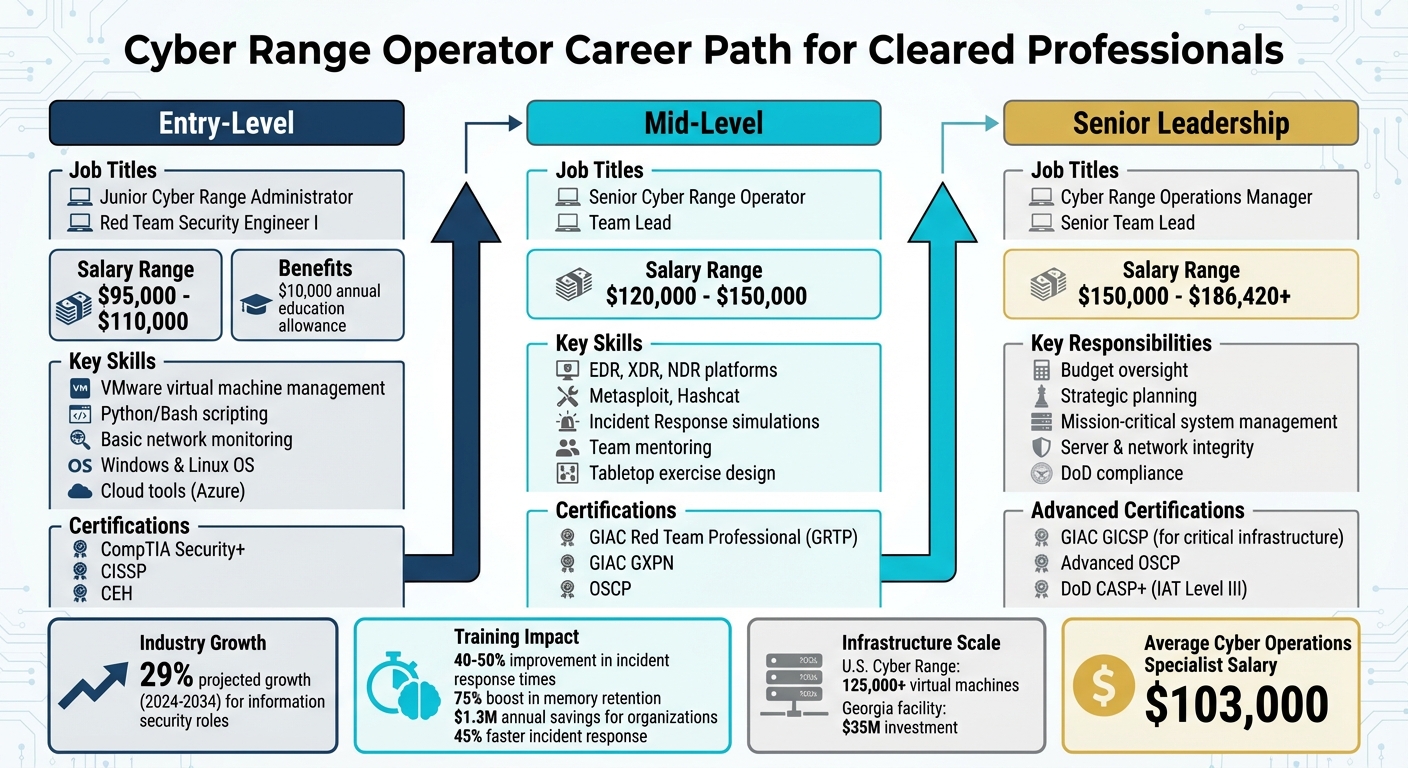
Cyber Range Operator Career Path: Roles, Salaries, and Certifications

Cyber Range Operator Career Path: Roles, Salaries, and Certifications

The Life of an Air Force Defensive Cyber Warfare Operator – Chief’s Corner #28

sbb-itb-bf7aa6b

What is a Cyber Range Operator?

A Cyber Range Operator runs simulated IT environments designed to mimic actual networks and cyber threats. For cleared professionals, these simulations are vital for supporting national security missions. Here’s how industry leaders define it:

"A cyber range is a simulated IT environment that replicates your organization’s network infrastructure, applications, and security tools. Think of it as a digital sandbox where security teams can safely conduct training exercises." – SimSpace [4]

At the core of this role is environment orchestration – essentially managing the system that powers the cyber range. This involves configuring virtualization platforms, infrastructure components, and target systems. Operators set up virtual machines to mirror real-world network setups [5]. They also simulate authentic traffic patterns and attack methods to reflect how actual cybercriminals operate. For those working on classified missions, these tasks take on heightened importance.

Cleared professionals in this role often simulate classified network environments for mission rehearsals and live-fire exercises. This allows them to safely practice both offensive and defensive strategies. They also facilitate Red Team (attack simulation) versus Blue Team (defense) exercises and provide secure spaces for malware analysis, reverse engineering, and testing security measures before deployment.

The impact of this work is significant. Training in cyber ranges improves incident response times by 40%–50%, boosts memory retention by up to 75%, and helps reduce risks associated with the $4.88 million average cost of a data breach [4][6]. For government agencies tasked with safeguarding critical infrastructure, having a safe place to practice before facing real-world threats is essential.

Key Responsibilities and Skills for Cyber Range Operators

Core Responsibilities

Cyber Range Operators handle a mix of infrastructure management and critical operational tasks. They are responsible for hosting servers, managing databases, and setting up networks or individual systems to ensure the range runs smoothly and efficiently [7]. To protect these systems during simulated attacks, they deploy defensive measures like firewalls and security controls [7].

When systems face outages, failures, or simulated breaches, operators step in to troubleshoot and restore functionality [7]. They also conduct forensic analysis, gathering and handling digital evidence to trace and identify network intrusions [7][8]. In military environments, their duties expand to include supporting warfare operations and managing sensitive mission intelligence. This might involve safeguarding essential assets such as weapon systems, satellites, and aviation infrastructure [7].

On the offensive side, operators engage in penetration testing, experiment with antivirus and Endpoint Detection and Response (EDR) evasion techniques, and run social engineering campaigns to test and evaluate the range’s defenses [8]. This combination of offensive and defensive responsibilities sets Cyber Range Operators apart from traditional cybersecurity roles, requiring them to adapt to constantly shifting scenarios.

Required Technical and Soft Skills

To excel in this role, Cyber Range Operators need a diverse mix of technical expertise and interpersonal abilities, especially when working in high-stakes environments.

Technically, operators must be proficient in reconnaissance techniques like packet analysis and system mapping, offensive strategies such as ethical hacking and Distributed Denial-of-Service (DDoS) simulations, and defensive measures including incident detection and firewall management [7]. These skills form the backbone of their ability to navigate complex cybersecurity challenges.

In addition to technical know-how, operators must thrive under pressure, making quick decisions and juggling multiple tasks effectively [7]. The demand for professionals in this field is growing, with information security roles projected to increase by 29% between 2024 and 2034. Cyber Operations Specialists typically earn an average salary of $103,000 [7], while cleared Red Cyber Operators at top defense firms like GDIT can expect salaries ranging from $100,900 to $136,512 [8]. Achieving Department of Defense (DoD) compliance through certifications like CASP+ (required for IAT Level III roles) is also essential for advancing in this field [8].

Top Certifications for Cyber Range Operators

Core Certifications

If you’re stepping into the world of cyber range operations, CompTIA Security+, CISSP, and CEH are essential starting points. These certifications establish your foundation in areas like network security, risk management, and incident response – skills you’ll rely on every day in a cyber range environment [10].

The Certified Information Systems Security Professional (CISSP) stands out for cleared professionals. It’s recognized under the U.S. Department of Defense directive DoDM 8140.03, covering key areas such as Security Operations and Security Assessment and Testing. This DoD approval makes CISSP a direct pathway to meeting federal job requirements [9].

The Certified Ethical Hacker (CEH) bridges theoretical knowledge with practical skills, focusing on offensive techniques within simulated environments. While certifications like these teach the "what", cyber ranges provide the hands-on experience to master the "how" [10]. Once you’ve built a solid foundation, advanced certifications can help you tackle more specialized challenges in cyber range operations.

Advanced Certifications

After completing the basics, GIAC certifications offer specialized tracks tailored for advanced cyber range roles. These certifications align closely with the practical and security demands of cleared environments. For example, the GIAC Red Team Professional (GRTP) demonstrates expertise in conducting comprehensive Red Team operations, from creating adversary emulation plans to executing Active Directory attacks using tools like Cobalt Strike and Empire [15][11].

The GIAC Exploit Researcher and Advanced Penetration Tester (GXPN) focuses on advanced penetration testing and exploit development – key skills for high-level operators [11]. For those working in critical infrastructure, the Global Industrial Cyber Security Professional (GICSP) focuses on Operational Technology (OT) and Industrial Control Systems (ICS) security [14][12]. Another standout is the Offensive Security Certified Professional (OSCP), which is renowned for its hands-on approach to penetration testing [13][12].

Organizations leveraging cyber range training see tangible benefits, such as responding to incidents 45% faster and saving up to $1.3 million annually [14].

"With this course we provide students with a blueprint they can use to set up a realistic Red Team operation against a client environment. Students will be able to consume threat intelligence, formulate a plan of attack, execute it, and ultimately create a debrief package." – Jean-Francois Maes, Certified SANS Instructor [15]

For advanced roles, certifications with lab-based exams, like GIAC’s CyberLive or OSCP, are ideal since they simulate real-world tasks [15][11]. Training costs can vary widely, from a few hundred dollars to $10,000 for in-depth bootcamps [2].

Tools and Technologies Used in Cyber Ranges
Cyber Ranges

Cyber Range Operators rely on a multi-layered technology stack that replicates real-world enterprise environments. At the core, virtualization platforms like VMware, AWS, Azure, and OpenStack create secure, isolated environments. These platforms enable activities like releasing live malware or simulating DDoS attacks without jeopardizing production systems [5]. For example, the U.S. Cyber Range, managed by Virginia Tech, supports over 125,000 virtual machines, providing training for students and professionals nationwide [12]. This foundation allows for the seamless orchestration of training scenarios.

The orchestration layer connects virtualization technologies with target infrastructures, enabling real-time deployment of custom training scenarios. Many modern platforms use Infrastructure as Code (IaC), where ranges are defined using YAML code. This approach significantly reduces setup time, allowing complex environments to be deployed in minutes rather than days [16].

"The orchestration layer serves as the brain of the cyber range, coordinating the various technological components and managing the dynamic creation and modification of training scenarios." – Matthew Dobbs, Cyberbit [5]

For offensive operations, tools like Metasploit, Burp Suite, Hashcat, Nmap, and DirBuster are commonly used [2]. On the defensive side, platforms such as SIEM systems, Security Onion, Wireshark, NetworkMiner, and VirusTotal are standard [2]. Endpoint security tools, including CrowdStrike Falcon, SentinelOne, Palo Alto Cortex XDR, and Cisco XDR, play a critical role in securing endpoints [2]. Additionally, network security tools like Palo Alto Next-Generation Firewalls, Cisco NGFW, and various intrusion detection and prevention systems enhance a cyber range’s defensive capabilities [2].

To simulate realistic scenarios, ranges incorporate traffic and attack generators. These tools inject network traffic, automated malware, phishing campaigns, and multi-stage attacks aligned with frameworks like MITRE ATT&CK [5]. Many ranges use commercial products like Microsoft Windows Server to mirror the actual systems operators will encounter [1]. An example of innovation in this field is IBM’s X-Force Command Cyber Tactical Operations Center (C-TOC), a mobile training unit equipped with 23 tons of cyber capabilities for on-site sessions [12].

The emergence of Cyber Range as a Service (CRaaS) has made these platforms more accessible. Organizations can now access cloud-based ranges within hours, eliminating the need for significant hardware investments [5]. Whether you’re using open-source tools or enterprise-grade solutions, mastering these technologies is essential for advancing as a Cyber Range Operator. These platforms are not just about training – they’re a cornerstone for national security preparation.

Career Path Progression for Cyber Range Operators

Cyber range operations offer a clear path for growth, transitioning from technical roles to strategic leadership. By understanding these stages, you can set realistic goals and focus on the skills required at each level.

Entry-Level Roles

Starting out, roles like Junior Cyber Range Administrator and Red Team Security Engineer I emphasize foundational technical skills. These include managing virtual machines in VMware environments, scripting with Python or Bash, and basic network monitoring. Familiarity with virtualization platforms, cloud-native tools like Azure, and both Windows and Linux operating systems is essential [17][3].

Salaries for cleared entry-level professionals typically range between $95,000 and $110,000, often accompanied by generous training benefits. For instance, some employers provide $10,000 annual education allowances to help employees stay updated on tools like Kubernetes, Docker, and Splunk [3]. While a Bachelor’s degree in Computer Science is common, relevant hands-on experience can often substitute for formal education [3].

Proficiency in Infrastructure as Code (IaC) tools such as Terraform and Ansible is becoming increasingly important. Entry-level operators use these tools to create realistic cyber range environments for critical training exercises. Collaboration with Hunt, Red, and Blue teams is also a key part of these roles, as they tailor infrastructure to specific simulation goals [3]. As technical expertise grows, opportunities for leadership and strategic roles become more accessible.

Mid-Level and Senior Roles

As professionals advance, mid-level and senior roles expand beyond technical tasks to include strategic responsibilities. Positions like Senior Cyber Range Operator, Team Lead, or Cyber Range Operations Manager involve designing and leading tabletop exercises, running Incident Response simulations, and mentoring junior team members [2][19][20]. These roles require expertise across multiple security tools, including EDR, XDR, and NDR platforms. Familiarity with red team tools like Metasploit and Hashcat is also valuable for anticipating adversary strategies [2].

For cleared professionals, managing sensitive mission-critical systems and adhering to strict operational protocols is a significant part of these roles. Salaries for mid-to-senior positions range from $120,000 to $150,000+, with top earners reaching up to $186,420. Additional responsibilities often include overseeing budgets, server systems, and network integrity [7]. Military professionals with experience in roles like the Army’s 17C (Cyber Operations Specialist) MOS often find these civilian positions a natural next step [7].

Training Programs and Resources for Cleared Professionals

For those building a career in cyber range operations, targeted training programs provide the practical experience necessary for excelling in government and defense roles. These programs are specifically designed to align with federal competency standards and offer hands-on exposure to classified systems.

Military and Veteran Training Pathways

One standout option is the Army MOS 17C (Cyber Operations Specialist) program. This intensive 45-week Advanced Individual Training is split between Florida (25 weeks) and Fort Gordon, Georgia (20 weeks). The curriculum addresses both offensive and defensive cyber operations and has earned a stellar 4.9 out of 5 rating from 94 reviews[23].

For transitioning service members, the DoD SkillBridge program is a great resource, particularly the CMS CyberVets rotation. This six-month program focuses on networking, reverse engineering, and threat management. To secure a spot, it’s recommended to apply at least eight months before your separation date. Additionally, the Department of Defense Cyber Crime Center (DC3) offers a Cyber Training Academy tailored for military and civilian personnel engaged in cyber-focused roles.

The Applied Technology Academy (ATA) collaborates with CYBER RANGES to deliver on-premise, bare-metal cyber range installations rated for Impact Level 4 (IL4). These installations meet stringent security requirements for federal agencies and Guard and Reserve forces[21]. For those outside the military, industry programs also provide specialized training to sharpen both tactical and technical skills.

Industry-Specific Training Courses

In addition to military pathways, industry-specific courses are available to further develop expertise in cyber range operations. The CSIAC Cyber Training Range (CTR) Course is one such program, offering free, virtual instructor-led training exclusively for federal employees and contractors with a .gov or .mil email address. This course dives into adversarial threats targeting DoD networks and weapons systems, incorporating hands-on training with unmanned aerial system simulators[24].

Another noteworthy program is CITADEL Red Team Training by CYBER RANGES. It provides a detailed lab environment featuring 13 integrated Windows systems and a medium-sized Active Directory domain. Participants work through the full adversary attack lifecycle, including phishing, password spraying, and persistence techniques like WMI and DLL-side loading.

"CITADEL’s scenarios mirrored our operational environment and exposed real gaps in our defenses. The Drill Masters’ feedback was invaluable." – Chief Information Security Officer, National Energy Grid[13]

This training aligns with NIST NICE work roles and MITRE ATT&CK techniques, ensuring participants meet federal standards.

For Maryland residents, the Hagerstown Community College SOC Operations Analyst I (SOCOA I) certification is available at no cost through the Cyber Workforce Accelerator program. This initiative trains 1,100 residents using the BCR Cyber Series 3000 Cyber Range for incident response scenarios[22]. Additionally, the Technology Advancement Center (TAC) offers specialized ranges that simulate Operational Technology (OT) and Platform Information Technology (PIT) environments crucial for safeguarding national infrastructure[14].

Job Search Strategies for Cleared Cyber Range Operators

Using Cleared Cyber Security Jobs Effectively

Cleared Cyber Security Jobs

Cleared Cyber Security Jobs provides tailored tools specifically for professionals with security clearances who are pursuing cyber range operator roles. To make the most of this platform, use clearance-level filters to narrow down job listings to those that match your specific clearance level, whether it’s Secret, Top Secret, or TS/SCI with polygraph. Setting up job alerts for positions like "Cyber Range Operator" ensures you receive timely notifications, allowing you to apply within 24–48 hours – a critical window for staying competitive. Uploading your resume is another key step, as it attracts recruiters from top defense contractors like Leidos, General Dynamics IT, and Nightwing.

It’s also smart to focus on major defense hubs, such as Annapolis Junction, Fort Belvoir, and Huntsville. Veterans can further boost their profiles by including their Military Occupational Specialty (MOS), which highlights relevant training and experience to potential employers[7]. These targeted approaches not only streamline your job search but also help you connect with the right opportunities in the cleared community.

Networking and Industry Connections

While job search tools are a great starting point, building a strong professional network is equally important. Participate in specialized training programs and attend industry events to connect with others in the cleared community. For instance, government-sponsored courses like the CSIAC Cyber Training Range (CTR) program offer both skill-building opportunities and a chance to meet key players in the field. A notable example is the three-day virtual CTR course hosted in partnership with the Defense Acquisition University (DAU) in July 2025, which was limited to 30 federal employees and contractors. Events like this foster direct interaction with Department of Defense (DoD) and federal contractors[24].

Cleared-specific job fairs organized by Cleared Cyber Security Jobs are another valuable resource. These events cater exclusively to professionals with active or eligible clearances, ensuring that every conversation with recruiters is highly relevant. Networking at these fairs can be a stepping stone to moving from entry-level roles into senior positions. Additionally, consider joining initiatives like Michigan’s Cyber Civilian Corps (MiC3), which operates on a "volunteer fire department" model for responding to cyber emergencies. Volunteering with such groups not only provides hands-on experience but also broadens your network within the cleared community[18].

Conclusion

Cyber Range Operators are uniquely positioned in the fast-growing cybersecurity field, especially when holding security clearances. This opens doors to opportunities within the National Cyber Range Complex and other classified settings where mission-critical rehearsals are a priority.

Success in this role hinges on more than just theoretical knowledge. It’s about building real-world experience through consistent practice in simulated breach scenarios. As Zach Carnes, Technical Solutions Architect at WWT, explains:

"The key, as with all learning, is repetition. Being presented with a problem, working through it, over and over and over again" [2].

This repetition builds the "muscle memory" essential for responding effectively to actual security incidents.

To move forward in this career, focus on earning relevant certifications, maintaining ongoing training, and expanding your professional network. Whether you’re transitioning from military cyber operations or advancing from an entry-level role, mastering tools like EDR and SIEM, along with documenting your processes through After-Action Reviews, is essential. States like Georgia, Michigan, and Virginia are actively investing in cyber range programs, creating plenty of chances for cleared professionals to grow their skills.

From here, leverage your clearance and expertise by connecting with defense contractors through platforms like Cleared Cyber Security Jobs. Pursue certifications that align with Department of Defense requirements and participate in Capture the Flag exercises to sharpen your abilities. Combining your clearance, technical know-how, and hands-on experience puts you in a prime position to protect national security in today’s digital landscape.

FAQs

What clearance do I need to become a Cyber Range Operator?

To become a Cyber Range Operator, having a Top Secret clearance is usually a must, particularly if you’re working with military or government cyber ranges. This clearance is essential because the role often involves handling highly sensitive and classified information.

How can I get cyber range experience without prior range work?

You can build cyber range experience using simulation-based training platforms that offer hands-on practice in safe, controlled environments. Seek out programs featuring realistic scenarios, Capture the Flag (CTF) exercises, or scenario-driven training sessions. These tools let you practice defending against and responding to simulated cyber threats, giving you practical skills – even if you’ve never worked in a cyber range before.

Which certifications matter most for DoD cyber range roles?

If you’re aiming for a role within a DoD cyber range, certain certifications can boost your qualifications significantly. Two key ones to consider are:

  • CISSP (Certified Information Systems Security Professional): Recognized under DoD 8140, this certification is essential for a variety of cybersecurity positions. It demonstrates advanced knowledge in securing systems and managing cybersecurity risks.
  • CEH (Certified Ethical Hacker): Approved for roles like Cyber Defense Analyst and Vulnerability Assessment Analyst, this certification focuses on identifying and addressing vulnerabilities, a critical skill in cybersecurity operations.

Both of these certifications align with DoD requirements and validate the specialized skills needed for professionals in this field.
Related Blog Posts

  • SOC Analyst Career Path for Cleared Professionals Tier 1 to Lead
  • Red Team Operator Career Path for Cleared Professionals
  • CISO Career Path for Cleared Chief Information Security Officers
  • Data Security Analyst Career Path for Cleared Professionals

Security Operations Center Manager Career Path Cleared

CyberSecJobs Editorial · March 25, 2026 ·

Becoming a Security Operations Center (SOC) Manager is a career milestone in cybersecurity, blending technical expertise with leadership. Here’s what you need to know:

  • Role Overview: SOC Managers oversee 24/7 threat monitoring, incident response, and compliance with federal regulations like DoD Directive 8140/8570.01-M. They translate technical threats into business insights and lead cross-team coordination during incidents.
  • Career Path: Typically requires 8–10 years of experience, starting as a Tier 1 Analyst and advancing through Tier 3 roles. Leadership, mentoring, and technical skills are essential.
  • Salary: Cleared SOC Managers earn $150,000–$180,000 on average, with security clearances adding a 15–25% premium.
  • Certifications: CISSP, CISM, and DoD-compliant certifications like GCIH or CySA+ are often mandatory.
  • Clearances: Secret, Top Secret (TS), or TS/SCI clearances are required, with higher levels offering increased earning potential.
  • Key Skills: Proficiency in SIEM, SOAR, EDR tools, crisis communication, and compliance management.

This role demands a balance between technical knowledge and leadership, making it both challenging and rewarding for those ready to take the next step.

SOC L1 vs L2 vs L3 vs Manager: The ONLY Breakdown of Roles, Skills, and Pay You Need

sbb-itb-bf7aa6b

What Does a SOC Manager Do?

A SOC Manager oversees the entire security operations, serving as the key decision-maker during incidents, from detection to recovery [2]. This role blends technical expertise with leadership, requiring a deep understanding of security threats and the ability to explain their impact to non-technical stakeholders.

SOC Managers lead teams of security analysts across different tiers while ensuring round-the-clock threat monitoring. With enterprise SOCs processing over 10,000 alerts daily – and 45% of those going uninvestigated [5] – streamlining alert triage becomes essential.

They also transform raw security data into actionable insights for executives, often using customized dashboards and compliance reports [2][3]. During active incidents, clear communication is critical for coordinating responses across IT, legal, and public relations teams. In cleared environments, these responsibilities become even more complex due to additional regulatory requirements.

Core Responsibilities in Cleared Environments

In cleared environments, SOC Managers handle extra responsibilities that go beyond standard corporate operations. They ensure incident response plans align with NIST SP 800-61r2 standards and comply with NIST SP 800-53 security controls [2][3]. This ensures that every phase, from detection to post-incident review, meets federal auditing standards.

Daily tasks include monitoring security tools, tracking performance metrics like Mean Time to Detect (MTTD), Mean Time to Acknowledge (MTTA), and Mean Time to Respond (MTTR), and conducting post-incident reviews to maintain efficiency [2][5]. Managers also use the MITRE ATT&CK framework to help analysts map attacker tactics and understand threat progression [2].

Another major responsibility is managing the team. SOC Managers hire, train, and mentor staff while addressing challenges like burnout – an issue highlighted by the fact that 52% of SOC analysts have considered leaving their jobs due to constant stress and alert fatigue [2]. Providing clear career progression paths, from Tier 1 to Tier 3, helps retain talent and strengthen the team [2][6].

How Cleared SOC Management Differs

While many responsibilities are shared across SOCs, managing a cleared SOC involves unique compliance and reporting requirements. Managers must ensure cyber incidents are reported in official government systems of record, adhering to protocols set by agencies like the Department of Homeland Security (DHS) or the Department of Defense (DoD).

Cleared roles also require compliance with DoD Directive 8140/8570.01-M, which dictates specific certifications for team members working on government systems [2][3]. These requirements influence hiring strategies and career development in ways that differ from commercial SOCs.

Additionally, managing security clearance adds another layer of complexity. SOC Managers need to maintain their own clearances, understand clearance levels, and ensure their team stays compliant with clearance standards. Mastering these requirements is crucial for anyone aiming to lead a cleared SOC successfully.

Required Skills and Certifications

If you’re aiming for a SOC Manager role, you’ll need to sharpen both your technical expertise and leadership skills while earning certifications that meet federal standards. This position demands a deep understanding of various technologies, effective crisis management, and the ability to lead teams in high-pressure situations. As Safwan Azeem aptly puts it:

Holding CISSP doesn’t guarantee promotion – but not holding any cert often guarantees you’ll be overlooked [1].

Technical and Leadership Skills

Your technical skills will be the backbone of your qualifications. Proficiency in SIEM platforms like Splunk or QRadar, SOAR solutions, and EDR/XDR tools such as CrowdStrike or SentinelOne is essential [1]. With over 64% of cybersecurity roles now requiring expertise in AI, machine learning, or automation, mastering these technologies is no longer optional [5]. You’ll need to validate AI-generated insights and manage workflows that balance human oversight with automation.

Leadership, however, is what sets managers apart. Strong crisis communication, conflict resolution, and mentoring skills are critical – especially since burnout affects 52% of SOC analysts, with many contemplating leaving their roles [2]. You’ll also need to translate complex technical data into business risk metrics that executives and CISOs can act on, often through customized dashboards [2]. Additional responsibilities include managing budgets, developing security policies, and setting metrics like MTTD (Mean Time to Detect) and MTTR (Mean Time to Respond) [2].

Before stepping into a management role, focus on demonstrating leadership within your current position. Lead incident retrospectives, mentor junior team members, and refine operational workflows [1]. Volunteering for "Incident Commander" roles during breaches is another excellent way to hone decision-making and maintain composure under pressure [7].

While technical knowledge and leadership abilities lay the foundation, certifications validate your expertise and are often non-negotiable for these roles.

Certifications for Cleared Professionals

For SOC Managers in cleared environments, certifications aligned with DoD Directive 8140/8570.01-M are a must [3]. The CISSP certification is widely regarded as a baseline for management roles, covering security and risk management comprehensively [2]. CISM, on the other hand, focuses on governance and incident handling, making it ideal for compliance-heavy environments [8]. CompTIA SecurityX (formerly CASP+) demonstrates advanced technical skills in architecture and integration and is recognized by the DoD under ISO 17204 [3].

For those specializing in incident response, GCIH offers targeted training in detection and response techniques [2]. CompTIA CySA+ is another excellent choice, validating skills in behavioral analytics and continuous monitoring [3]. Most SOC Managers hold at least two certifications, which not only meet technical and managerial requirements but also contribute to the 15–25% salary premium associated with security clearances.

The path to becoming a SOC Manager typically spans 5–10 years, progressing through roles from Tier 1 Triage to Tier 3 Threat Hunting [2] [5]. To accelerate your learning, explore hands-on labs like Hack The Box and CyberDefenders, or build home labs to practice. Cyber ranges such as BlueYard or Secplayground are also great for simulating real-world attack scenarios [8] [9].

Career Progression to SOC Manager

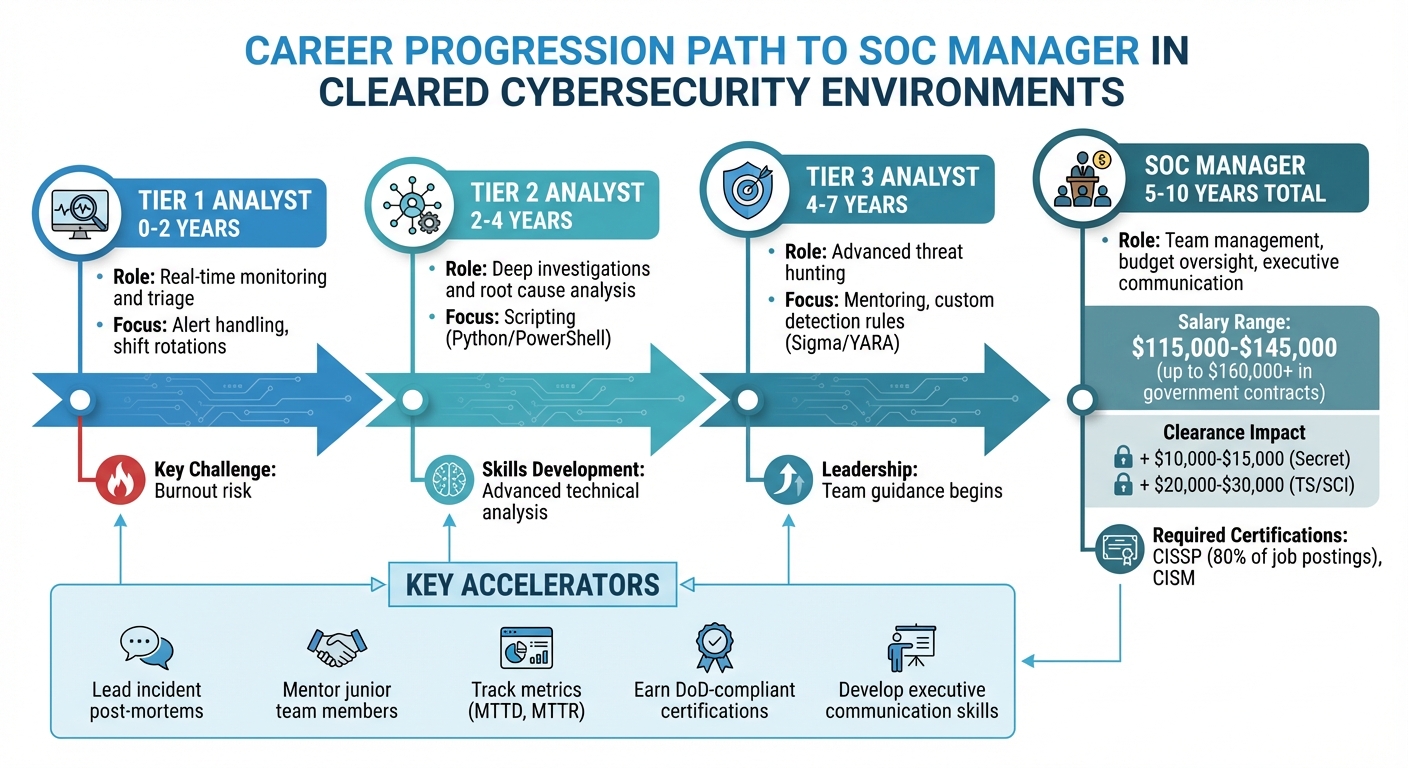
SOC Manager Career Path Timeline: From Tier 1 Analyst to Leadership

SOC Manager Career Path Timeline: From Tier 1 Analyst to Leadership

Typical Career Timeline

The journey to becoming a SOC Manager typically starts with gaining hands-on experience in various analyst roles. It begins with 0–2 years as a Tier 1 Analyst, focusing on real-time monitoring and triage. This role often involves rotating shifts, which can lead to burnout [10]. Afterward, analysts move into Tier 2 Analyst roles (2–4 years), where they handle deeper investigations and root cause analysis. Here, skills like scripting in Python or PowerShell can set you apart. By the time analysts reach the Tier 3 Analyst level (4–7 years), their work involves advanced threat hunting, mentoring, and creating custom detection rules using tools like Sigma or YARA [10].

The transition to SOC Manager usually occurs after 5–10 years of progressive experience [2][3]. This role shifts focus from hands-on technical tasks to managing teams, budgets, and communicating with executives. In environments requiring security clearances, your clearance level can significantly impact your earnings. For instance, a Secret clearance might add $10,000–$15,000 to your salary, while a TS/SCI clearance could add $20,000–$30,000 [10]. SOC Manager salaries typically range from $115,000 to $145,000, but senior roles in government contracts can exceed $160,000 [1]. These steps build the foundation for the leadership responsibilities discussed in the next section.

How to Accelerate Your Career Growth

Climbing the SOC career ladder faster requires proactive steps and targeted skill-building. Start by taking on leadership tasks, even before being formally promoted. For example, volunteer to lead incident post-mortems, oversee shift handovers, or mentor junior team members [1]. Keep a record of your achievements, like reducing Mean Time to Respond (MTTR) or creating a new incident severity rubric, to showcase your value during promotion reviews [1][11].

Certifications also play a critical role in advancing your career. Begin with Security+ for entry-level compliance, then move to CySA+ for analytical skills, and finally aim for CISSP or CISM as you target management roles. Notably, 80% of SOC Manager job postings require CISSP, making it a must-have credential [10]. Alongside certifications, build expertise in tools like SIEM, EDR/XDR, and SOAR to solidify your technical foundation [1][2].

Developing executive communication skills is equally important. Learn how to translate technical incident data into business-focused language that highlights risks and solutions. Participating in cross-functional projects with legal, compliance, or IT teams can help you hone relationship-management skills critical for leadership [1]. Demonstrating your ability to move from simply "watching alerts" to identifying patterns and presenting strategic insights to directors signals that you’re ready for the next level of responsibility [1][11].

Security Clearance Requirements

Clearance Levels Explained

SOC Manager positions demand strict security clearances, categorized into three main levels: Secret, Top Secret (TS), and Top Secret/Sensitive Compartmented Information (TS/SCI). These levels determine access to increasingly sensitive information. A Secret clearance applies to data where unauthorized disclosure could severely harm national security. Top Secret clearance covers information that could cause "grave damage" if exposed. The TS/SCI level grants access to intelligence compartments and often involves oversight of Special Access Programs (SAP).

The investigation process differs by clearance level. For a Secret clearance (Tier 3), the process includes record verification, employment checks, and education reviews, taking approximately 60–150 days. Top Secret clearance (Tier 5) requires a Single Scope Background Investigation (SSBI), including in-person interviews, and typically takes 120–240 days. Investigations for TS/SCI clearance often include a polygraph and can last 180–365+ days [14]. By early 2026, the investigation backlog had dropped to about 100,000 cases, marking a significant improvement [13].

Higher clearances come with greater responsibilities and earning potential. Those holding security clearances are among the top 10% of wage earners in the U.S. [12]. As a SOC Manager with TS/SCI clearance, you’ll oversee intelligence-focused data and manage staff access to classified compartments – responsibilities that go beyond what lower clearance levels entail. These rigorous requirements highlight the importance of security clearances in enabling SOC Managers to lead critical cybersecurity operations effectively.

Maintaining Your Clearance

Securing a clearance is just the beginning; keeping it active is equally important. The introduction of Trusted Workforce 2.0 fundamentally changed the process. This system replaced periodic reviews with Continuous Vetting (CV), which uses automated, near real-time monitoring of criminal records, credit issues, and public databases. As of early 2026, more than 3.8 million cleared individuals were enrolled in this federal program [13].

"An incident on a Saturday could generate an alert to your security office by Monday. This makes immediate self-reporting of any adverse event… a critical component of sustaining trust." – Kevin James, Cybersecurity Professional [14]

To maintain your clearance, you must self-report foreign travel, interactions with foreign nationals, and significant financial events like bankruptcy or major debt. Financial issues remain the top reason for clearance revocation, so monitoring your credit history and debt-to-income ratio is crucial. Adjudicators also review your digital footprint, including GitHub activity, gaming forums, and social media, for signs of poor judgment. Proactive self-reporting is viewed more favorably than waiting for automated systems to flag issues.

If you leave a sponsoring position, your clearance typically becomes inactive after 24 months. However, the 2026 National Defense Authorization Act extended eligibility for departing Department of Defense personnel to five years, making it easier to transition into contractor SOC Manager roles [13].

Moving from Technical Work to Management

Building Management Skills

Making the leap from technical roles to management is an important step in a cleared SOC career. This transition builds on your technical expertise while preparing you for broader responsibilities. The journey often begins by showing leadership informally – take the lead on tasks like shift handovers, post-incident reviews, or improving internal Standard Operating Procedures (SOPs) before being officially promoted [1]. This proactive approach demonstrates your readiness for management and earns trust from both your team and leadership.

One of the best ways to develop management skills is through mentorship. Start by guiding interns or junior analysts [1]. These experiences help you build communication skills and prove your ability to lead teams through challenges. Consider volunteering to run daily standups or retrospectives to practice facilitation [1].

Equally important is "managing up", or building trust with executives. Regularly update your manager on Key Performance Indicators (KPIs), challenges, and strategic ideas [1][15]. For instance, maintaining a tuning log to track noisy detection rules and their resolutions highlights your focus on operational efficiency [11]. Similarly, creating a severity rubric with clear examples of P1 to P4 incidents showcases your discipline and ability to prioritize during triage [11].

Expanding your perspective beyond the SOC is also essential. Engage in activities like compliance reviews, tabletop exercises, or company-wide meetings to see how security fits into larger business goals [1][15]. Practice translating technical jargon into language that resonates with non-technical stakeholders and executives [15][2]. As Safwan Azeem puts it:

Soft skills determine promotability, not just performance [1].

While building leadership skills is critical, staying connected to your technical roots is just as important.

Balancing Technical and Management Duties

Even after moving into management, maintaining technical credibility is key. While you’re no longer expected to code like your engineers, you should remain fluent in tools like SIEM, SOAR, and EDR platforms to earn your team’s trust [1]. Staying proficient ensures your decisions are grounded in operational realities rather than assumptions [1].

Your focus will shift from handling individual incidents to providing strategic oversight. Instead of triaging every alert, you’ll review incident timelines, assign complex cases, and verify that analysts follow proper protocols [1]. You’ll also take the lead on evaluating new technologies and managing vendor relationships to keep the security stack up-to-date [2]. During high-severity incidents, step into the role of "incident commander" to coordinate responses across teams like IT, legal, and public relations, showcasing both leadership and hands-on expertise [2].

Daily responsibilities will look very different in management. Analysts focus on detection, triage, and response, while managers prioritize strategy, people management, and the overall security posture [1]. Metrics of success also evolve – from speed and pattern recognition to KPIs, budget oversight, and risk reduction [1][2]. This shift not only broadens your career scope but often comes with substantial financial rewards, making the balance between technical expertise and leadership all the more worthwhile.

Wrapping Up

Becoming a cleared SOC Manager is about more than just technical skills – it’s a mix of certifications, practical experience, and leadership growth. The path usually starts with roles like SOC Analyst, where you gain the foundational knowledge and experience needed for advancement. Along the way, earning certifications, especially those recognized by the Department of Defense (DoD), can demonstrate your readiness for leadership while meeting federal requirements [1][3].

But technical skills and certifications alone won’t get you there. Taking initiative is key. Step up during shift handovers, help junior analysts grow, and find ways to improve standard operating procedures – even before you officially move into a leadership role [1]. Track metrics like Mean Time to Detect (MTTD) and Mean Time to Respond (MTTR) to highlight your contributions and show you’re prepared for the strategic responsibilities of managing a SOC. These efforts build trust and establish your readiness for overseeing teams, managing risks, and communicating effectively at a higher level [4].

The rewards for this career leap are both professional and financial. SOC Managers typically see a 30%–60% salary jump, with average earnings ranging from $110,000 to $160,000, and in some cases, exceeding $180,000 in high-demand industries [4]. However, the role isn’t just about the paycheck. It’s a transition from focusing on tactical detection to driving strategic leadership. Your success will be measured by how well your team performs, how effectively risks are mitigated, and the overall security strength of your organization [1].

As Safwan Azeem, ACSMC, puts it:

Security leadership doesn’t wait for permission. It moves forward when you do.

FAQs

Can I become a SOC Manager without a CISSP?

Yes, you can become a SOC Manager without holding a CISSP certification. However, certifications such as CISSP or GCIH are highly recommended. They not only bolster your qualifications but also showcase your expertise in cybersecurity. These credentials often give candidates an edge when pursuing leadership positions in the field.

How do I get a Secret or TS/SCI clearance for a SOC role?

To work in a SOC role requiring a Secret or TS/SCI clearance, you’ll need to go through the U.S. government security clearance process. This involves submitting an application, completing specific forms, and passing thorough background checks. These checks cover areas like your employment history, criminal record, financial standing, and any connections with foreign nationals.

For positions dealing with classified information, employers typically sponsor the clearance application. Keep in mind, the process can take several months, and maintaining the clearance demands strict adherence to security protocols.

What should I do now to move from Tier 3 to SOC Manager?

To move from a Tier 3 role to a SOC Manager position, you’ll need to build expertise in cybersecurity operations while also honing leadership and incident management skills. Here are some key ways to make that leap:

  • Sharpen leadership abilities: Take charge of team projects, coordinate activities, and work closely with stakeholders to develop a collaborative approach.
  • Pursue relevant certifications: Credentials like CISSP or CISM not only validate your expertise but also demonstrate your readiness for managerial responsibilities.
  • Broaden your scope of work: Take on tasks such as drafting Standard Operating Procedures (SOPs), overseeing incident response efforts, and preparing reports for senior management.

By focusing on these areas, you’ll be better equipped to step into a SOC Manager role.

Related Blog Posts

  • SOC Analyst Career Path for Cleared Professionals Tier 1 to Lead
  • Blue Team Analyst Career Path for Cleared Defenders
  • CISO Career Path for Cleared Chief Information Security Officers
  • Data Security Analyst Career Path for Cleared Professionals

Cyber Threat Hunter Career Path for Cleared Professionals

CyberSecJobs Editorial · March 22, 2026 ·

Cyber threat hunting is an active cybersecurity role where professionals search for hidden threats that bypass automated systems. For those with security clearances, this career offers high responsibility, protecting sensitive government and defense data from advanced threats like state-sponsored hackers and insider risks. Average salaries start at $159,500, with senior roles reaching $181,500. Demand is growing by 15% annually, driven by increasing cyber breaches.

Key Takeaways:

  • Skills Needed: Master tools like Splunk, Wireshark, and EDR platforms (e.g., CrowdStrike). Learn scripting (Python, PowerShell) and frameworks like MITRE ATT&CK.
  • Certifications: Start with CompTIA Security+ or CySA+, then pursue advanced options like SANS FOR508 or GIAC GCIH.
  • Clearance Advantage: A security clearance can boost salaries by $10,000–$50,000 and unlock exclusive roles.
  • Job Search Tips: Network at cleared job fairs, use platforms like Cleared Cyber Security Jobs, and highlight your clearance on your resume.

This field offers a clear progression path, starting with SOC Analyst roles and leading to leadership positions. Cyber threat hunting is a lucrative, growing career for cleared professionals with the right skills and certifications.

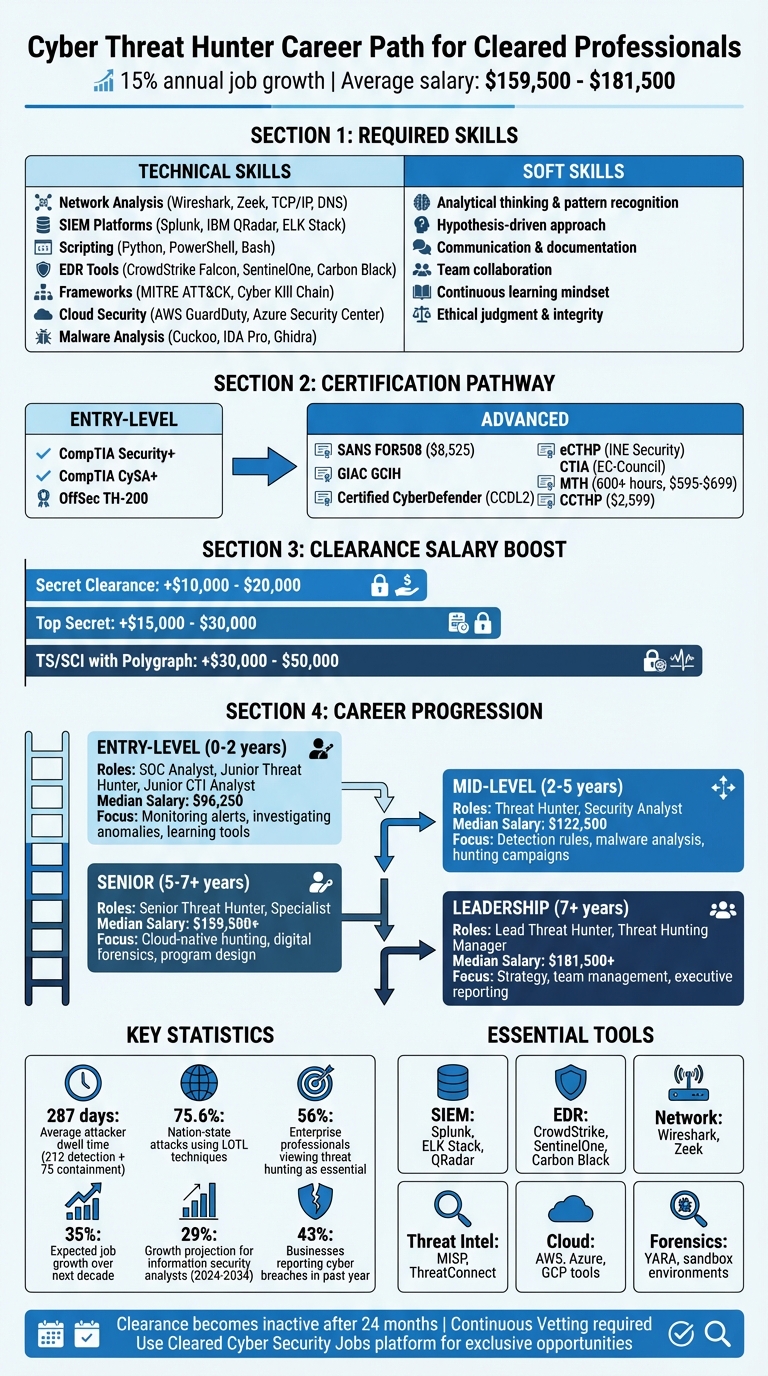
Cyber Threat Hunter Career Path: Skills, Certifications, and Salary Progression

Cyber Threat Hunter Career Path: Skills, Certifications, and Salary Progression

Required Skills for Cleared Cyber Threat Hunters

Technical Skills

Cleared professionals need a robust set of technical skills to excel in cyber threat hunting. For starters, tools like Wireshark and Zeek are essential for analyzing network traffic, including protocols like TCP/IP, DNS, and HTTP/s. These tools help identify hidden command-and-control channels attackers use to communicate with compromised systems [1][2].

Proficiency with log investigation and Security Information and Event Management (SIEM) platforms is another must. Tools like Splunk, IBM QRadar, or the ELK Stack allow threat hunters to sift through massive datasets. Advanced querying languages, such as SPL (Splunk Processing Language) or KQL (Kusto Query Language), are key to uncovering threats buried in logs [1][2]. Additionally, scripting skills in Python, PowerShell, or Bash are invaluable for automating repetitive tasks and creating custom detection scripts tailored to specific environments [1][2].

Endpoint Detection and Response (EDR) tools, such as CrowdStrike Falcon, SentinelOne, or Carbon Black, provide detailed insights into individual systems. These tools are critical for spotting lateral movement, persistence techniques, and other signs of an attacker’s presence [1][2]. Understanding malware behavior is equally important, whether through sandbox testing with tools like Cuckoo or reverse engineering with IDA Pro and Ghidra. These skills help identify adversary tactics and strengthen defenses [1][2].

Nation-state adversaries often employ "Living off the Land" (LOTL) techniques, which involve using legitimate system tools to blend into normal network activity. This makes detection particularly challenging, as LOTL techniques account for 75.6% of nation-state attacks [7]. To counter these threats, deep knowledge of Windows and Linux internals – especially persistence mechanisms and privilege escalation methods – is critical [6].

Threat hunters also rely on frameworks like MITRE ATT&CK and the Cyber Kill Chain to map adversary tactics, techniques, and procedures (TTPs). These frameworks help predict and counter attackers’ next moves, especially in cleared environments [1][3]. With the growing reliance on cloud infrastructure, expertise in cloud-native security tools like AWS GuardDuty, Azure Security Center, and Google Chronicle is becoming increasingly important for identifying threats in dynamic cloud environments [2].

While technical skills form the backbone of threat hunting, success also depends heavily on sharp analytical and interpersonal abilities.

Soft Skills

Being a proficient threat hunter requires more than technical know-how. Analytical thinking is at the core of the job – you need to recognize patterns, work with incomplete information, and uncover adversaries that evade automated defenses. A hypothesis-driven approach sets threat hunters apart, as you’ll proactively form and test theories about potential compromises rather than relying solely on alerts [4].

Communication skills are equally critical. You must translate complex technical findings into actionable intelligence for both technical teams (like SOCs or Incident Response) and non-technical stakeholders, such as executives. Clear and detailed documentation is also essential for creating repeatable playbooks and ensuring auditability of your findings [4].

Collaboration is another cornerstone of effective threat hunting. You’ll frequently work with detection engineers, SOC analysts, and risk teams to turn your discoveries into automated defenses. A curious mindset and a commitment to continuous learning are vital, as you’ll need to stay ahead of evolving TTPs by thinking like an attacker. Finally, given the sensitive nature of your work, ethical judgment and integrity are non-negotiable – you must handle classified information responsibly and use your access solely for defensive purposes [1][3].

sbb-itb-bf7aa6b

Certifications for Cyber Threat Hunters

Entry-Level Certifications

To kickstart a career in cyber threat hunting, entry-level certifications provide a solid foundation in security principles and practices.

  • CompTIA Security+: This certification covers the essentials, such as threat management, vulnerabilities, and security operations. It also meets baseline requirements for professionals working in Department of Defense (DoD) roles.
  • CompTIA CySA+ (Cybersecurity Analyst): Designed for those focusing on proactive threat detection, this certification emphasizes behavioral analytics, trend identification, and anomaly detection – key skills for threat hunters.
  • OffSec TH-200: This program dives into indicators of compromise (IOCs) and adversarial tactics. It introduces structured methodologies for conducting threat hunts and analyzing network traffic.

Once you’ve built a foundation with these certifications, you’re ready to explore advanced options to deepen your expertise.

Advanced Certifications

For seasoned professionals, advanced certifications provide the tools to combat sophisticated cyber threats. These programs are particularly valuable for those with security clearances or roles in highly sensitive environments.

  • SANS FOR508: Widely regarded as the gold standard, this 54-hour course focuses on advanced incident response and threat hunting. Priced at $8,525 (excluding exam and renewal fees), it covers persistent threats, memory forensics, and investigative techniques critical for high-level security operations [10].
  • GIAC Certified Incident Handler (GCIH): This certification highlights expertise in detecting and resolving security incidents. Its alignment with both DoD and NICE frameworks makes it a strong choice for professionals in government-related roles.
  • Certified CyberDefender (CCDL2): Featuring a 48-hour practical exam, this certification tests real-world investigation skills. It has been praised by professionals from companies like Microsoft, IBM, and Accenture for its vendor-neutral, high-quality lab content [12].
  • eCTHP (INE Security): This hands-on certification includes a practical exam based on real-world malware scenarios. It requires a VPN connection and hardware with at least 8GB of RAM for virtualization [9].
  • Certified Threat Intelligence Analyst (CTIA): Offered by EC-Council, this certification integrates threat intelligence with automated hunting and SOC operations. It’s listed in U.S. Army and Navy COOL programs, making it particularly relevant for military and defense contractors [14].
  • Mosse Certified Threat Hunter (MTH): With over 600 hours of training and lifetime access for $595–$699, this certification focuses on Windows internals like the Registry, Event Logs, and Services [10].
  • Infosec Cyber Threat Hunting Boot Camp: Priced at $2,599, this program includes the Certified Cyber Threat Hunting Professional (CCTHP) credential. It aligns with DoD, NICE, and NIST frameworks and has received a 4.6/5 rating from 738 reviews. With information security analyst roles projected to grow 29% between 2024 and 2034 [8] and the threat hunting field expected to expand by 5% [11], this certification can set you apart in a competitive job market.

These certifications not only enhance your technical skills but also position you for long-term success in the evolving field of cyber threat hunting.

Daily Responsibilities and Tools

Primary Job Duties

Cyber threat hunters working in cleared environments operate with the mindset that attackers are already inside the network. Instead of waiting for automated systems to flag issues, they actively search for signs of compromise, assuming defenses have already been breached. Their mission is to uncover hidden adversaries before automated detection tools even raise an alert.

On a typical day, these professionals analyze massive datasets from endpoints, cloud environments, and network logs. They’re looking for patterns and anomalies that automated systems might miss. This proactive approach is critical in cleared environments, where state-sponsored attackers and advanced persistent threats often target sensitive national security interests. Hunters map their discoveries to known adversary tactics and procedures. When they identify unusual activity, they trace indicators, conduct host acquisitions, and analyze malware behavior. The ultimate goal? To minimize "dwell time", or the period attackers remain undetected. Right now, the average dwell time across organizations is 287 days – 212 days for detection and 75 days for containment [13].

Collaboration is another key part of the role. Threat hunters work closely with engineering teams to create automated detection rules and develop playbooks tailored for both technical teams and executive decision-makers. With 56% of enterprise-level cybersecurity professionals viewing threat hunting as essential for improving security [13], the demand for these roles is expected to grow by 35% over the next decade [5].

To tackle these challenges, threat hunters depend on a robust set of tools to turn raw data into actionable insights.

Common Tools and Technologies

The tools of a threat hunter are designed to handle and analyze security data on a large scale. Security Information and Event Management (SIEM) platforms like Splunk, ELK Stack, and QRadar allow hunters to query logs using languages such as KQL, SQL, or regex. For endpoint visibility, tools like CrowdStrike Falcon, SentinelOne, and Carbon Black provide insights into process creation, registry changes, and potential lateral movement within machines.

When it comes to network analysis, tools like Wireshark and Zeek help hunters inspect packets and identify command-and-control traffic. Threat intelligence platforms such as MISP and ThreatConnect are also essential for managing indicators of compromise and profiling threat actors’ tactics. As more organizations adopt cloud-native environments, expertise in analyzing logs from platforms like AWS, Azure, and GCP – along with familiarity with Kubernetes signals and eBPF telemetry – has become increasingly important.

Automation plays a huge role in this field. Skills in Python, PowerShell, and Bash allow hunters to automate repetitive tasks and create custom detection scripts. For forensics and malware analysis, tools like YARA scanners, sandbox environments, and binary triage software help reconstruct attack timelines and examine malicious code. These specialized skills are highly valued and reflected in the competitive salaries offered for these roles.

Using Your Security Clearance for Career Growth

Clearance Advantages

If you’re a cyber threat hunter with an active security clearance, you’re holding one of the most powerful tools for career advancement in the cybersecurity world. A clearance unlocks opportunities that are off-limits to most, such as defending classified networks like SIPRNet, analyzing sensitive threat indicators, or securing government-specific cloud environments like AWS GovCloud and Microsoft Azure Government [16]. Beyond technical qualifications, your clearance signals loyalty, reliability, and sound judgment – qualities that are essential for success in this field [3][16]. It also gives employers a huge hiring advantage by cutting down the lengthy background check process [17].

The financial perks are just as compelling. For instance, a Secret clearance can bump your salary by $10,000–$20,000, while a Top Secret clearance might add $15,000–$30,000. If you hold a TS/SCI clearance with a polygraph, that premium can soar to $30,000–$50,000 over similar roles without clearance [20]. Thanks to the Trusted Workforce 2.0 initiative, clearance reciprocity across federal agencies is improving, making it easier to transition between departments or contractors without starting from scratch [16].

Brad Tachi, the Founder of Best Military Resume, offers a valuable perspective:

"When I transitioned out of the Navy, I did not fully appreciate what my clearance was worth. I spent time applying for jobs that did not require one – which meant I was competing with the entire civilian workforce instead of a much smaller pool of cleared candidates. That is a strategic mistake." [20]

These benefits highlight why your clearance is not just a credential but a powerful career asset.

Highlighting Your Clearance

To maximize these advantages, your resume needs to showcase your clearance effectively. Make it one of the first details recruiters see by listing it prominently at the top of your resume. Be specific about your clearance level – for example, "Top Secret/SCI (Active)" or "Secret (Tier 3)" – as many high-level roles require an active clearance [18].

While being clear is important, protect sensitive information. Mention your clearance level and, if relevant, note that you’ve completed a polygraph. However, avoid revealing classified program names, code words, or any other sensitive details [20]. To further stand out, highlight certifications like GIAC Cyber Threat Intelligence (GCTI) and your expertise in frameworks such as MITRE ATT&CK [19]. Setting up job alerts on platforms like Cleared Cyber Security Jobs can also help you stay ahead of new opportunities tailored to your skills and clearance level.

Keep in mind that clearances become inactive 24 months after leaving a cleared role, although there are proposals to extend this to five years by 2026 [16]. Under the Continuous Vetting system, maintaining your clearance requires proactive steps. Report any significant life changes – like arrests, major financial issues, or foreign contacts – to your Facility Security Officer. Additionally, regularly review your social media privacy settings, as adjudicators increasingly check public-facing online activity for signs of operational security awareness [16].

Networking and Job Search for Cleared Professionals

Building Connections in the Cleared Community

Landing a cyber threat hunter role in the cleared space takes more than just submitting your resume online. Networking plays a huge role, and the cleared community has its own unique way of operating. To get started, connect directly with professionals working in your target roles at respected defense contractors like Peraton. As Bryan Acton, Military & Veterans Program Leader at Peraton, explains:

"Engage your peers and get an employee referral. That’s something I can’t give you as a recruiter." [21]

Referrals not only lead to better hires but also improve retention rates. [23]

Attending cleared job fairs is another excellent way to build connections. Events like Connect Reston (happening October 15–16, 2026, in Reston, VA) and Connect Colorado (scheduled for July 23, 2026, in Colorado Springs, CO) allow you to meet hiring managers from defense and government agencies face-to-face. [25] These events are designed exclusively for cleared professionals, and some are even limited to those with polygraphs. Kirsten Renner, VP of Talent Strategy at SilverEdge Government Solutions, highlights the importance of these events:

"Sometimes what you see posted is just a glimpse into what’s possible." [21]

Many opportunities never appear on public job boards, making these in-person interactions invaluable.

Outside of formal events, you can expand your network by joining online communities like Reddit’s r/netsec or contributing to open-source security projects on GitHub to showcase your skills. After meeting someone, send a brief thank-you email to stay on their radar. Volunteering your cybersecurity skills at conferences or with local non-profits is another way to grow your network while gaining relevant experience to enhance your resume. [22]

These networking efforts work hand-in-hand with the tools available on Cleared Cyber Security Jobs, streamlining your job search.

Finding Jobs on Cleared Cyber Security Jobs

Once you’ve built your network, Cleared Cyber Security Jobs can help you find exclusive opportunities tailored to your clearance level and expertise. This platform is specifically designed for security-cleared cyber threat hunters, so you’ll face less competition compared to general job boards. By uploading your resume, recruiters can find you directly through the platform’s database. You can also set up job alerts with keywords like "Cyber Threat Hunter", "CTI Analyst", or "Insider Threat" to get instant notifications when new roles are posted. [15][24]

The platform’s search filters make it easy to narrow down roles based on your specific clearance level, whether it’s Secret, Top Secret, or TS/SCI. Since many threat hunter roles require active clearances, this feature ensures you’re focusing on the right opportunities. Remember to keep your profile updated and respond quickly, as hiring in the cleared space often moves fast. Additionally, the platform offers access to career resources and specialized job fairs, giving you even more ways to connect with employers actively looking for your skills.

Career Progression from Entry-Level to Leadership

Starting Positions

After building the foundational skills and earning the certifications discussed earlier, your career in threat hunting often begins with roles like SOC Analyst, Security Analyst, Junior Threat Hunter, or Junior Cyber Threat Intelligence (CTI) Analyst. These roles are all about supporting incident response by keeping an eye on alerts and investigating anomalies. You’ll get hands-on experience with tools used in enterprise security, learn to parse logs, and apply frameworks like MITRE ATT&CK. [2][3]

The median salary for entry-level Threat Hunters in the US is around $96,250. [2] To qualify for these positions, a bachelor’s degree in Cybersecurity, Computer Science, or Information Technology is typically required. You’ll also need to be proficient in scripting languages like Python, PowerShell, or Bash, which are essential for automating tasks and developing custom tools. [2] For those just starting out (0-2 years of experience), building a portfolio is key. Platforms like GitHub, participating in Capture The Flag (CTF) challenges, and using lab environments such as TryHackMe or Hack The Box can showcase your skills. [2]

As you gain experience, your responsibilities will transition from operational tasks to more strategic oversight.

Moving into Leadership Roles

With a solid foundation in analysis and communication, experienced threat hunters can step into more strategic positions. Mid-level professionals (2-5 years of experience) take on tasks like designing detection rules, conducting malware reverse engineering, and leading threat-hunting campaigns. These roles come with median salaries of $122,500. [2] Senior threat hunters (5+ years) often specialize in areas such as cloud-native threat hunting or advanced digital forensics. They also define enterprise-wide programs and provide guidance to executives. [1][2]

Leadership roles, such as Lead Threat Hunter or Threat Hunting Manager, typically require 7+ years of experience and shift the focus from technical execution to strategy, team management, and risk oversight. These positions involve allocating resources effectively, staying ahead of emerging threats through AI and automation, and translating technical findings into actionable insights for company executives. Salaries for these roles can exceed $181,500. [1][2] Holding a security clearance can significantly accelerate your career trajectory and unlock leadership opportunities in sensitive environments.

To prepare for leadership, consider pursuing management-focused certifications like the CISSP, mentoring junior team members, and leading collaborative projects that involve IT, engineering, and legal teams. [1][2]

Success in threat hunting demands continuous practice, exposure to real-world attack scenarios, and the ability to learn from both your successes and setbacks. [1]

How to Become a Threat Hunter | Lumen’s Danny Adamitis Interview

Conclusion

Stepping into the world of cyber threat hunting as a cleared professional gives you a distinct edge. Your security clearance – be it Secret, TS/SCI, or Polygraph – opens doors to sought-after roles within government agencies, defense contractors, and critical infrastructure sectors that are often out of reach for others. With the job market for threat hunters expanding at a rate of 15% and nearly 43% of businesses reporting cyber breaches in the past year, the need for proactive threat detection has never been more urgent [2].

Your journey starts with building the right technical skills and earning key certifications. Begin with foundational credentials like CompTIA Security+ or CySA+, and then aim for advanced certifications such as GIAC Cyber Threat Intelligence (GCTI) or SANS FOR508. Learn scripting languages like Python, PowerShell, and Bash to automate processes, and gain hands-on experience with the MITRE ATT&CK framework and tools like Splunk, CrowdStrike, and Wireshark – these will be your everyday arsenal for identifying hidden threats [2].

Networking within the cleared professional community can also accelerate your career. Platforms like Cleared Cyber Security Jobs offer tailored job search tools, resume databases, and job alerts specifically for security-cleared professionals. Additionally, upcoming cleared job fairs in locations such as Falls Church, VA (April 16, 2026), Hanover, MD (May 14, 2026), and Herndon, VA (June 3 and August 27, 2026) provide an excellent opportunity to connect directly with recruiters from top defense contractors [26].

As you gain experience, the financial rewards grow alongside your responsibilities. From entry-level roles to senior and leadership positions, showcasing your skills is essential. Use platforms like GitHub, participate in Capture The Flag events, and engage with lab environments to demonstrate your practical expertise. This field requires continuous practice and exposure to real-world attack scenarios to stay sharp.

FAQs

How do I move from SOC Analyst to Threat Hunter?

Transitioning from a SOC Analyst to a Threat Hunter means diving deeper into understanding adversary tactics, behavioral patterns, and operating system internals. To make this shift, focus on gaining hands-on experience with hunting techniques and methodologies. Developing expertise in cloud-native environments is also becoming increasingly important. Certifications such as CySA+ can help validate your skills and knowledge.

Use your SOC role as a foundation by prioritizing proactive hunting and hypothesis-driven investigations. Building practical experience and documenting your methods will not only help you refine your skills but also demonstrate your readiness for this specialized role.

Which tools should I learn first for threat hunting?

Threat hunting starts with the right tools. Platforms like Microsoft Azure Sentinel and IBM Security QRadar are essential for managing and analyzing security information and events. To bolster your efforts, threat intelligence tools such as Pulsedive and AlienVault OTX can provide valuable insights into emerging threats.

Additionally, understanding query languages like KQL (Kusto Query Language) is crucial. Pairing this knowledge with behavioral analytics will help you monitor network traffic, dive into logs, and investigate any suspicious activity with greater precision.

Do I need an active clearance to get hired?

Yes, most cyber threat hunter positions in the cleared cybersecurity field require an active security clearance. Employers generally prefer candidates who already hold a current clearance to fulfill the unique requirements of these roles.

Related Blog Posts

  • MITRE ATT&CK Cleared Positions – Framework Expertise for Threat Hunters
  • Threat Intelligence Analyst Career Path for Cleared Professionals
  • Red Team Operator Career Path for Cleared Professionals
  • Cryptanalyst Career Path for Cleared Intelligence Professionals

SCADA Security Engineer Career Path for Cleared Professionals

CyberSecJobs Editorial · March 21, 2026 ·

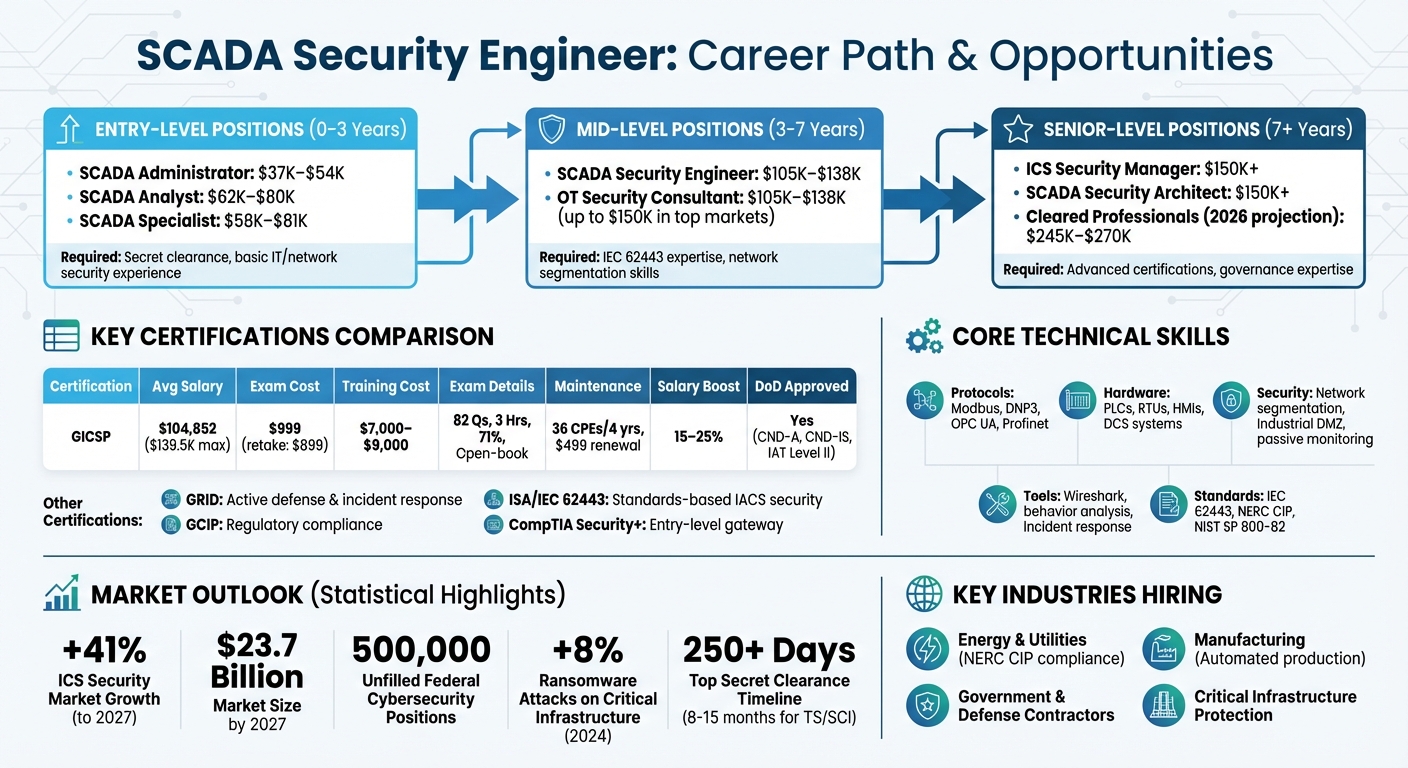
SCADA Security Engineers protect critical infrastructure like power grids and pipelines from cyber threats. These roles require expertise in industrial systems, cybersecurity, and often a security clearance due to the sensitive nature of the work. Here’s what you need to know:

  • Core Skills: Knowledge of SCADA protocols (Modbus, DNP3), hardware (PLCs, RTUs), and cybersecurity practices like network segmentation and OT-specific threat detection.
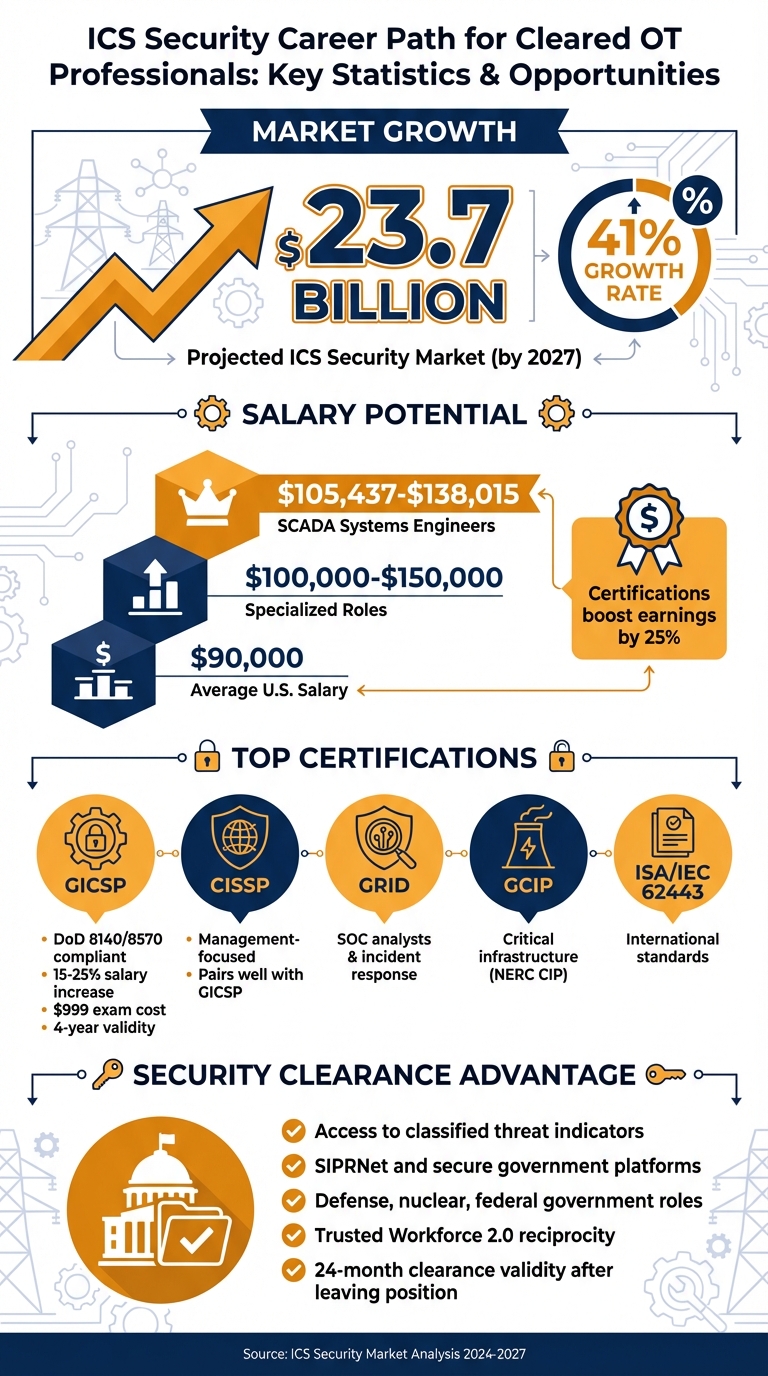
  • Certifications: GICSP is highly valued, with average salaries of $104,852 (up to $139,500). Other options include GRID, GCIP, and ISA/IEC 62443.
  • Career Path: Start in IT or network security, then transition to SCADA roles like SCADA Analyst ($62K–$80K) or SCADA Specialist ($58K–$81K). Mid-level roles can pay $105K–$138K, while senior positions exceed $150K.
  • Demand: By 2026, salaries for cleared SCADA professionals could reach $245K–$270K due to talent shortages and increasing threats to critical infrastructure.
  • Key Industries: Energy, government, and manufacturing are major employers, with strong demand for cleared professionals to secure national security assets.

For those with security clearances, this field offers high earning potential and opportunities to work on essential systems. Certifications, hands-on experience, and staying updated on industry standards like IEC 62443 are crucial to advancing in this career.

SCADA Security Engineer Career Path: Salaries, Certifications, and Progression Timeline

SCADA Security Engineer Career Path: Salaries, Certifications, and Progression Timeline

Required Skills and Certifications

Technical Skills for SCADA Security Engineers

Working in SCADA security demands a strong grasp of both industrial systems and cybersecurity. Engineers need to understand PERA levels 0–3 and use IEC 62443 Zones and Conduits as a baseline for system design. Familiarity with industrial protocols like Modbus, DNP3, OPC UA, and Profinet is critical, along with the ability to analyze traffic using tools such as Wireshark.

Hands-on knowledge of hardware is equally important. This includes managing and securing PLCs, RTUs, HMIs, and DCS systems. Network segmentation, particularly creating Industrial DMZs to isolate IT systems from operational technology (OT), is a key strategy to prevent ransomware from spreading across environments.

Unlike traditional IT systems, SCADA environments often rely on passive monitoring due to the fragility of legacy PLCs, which can crash under active scanning. Engineers should develop expertise in OT-specific threat detection, behavior analysis for identifying malware, and incident response strategies that prioritize physical process safety. Hardening legacy systems like Windows XP or Windows 7 and Unix-based platforms requires techniques such as application allowlisting and limiting local admin rights. Secure remote access is another critical area, involving multi-factor authentication (MFA), jump hosts, and encrypted VPNs to ensure safe vendor maintenance.

While these technical skills form the foundation, industry-recognized certifications are essential to demonstrate expertise in this specialized field.

Certifications That Employers Look For

One of the most sought-after certifications in SCADA security is the GICSP (Global Industrial Cyber Security Professional). This certification bridges the knowledge gap between IT, engineering, and cybersecurity [8][10]. The GICSP exam consists of 82 questions, takes three hours to complete, and requires a passing score of 71% [8]. It’s an open-book exam (printed materials only), so having a well-organized reference of technical terms can be incredibly helpful.

From a financial perspective, GICSP certification offers substantial rewards. As of September 2025, the average annual salary for GICSP-certified professionals in the U.S. was about $104,852, with top earners reaching $139,500 [7]. On average, certified individuals earn 15–25% more than their non-certified counterparts, with salaries for many specialists exceeding $120,000 [7]. The certification exam costs around $999, with retakes priced at $899. Official SANS training courses, such as ICS410, typically range between $7,000 and $9,000 or more [7]. To maintain certification, professionals need 36 Continuing Professional Education (CPE) credits over four years and must pay a renewal fee of approximately $499 [7][10].

The GICSP is recognized by the U.S. Department of Defense for roles in categories like CND-A, CND-IS, and IAT Level II [7]. Other certifications worth considering include:

  • GRID (GIAC Response and Industrial Defense): Focuses on active defense and incident response.
  • GCIP (GIAC Critical Infrastructure Protection): Targets regulatory compliance.
  • ISA/IEC 62443 Certification: Emphasizes standards-based IACS security [9][10].

While general certifications like CISSP, CEH, and CISM provide a broad understanding of information security, they lack the specific focus on OT/ICS environments that the GICSP offers [10].

Beyond technical skills and certifications, success in SCADA security also depends on mastering key non-technical abilities.

Non-Technical Skills for Success

In SCADA security, priorities differ from traditional IT. The focus is on Availability → Integrity → Confidentiality, all underpinned by a commitment to safety [6]. This safety-first approach is critical because mistakes in industrial settings can lead to physical harm and costly operational disruptions.

Problem-solving is a must, especially when conventional IT methods don’t work in OT environments. As Francis Cianfrocca, CEO of Insight Cyber Group, explains:

Even if you change an operating system just a little bit to patch it, you’ve invalidated all your safety testing [1].

This means engineers often need to rely on manual behavior analysis and creative solutions to secure outdated systems.

For professionals in cleared SCADA roles, communication and leadership are equally important. Engineers must translate complex cyber risks into actionable safety measures for plant managers and regulatory bodies. Using clear, quantifiable descriptions of achievements – such as "Developed a secure remote access policy ensuring 100% compliance with ISA/IEC 62443 standards" – can effectively convey impact. Working under pressure is a common requirement, especially in critical infrastructure sectors like nuclear energy or power grids, where uptime directly impacts public safety. Collaboration across engineering teams, adapting to manual processes when automation isn’t an option, and leading the development of long-term security strategies are all part of the role.

sbb-itb-bf7aa6b

Career Progression and Growth Opportunities

Entry-Level Positions and Getting Started

If you’re looking to break into SCADA security, your journey will likely begin by leveraging your existing IT or physical security experience. As the Infosec Institute explains:

OT security practitioner roles aren’t typically entry-level positions. Most people get into industrial control systems security after working in network security [1].

This means your background in IT can be a solid foundation – just shift the focus of your expertise. Instead of emphasizing software maintenance, highlight how your skills contribute to risk reduction and operational reliability [6].

For entry-level roles, consider positions like SCADA Administrator (salary range: $37K–$54K), SCADA Analyst ($62K–$80K), or SCADA Specialist ($58K–$81K) [1]. These roles often require knowledge of industrial protocols, basic hardware, and a security clearance – typically at least a Secret level – for work in government or critical infrastructure.

Emily Miller, Vice President of National Security and Critical Infrastructure at Mocana, advises newcomers to start with foundational certifications:

If you’re new to the field, CompTIA Security+ is an excellent gateway into OT and ICS security [1].

Building on that, you can pursue more specialized certifications like the GICSP or Industrial Control Security Practitioner (ICSP). Setting up a home lab is another great way to stand out. Use Modbus simulators, open-source HMI tools, and software like pfSense to demonstrate your practical skills to potential employers [6]. Over time, you’ll gain the experience needed to move into more advanced roles.

Mid-Level and Senior SCADA Security Positions

As you grow in your career, you’ll find opportunities to specialize in technical or governance-focused roles. Mid-level positions, such as SCADA Security Engineer or OT Security Consultant, offer salaries ranging from $105K to $138K, with top markets reaching as high as $150K [1]. These roles require deep knowledge of frameworks like IEC 62443, particularly in designing secure architectures with zones and conduits for network segmentation.

At the senior level, the focus shifts to broader responsibilities. For instance, ICS Security Managers handle governance, risk, and compliance using standards like NIS2, while SCADA Security Architects focus on technical implementations guided by frameworks such as NIST SP 800-82. These roles often involve balancing IT security measures with the unique demands of operational technology, such as managing patch cycles without disrupting critical processes.

Senior professionals also need to excel at detecting threats through manual behavior analysis and passive network monitoring, as traditional signature-based detection methods often fall short in industrial environments.

How to Advance Your SCADA Security Career

Once you’ve built a solid foundation in entry-level and mid-level roles, advancing your career requires a strategic approach. As Emily Miller points out:

Credentialing yourself is number one [1].

To stand out, consider advanced certifications like the GIAC Critical Infrastructure Protection (GCIP) or the ISA/IEC 62443 Cybersecurity Expert certificate. These credentials demonstrate your expertise in both governance and compliance, which are critical for senior roles.

The ICS security market is growing rapidly, with projections showing a 41% increase through 2027, reaching $23.7 billion [1]. This growth means there’s strong demand for professionals who can navigate both technical and regulatory challenges. Stay ahead by keeping up with CISA ICS alerts, joining organizations like the Industrial Control System Information Sharing and Analysis Center (ICS-ISAC), and participating in OT-specific cyber drills to improve your incident response skills [1][2].

Developing and tracking senior-level metrics is also essential. Focus on KPIs like asset inventory coverage, segmentation progress (e.g., implementing an Industrial DMZ), and backup readiness for critical OT servers. Mastering the "Zones and Conduits" approach from IEC 62443 can help you communicate effectively across engineering, operations, and IT teams.

For professionals with active security clearances, platforms like Cleared Cyber Security Jobs can connect you with specialized roles in defense and national security. These positions often offer unique opportunities to work on critical infrastructure projects that require top-tier expertise.

Job Market and Salary Information

Industries Hiring SCADA Security Engineers

SCADA security engineers are in high demand across several industries. Energy and utilities companies, like Dominion Energy, rely on these professionals to protect industrial control systems and ensure compliance with regulations such as NERC CIP and NIST standards [12]. For instance, in February 2026, Dominion Energy South Carolina sought a Senior/Staff Cyber Security and Control Systems Engineer in Cayce, SC. The role involved supporting power generation facilities, maintaining NERC CIP compliance, and managing industrial control system networks [12].

Outside the energy sector, manufacturing facilities with automated production lines also require SCADA security specialists. These professionals play a crucial role in bridging the gap between IT security and operational technology on the factory floor [12]. Additionally, defense contractors and government agencies are prominent employers in this field, particularly in roles tied to critical infrastructure protection [3].

The increasing need for SCADA security experts highlights the broader challenges of filling cleared cybersecurity positions.

Growing Demand for Cleared SCADA Professionals

The SCADA job market, particularly for cleared professionals, faces a severe talent shortage. Around 500,000 federal cybersecurity positions remain unfilled, with TS/SCI-cleared roles being among the hardest to staff. These positions are crucial to national security, especially as adversaries like Russia, China, and Iran intensify their attacks on IT and OT/SCADA systems [3].

Regulatory requirements are further driving the demand for SCADA professionals. Executive Order 14028 mandates Zero Trust adoption across federal agencies, while FedRAMP-High standards require cleared personnel for cloud migration tasks, including supply-chain vetting and continuous monitoring [3]. However, the process of obtaining Top Secret clearances is lengthy, with investigations taking over 250 days and TS/SCI adjudications requiring 8 to 15 months. This prolonged timeline exacerbates the scarcity of cleared professionals [3].

These challenges, combined with the urgency of addressing cyber threats, have a direct impact on salaries in the SCADA security field.

Salary Ranges and Job Outlook

In the SCADA security sector, security clearances significantly boost earning potential. Employers are prioritizing "verified trust" and the ability to work in sensitive environments over technical skills alone [13]. By 2026, salaries for cleared SCADA security professionals are projected to range from $245,000 to over $270,000. This trend underscores the value of security clearances in a market shaped by increasing cyber threats and stringent regulations [13].

Industry insiders often refer to this situation as the "combined challenges" – a mix of growing nation-state threats, expanding regulatory requirements like CMMC and Zero Trust, and a historic shortage of polygraphed technical experts [13]. A representative from FullScope Staffing explained:

The clearance itself has become a strategic asset, and in 2026 it will be the single strongest determinant of compensation for top technical cybersecurity roles [13].

Federal agencies are also grappling with retention issues. Cleared engineers are frequently drawn to defense contractors offering signing bonuses and salaries that exceed federal pay scales by 10–25% [3].

For those with security clearances looking to enter the SCADA security field, platforms such as Cleared Cyber Security Jobs provide access to high-paying roles in the energy, defense, and government sectors. With ransomware attacks on critical infrastructure rising by 8% as of 2024, the demand for SCADA security expertise is expected to remain strong well into the future [3].

OT Cybersecurity for Beginners: The Complete Guide (ICS, SCADA & PLC)

Next Steps for Your SCADA Security Career

If you’re looking to advance your cleared SCADA security career, here’s a roadmap to help you build on the essential skills and seize new opportunities.

Key Requirements for a SCADA Security Career

A successful SCADA security career demands a mix of certifications, hands-on technical expertise, and an active security clearance. Start with a foundational certification like CompTIA Security+, then move on to specialized credentials such as GICSP or GCIP [1]. As Emily Miller, Vice President of National Security and Critical Infrastructure at Mocana, puts it:

Credentialing is the top priority. [1]

Beyond certifications, consider setting up a lab to practice with protocols and standards like Modbus, DNP3, IEC 62443, and NERC CIP [2]. Developing skills in malware behavioral analysis is also critical. According to Francis Cianfrocca, CEO of Insight Cyber Group:

Implementing IT-style security controls in industrial environments is challenging; much of ICS security requires manual, creative solutions. [1]

Achieving specialized certifications alongside an active clearance can boost your earnings by 15–25% [7]. These steps will lay a strong foundation for leveraging resources and tools to propel your career further.

Resources and Job Search Tools

Once you’ve met the core requirements, take advantage of specialized platforms and training programs to secure your next SCADA security role. Start with Cleared Cyber Security Jobs, a platform that connects professionals to SCADA security positions within defense contractors, government agencies, and critical infrastructure sectors. Features like job alerts, a resume database, and tailored career resources allow you to stay updated on roles such as "ICS/SCADA Cyber Threat Intelligence Analyst" or "Incident Response Analyst (OT/ICS/SCADA)" [4][5].

For training, the SANS ICS410 (ICS/SCADA Security Essentials) course is highly respected for preparing candidates for the GICSP exam. While the course costs between $7,000 and $9,000, it is considered a top-tier investment [7]. Free resources are also available through the Cybersecurity & Infrastructure Security Agency (CISA), which offers training materials and ICS alerts tailored for cleared professionals [1][2]. Additionally, the ISA/IEC 62443 Cybersecurity Certificate Program provides flexible learning formats, including classroom sessions, instructor-led online courses, and self-paced modules. These options make it possible to earn the ISA/IEC 62443 Cybersecurity Fundamentals Specialist certificate while maintaining full-time employment [11].

Keep an eye on hiring opportunities from prominent defense contractors like Leidos, SAIC, Nightwing, and Riverside Research. These companies frequently post cleared SCADA roles in key areas such as Arlington, VA; Reston, VA; Dayton, OH; and Tucson, AZ [4][5]. With the ICS security market expected to grow to $23.7 billion by 2027 and a projected annual growth rate of 41%, now is an excellent time to take the next step in your SCADA security career [1].

FAQs

What clearance level do SCADA security roles usually require?

SCADA security roles often require a Top Secret clearance. In some cases, positions may also necessitate SCI (Sensitive Compartmented Information) access, depending on the specific responsibilities of the job.

How can I get hands-on OT/SCADA experience without access to a plant?

To build experience with OT/SCADA systems, you can dive into virtual labs, simulations, and online training. Start with platforms that create realistic scenarios for critical infrastructure. For example, free resources like CISA’s virtual labs offer hands-on opportunities. Additionally, training courses that focus on ICS security are a great way to deepen your understanding. Tools for penetration testing and simulations also let you practice in controlled environments, giving you the chance to develop skills without requiring physical access to an actual plant.

Which certification should I get first for SCADA security: Security+ or GICSP?

For SCADA security, the GICSP (Global Industrial Cybersecurity Professional) certification is an excellent starting point. It specifically targets the security of industrial control systems (ICS) and operational technology (OT), making it a perfect fit for SCADA-related roles. On the other hand, Security+ offers a general introduction to cybersecurity concepts and is more suited for entry-level professionals. If you’re aiming to show expertise in safeguarding critical infrastructure, GICSP aligns much better with that goal.

Related Blog Posts

  • OT Security Clearance Jobs – The Critical Infrastructure Opportunity
  • GRID Certification Career Guide for Cleared Incident Response
  • Cisco CCIE Security Career Guide for Cleared Expert Engineers
  • ICS Security Specialist Career Path for Cleared OT Professionals

ICS Security Specialist Career Path for Cleared OT Professionals

CyberSecJobs Editorial · March 21, 2026 ·

If you’re an OT professional with a security clearance, now is the perfect time to transition into the growing field of ICS security. The demand for ICS Security Specialists is surging, with the market projected to reach $23.7 billion by 2027 and a 41% growth rate. These roles are critical for protecting infrastructure like power grids and transportation systems, where failures can have serious consequences.

Key highlights:

  • Salary potential: Average U.S. salary is $90,000, with specialized roles offering $100,000–$150,000 annually.
  • Certifications: GICSP and CISSP are highly valued, with GICSP aligning with DoD standards and boosting earnings by up to 25%.
  • Skills required: Expertise in industrial protocols (e.g., Modbus, DNP3), network segmentation (Purdue Model), and OT-specific security tools like Dragos and Nozomi Networks.
  • Security clearance advantage: Opens doors to high-stakes roles in defense, nuclear energy, and federal government sectors.

This field combines OT expertise with cybersecurity skills, prioritizing availability, integrity, and safety over traditional IT confidentiality concerns. With the right training, certifications, and leveraging your clearance, you can excel in this high-demand career path.

ICS Security Career Path: Market Growth, Salaries, and Certification Benefits

ICS Security Career Path: Market Growth, Salaries, and Certification Benefits

OT/ICS Cybersecurity Career: Skills, Certs, & Critical Infrastructure – CyberCast After Dark – Ep.17

sbb-itb-bf7aa6b

What Is an ICS Security Specialist?

An ICS Security Specialist protects the hardware and software that control critical infrastructure, like power grids and transportation systems. Their goal is to ensure these systems stay operational and safe. It’s not just about stopping data breaches – it’s about preventing disruptions that could lead to physical harm, environmental damage, or even loss of life.

This role combines two areas that traditionally operated separately: operational technology (OT) and cybersecurity. Supratik Pathak, a Senior Cyber Security Professional, explains this shift in focus:

"In OT cybersecurity, the mission is different. The priority stack flips from IT’s CIA triad to Availability → Integrity → Confidentiality, anchored by Safety" [5].

In simpler terms, keeping systems running safely takes precedence over securing sensitive information. This unique mix of OT and cybersecurity calls for a specialized set of skills, which we’ll dive into further.

Daily Responsibilities of an ICS Security Specialist

As an ICS Security Specialist, your daily responsibilities reflect the delicate balance between maintaining system availability and ensuring security. A significant part of your role involves monitoring industrial systems for both physical and digital threats. You’ll work with critical components like Programmable Logic Controllers (PLCs), Remote Terminal Units (RTUs), and Human-Machine Interfaces (HMIs) – the devices that control industrial machinery. This includes conducting vulnerability assessments during operations, where making security updates must be carefully managed to avoid interrupting essential processes.

Network security plays a unique role in this field. You’ll review and enforce firewall rules between IT and OT networks, often using the Purdue Model to segment networks. This setup ensures that a breach in a corporate system doesn’t cascade into the operational network. If an incident occurs, your response will follow OT-specific playbooks designed to minimize detection and response times, all while prioritizing safety and uptime.

Access control in ICS security goes beyond digital permissions. You’ll manage both physical and digital access to critical systems, ensuring only authorized personnel can interact with sensitive devices. Threat detection also requires a hands-on approach, as traditional IT tools often fall short in industrial environments. You’ll use behavior analysis to manually hunt threats, focusing on specialized protocols like Modbus, DNP3, and PROFINET. These daily tasks are essential for building the expertise and certifications that are crucial in this field.

Why ICS Security Matters for OT Professionals

The risks in ICS security are far greater than those in traditional IT. For instance, a study of 125,000 OT assets revealed that nearly 13% of HMIs are insecurely connected to the internet, and 36% contain at least one publicly exploited vulnerability [4]. These aren’t just numbers – they represent real vulnerabilities that attackers are actively targeting. A recent example is the Chinese state-sponsored group Volt Typhoon, which has been embedding cyber weapons in U.S. critical infrastructure to potentially cause disruptions during military conflicts [4].

As someone with an OT background, you understand the high-stakes consequences of even small errors. Patching a system isn’t as simple as clicking "update" – a minor software change could invalidate months of safety testing. Many industrial systems were designed to last decades and weren’t built with modern security in mind. This practical knowledge gives you an edge over IT professionals who may lack insight into how these systems truly operate. Recognizing these risks highlights the importance of the skills and certifications discussed in the next sections.

Required Skills for Cleared OT Professionals

Transitioning into ICS security builds on your existing OT expertise, requiring a blend of technical skills, cybersecurity knowledge, and the unique advantage of a security clearance for specialized roles.

Technical Skills for ICS Security

At the core of ICS security are industrial protocols. Familiarity with Modbus TCP, DNP3, PROFINET, OPC UA, Ethernet/IP, and IEC 61850 is essential. These protocols are the backbone of ICS operations, replacing the IT-centric protocols like HTTP or SMTP.

A key focus is network segmentation using the Purdue Model, which separates IT and OT environments. Following ISA/IEC 62443 standards, segmentation creates barriers to prevent threats from spreading between corporate and operational networks. Strengthening the IT/OT boundary can mean the difference between a localized issue and a facility-wide system failure.

Managing vulnerabilities in OT environments requires a different mindset than in IT. Francis Cianfrocca, CEO of Insight Cyber Group, highlights the complexity:

"Even if you change an operating system just a little bit to patch it, you’ve invalidated all your safety testing" [1].

This means you’ll need to conduct assessments without disrupting production, focusing on long-term remediation plans that prioritize safety over speed. Implementing OT-specific vulnerability management programs can significantly lower critical risks.

To monitor and secure OT networks, tools like Nozomi Networks, Dragos, and Tenable.ot are invaluable. You’ll also work with technologies like data diodes, industrial-grade firewalls from vendors like Palo Alto and Fortinet, and SIEM systems tailored for industrial use. Building skills in virtualized lab environments – using tools like pfSense, open-source HMI software, and Modbus simulators – can help you master these technologies. The effort is worth it: well-configured OT detection rules can cut Mean Time to Detect (MTTD) for anomalies on a DCS network from 6 hours to just 15 minutes [5].

These technical capabilities, combined with your security clearance, position you as a critical asset in ICS security roles.

How Security Clearances Help in ICS Roles

Beyond technical expertise, your security clearance offers access to sensitive environments and classified information, giving you a distinct edge. Cleared professionals can work with classified threat indicators and national security data [6], providing insights into threats that are unavailable to uncleared individuals. This exclusive intelligence allows you to safeguard systems more effectively.

Many ICS roles – such as those involving weapon systems, nuclear power plants, or critical energy infrastructure – require clearances by default. With clearance, you’ll gain access to classified networks like SIPRNet and secure government-only platforms such as AWS GovCloud and Microsoft Azure Government [6]. These aren’t optional credentials; they’re essential for working in high-stakes environments.

The Trusted Workforce 2.0 (TW 2.0) framework, fully operational by 2026, enhances the value of your clearance. This initiative simplifies clearance reciprocity, allowing you to transition between federal agencies and defense contractors without reapplying [6]. Combined with Continuous Vetting (CV), which replaces periodic reinvestigations with real-time monitoring, your cleared status makes you a highly dependable resource for organizations that prioritize security.

The demand for cleared professionals is also reflected in the numbers. The ICS security market is expected to hit $23.7 billion by 2027, with OT security roles projected to grow by 41% during this period [1]. While the average salary for an OT security practitioner in the U.S. is around $90,000, specialized roles like SCADA systems engineers earn between $105,437 and $138,015 [1]. Your clearance can position you for the higher end of this range, especially in government and defense sectors where cleared talent is in short supply.

Certifications for ICS Security Specialists

If you’re looking to stand out in the competitive world of ICS security, earning recognized certifications is a crucial step. These credentials not only validate your expertise but also pave the way for higher-paying roles. For professionals working in government or defense sectors, certifications demonstrate your ability to secure critical infrastructure while meeting stringent requirements.

GICSP: Global Industrial Cyber Security Professional

The GICSP is often considered the benchmark certification for ICS security experts. It bridges the fields of IT, engineering, and cybersecurity, covering the entire lifecycle of industrial control systems [9]. This certification emphasizes industrial protocols and the Purdue Reference Architecture, which is key to securing ICS environments.

For professionals with security clearances, the GICSP is especially valuable as it aligns with DoD 8140/8570 standards for IAT Level II and CND-A/IS roles [9]. Certified individuals typically earn between $100,000 and $150,000 annually – 15% to 25% more than their uncertified counterparts [9].

The exam itself includes 82–115 questions, has a three-hour time limit, and requires a passing score of 71% [9]. It’s open-book (hard copy materials only), so creating an organized, alphabetized index with definitions and page references is highly recommended. The SANS ICS410 course is tailored to help candidates prepare for the exam, with training costs ranging from $7,000 to $9,000 [9]. The exam attempt costs around $999, and the certification remains valid for four years, requiring 36 Continuing Professional Education credits for renewal [9]. After earning the GICSP, you might consider furthering your credentials with broader certifications like CISSP.

CISSP: Certified Information Systems Security Professional

The CISSP certification focuses on key security management concepts such as governance, risk management, and security architecture. While it applies to a broad range of cybersecurity roles, it becomes particularly valuable in ICS security when paired with specialized certifications like GICSP or ISA/IEC 62443. This combination is ideal for professionals aiming for management roles that oversee both IT and OT environments.

Additional ICS Security Certifications

If you’re looking to specialize further, several other certifications cater to specific areas within ICS security:

  • GRID (GIAC Response and Industrial Defense): Tailored for SOC analysts and incident responders, this certification focuses on active defense, network security monitoring, and incident response in ICS environments [8].
  • GCIP (GIAC Critical Infrastructure Protection): Perfect for those working with NERC CIP standards, this certification centers on protecting the electrical grid and other critical infrastructure [7].
  • ISA/IEC 62443: This certification highlights international standards for securing industrial automation and control systems, making it a great fit for compliance officers and engineers working in global operations [2].

These certifications allow you to tailor your expertise to specific niches, helping you align your career path with your interests and the industries you wish to serve.

How to Transition into ICS Security

Transitioning from general OT work to ICS security is all about strategy. Your background in operational technology gives you an advantage – you already understand the physical systems and safety priorities that many IT professionals find challenging. The next step is to translate that experience into a security-focused framework and address any gaps in ICS-specific knowledge. Here’s a step-by-step guide to help you make the move.

Step 1: Assess Your OT Experience

Start by mapping your experience with systems like PLCs, RTUs, HMIs, and SCADA systems to the Purdue Model [4]. This will help you pinpoint which layers of ICS security you’re already familiar with and where you need to focus your learning.

In OT security, the focus shifts to Availability, Integrity, and Confidentiality (AIC), with safety as a cornerstone – unlike IT’s CIA model. As you review your past projects, highlight instances where you implemented controls without causing downtime or operational disruptions. These examples showcase your ability to balance security with system reliability [5].

When updating your resume, use the "Action Verb + Task + Result" formula to frame your experience. For example, instead of saying "Managed firewall rules", write something like "Hardened the IT/OT boundary by auditing 3,000+ firewall rules to align with the Purdue Model." This approach highlights both your technical skills and your understanding of security implications [5].

Step 2: Learn ICS Protocols and Tools

After assessing your OT experience, focus on learning key ICS protocols. These include Modbus (RTU/TCP), DNP3, OPC UA, PROFINET, EtherNet/IP (CIP), and Siemens S7COMM – protocols designed for reliability and safety over security. As Francis Cianfrocca, CEO of Insight Cyber Group, explains:

"Controls systems were designed for robustness; they were designed for safety but [they] weren’t designed for security" [1].

Tools like Wireshark can help you analyze industrial traffic and spot anomalies [9]. For hands-on practice, consider building a home lab with used PLCs from platforms like eBay. If hardware isn’t an option, simulators like PLCsim or Conpot offer a way to gain experience with programming and security hardening in a controlled environment [3].

Additionally, familiarize yourself with OT-specific security platforms like Claroty and Dragos, which are widely used for asset visibility and protocol mapping. Knowing how these tools function can make you an asset to employers who rely on them for threat detection and response [10].

Step 3: Pursue Training and Certifications

Practical training is crucial for a smooth transition. The SANS ICS410 course is a great option, offering hands-on experience with industrial environments and preparing you for the GICSP exam. While the course costs between $7,000 and $9,000, it’s a solid investment for those serious about ICS security [9]. If you’re looking for a more budget-friendly option, platforms like Hack The Box’s "Alchemy" Pro Lab simulate real-world industrial scenarios, helping you develop both offensive and defensive skills [11].

Certifications like GICSP should be a priority, especially if you’re targeting government or defense roles. This credential aligns with DoD 8140/8570 standards and can lead to a 15% to 25% salary boost [9]. Emily Miller, Vice President of National Security and Critical Infrastructure at Mocana, underscores this point:

"Credentialing yourself is number one" [1].

Step 4: Leverage Your Security Clearance and Network

If you hold a security clearance, it’s a major advantage for roles involving classified networks like SIPRNet or critical infrastructure protection [6]. Under the Trusted Workforce 2.0 (TW 2.0) framework, clearances are designed to be portable across federal agencies and contractors. Remember, your clearance generally remains active for 24 months after leaving a position, giving you time to secure your next role [6].

When applying for jobs, tailor your resume to highlight OT-specific language. Use terms like "Purdue Model", "ISA/IEC 62443", "SCADA", and "Modbus" to demonstrate your expertise and ensure your resume passes Applicant Tracking Systems [5]. Replace IT-centric phrases like "PII protection" with OT-focused terms such as "process safety", "uptime", and "reduced operational risk" [5].

Expand your network through organizations like the International Society of Automation (ISA) and the SANS community, where you can find mentorship and job opportunities [3]. Platforms like Cleared Cyber Security Jobs can also connect you with employers seeking security-cleared ICS professionals. These platforms often feature job fairs, allowing you to meet hiring managers who value your unique blend of OT experience and security clearance.

Finding ICS Security Jobs

Job Market Demand for ICS Security Specialists

The demand for professionals skilled in Industrial Control Systems (ICS) security is on the rise. In fact, the global ICS Security Market was valued at $15.47 billion in 2024 and is expected to grow to $26.49 billion by 2032, with a compound annual growth rate of 6.96% from 2026 to 2032 [12]. This growth is fueled by several factors, including the merging of IT and OT systems, the adoption of Industry 4.0 technologies, and the increasing prevalence of ransomware and Advanced Persistent Threat attacks targeting critical infrastructure.

For OT professionals with active security clearances, this creates a high-demand niche, particularly in government contracting and defense. Industries such as power grids, manufacturing, oil and gas, and water treatment facilities are actively looking for specialists who can secure SCADA systems and PLCs. Clearances like Secret, Top Secret, or TS/SCI are often a prerequisite for these roles.

Major companies like Siemens AG, Schneider Electric SE, Honeywell International Inc., ABB Ltd., and Cisco Systems, Inc. dominate the field, providing stable and attractive career opportunities. Meanwhile, emerging trends are reshaping the job market. These include the use of AI and machine learning for real-time threat detection, the rise of managed security services tailored to OT environments, and the integration of 5G networks and edge computing. Knowledge of digital twin technology and blockchain-based authentication is also becoming increasingly valuable for ensuring data integrity.

This dynamic market growth highlights the importance of developing a focused job search strategy that aligns with your OT expertise and security clearance.

Finding Jobs Through Cleared Cyber Security Jobs

Cleared Cyber Security Jobs

To tap into this growing demand, platforms like Cleared Cyber Security Jobs provide specialized tools for finding ICS security roles. This site is specifically designed for security-cleared professionals, offering free access to job search features tailored to clearance levels. Whether you’re looking for positions requiring Secret, Top Secret, or TS/SCI clearances, the platform allows you to narrow your search efficiently.

You can also upload your resume directly to connect with hiring managers, bypassing the need for intermediaries like staffing firms. Additionally, the platform organizes job fairs where you can meet employers face-to-face, showcasing your combination of OT experience and security credentials.

Other features include job alerts for new opportunities in sectors like power, energy, utilities, and manufacturing, as well as career resources to help you stay competitive. These resources cover certifications and professional development tailored to the cleared community, ensuring you’re well-prepared for the evolving demands of the ICS security field.

Conclusion

Building a career in ICS security as a cleared OT professional depends on developing the right technical skills, earning relevant certifications, and making the most of your security clearance. Start by gaining a solid understanding of key ICS frameworks and protocols – these are at the heart of every ICS security role.

The GICSP certification, approved by the DoD for IAT Level II roles, is a great way to showcase your ability to bridge IT and OT. It can even increase your earnings by 15%–25% [9]. While the $999 exam fee might seem steep, it’s a smart investment in your future. The certification emphasizes the safety-first triad of Availability → Integrity → Confidentiality [5].

Your security clearance gives you a competitive edge, especially in industries like defense contracting, utilities, and government-regulated manufacturing. With the ICS security market expected to hit $23.7 billion by 2027 and grow at a rate of 41%, cleared professionals are in a strong position to seize these opportunities [1]. As Emily Miller, VP of National Security and Critical Infrastructure at Mocana, aptly says:

"Credentialing yourself is number one" [1].

To stand out, take practical steps to prove your expertise. For example, set up a home lab with tools like Modbus simulators and pfSense firewalls. Update your resume to highlight measurable OT accomplishments, such as cutting mean time to detect from 6 hours to just 15 minutes [5]. With the right training and hands-on experience, you’ll be well-prepared to thrive in this fast-growing field.

FAQs

What OT experience counts most for an ICS security role?

Experience in overseeing, securing, and managing access to Industrial Control Systems (ICS) is especially important in environments like power plants, nuclear reactors, or electrical grids. Practical, hands-on knowledge of these operational settings reflects a solid background for roles focused on ICS security.

How can I practice ICS security without risking a live plant?

Creating a safe space to practice ICS security is essential, and building an OT/ICS home lab is a great way to do it. By leveraging free virtualized platforms and tools designed specifically for ICS, you can simulate key activities like network reconnaissance, protocol analysis, and system interactions – all within a controlled environment. This setup not only helps you develop hands-on skills but also lets you test defense strategies and dive into ICS technologies without putting actual industrial systems at risk.

Will my security clearance speed up hiring for ICS security jobs?

Having a security clearance can speed up the hiring process for ICS security roles. It provides a clear advantage, especially for positions that require clearance, such as those in government or critical infrastructure sectors. This is particularly important for roles where trust and access to sensitive systems are crucial.

Related Blog Posts

  • OT Security Clearance Jobs – The Critical Infrastructure Opportunity
  • GSEC Certification Career Guide for Cleared Security Essentials
  • GICSP Certification Career Guide for Cleared ICS Security
  • GRID Certification Career Guide for Cleared Incident Response

  • « Go to Previous Page
  • Go to page 1
  • Interim pages omitted …
  • Go to page 18
  • Go to page 19
  • Go to page 20
  • Go to page 21
  • Go to Next Page »
  • Facebook
  • Instagram
  • LinkedIn
  • Twitter
  • YouTube

Cleared Cyber Security Jobs | CyberSecJobs.com

  • Contact
  • About
  • Privacy Policy