

The Global Industrial Cyber Security Professional (GICSP) certification is designed for professionals securing industrial control systems (ICS) in critical environments. It focuses on bridging IT and operational technology (OT) skills, addressing unique challenges in sectors like energy, water, and manufacturing. GICSP is recognized by the U.S. Department of Defense (DoD) 8570.0.1 program and qualifies for roles such as IAT Level II, CND-A, and CND-IS.
Key Takeaways:
- Who Should Consider GICSP? IT professionals, OT security analysts, engineers, and managers in ICS environments.
- Exam Details: 82 questions, 3 hours, 71% passing score, costs $1,899. Open-book format with printed materials allowed.
- Career Benefits: Average salary of $135,000; applicable to roles in critical infrastructure and defense sectors.
- Preparation Tips: Study SANS ICS410, practice with tools like Wireshark, and create a detailed index for the open-book exam.
This certification is ideal for cleared professionals looking to validate their ICS security expertise and advance in high-demand roles.
Who Should Get GICSP Certification?
Cleared Professionals in ICS/OT Security
The GICSP certification is designed for IT professionals, OT security analysts, security engineers, and managers responsible for safeguarding industrial control system (ICS) environments [8].
"The GICSP assesses a diverse set of professionals who engineer or support control systems and share responsibility for the security of these environments." – GIAC [8]
Roles that benefit the most include SCADA Security Engineers, OT Cybersecurity Specialists, Critical Infrastructure Analysts, and ICS Consultants [9][10]. These professionals often operate in critical sectors like energy (including nuclear facilities), manufacturing, water treatment facilities, and transportation hubs such as airports [10]. For cleared professionals working in defense and critical infrastructure, the certification validates their expertise in securing environments where failures can lead to severe consequences.
The certification is especially useful for those transitioning from IT security into operational technology (OT) roles. Control system engineers and SCADA technicians leverage GICSP to demonstrate their ability to protect industrial processes [12]. With an average base salary of around $135,000 for GICSP-certified professionals [10], it’s clear that the certification holds strong value in the job market for specialized OT security skills.
This focus on specialized knowledge lays the groundwork for the experience and skills required, as outlined below.
Experience and Skills Needed
Although GICSP doesn’t mandate extensive experience, candidates should have a solid grasp of IT and OT fundamentals, making it an accessible option for those moving into critical infrastructure roles [9][10]. Many candidates pursue the certification after gaining 1–2 years of ICS or IT experience to further develop their expertise.
Before diving into GICSP, candidates should understand basic computer networking and security protocols. Earning a CompTIA Network+ certification is often recommended as a foundational step [11]. For cleared professionals, maintaining an active security clearance is crucial, as many roles tied to GICSP involve sensitive defense and critical infrastructure systems. Additionally, the certification can be applied toward fulfilling one year of the five-year experience requirement for the CISSP certification, making it a valuable stepping stone for those aiming for leadership positions in the future [10].
sbb-itb-bf7aa6b
Career Benefits of GICSP Certification
Bridging the IT-OT Skills Gap
The GICSP certification is a game-changer for professionals working at the intersection of IT and OT in critical infrastructure security. As industrial systems become more interconnected, there’s a growing demand for individuals who can effectively operate in both domains. This certification equips you with the expertise to blend IT security protocols with OT-specific needs seamlessly [7][14].
"GICSP holders are not constrained by silos – they are the integrators, the polymaths who can explain to a field technician why a firewall rule matters, or to a CISO why a firmware update might compromise uptime." – Prepaway [7]
This ability to navigate both worlds is especially valuable in industries where cyber threats can cause physical harm, such as disrupting energy grids or halting production lines. The certification’s focus on dual-domain knowledge not only boosts your technical versatility but also enhances your career prospects, including compensation and advancement opportunities.
Job Market Demand for GICSP-Certified Professionals
The GICSP credential isn’t just about technical know-how – it’s also a powerful career asset. With IT and OT integration becoming a priority, certified professionals are in high demand. Financially, the numbers speak volumes: GICSP holders in the U.S. earn an average annual salary of $104,852, with top earners reaching $139,500 [14]. On top of that, these professionals typically earn 15% to 25% more than their non-certified counterparts, with salary increases often ranging from 10% to 30% [14].
The certification also opens doors to senior-level roles such as ICS Security Architect, Industrial Systems Analyst, and Cybersecurity Program Manager [7]. For those working in defense or government sectors, the GICSP is approved under the U.S. Department of Defense (DoD) 8570.0.1 Information Assurance Workforce Improvement program. It qualifies for categories like CND-A, CND-IS, and IAT Level II, making it a valuable credential for positions requiring validated ICS security expertise [14][5].
One of the standout advantages of GICSP is its adaptability across industries. Certified professionals are recognized as experts in cyber-physical systems, making them sought after in fields like oil and gas, utilities, manufacturing, transportation, and healthcare automation [7]. This cross-sector relevance ensures that your certification remains valuable, no matter where your career takes you.
Compliance and Industry Standards
As regulatory scrutiny tightens across critical infrastructure sectors, having a GICSP certification positions you as a key player in ensuring governance and audit readiness. The skills you gain directly support compliance with major frameworks such as NERC CIP (North American Electric Reliability Corporation Critical Infrastructure Protection), NIST 800-82, and IEC 62443 [7][14]. For those in defense-related roles, the certification also helps meet Cybersecurity Maturity Model Certification (CMMC) requirements, which are becoming increasingly important for contractors [7].
Global organizations also value GICSP-certified professionals for their expertise in international compliance standards, including the European NIS Directive [7]. As cyberattacks on industrial systems grow in frequency and complexity, industries face stricter enforcement of these standards [2][7][14]. Your certification demonstrates not only technical proficiency but also a solid understanding of the regulatory landscape surrounding critical infrastructure.
Independent contractors and consultants find the GICSP particularly beneficial when navigating diverse compliance requirements. It validates your ability to adapt security principles to the unique needs of different industries, making you a trusted advisor in managing complex regulatory environments [7].
How to Prepare for the GICSP Exam
Preparation Steps
Start by reviewing the GIAC GICSP blueprint, which outlines key areas like ICS architecture, attack surfaces, defense strategies, incident response, and governance [8]. A great resource to consider is the SANS ICS410: ICS/SCADA Security Essentials course. This course is tailored to match these objectives and dives into topics like the Purdue Reference Architecture (Levels 0–3) and hands-on protocol analysis [17].
To make the most of your open-book exam, create a well-organized physical index. Alphabetize definitions and explanations from your study materials for quick reference [14]. Since digital resources aren’t allowed, this index can be a lifesaver. Tools such as Voltaire or Lesley Carhart’s GIAC Indexing Guide offer helpful tips for structuring it [17]. If you’re working full-time, aim to dedicate 2–3 hours on weekday evenings and full days on weekends, allowing about 3–4 weeks for preparation [17].
Hands-on skills are also critical. Practice using tools like Wireshark for analyzing industrial protocols, and get comfortable with PowerShell, Linux command-line operations, and basic PLC programming (like ladder logic) [18]. These skills are especially important for the CyberLive sections of the exam, where you’ll solve practical security challenges using real code and virtual machines [8]. This blend of theoretical study and hands-on practice will prepare you for both the exam and real-world scenarios.
Study Resources and Tools
Alongside the SANS ICS410 course, GIAC’s official practice tests are a must. They simulate the 3-hour exam environment and help you identify any weak areas [17]. As Keirsten Brager, a Lead Security Engineer, points out:
"The practice tests in the course are meant to reinforce the knowledge gained in the course, not pass the GIAC exam. GIAC has its own practice exams that simulate the real environment."
These practice exams cost around $399 and closely mirror the actual test format [14].
For additional study, consider the book Practical Industrial Cybersecurity: ICS, Industry 4.0, and IIoT by Wiley, which is specifically designed to support GICSP exam preparation [19]. Spending time in virtual lab environments like CyberLive is also highly recommended. These labs let you work with real programs and code, sharpening your practical skills [8]. During the exam, aim to answer multiple-choice questions in about one minute each, leaving enough time for the hands-on scenarios [18].
Once you’ve gathered your resources and mapped out your study plan, take time to familiarize yourself with the exam format and related costs.
Exam Format, Cost, and Requirements
You can take the exam remotely through ProctorU or in person at PearsonVUE testing centers [8]. It’s open-book, meaning you can bring printed materials and your index, but digital resources are strictly prohibited [14]. The exam structure emphasizes hands-on skills, reflecting the practical focus of the certification.
For remote testing, you’ll need two forms of government-issued ID, such as a driver’s license and passport, and these must match the details on your exam record [17].
The exam costs $1,899 for the initial attempt, with retakes priced at about $899 after a required 30-day waiting period [14]. Other expenses include a $175 reseating fee for missed exams and a certification renewal fee of approximately $499 every four years [14]. Keep in mind, you have 120 days from the activation date to complete your certification attempt [8], so plan your schedule wisely.
How to Prepare for GICSP Certification Without SANS Training | Your Self-Study Guide
Cleared ICS Job Roles That Value GICSP Certification
GICSP Certification Salary Ranges by Job Role
Common Cleared ICS Security Roles
The GICSP certification is a game-changer for professionals aiming to secure roles in critical infrastructure protection. It’s especially relevant for positions like ICS Security Engineers and ICS Security Specialists, who are responsible for designing, implementing, and maintaining the security of networked control systems. These roles often involve monitoring firewall logs, managing intrusion detection systems, and ensuring endpoint security in industrial environments [20]. A solid grasp of the Purdue Reference Architecture and hands-on experience with both IT and operational technology are essential for these positions.
Another key role is that of OT Cybersecurity Analysts, who focus on investigating intrusions and identifying vulnerabilities in systems that manage physical processes [1][20]. Similarly, Cyber Security Software Engineers work on creating software solutions tailored to address industrial security challenges [20]. The GICSP certification is particularly valuable in these roles because of its vendor-neutral approach, bridging the gap between IT, engineering, and cybersecurity disciplines [1][13].
Industries like electric power, oil and gas, water, chemical production, and critical manufacturing place a high value on this certification [20].
Finding GICSP-Aligned Roles on Cleared Cyber Security Jobs
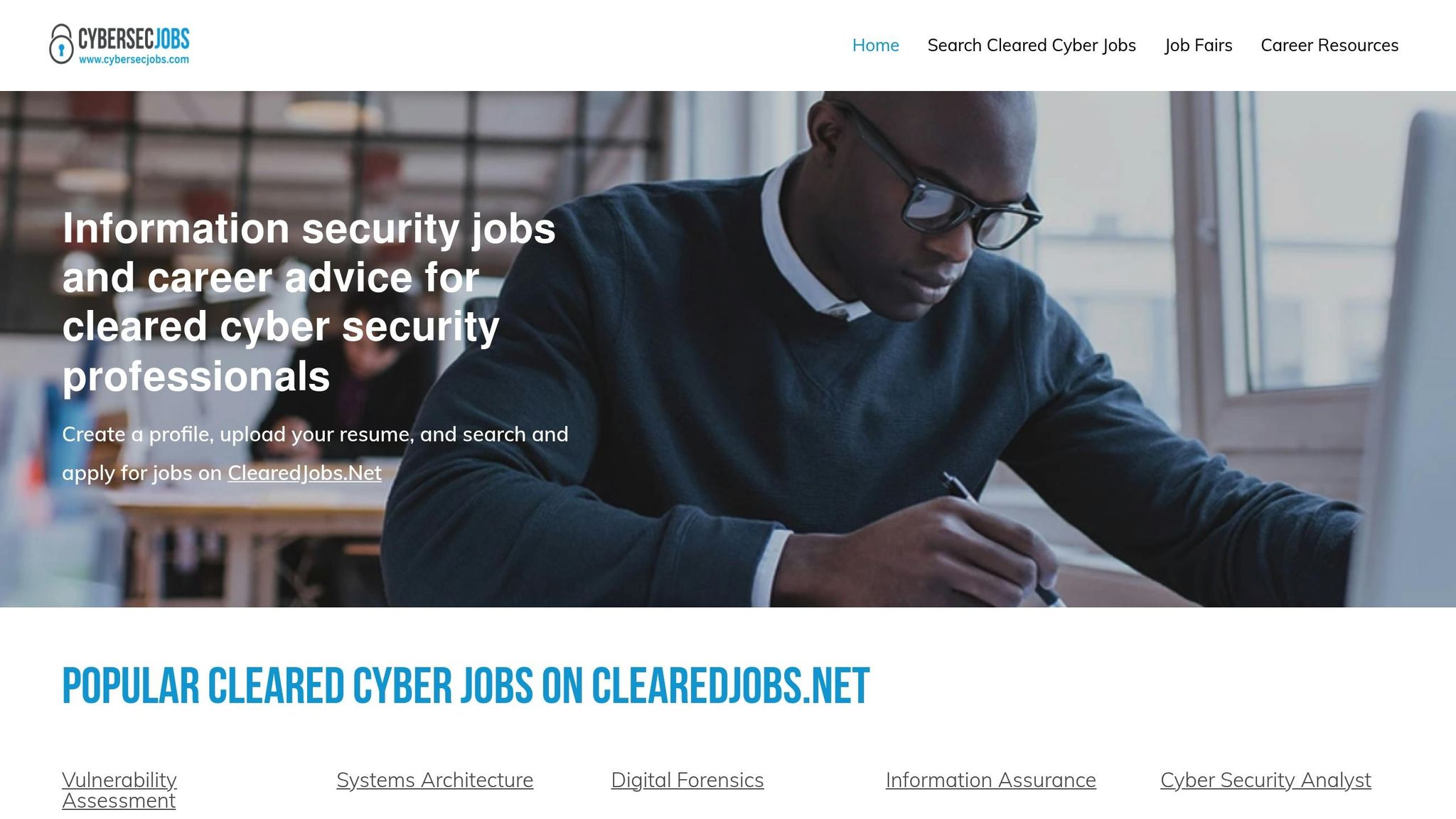
For those with a GICSP certification, Cleared Cyber Security Jobs offers a tailored platform to connect with employers in the ICS space. Their search tools help you identify positions that specifically list GICSP as a preferred or required qualification. By uploading your resume, you can directly apply for cleared ICS roles with hiring organizations.
The platform also provides job alerts customized to your certification, notifying you when relevant openings arise. Since all employers on the site are direct-hire organizations, you’ll bypass third-party recruiters and connect directly with companies looking for cleared professionals. Additionally, job fairs hosted by the platform offer a chance to meet hiring managers from critical infrastructure sectors in person. Importantly, these services are free for job seekers, though U.S. citizenship and an active security clearance are required to access the full range of opportunities. This streamlined process makes it easier to transition from certification to career advancement.
Salary Ranges and Role Comparisons
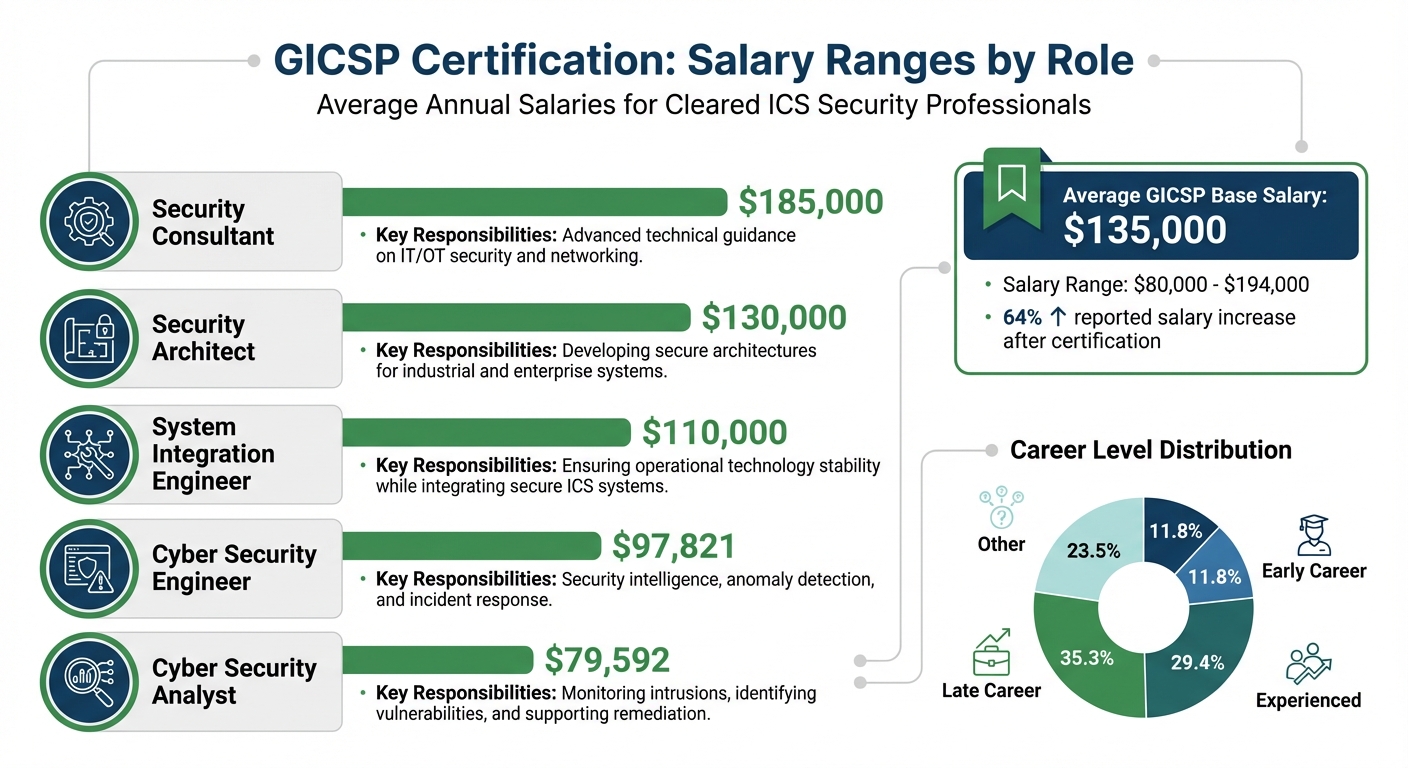
GICSP-certified professionals enjoy competitive salaries, with an average base salary of around $135,000 per year. Depending on the role, experience, and complexity of the systems involved, salaries range from $80,000 to $194,000 [15][16].
| Job Title | Average Salary | Key Responsibilities |
|---|---|---|
| Security Consultant | $185,000 | Offering advanced technical guidance on IT/OT security and networking [16] |
| Security Architect | $130,000 | Developing secure architectures for industrial and enterprise systems [16] |
| System Integration Engineer | $110,000 | Ensuring operational technology stability while integrating secure ICS systems [16] |
| Cyber Security Engineer | $97,821 | Conducting security intelligence, anomaly detection, and incident response [15][20] |
| Cyber Security Analyst | $79,592 | Monitoring for intrusions, identifying vulnerabilities, and supporting remediation [15][20] |
Statistics show that 64% of professionals reported a salary increase after earning certifications like the GICSP [13]. The majority of GICSP holders are seasoned professionals, with 35.3% in "Late Career" and 29.4% classified as "Experienced." Only 11.8% fall into the "Early Career" category [15]. This distribution aligns with the certification’s prerequisites, which include at least two years of work experience and post-secondary education [3].
Next Steps for Certification and Career Growth
Steps to Get Certified
Once your study plan is in place, it’s time to take action and secure your certification. To qualify, you’ll need at least two years of work experience and two years of post-high school education or training [3]. While these are the baseline requirements, many candidates choose to prepare through the SANS ICS410: ICS/SCADA Security Essentials course [6]. If you decide to take this course, it’s a smart move to schedule your exam as soon as you complete it – this helps keep the momentum going [2].
The process itself is straightforward: submit your application, formally agree to the GIAC Code of Ethics, and schedule your exam. You’ll have 120 days from account activation to complete the exam, which can be taken through ProctorU or PearsonVUE [1][3][4].
Using GICSP to Find Job Opportunities
Once you’ve earned your GICSP certification, it’s time to put it to work. Start by updating your resume on Cleared Cyber Security Jobs, a platform that connects you directly with hiring managers looking for GICSP-certified professionals. Use the platform’s search tools to pinpoint jobs where GICSP is listed as a preferred or required qualification, and set up job alerts to get notified about new opportunities tailored to your certification.
The GICSP certification also meets several Department of Defense (DoD) requirements, including IAT Level II, CND-A, and CND-IS, under DoD 8570.0.1 [5]. Highlighting this compliance on your resume can open doors to federal positions in critical sectors like energy, transportation, and federal network defense [13][5]. Once you’ve secured a role, staying current with your certification will ensure long-term career success.
Maintaining Your Certification
Your GICSP certification is valid for four years, but to renew it, you’ll need to earn 36 CPE credits or retake the latest version of the exam [21][3][22]. To make the renewal process smoother, it’s a good idea to track your CPE credits early by regularly logging into your GIAC account. Attending SANS training events and industry conferences can help you earn these credits while staying up-to-date with the latest industry trends [21].
Maintaining your certification not only keeps you competitive but also enhances the career benefits you’ve already gained. For instance, 64% of professionals reported salary increases after earning certifications like the GICSP [13]. To take your career further, consider adding related certifications to your portfolio, such as GIAC Response and Industrial Defense (GRID) or GIAC Critical Infrastructure Protection (GCIP) [2][6].
FAQs
Is GICSP worth it if I’m new to ICS/OT?
The GICSP certification can be a great asset, even for those just starting in the ICS/OT field. It introduces key concepts and provides a solid base in industrial control systems security, making it accessible to professionals regardless of their experience level. Beyond foundational knowledge, it also helps you develop practical skills and enhances your credibility in the ICS/OT domain, which can open doors for career advancement and align well with industry demands.
What should I bring to the GICSP open-book exam?
For the GICSP open-book exam, make sure to bring a valid form of identification and any reference materials that the exam provider specifically allows. Since this is an online, proctored exam, it’s important to carefully review the official instructions provided by GIAC or the testing service ahead of time. Double-check the guidelines to ensure you’re fully prepared and have all necessary items ready for exam day.
Which cleared job titles most often require GICSP?
The GICSP certification is frequently associated with roles like ICS Security Engineer and ICS Security Specialist. These positions typically focus on protecting industrial control systems, making this certification a sought-after qualification for professionals working in cleared ICS security roles.