• Skip to primary navigation
  • Skip to main content
Cleared Cyber Security Jobs | CyberSecJobs.com

Cleared Cyber Security Jobs | CyberSecJobs.com

Cleared Cyber Security Jobs

  • Home
  • Search Cleared Cyber Jobs
  • Job Fairs
  • Career Resources

Certifications

AWS Security Specialty Certification for Cleared Cloud Engineers

CyberSecJobs Editorial · February 14, 2026 ·

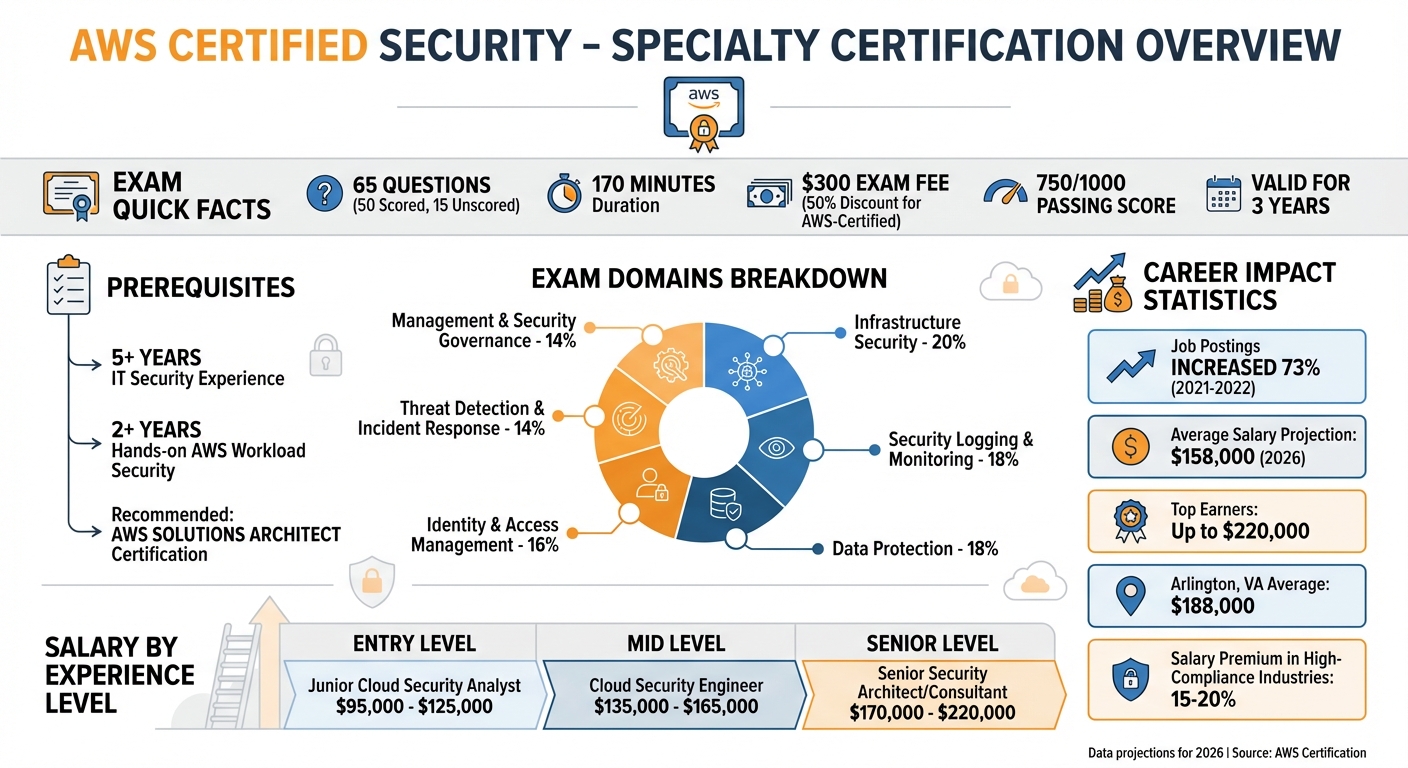
The AWS Certified Security – Specialty certification is a must-have for cloud engineers working with classified or sensitive data. It validates expertise in AWS security, compliance, and incident response – skills in high demand for government and defense projects. With job postings requiring this certification increasing by 73% between 2021 and 2022, and average salaries projected to hit $158,000 annually by 2026, it’s a career booster for cleared professionals.

Key highlights:

  • Exam Overview: 65 questions, 170 minutes, $300 fee (50% discount for current AWS-certified professionals).
  • Core Domains: Infrastructure Security, Data Protection, IAM, Threat Detection, Logging & Monitoring, Governance.
  • Prerequisites: 5+ years of IT security experience, 2+ years securing AWS workloads.
  • Job Impact: Positions like Cloud Security Engineer and Senior Security Architect offer salaries up to $220,000.

This certification equips you to secure classified workloads, enforce compliance, and handle advanced AWS tools like GuardDuty, KMS, and Security Hub. It’s a practical investment for cleared engineers aiming to excel in high-stakes environments.
AWS Security Specialty Certification: Exam Details, Salary Projections, and Career Impact 2026

AWS Security Specialty Certification: Exam Details, Salary Projections, and Career Impact 2026

AWS Certified Security Specialty Exam (SCS-C02) Training Course
AWS

sbb-itb-bf7aa6b

What Is the AWS Certified Security – Specialty Certification?

The AWS Certified Security – Specialty certification validates your expertise in designing and implementing security solutions within the AWS Cloud. It focuses on advanced security practices, including encryption methods and compliance frameworks tailored for sensitive environments like government operations [1][2].

The SCS-C02 exam includes 65 questions (50 of which are scored), has a time limit of 170 minutes, and requires a minimum score of 750 out of 1,000 to pass. The exam fee is $300, but active AWS certification holders receive a 50% discount [1][5]. Candidates are expected to have five years of IT security experience and two years of hands-on experience securing AWS workloads [1][2]. Once achieved, the certification is valid for three years, after which recertification is required by passing the latest version of the exam [1][5]. These rigorous requirements highlight its importance, especially for professionals handling sensitive workloads.

Why Cleared Cloud Engineers Need This Certification

Cleared professionals often work in environments where security is paramount, and any lapse could have serious consequences. This certification equips them with the expertise to safeguard classified or sensitive workloads, aligning with the strict compliance and security standards required in government and defense projects [3][5].

The exam emphasizes compliance and governance using tools like AWS Config and Security Hub, which help enforce frameworks like CIS AWS Foundations and PCI DSS [3]. For projects that demand FIPS 140-2 Level 3 compliance, the certification covers AWS CloudHSM, a service that provides dedicated hardware security modules [3].

Additionally, it prepares candidates to respond to security incidents effectively. For example, you’ll learn to maintain data immutability with S3 Object Lock and Glacier Vault Lock, ensuring WORM (Write Once, Read Many) compliance for sensitive data [3]. By combining technical skills with compliance expertise, this certification empowers cleared engineers to handle the unique demands of government and defense projects.

Core Skills Covered

The certification’s exam domains mirror real-world security priorities, ensuring that the skills you gain are directly applicable to securing sensitive workloads. The exam is divided into six key domains:

Domain Weight Key Services and Topics
Infrastructure Security 20% AWS WAF, Shield, VPC, Security Groups, NACLs
Security Logging & Monitoring 18% CloudTrail, CloudWatch, VPC Flow Logs, Inspector
Data Protection 18% KMS, CloudHSM, S3 Encryption, Secrets Manager
Identity & Access Management 16% IAM Policies, Roles, Federation, Cognito
Threat Detection & Incident Response 14% GuardDuty, Security Hub, Detective
Management & Security Governance 14% AWS Organizations, SCPs, Config

Incident Response training includes tools like Amazon GuardDuty, Security Hub, and Detective to detect and address compromised resources [3]. You’ll also explore automation techniques, such as using Amazon EventBridge to trigger AWS Lambda functions for security remediation [3].

Logging and Monitoring focuses on setting up CloudTrail for auditing, CloudWatch for real-time alerts, and VPC Flow Logs for analyzing network traffic [3][7]. In Infrastructure Security, you’ll learn to design robust edge security with AWS WAF and Shield, as well as implement network segmentation using Security Groups and NACLs [3].

Identity Management covers complex authorization tasks, including creating IAM policies, managing roles, and enabling secure access to AWS resources through federation and SAML 2.0 integration with on-premises Active Directory [3][4][7].

Finally, Data Protection emphasizes mastering AWS KMS for encryption key management, CloudHSM for hardware-based security, and S3 Object Lock for preserving data integrity. For instance, you’ll learn to use S3 Object Lock in "Compliance" mode to ensure critical data remains untouchable, even by root users [3].

Certification Requirements and Exam Details

Prerequisites and Experience Requirements

You don’t need any prior AWS certifications to sign up for this exam [5]. That said, AWS strongly recommends candidates bring a wealth of practical experience to the table: five or more years of IT security experience focused on designing and implementing security solutions, alongside at least two years of hands-on experience securing AWS workloads [1][2][5].

To succeed, you’ll need a solid grasp of the AWS shared responsibility model, data encryption techniques, data classifications, and secure internet protocols [1][5]. Additionally, hands-on familiarity with key AWS services like IAM, CloudTrail, KMS, CloudWatch, GuardDuty, Security Hub, Macie, AWS Config, and WAF is essential [5]. While not mandatory, many candidates choose to first earn the AWS Certified Solutions Architect – Associate or Professional certifications to strengthen their cloud knowledge base [1][5]. This foundational expertise is especially valuable for tackling the complex demands of securing classified cloud environments.

Exam Format and Scoring

Preparation doesn’t stop at experience – it’s also about knowing the exam’s format inside and out. Referred to as SCS-C02, the exam includes 65 questions presented in multiple choice and multiple response formats [1][5]. However, only 50 questions count toward your final score, as 15 are unscored trial questions. Since these trial questions aren’t identified, every question deserves your full attention.

To pass, you’ll need a scaled score of 750 [5]. AWS uses a compensatory scoring method, meaning your overall performance across all domains determines your result [5]. This approach makes understanding the exam structure key for professionals working in high-security environments.

The test is available at Pearson VUE centers or through online proctoring, and it’s offered in several languages, including English, Japanese, Korean, Portuguese, Simplified Chinese, and Spanish [1][8]. After completing the exam, you’ll receive a detailed breakdown of your performance by domain, helping you identify areas to focus on if you need to retake it [5].

Benefits for Cleared Cloud Engineers

Cleared cloud engineers who master essential security domains unlock a range of career and technical advantages.

Job Demand and Salary Impact

Achieving the AWS Certified Security – Specialty certification can lead to some of the most lucrative positions in the cleared cybersecurity field. By 2026, professionals holding this certification are projected to earn an average base salary of $158,000 annually in the United States, with top earners in major tech hubs surpassing $200,000 per year [9]. In key defense and government contracting areas like Arlington, VA, average salaries can climb to $188,000 [9].

In high-compliance industries such as defense, fintech, and healthcare, cleared professionals often enjoy a 15% to 20% salary premium. This is because employers in these sectors value both expertise and the assurance that comes with it – mistakes in these fields can have enormous costs [9]. Additionally, this certification demonstrates the ability to implement advanced security measures, such as Service Control Policies across multiple accounts. This expertise can result in a 20% to 30% salary boost over those with only basic cloud knowledge [9].

Experience Level Job Role Estimated Salary Range (2026)
Entry Level Junior Cloud Security Analyst $95,000 – $125,000
Mid Level Cloud Security Engineer $135,000 – $165,000
Senior Level Senior Security Architect/Consultant $170,000 – $220,000

In addition to competitive pay, the certification hones technical skills critical for working in classified environments.

Technical Skills for Classified Work

This certification develops the expertise needed to secure classified and sensitive workloads effectively. For example, it provides advanced knowledge of data protection tools like AWS KMS and CloudHSM, ensuring compliance with FIPS 140-2 Level 3 and safeguarding data both at rest and in transit.

It also emphasizes continuous monitoring and auditing capabilities. You’ll learn to maintain detailed audit trails and detect threats in real time. Using tools like AWS Lambda and Amazon EventBridge, you can build automated workflows to immediately isolate compromised resources – an essential skill in environments where delays in response are unacceptable.

The training further covers designing secure network architectures. By leveraging VPCs, Network Access Control Lists, and private endpoints, you’ll be able to isolate sensitive workloads from public internet access while meeting stringent regulatory requirements. These skills are indispensable for maintaining security in high-stakes, classified settings.

How to Prepare for the Exam

Preparing for the AWS Certified Security – Specialty exam takes a mix of structured study, hands-on practice, and disciplined time management. Here’s how you can set yourself up for success.

Study Materials and Resources

Begin with the AWS Certified Security – Specialty Exam Guide and the Official Practice Question Set available on AWS Skill Builder [1]. These resources detail the exam’s scope and familiarize you with the types of questions you’ll encounter. AWS Skill Builder also offers an "Exam Prep Plan" featuring digital courses, AWS Builder Labs, AWS Cloud Quest, and AWS Jam for hands-on practice [1].

For additional preparation, platforms like A Cloud Guru (now part of Pluralsight) provide certification courses, quizzes, and an Exam Simulator that replicates the test environment [4]. This simulator is especially useful for practicing time management – try to answer 10 questions every 20 minutes [6].

Key AWS whitepapers to review include the "AWS Security Incident Response Guide", "KMS Best Practices", and "DDoS Best Practices" [4]. You can also access free sessions on AWS Training Live on Twitch, led by AWS experts [1]. If you’ve previously passed an AWS certification, take advantage of the 50% discount voucher for your next exam, bringing the cost down to $150 USD [1].

Exam Domain Weighting Services to Review for Exam Prep
Infrastructure Security 20% VPC, Security Groups, NACLs, WAF, Shield
Data Protection 18% KMS, CloudHSM, S3 Encryption, Secrets Manager
Logging and Monitoring 18% CloudWatch, CloudTrail, Config, Inspector
Identity and Access Management 16% IAM, Cognito, Organizations, Directory Service
Threat Detection and Incident Response 14% GuardDuty, Security Hub, Detective
Management and Security Governance 14% Organizations, SCPs, Trusted Advisor

Armed with these resources, it’s time to dive into practical application.

Hands-On Practice with AWS

"There’s no replacement for [hands-on experience]. We’re humans, and we learn by doing."
– Faye Ellis, Principal Training Architect, A Cloud Guru [4]

Relying solely on theory won’t cut it for this exam. Use the AWS Free Tier to practice with core security services like IAM, KMS, CloudTrail, and GuardDuty [3][4]. For services beyond the Free Tier, budget around $10.00 per month for practice exercises [10].

Set up at least three AWS accounts and use AWS Organizations to create a master account. This setup lets you practice cross-account IAM roles and resource sharing – skills essential for managing multi-account environments [10]. For encryption exercises, invest in a Customer Managed Key (CMK) in KMS, which costs about $1.00 per month [10].

You can also launch EC2 instances to practice enabling VPC Flow Logs, sending logs to CloudWatch, and setting alarms for rejected traffic on specific ports like port 22 [10]. Test S3 bucket policies and VPC endpoints by restricting bucket access to a specific VPC endpoint, then simulate failure scenarios using the CLI [10][11]. Additionally, experiment with Permission Boundaries and Attribute-Based Access Control (ABAC) by tagging users and designing policies that align access permissions with resource tags [10].

Once you’ve built your practical skills, it’s time to organize your study plan.

Creating a Study Schedule

Balancing work and exam prep can be challenging, especially for professionals. A three-month study plan works well for those with prior AWS experience.

  • Month 1: Focus on Identity and Infrastructure. Learn IAM policy evaluation, VPC security, and edge security tools like WAF, Shield, and CloudFront.
  • Month 2: Dive into Data Protection and Monitoring. Concentrate on KMS key policies, S3 security configurations, and services like CloudTrail and CloudWatch Logs.
  • Month 3: Cover Incident Response and Governance. Study services like GuardDuty, Security Hub, and AWS Organizations [6].

Use the final two weeks for practice exams from Whizlabs or AWS Skill Builder to fine-tune your timing and readiness [6]. Follow AWS’s 4-Step Plan: review the exam guide, fill knowledge gaps with courses, practice with flashcards and questions, and take the official pretest to gauge your preparedness [1]. When answering questions, prioritize the most secure solution unless the question explicitly asks for the "simplest" or "most economical" option [6].

To retain what you learn, review new material at intervals: after 10 minutes, 24 hours, one week, and one month. This approach can help you retain up to 90% of the information [4].

Using the Certification in Classified Environments

This section explores how to apply your certification skills to tackle the challenges of classified environments. With your AWS Certified Security – Specialty knowledge, you’ll be equipped to protect the nation’s most sensitive data. This certification confirms your expertise in managing specialized data classifications and AWS protection tools, which are critical for handling workloads across Unclassified, Sensitive, Secret, and Top Secret levels.

Securing Classified Workloads on AWS

For over a decade, AWS has been the go-to cloud service provider for U.S. government workloads, supporting the full spectrum of data classifications [12]. Your training enables you to enforce compliance with standards like DNI ICD 503 and NIST SP 800-53.

In classified environments, AWS handles the physical infrastructure’s security while you focus on applying OS and application STIGs. Using pre-approved CloudFormation templates, you can secure security groups, network ACLs, and deploy STIG-hardened machine images.

AWS Environment DoD Impact Level Classification Level
US East / West Regions IL 2 Unclassified / Public
AWS GovCloud (US) IL 2, 4, 5 CUI / Sensitive
AWS Secret Region IL 6 Secret
AWS Top Secret Cloud N/A (ICD 503) Top Secret

The AWS Top Secret Cloud is supported 24/7 by cleared U.S. citizens [12]. In October 2025, AWS expanded its Secret-level capacity by launching the Secret-West Region [16]. For example, the Naval Information Warfare Center (NIWC) Pacific used AWS in 2024 to create a compliant DevSecOps environment, accelerating classified research and development [16].

"By removing the undifferentiated heavy lifting of the underlying IT infrastructure, national security customers are able to focus on keeping the United States secure."

  • AWS Top Secret Cloud Documentation [12]

You can also streamline your compliance efforts by leveraging AWS FedRAMP and DoD provisional authorizations to reduce the burden of System Security Plans (SSP). Concentrate on shared and customer-specific controls, and automate compliance by enforcing programmatic policies. AWS Service Catalog templates allow you to lock down security settings, ensuring application owners cannot modify critical configurations like network ACLs.

Next, we’ll look at connecting AWS services with on-premises classified networks to complete your security strategy.

Connecting AWS with Classified Networks

Integrating AWS with on-premises classified infrastructure requires precise connectivity solutions. Your certification expertise in secure protocols and AWS networking is essential when using AWS Direct Connect. This dedicated, high-bandwidth connection bypasses the public internet, meeting strict requirements for Secret and Top Secret data transmission.

For workloads at Impact Levels 4 (IL4) and 5 (IL5), deploy the Landing Zone Accelerator (LZA) on AWS to align with DISA SCCA requirements [14]. While physical isolation was once the standard, the DoD Security Requirements Guide now allows logical separation for IL5 workloads if you demonstrate robust virtual separation controls and dedicated tenancy [15].

To enforce data handling standards, use resource tags (e.g., Classification: Secret) along with AWS Organizations tag policies. AWS Config can continuously monitor resources and flag any deviations from your security baseline. Always ensure cryptographic protection for sensitive government data by using FIPS 140-3 validated endpoints [13].

For ITAR-regulated or highly sensitive data, restrict access to "US Persons" as defined by federal regulations. Maintain a centralized data catalog that maps data locations, sensitivity levels, and applied controls – such as encryption, retention, and access restrictions. This ensures compliance while managing multi-tenant systems effectively. Alternate solutions may also be approved during the Provisional Authorization (PA) process [15].

Finding Jobs with Your Certification on Cleared Cyber Security Jobs
Cleared Cyber Security Jobs

Put your technical skills to work by targeting high-demand roles in cleared cybersecurity. With an AWS Certified Security – Specialty credential, you’re positioned for some of the most sought-after positions in the field. The key is making sure the right employers see it. Cleared Cyber Security Jobs connects you with a resume database that defense and intelligence contractors actively use to search through over 1.6 million qualified candidates.

Highlighting Your Certification on Resumes

Make your AWS Certified Security – Specialty credential stand out – especially alongside your clearance level. Recruiters often skim the first few lines of a resume for critical qualifications, so include this information in your professional summary or contact section. For instance, instead of burying it later in your resume, lead with something like: "TS/SCI cleared Cloud Security Engineer with AWS Certified Security – Specialty and 7 years securing classified workloads." [17][18]

Consider adding a Technical Skills section to your resume where "AWS Certified Security – Specialty" is prominently listed. Use the STAR method (Situation, Task, Action, Result) to quantify your achievements. For example, instead of writing "Managed AWS security", try: "Reduced system vulnerabilities by 35% through proactive threat monitoring using AWS Security Hub." This approach not only appeals to human recruiters but also improves your visibility in Applicant Tracking Systems (ATS) [17][18].

"Your security-cleared resume is not a biography or a mere list of qualifications. It’s an ad designed to help you land that coveted cleared job interview." – Ashley Jones, Editor, ClearedJobs.Net [18]

Keep your resume concise – limit it to one or two pages by removing outdated roles (older than 10 years) and focusing on your most relevant certifications [18][19]. Stick to simple formatting without graphics or unusual fonts to avoid issues with electronic scanning systems. Lastly, ensure your certification is active, as it’s valid for three years, so you remain competitive in the cleared job market.

Using Job Search Tools and Filters

Once your resume is polished, take advantage of job search tools to zero in on the right cleared cybersecurity positions. Cleared Cyber Security Jobs offers advanced filters to help you narrow results by clearance level (e.g., Secret, Top Secret, TS/SCI), polygraph requirements (CI or Full Scope), and work environment (on-site, remote, or hybrid). Use Boolean search operators to refine your search further – try something like "AWS" AND "GuardDuty" to find positions requiring specific tools. You can also set up automated alerts with keywords like "AWS Security Engineer" or "Cloud Architect" to receive regular updates on relevant openings.

The platform’s IntelliSearch™ feature matches the details of your security-focused resume to suitable positions, while the polygraph filter quickly highlights high-level roles that often come with premium pay for AWS expertise. By saving search filters, you can monitor multiple criteria at once, ensuring you don’t miss opportunities that align with your certification and clearance level. As of October 2024, the AWS Certified Security – Specialty is among the top-paying technical certifications in the U.S. [1], making these targeted tools especially valuable for boosting your earning potential.

Conclusion

The AWS Certified Security – Specialty is a key credential for cloud engineers working on classified projects. It confirms your ability to secure sensitive workloads, implement advanced encryption techniques, and navigate the critical tradeoffs required in high-stakes government settings. With demand increasing for experts who combine cloud skills with national security expertise, this certification holds significant value.

It also positions you as a trusted professional in managing complex data classifications across air-gapped systems and multi-level security setups, such as the Amazon Dedicated Cloud (ADC) [20]. As of October 2024, this certification ranks among the highest-paying technical credentials in the United States [1], underlining the essential role you play in safeguarding classified data and supporting intelligence missions. Beyond validating your technical skills, it sets you apart for top-tier cleared roles.

"This certification can build your credibility and position you as a trusted advisor to your stakeholders and customers." – AWS [1]

To connect with opportunities that align with your expertise, Cleared Cyber Security Jobs offers a focused platform. It features advanced filters for clearance levels, polygraph requirements, and work environments, helping you target roles like Cloud Security Engineer or DevSecOps within defense and intelligence sectors.

Whether you’re securing classified systems, designing incident response strategies, or architecting multi-level security frameworks, the AWS Certified Security – Specialty credential opens doors to some of the most challenging and rewarding careers in cleared cybersecurity.

FAQs

Is this certification worth it if I already have a clearance?

Earning the AWS Security Specialty certification is absolutely worth it, even if you already have a security clearance. This certification highlights your advanced skills in AWS security, adds credibility to your expertise, and opens doors to more opportunities in cloud security roles. It’s especially valuable when working with sensitive or classified cloud environments, helping you stand out in a competitive field.

Which AWS services should I practice most for SCS-C02?

When diving into AWS security, there are a few critical areas to master, especially if you’re preparing for the SCS-C02 exam or aiming to implement AWS security best practices.

Start with Identity and Access Management (IAM). This service is at the heart of controlling who can access your AWS resources and what actions they can take. Understanding how to configure IAM policies, roles, and permissions is essential for maintaining a secure environment.

Next, focus on data encryption. AWS offers multiple options for encrypting data at rest and in transit, such as using AWS Key Management Service (KMS) or enabling encryption for services like S3, RDS, and EBS. Knowing when and how to apply encryption ensures your sensitive data stays protected.

Don’t overlook security controls tailored for AWS environments. These include setting up security groups, network ACLs, and leveraging AWS Web Application Firewall (WAF) to guard against common threats.

Equally important are logging and monitoring strategies. Tools like Amazon CloudWatch and AWS CloudTrail help you track activity and detect anomalies. Combined with services like AWS Config, you can maintain compliance and quickly identify misconfigurations.

Finally, sharpen your skills in vulnerability management and incident detection tools. AWS Inspector, GuardDuty, and Security Hub are powerful resources for identifying vulnerabilities and responding to potential incidents.

By focusing on these areas, you’ll not only prepare for the exam but also gain a deeper understanding of how to secure AWS environments effectively.

How do I get hands-on experience without risking high AWS costs?

To get hands-on practice with AWS security while keeping costs low, take advantage of the AWS Free Tier. This allows you to experiment with services like EC2, S3, and CloudTrail without incurring charges. Just remember to shut down any resources when you’re done to prevent unexpected fees.

Another great option is to explore free AWS hands-on labs offered by various learning platforms. These labs don’t require a credit card and provide practical exercises in a controlled, risk-free environment. They’re a great way to build your skills and prepare for the AWS Security Specialty certification.

Related Blog Posts

  • Classified Cloud Security Jobs – AWS GovCloud and Azure Government Specialization
  • Security Plus Certification Career Guide for Cleared Entry Level
  • CCSP Certification Career Guide for Cleared Cloud Security
  • CCSK Certification Career Guide for Cleared Cloud Knowledge

Related Guides

  • GCP Security Certification for Cleared Cloud Architects
  • Azure Security Engineer Certification for Cleared Professionals
  • CCSK Certification Career Guide for Cleared Cloud Knowledge
  • Cybersecurity Salary Guide 2026
  • TS/SCI Salary Premium: Real 2026 Numbers

CCSK Certification Career Guide for Cleared Cloud Knowledge

CyberSecJobs Editorial · February 14, 2026 ·

Looking to advance your career in cloud security? The Certificate of Cloud Security Knowledge (CCSK) is a vendor-neutral certification by the Cloud Security Alliance (CSA) that validates your expertise in securing cloud environments. Its latest version, CCSK v5, released in July 2024, covers 12 domains including Zero Trust, AI security, and DevSecOps. Here’s why it’s worth considering:

  • Exam Details: 60 open-book multiple-choice questions, $445 fee, 80% required to pass, and two attempts allowed within two years.
  • Career Impact: Ideal for roles like Cloud Security Engineer and Cloud Architect. It also counts as one year toward CCSP certification requirements.
  • Cleared Professionals: Meets federal compliance standards (e.g., FedRAMP, NIST SP 800-53) and aligns with U.S. cybersecurity initiatives.
  • Study Resources: Free CCSK v5 Prep Kit, sample questions, and optional hands-on labs with the CCSK Plus course ($1,695).

Whether transitioning from military to civilian roles or enhancing your cloud security credentials, CCSK equips you to tackle multi-cloud environments and secure classified projects. Ready to take the next step? Start with the free prep kit and position yourself for top-tier cloud security roles.

CSA’s CCSK v5: The Essential Cloud Security Training & Certificate

sbb-itb-bf7aa6b

Career Benefits of CCSK for Cleared Professionals

CCSK vs CCSP vs CCZT Certification Comparison Chart

CCSK vs CCSP vs CCZT Certification Comparison Chart

Recognition and Career Growth

The CCSK certification builds credibility in the fast-paced world of cloud adoption, unlocking opportunities for roles like Cloud Security Engineer, Cybersecurity Consultant, Cloud Architect, and Cloud Advisor. This is especially relevant as federal agencies move sensitive workloads to secure cloud platforms [3].

Additionally, CCSK sets the stage for pursuing advanced certifications such as CCSP, CCZT, and CCAK [3]. Notably, earning the CCSK fulfills one year of the experience requirement for the CCSP, which typically demands five years of IT experience [7].

"Within a year of earning my CCSK, I was able to negotiate my way into an exciting new role with bigger benefits and compensation at a virtualization company where I support a cloud security product."
– Michael Benavidez, Technical Writer, Securitas [9]

You can also showcase your CCSK achievement with a digital badge on your resume or cleared job profiles, making your skills visible to recruiters and hiring managers. Plus, the certification contributes to continuing professional education (CPE) credits for other IT credentials [3].

This recognition positions professionals to blend cloud and cybersecurity expertise, enabling them to handle high-stakes projects with confidence.

Combining Cloud and Cybersecurity Skills

The CCSK v5 curriculum is tailored to address federal priorities, emphasizing Zero Trust architecture across its 12 domains to align with government mandates for secure systems [3]. It also includes training on DevSecOps, CI/CD pipelines, and automation – skills critical for managing classified projects that require secure and rapid deployment [3].

Another standout feature is its focus on AI and Generative AI security, replacing outdated IoT content with actionable strategies for safeguarding AI systems within cloud environments. Additional topics include serverless computing, data lakes, and cloud telemetry [3].

For those seeking hands-on learning, the CCSK Plus option offers practical labs simulating secure cloud migrations. This instructor-led course, priced at $1,695, helps participants build applied skills that are highly valued by cleared employers [8].

CCSK vs. Other Certifications

Comparing CCSK with other certifications helps professionals make informed decisions about their career paths. Here’s a quick breakdown of how it stacks up:

Feature CCSK CCSP CCZT
Focus Foundational Cloud Security Broad Information Security Zero Trust Strategy & Implementation
Experience Required None 5 years IT/Security experience None
Exam Format Open-book, Online Proctored, Closed-book Online
Exam Cost $445 Varies Included in $1,250 bundle with CCSK
Maintenance None required $135/year + 90 CPEs every 3 years Varies
Average Salary $121,932 $148,009 –
Best For Entry to Mid-level Cloud Roles Senior/Architect Roles Specialized Zero Trust Roles

The CCSK stands out for its open-book exam format and lack of experience requirements, making it an accessible choice for professionals starting or transitioning into cloud security. Its vendor-neutral framework ensures the skills are applicable across major cloud platforms, a critical factor for cleared environments.

"The CCSK covers the basics of strategic and tactical cloud security skills. The material for this certificate is vendor-neutral, meaning the skills should apply to any career path within cloud security."
– Coursera Staff [6]

How to Get the CCSK Certification

Study Resources and Exam Preparation

Start your CCSK journey with the free CCSK v5 Prep Kit, which includes a Study Guide, Knowledge Guide, sample questions, and the foundational "Security Guidance v5" document [11][13]. This kit is your go-to resource, covering everything you need for the exam.

For extra help, use the CCSK Orb chatbot, which provides topic-specific insights as you study [10][12]. If you prefer structured learning, consider the self-paced online course (15.5 hours) or the CCSK Plus course, which includes hands-on labs that simulate secure cloud migrations – especially useful for those working in secure environments [10].

Focus your preparation on the 12 domains of the v5 curriculum. Pay close attention to areas like Cloud Workload Security (11.67% of the exam), Infrastructure & Networking (10%), and Application Security (10%) [4]. The updated curriculum highlights critical topics such as Zero Trust strategy, Artificial Intelligence security, and serverless computing – key skills for professionals working in classified cloud projects [3].

"Obtaining the CCSK certificate was one of the best decisions I’ve made for my professional growth. Studying for the certificate not only deepened my technical knowledge but also improved my ability to communicate security concepts to non-technical stakeholders."
– Salvador Guarino Jr., CISO, PwC Philippines [14]

If you’re a U.S. Veteran, the GI Bill can fully cover your CCSK exam fees [5], making this an excellent opportunity for those with a military background. Once you’ve completed your preparation, you’ll be ready to schedule your exam.

Exam Details and Registration

Here’s what you need to know about the CCSK exam: The cost is $445, which includes two attempts valid for two years from the purchase date [3]. To register, create an account on the Cloud Security Alliance (CSA) platform and purchase an exam token [4].

The exam consists of 60 multiple-choice or true/false questions, with a time limit of 120 minutes [3]. To pass, you’ll need a score of at least 80%, though the average passing rate is currently 62% [4]. While there are no formal work experience requirements, having a basic understanding of firewalls, encryption, and Identity and Access Management (IAM) is recommended [4].

The test is open-book and taken online, so you can use study materials during the exam [3]. Before you begin, ensure you have a reliable internet connection and a quiet space for the two-hour test period [4]. Organize your notes and the Security Guidance v5 document in advance for quick reference during tricky governance or compliance questions [3]. Once you’ve registered, you’re ready to put your preparation into action.

Tips for Passing the Exam

To make the most of the open-book format, create an efficient reference system. Prepare an acronym list and bookmark important sections of the Security Guidance v5 document for easy access [3]. Since you can use these materials during the test, focus on understanding concepts rather than memorizing details.

Practice with the sample questions provided in the Prep Kit to get a feel for the exam’s phrasing and difficulty level [11]. Dedicate extra time to mastering new v5 topics like Artificial Intelligence (GenAI), Zero Trust strategy, and Data Lakes [3]. The CSA’s "Top Threats to Cloud Computing" series is another excellent resource for understanding the current threat landscape [4].

Prioritize domains with the highest exam weighting: Cloud Workload Security, Infrastructure & Networking, and Application Security together make up almost a third of the test [4]. Manage your time carefully – each question should take about two minutes on average [3]. If you’re unsure of an answer, flag it and move on, then revisit flagged questions with your reference materials before time runs out.

Using CCSK to Find Cleared Cloud Jobs

Your CCSK certification can be a powerful tool for landing cleared cloud security roles. By combining specialized job search strategies with the skills and knowledge you’ve gained, you can position yourself as a top candidate in the field.

Finding Jobs on Cleared Cyber Security Jobs

Cleared Cyber Security Jobs

Cleared Cyber Security Jobs is a platform designed to help professionals like you find roles that align with your CCSK certification. Start with the IntelliSearch feature to filter jobs using keywords such as "CCSK", "cloud security", or "Zero Trust." This allows you to focus on positions directly related to your expertise. For more precise results, use the Boolean Job Search tool. For example, you can search for "cloud AND security AND TS/SCI" to target positions that match your clearance level.

Uploading your resume is another key step – it increases your visibility to employers actively seeking CCSK-certified professionals. You can also set up job alerts to receive notifications about new opportunities. As of February 2026, there are 152 cloud security positions listed on the platform [15]. Additionally, the Skills Cloud feature highlights your CCSK credential alongside your clearance status, making it easier for recruiters to identify your qualifications at a glance.

Making Your CCSK Credential Stand Out

Once you’ve identified potential roles, ensure your resume places your CCSK certification in a prominent position. List your CCSK credential alongside your clearance to immediately catch the attention of employers. Take advantage of the digital badge provided by the Cloud Security Alliance – it’s a quick way for recruiters to verify your expertise. Add this badge to your resume and professional profiles for added credibility [4].

When detailing your experience, reference specific CCSK domains and quantify your achievements. For example, you might highlight how you reduced cloud vulnerabilities by 40% using Zero Trust principles or maintained 99.9% uptime for classified cloud systems [16]. Tailor your resume to each job description. If a position emphasizes Identity & Access Management, emphasize your CCSK training in that particular area [16].

What Employers Look For

It’s also important to understand what employers value in CCSK-certified professionals. Employers on Cleared Cyber Security Jobs often seek candidates with demonstrated expertise in areas like Zero Trust, DevSecOps, and Artificial Intelligence security. The CCSK certification stands out because of its challenging requirements – an average passing rate of 62% and a minimum score of 80% – which prove your mastery of vendor-neutral cloud security principles [4].

During interviews, be ready to discuss how your CCSK knowledge applies to practical challenges. For instance, explain how Zero Trust architecture or Cloud Telemetry could solve specific security issues in classified environments [3]. Use the platform’s Expressed Interest feature to show enthusiasm for particular roles, and the Following Companies tool to keep track of organizations that frequently hire for cloud security positions.

Feature Category Job Seeker Tools Employer/Recruiter Tools
Search & Discovery IntelliSearch, Boolean Job Search, Job Alerts Candidate Search, Skills Cloud Filtering
Profile Optimization Resume Upload, Skills Cloud, Digital Badges Profile Views, Pulse Networking
Engagement Expressed Interest, Following Companies Group Management, Direct Messaging
Visibility Active Clearance Status, Certification Listing Verified Professional Profiles

Conclusion: Moving Forward with CCSK

Earning the CCSK certification does more than validate your expertise – it positions you for sought-after cloud security roles in government and defense. As a vendor-neutral credential, the CCSK equips you with the knowledge to tackle complex security challenges in cleared environments, making it a solid foundation for advancing in this field [3].

Start your journey with the free CCSK v5 Prep Kit [1]. Once certified, highlight your digital badge on your resume and professional profiles to grab the attention of recruiters [3]. Use this certification as a springboard to boost your career in cleared cloud security.

Take the next step by uploading your resume to Cleared Cyber Security Jobs, setting up job alerts, and showcasing your CCSK certification alongside your security clearance. This combination makes you an ideal candidate for employers in the cleared space.

The CCSK also lays the groundwork for pursuing advanced certifications like the CCSP, CCZT, or CCAK, which can lead to senior-level opportunities [2]. Stay active in the cloud security field by participating in CSA working groups and webinars to keep your skills sharp and your network strong [3]. Investing in the CCSK today is a step toward securing your future in cleared cloud security roles.

FAQs

Is CCSK worth it for cleared jobs?

The CCSK certification holds significant value for cleared cybersecurity roles. As a globally recognized credential, it showcases expertise in cloud security, which is increasingly important in today’s tech landscape. Earning this certification can help professionals access new opportunities and qualify for higher-level positions in cloud-focused environments.

How hard is the CCSK v5 exam?

The CCSK v5 exam is no walk in the park. With 173 questions, it dives deep into modern cloud security concepts and best practices. To succeed, you’ll need to dedicate serious time to studying and truly understand the material. Preparation and consistent practice are key to tackling this challenge effectively.

What should I study first for CCSK v5?

To begin your journey with the CCSK v5 curriculum, focus on its foundational domains. These include Cloud Computing Concepts and Architectures, Cloud Governance, Risk, Audit, and Compliance, and Identity and Access Management. These areas lay the groundwork for understanding cloud security principles and form the core knowledge required for the certification.

Related Blog Posts

  • Classified Cloud Security Jobs – AWS GovCloud and Azure Government Specialization
  • GSEC Certification Career Guide for Cleared Security Essentials
  • Security Plus Certification Career Guide for Cleared Entry Level
  • CCSP Certification Career Guide for Cleared Cloud Security

Related Guides

  • GCP Security Certification for Cleared Cloud Architects
  • Azure Security Engineer Certification for Cleared Professionals
  • AWS Security Specialty Certification for Cleared Cloud Engineers
  • Cybersecurity Salary Guide 2026
  • TS/SCI Salary Premium: Real 2026 Numbers

CCSP Certification Career Guide for Cleared Cloud Security

CyberSecJobs Editorial · February 14, 2026 ·

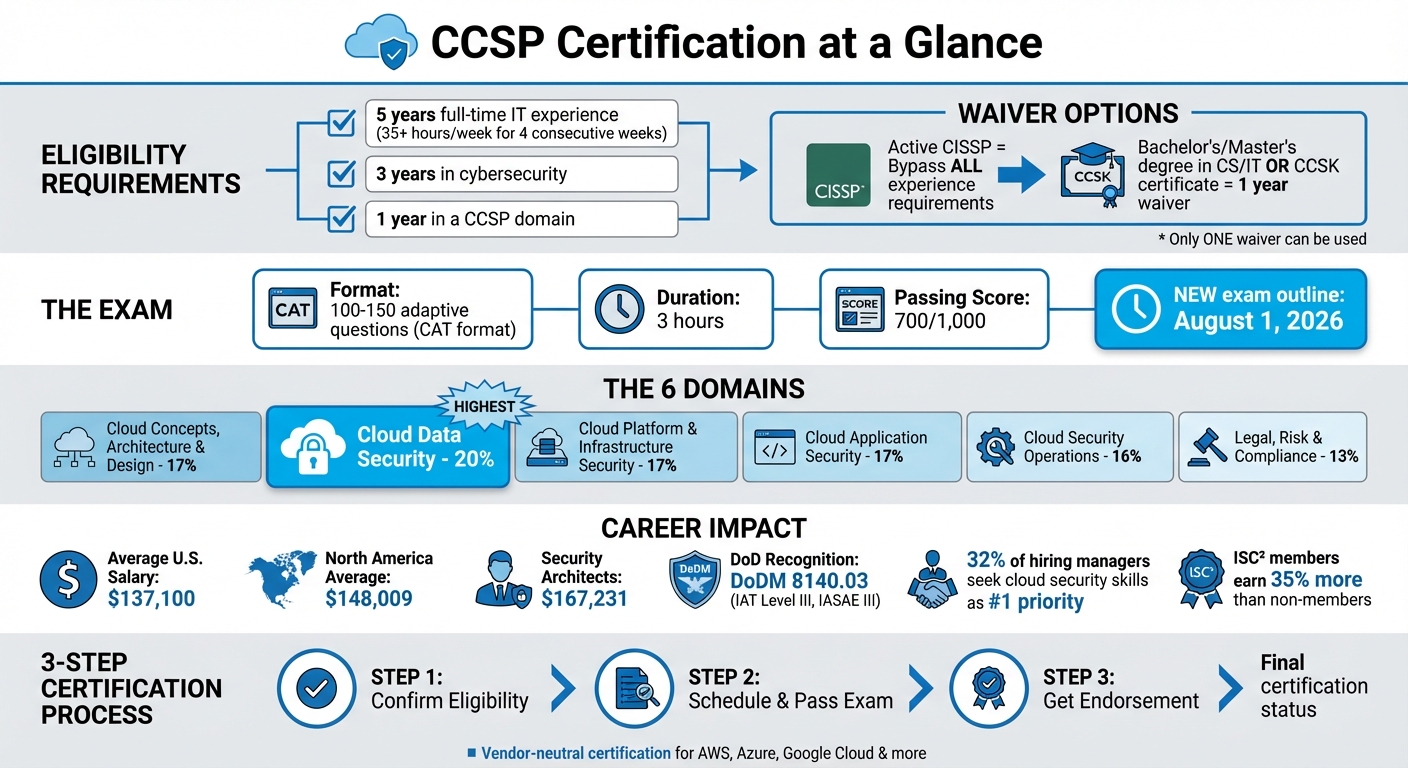
The Certified Cloud Security Professional (CCSP) certification, offered by ISC2, is a globally recognized credential for cloud security experts. It’s especially relevant for professionals with security clearances, as it’s officially approved under the U.S. Department of Defense Manual (DoDM) 8140.03 for roles like IAT Level III and IASAE III. With the rise of multi-cloud and hybrid infrastructures in government and defense sectors, the demand for CCSP-certified professionals continues to grow.

Key Highlights:

  • Eligibility: Requires five years of IT experience (three in cybersecurity and one in a CCSP domain). CISSP holders can bypass the experience requirement.
  • Exam: 100–150 adaptive questions, three hours, 700/1,000 passing score. A new exam outline takes effect on August 1, 2026.
  • Domains: Six domains, with Cloud Data Security (20%) being the most weighted.
  • Salary: Average U.S. salary of $137,100, with higher earning potential for specific roles like Cloud Architect or Security Engineer.
  • Job Market: High demand in cleared roles such as Cloud Security Analyst and Cloud Engineer, with employers like Lockheed Martin and the U.S. Air Force actively hiring.

The CCSP certification validates expertise across cloud platforms like AWS, Azure, and Google Cloud, focusing on vendor-neutral security practices. It is a critical credential for professionals aiming to secure sensitive government data while advancing their careers in cloud security.

CCSP Certification Requirements and Path to Certification

CCSP Certification Requirements and Path to Certification

What You Need to Know About CCSP Certification

CCSP Certification Overview

The Certified Cloud Security Professional (CCSP) is a globally recognized certification from ISC2. It validates your expertise in designing, managing, and securing cloud environments, including data, applications, and infrastructure. Unlike certifications tied to specific platforms, CCSP applies broadly across all cloud providers, making it especially useful for professionals in sensitive, security-cleared roles.

This certification is accredited by the American National Standards Institute (ANSI) and meets ISO/IEC Standard 17024, ensuring it adheres to international professional standards. It builds on the foundational knowledge from certifications like CISSP (Certified Information Systems Security Professional) and CCSK (Certificate of Cloud Security Knowledge), making it a logical next step for seasoned cybersecurity professionals.

To qualify for the CCSP, you need at least five years of full-time IT experience, including three years in cybersecurity and one year in one of the six CCSP domains. However, if you already hold an active CISSP credential, it waives the entire experience requirement. Additionally, a bachelor’s or master’s degree in computer science or IT, or a CCSK certificate, can substitute for one year of required experience.

The exam includes 100–150 multiple-choice questions administered through Computerized Adaptive Testing (CAT), which adjusts the question difficulty based on your answers. You’ll have three hours to complete the test, and a score of 700 out of 1,000 points is required to pass. Keep in mind that a new exam outline takes effect on August 1, 2026, so plan your preparation accordingly if you’re testing after this date.

The 6 CCSP Knowledge Domains

The CCSP exam is structured around six domains, each focusing on a critical aspect of cloud security. These domains are weighted differently, so understanding their importance will help you allocate your study time effectively.

Domain Weight Focus Area
1. Cloud Concepts, Architecture and Design 17% Cloud roles, reference architectures, security design principles like cryptography and zero trust
2. Cloud Data Security 20% Data lifecycle, encryption, classification, and Information Rights Management (IRM)
3. Cloud Platform & Infrastructure Security 17% Physical/logical infrastructure, secure data center design, and BC/DR strategies
4. Cloud Application Security 17% Secure Software Development Life Cycle (SDLC), Identity and Access Management (IAM), and software assurance
5. Cloud Security Operations 16% Operating and maintaining cloud infrastructure, digital forensics, and security operations
6. Legal, Risk and Compliance 13% Privacy laws, audit processes, and enterprise risk management

Cloud Data Security (Domain 2) carries the most weight at 20%, emphasizing the importance of protecting sensitive information in the cloud. This domain is particularly relevant for professionals handling classified government data, as it covers encryption standards and data classification.

Legal, Risk and Compliance (Domain 6) focuses on navigating privacy laws, international regulations, and compliance standards like Common Criteria (CC) and FIPS 140-2. These are essential for managing data across borders or within government and defense systems.

These domains highlight the specific skills CCSP-certified professionals need to secure cloud environments, especially in multi-cloud setups often used in government and defense roles.

How CCSP Applies to Cleared Positions

The CCSP certification is especially valuable for professionals in government and defense sectors. It’s officially recognized under U.S. Department of Defense Manual (DoDM) 8140.03, qualifying it for various roles like Cloud Architect, Cloud Engineer, Cloud Security Analyst, and Cloud Computing Auditor. This approval ensures it meets the mandatory certification requirements for information workforce positions.

One of CCSP’s key advantages is its vendor-neutral approach. Whether your agency uses AWS, Azure, Google Cloud, or a combination of platforms, you can apply the same security principles and policies across all environments. This adaptability is one reason why CCSP is the fastest-growing ISC2 certification and a top credential professionals aim to earn in 2024.

In multi-cloud environments, which are increasingly common in government agencies, the CCSP’s focus on tenant partitioning and logical design (Domain 3) ensures secure separation of classified and unclassified data. Meanwhile, Domain 5 addresses the operational skills needed for monitoring cloud infrastructure, performing digital forensics, and responding to security incidents – tasks that are critical in cleared roles.

If you pass the exam but don’t yet meet the experience requirements, you can earn the title of Associate of ISC2. This status gives you six years to gain the necessary experience while still showcasing your expertise in cloud security – a valuable distinction even before full certification.

sbb-itb-bf7aa6b

CCSP Eligibility Requirements and Qualification Paths

Experience and Education Requirements

To qualify for the CCSP certification, you’ll need five years of full-time IT experience. Within those five years, three must be in cybersecurity, and at least one year must involve one of the six CCSP domains. To count a month of experience, you must work at least 35 hours a week for four consecutive weeks [8][10].

If you already hold an active CISSP certification, you can bypass the experience requirement entirely and proceed directly to the exam [8][10]. This is the quickest route for professionals who have already earned their CISSP. Additionally, a bachelor’s or master’s degree in computer science, IT, or a related field – or the Cloud Security Alliance‘s CCSK certificate – can replace one year of the required experience [8][10]. However, you can only use one waiver; combining the degree and CCSK substitution is not allowed.

If you pass the exam but lack the full experience, you’ll earn an Associate status, which gives you up to six years to meet the remaining requirements [8][4].

The next step is to ensure you meet the security and ethical standards tied to this certification.

Security Clearance and Ethics Requirements

While security clearance isn’t mandatory for CCSP eligibility, the ISC2 background qualification process aligns with many of the standards required for cleared professionals. You’ll need to disclose any prior disciplinary actions from government agencies or professional organizations, as well as any involvement in criminal or computer-related offenses [11]. The background check also reviews military court-martials and government disciplinary records, which cleared professionals are typically already familiar with [11].

All candidates must agree to follow the ISC2 Code of Ethics to qualify for certification [8]. If you have any concerns about your eligibility – such as past disciplinary issues – reach out to legal@isc2.org before scheduling your exam. Keep in mind that exam fees are non-refundable if you’re later deemed ineligible [11].

For those with non-traditional work arrangements, part-time roles and internships can also help you meet the experience requirements.

How Part-Time Work and Internships Count

If you’ve worked part-time or completed internships, these experiences can also count toward your CCSP eligibility. Part-time work is eligible if you’ve worked between 20 and 34 hours per week. ISC2 calculates 1,040 hours as equivalent to six months of full-time experience, and 2,080 hours as equivalent to a year [8][10]. This is particularly useful for professionals who may have started with part-time roles in government or contractor positions.

Both paid and unpaid internships qualify, provided you can verify them. For internships, you’ll need documentation on official letterhead (or registrar’s stationery for school-based internships) during the endorsement process. If your career began with internships through government agencies or defense contractors, gathering this documentation early can streamline your certification process [8][10].

Introduction | 40-Hour Free CCSP Exam Preparation Tutorial | ISC2 CCSP 2025 Full Course

ISC2

How to Earn Your CCSP Certification

Earning the CCSP certification involves a straightforward process with specific steps to help professionals navigate the requirements effectively.

Step 1: Confirm Your Eligibility

Before diving in, make sure you meet the necessary experience criteria. You’ll need five years of full-time IT experience (at least 35 hours per week for four consecutive weeks), including three years in cybersecurity and one year in a CCSP domain. If you already hold an active CISSP, a qualifying degree, or a CCSK certificate, you can waive one year of this requirement. If you don’t yet meet the full experience requirements, you can still earn Associate status, giving you up to six years to fulfill the remaining criteria [4][8].

Step 2: Schedule and Take the Exam

Once you’ve confirmed your eligibility, the next step is scheduling your exam. Log in to your ISC2 account, select the CCSP exam, pay the fees, and book your test appointment through Pearson VUE [12]. Double-check that your registration details match your government-issued ID exactly – any discrepancies could cause issues on test day, and exam fees are non-refundable [12].

The exam uses Computerized Adaptive Testing (CAT) and includes 100 to 150 multiple-choice and advanced questions. You’ll have three hours to complete it, and you’ll need a score of at least 700 out of 1,000 points to pass [4][9]. Testing centers enforce strict security measures, such as infrared and metal detection wands, to ensure exam integrity [12]. Keep in mind that a new exam outline will take effect on August 1, 2026 [4][1].

Step 3: Get Your Endorsement

After passing the exam, the final step is securing an endorsement. This involves having an ISC2-certified professional verify your qualifications and work experience [4][8]. The endorsement confirms that you meet the required IT experience, including cybersecurity and domain-specific expertise.

If you already hold an active CISSP, this process becomes simpler. For professionals with security clearance, it’s a good idea to identify an ISC2-certified colleague or supervisor beforehand to streamline this step. While security clearance doesn’t replace the endorsement, the CCSP’s recognition under U.S. DoDM 8140.03 makes it a highly respected credential for government and defense positions [1][5].

Cleared Jobs That Require or Prefer CCSP Certification

Common Cleared Cloud Security Positions

The CCSP certification opens doors to a variety of cleared cloud security roles. For instance, Cloud Security Analysts focus on identifying vulnerabilities and ensuring smooth cloud operations, often requiring active security clearance. Meanwhile, Cloud Architects and Cloud Engineers are responsible for designing and implementing secure cloud infrastructures, which frequently support intricate government systems.

Other roles, such as Enterprise Architects and Security Engineers, also often list the CCSP as a preferred or required credential. In January 2026, companies like Akumen Inc. and Resource Management Concepts Inc. advertised onsite Cloud Security Engineer positions in Washington, D.C., and Crane, Indiana, respectively [13]. These postings highlight how CCSP-certified professionals influence salary trends and the broader job market, which are explored next.

Salary Expectations and Job Market Outlook

In North America, CCSP-certified professionals command impressive salaries. On average, they earn $148,009 per year. Specific roles demonstrate even higher earning potential: Security Architects average $167,231 annually, Information Security Managers make around $129,063, and Information Security Analysts start at approximately $89,502 [14][15].

Demand for cloud security expertise in the cleared market remains strong. A notable 32% of cybersecurity hiring managers rank cloud computing security as the most sought-after skill in potential hires [6]. Additionally, ISC² members report earning salaries that are 35% higher than their non-member counterparts [13]. Prominent employers like Lockheed Martin Aeronautics Company, Microsoft Corp, and the U.S. Air Force actively recruit CCSP-certified professionals [15]. This consistent demand highlights the certification’s importance in government and defense sectors.

CCSP Value in Government and Defense Work

The CCSP certification holds particular significance in government and defense roles. It is officially recognized under U.S. DoDM 8140.03 [5][7], making it a key qualification for military and government contractors. Its vendor-neutral design allows professionals to work seamlessly across various cloud platforms, a critical advantage for agencies managing multi-cloud or diverse environments.

The certification’s emphasis on Legal, Risk, and Compliance aligns with stringent defense regulatory standards. As government agencies increasingly migrate critical assets to the cloud, many now require CCSP certification as a hiring prerequisite. Additionally, the certification’s rigorous approval process and adherence to the ISC² Code of Ethics ensure that CCSP holders are well-equipped to handle sensitive government data [13]. This makes the CCSP an essential credential for professionals working in the cleared cybersecurity space.

Study Resources and Exam Preparation Tips

ISC2 Official Study Materials

Once you’ve met the certification requirements and scheduled your exam, it’s time to focus on preparing effectively. The ISC2 Official Study Guide (3rd Edition) is an excellent starting point, as it covers all the exam objectives and includes practice tests. Pair it with the Official (ISC)2 CCSP CBK Reference (3rd Edition) for a deeper dive into the six domains, offering vendor-neutral insights that complement your study sessions.

Practicing exam questions is a must. The ISC2 official practice tests feature over 1,000 questions, helping you build stamina and pinpoint areas needing improvement [17][20]. For on-the-go learning, the Pocket Prep app is a handy tool, offering quick quizzes and earning a stellar 4.8/5 rating on the App Store [18]. If you’re an auditory learner, consider video training from ITPro.tv with Adam Gordon – it’s perfect for listening during your commute [17].

Support Networks for Cleared Professionals

Don’t underestimate the value of community support when preparing for the CCSP exam. Platforms like Reddit’s r/CCSP and various Discord channels provide access to real-time advice, pinned study notes, and shared experiences from others on the same journey [17]. These communities are especially useful for professionals who need to maintain operational security while seeking guidance.

Another helpful resource is the Cloud Security Alliance (CSA) Guidance v4.0, which includes the Cloud Controls Matrix (CCM). This reference is particularly useful for understanding concepts that frequently appear on the exam [17][19]. While not an official ISC2 resource, it’s highly relevant for those working with government cloud implementations, as it aligns closely with federal compliance standards.

Balancing Study Time with Work Demands

Selecting the right resources is just one part of the equation – managing your study time effectively is just as important. Most candidates dedicate 3 to 6 months to focused preparation, spending 10 to 20 hours per week studying [16][17]. With fewer than 10,000 CCSP holders worldwide compared to over 150,000 CISSP holders [17], it’s clear this certification requires a strategic approach.

"The CCSP tests more than just your technical knowledge – it evaluates your understanding of cloud security from a vendor-neutral perspective, your grasp of risk management principles, and your ability to think strategically." – John Berti, Co-founder, Destination Certification [16]

Start by taking a baseline practice test to identify your strengths and weaknesses. Then, apply the 60/30/10 rule: devote 60% of your study time to weaker areas, 30% to moderate ones, and 10% to reviewing what you’re already confident in [16]. Use tools like the Pocket Prep app to make the most of idle moments [17][18]. Aim to consistently score around 80% on practice tests before scheduling your exam. This ensures you’re ready and helps avoid "study drift" [17]. For professionals working in environments like AWS GovCloud or Azure Government, it’s crucial to shift focus from platform-specific knowledge to broader, vendor-neutral security principles [16].

Advancing Your Career with CCSP Certification

Finding CCSP Jobs on Cleared Cyber Security Jobs

Cleared Cyber Security Jobs

Once you’ve earned your CCSP, it’s time to connect with employers who recognize the value of your expertise. Cleared Cyber Security Jobs is a specialized platform designed to link security-cleared professionals with government agencies and defense contractors actively hiring for cloud security roles. By using the platform’s search filters, you can zero in on positions like Cloud Security Engineer, Cloud Architect, or Cloud Security Analyst – roles where a CCSP certification is often highly regarded.

To stand out, upload your resume with your CCSP credential and security clearance details. This can help you meet requirements such as DoD 8140.03 IAT Level III and IASAE III. Setting up job alerts with keywords like “CCSP” or “Cloud Security” can also help you stay ahead in a competitive market. Considering that 64% of organizations have identified cloud security as a top priority for 2025 [2], this proactive approach can give you a significant edge. But remember, landing the job is just the beginning – maintaining your certification is just as important.

Keeping Your CCSP Certification Current

Getting your CCSP is just the first step; keeping it current is essential. To maintain your certification, you’ll need to recertify every three years by earning Continuing Professional Education (CPE) credits and paying an Annual Maintenance Fee of $125. Staying up to date not only fulfills certification requirements but also ensures you’re prepared to address new challenges in cloud security. This is especially critical as threats like Ransomware-as-a-Service and shifting cloud architectures continue to evolve.

For busy professionals, ISC² Express Courses and Certificates offer a convenient way to earn CPE credits while managing a demanding schedule. Additionally, keep in mind that the CCSP exam outline will be updated on August 1, 2026 [5]. Staying informed about these changes will help you maintain your edge in the industry.

Career Success Stories from CCSP-Certified Professionals

Maintaining your CCSP certification can open doors to impressive career opportunities and financial rewards. On average, CCSP-certified professionals in North America earn $148,009 annually [2]. But it’s not just about the paycheck – this certification also paves the way for leadership roles. With a CCSP, cleared professionals are well-positioned for advanced roles like Cloud Architect, Auditor of Cloud Computing Services, or Security Consultant. These roles often involve working with high-profile organizations, from government agencies and defense contractors to major enterprises like JPMorganChase and Swiss Re.

One of the standout features of CCSP certification is its vendor-neutral approach. This equips you with the skills to secure multicloud environments across platforms like AWS, Azure, and Google Cloud [3]. Whether you’re protecting a single cloud or managing complex multicloud systems, the CCSP ensures you’re ready to tackle the challenges ahead.

Conclusion

The CCSP certification is a smart career choice for professionals with security clearances looking to specialize in cloud security. With its recognition by the Department of Defense under DoDM 8140.03, its vendor-neutral approach to multicloud environments, and its focus on six critical knowledge areas, the CCSP can open doors to roles like Cloud Architect, Cloud Security Analyst, and Cloud Consultant. In the U.S., professionals holding this certification earn an average salary of $137,100, placing it among the top 15 highest-paying credentials [3].

As the demand for cloud security experts grows and the cybersecurity skills gap persists, having a CCSP certification gives you a distinct edge in the hiring process [21]. Whether you’re tasked with securing government systems, protecting defense contractor networks, or managing complex multicloud setups, the CCSP demonstrates your expertise in designing, managing, and safeguarding critical assets using globally recognized best practices [1].

These credentials can directly translate into career growth. Platforms like Cleared Cyber Security Jobs connect security-cleared professionals with government agencies and defense contractors seeking cloud security specialists. By uploading your resume with your CCSP certification and clearance details, and setting up targeted job alerts, you can position yourself for opportunities tailored to your unique qualifications.

Take the step to earn your CCSP, stay current with professional development, and connect with employers who value your security clearance and cloud security skills. With the CCSP exam outline set to update on August 1, 2026, this is the perfect time to advance your certification journey [5].

FAQs

Is CCSP worth it if I already have a security clearance?

Earning the CCSP certification holds strong value, even if you already have a security clearance. It showcases advanced knowledge in cloud security, which is increasingly critical as more organizations shift to cloud environments. This certification not only opens doors to better career opportunities but also aligns with the rising demand for professionals with both cloud security expertise and clearance. It’s a great way to distinguish yourself in the cybersecurity field and prove your dedication to staying current with technical skills.

What cleared roles does CCSP help me qualify for under DoD 8140.03?

The CCSP certification prepares professionals for a variety of roles within cloud security, aligning with the DoD 8140 framework. These roles include responsibilities in cloud security architecture, design, operations, and service orchestration. Certified individuals may work on managing and securing cloud environments, overseeing cloud operations, or handling procurement and cloud service management tasks.

Should I take the CCSP exam before or after the August 1, 2026 update?

It’s a good idea to take the CCSP exam before August 1, 2026, since a new exam outline will be implemented after that date. Preparing for the current version could be easier, as new outlines typically bring changes to the content and areas of emphasis.

Related Blog Posts

  • Classified Cloud Security Jobs – AWS GovCloud and Azure Government Specialization
  • GSEC Certification Career Guide for Cleared Security Essentials
  • Security Plus Certification Career Guide for Cleared Entry Level
  • CySA Plus Certification Career Guide for Cleared SOC Analysts

Related Guides

  • GCP Security Certification for Cleared Cloud Architects
  • Azure Security Engineer Certification for Cleared Professionals
  • AWS Security Specialty Certification for Cleared Cloud Engineers
  • Cybersecurity Salary Guide 2026
  • TS/SCI Salary Premium: Real 2026 Numbers

PenTest Plus Certification Career Guide for Cleared Pen Testers

CyberSecJobs Editorial · February 13, 2026 ·

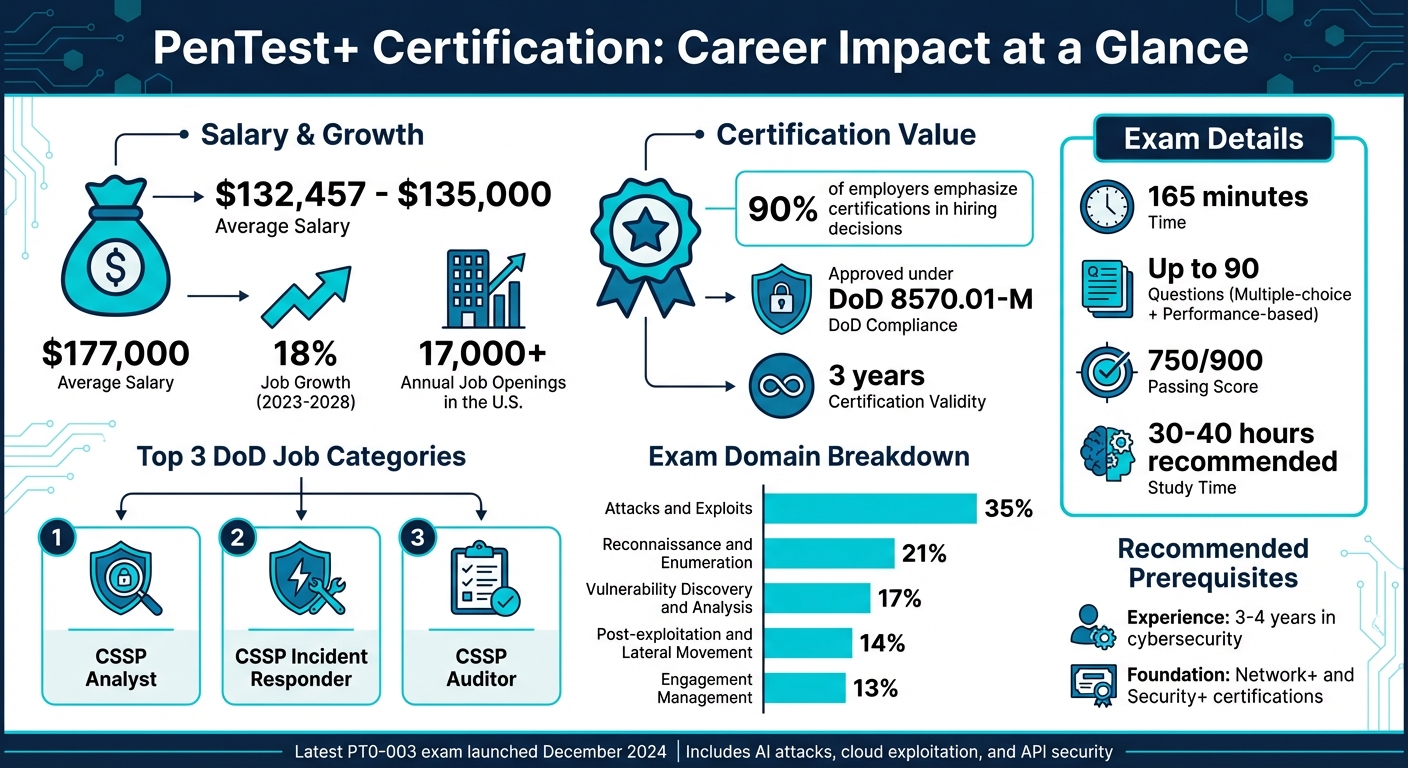
If you’re aiming for offensive cybersecurity roles within government or defense sectors, the CompTIA PenTest+ certification is a must-have. Approved under DoD 8570.01-M, it qualifies you for critical job categories like CSSP Analyst, CSSP Incident Responder, and CSSP Auditor. With an average salary of $132,457 and projected job growth of 18% (2023–2028), penetration testing is a lucrative and growing field.

This intermediate-level certification tests skills in penetration testing, vulnerability assessments, and compliance – key for cleared environments. The latest PT0-003 exam, launched in December 2024, includes modern topics like AI attacks, cloud exploitation, and API security. It’s performance-focused, requiring hands-on expertise in tools like Nmap, Nessus, and Metasploit.

For preparation:

  • Experience: 3–4 years in cybersecurity roles recommended.
  • Resources: Use CompTIA Labs, CertMaster Practice, and official study guides.
  • Exam Details: 90 questions (multiple-choice and performance-based), 165 minutes, passing score of 750/900.

Top employers like Northrop Grumman and Johns Hopkins APL actively seek PenTest+ holders for roles in penetration testing, vulnerability assessments, and red team operations. With over 17,000 job openings annually, this certification boosts your eligibility for high-demand cleared positions.

Ready to advance your career? Focus on building hands-on skills, meeting DoD compliance, and leveraging job platforms tailored to cleared professionals.

PenTest+ Certification Career Statistics and Salary Guide 2024

PenTest+ Certification Career Statistics and Salary Guide 2024

What is CompTIA PenTest+ Certification?

CompTIA

PenTest+ Certification Overview

CompTIA PenTest+ is an intermediate-level certification in offensive cybersecurity, tailored for professionals with hands-on experience. Unlike certifications that focus only on finding vulnerabilities, PenTest+ evaluates your ability to handle the entire penetration testing process – from planning and scoping to managing vulnerabilities, conducting post-exploitation tasks, and delivering detailed reports [2][12].

This certification is ANSI accredited, adheres to ISO 17024 standards, and aligns with the NICE Cybersecurity Workforce Framework, making it essential for roles outlined in DoD 8140 [9][3]. Its alignment with these frameworks underscores its importance in government and defense settings.

What sets PenTest+ apart is its use of performance-based assessments. These tests go beyond theory, requiring you to demonstrate practical, job-ready skills that reflect the demands of real-world penetration testing roles [3].

Now, let’s dive into the exam domains, which mirror the workflow of a professional penetration tester.

Exam Domains and Skills Covered

The PT0-003 exam includes up to 90 questions, combining multiple-choice and performance-based formats. You’ll have 165 minutes to complete the test, and a passing score is 750 on a scale of 100–900 [11]. The exam focuses on five key domains that reflect the real-world tasks of a penetration tester:

Exam Domain Weight Key Skills
Attacks and Exploits 35% Network, host-based, web app, cloud, and AI attacks; authentication attacks
Reconnaissance and Enumeration 21% Active/passive recon, OSINT, DNS enumeration, script modification (Python, PowerShell, Bash)
Vulnerability Discovery and Analysis 17% Authenticated/unauthenticated scans, SAST/DAST, result validation
Post-exploitation and Lateral Movement 14% Persistence, lateral movement, cleanup, attack narratives
Engagement Management 13% Planning, scoping, legal/ethical compliance, reporting

The latest version (PT0-003), introduced on December 17, 2024, includes AI-specific attacks such as prompt injection and model manipulation [11]. It also emphasizes the ability to modify scripts (Python, PowerShell, Bash) to address modern environments like cloud platforms and IoT devices [11].

These domains clearly illustrate why PenTest+ is indispensable for professionals working in sensitive environments.

Why PenTest+ Matters for Cleared Roles

PenTest+ is officially recognized under DoD 8570.01-M, qualifying holders for three crucial job categories: CSSP Analyst, CSSP Incident Responder, and CSSP Auditor [3][1]. According to CompTIA, "military personnel and defense contractors who work with sensitive information can take CompTIA PenTest+ to satisfy specific job requirements" [3]. Without this certification, many cleared positions may not be accessible.

The certification’s focus on legal and ethical compliance is especially important when working with sensitive government and defense systems [3][11]. It equips you with the skills to plan and execute penetration tests within regulatory guidelines, document findings accurately, and present results effectively to stakeholders – essential capabilities for cleared environments. Additionally, PenTest+ aligns with the NICE Framework, ensuring a smooth transition to the DoD 8140 manual [3].

Beyond penetration testing roles, PenTest+ prepares you for positions like vulnerability assessment analyst, application security vulnerability specialist, and network security operations roles [3][9]. It serves as a stepping stone between foundational certifications like Security+ and advanced credentials such as SecurityX (formerly CASP+), particularly for those pursuing offensive cybersecurity roles on the "red team" side of the field [3].

sbb-itb-bf7aa6b

How to Prepare for the PenTest+ Certification

Prerequisites and Experience Requirements

You don’t need any specific certifications or degrees to take the PenTest+ exam – there are no mandatory prerequisites [5][15]. That said, CompTIA suggests having 3–4 years of hands-on experience in penetration testing or related areas of information security before attempting this certification [11][13].

It’s also helpful to build a solid foundation with CompTIA Network+ and Security+ certifications before diving into PenTest+ [11][14]. Since this certification focuses on offensive security and practical technical skills, it’s designed as a natural step after Security+. For those in cleared roles, PenTest+ holds additional value as it’s approved for DoD 8570.01-M compliance, qualifying you for positions like CSSP Analyst, CSSP Incident Responder, and CSSP Auditor [3].

Study Materials and Training Resources

Once your foundational knowledge and experience are in place, the next step is gathering and using the right study tools. Start by downloading the official PT0-003 exam objectives. This will help you pinpoint areas where your skills or knowledge might need improvement [5][14]. CompTIA recommends setting aside 30 to 40 hours for focused study before taking the exam [14].

Practical, hands-on practice is key. Use CompTIA Labs to work with tools like Nmap, Wireshark, and Nessus, which are essential for tackling the performance-based questions on the exam [11][3]. These labs are especially useful for learning how to test devices in environments like the cloud and mobile platforms, alongside traditional setups. As CompTIA explains:

The certification requires a candidate to demonstrate the hands-on ability and knowledge to test devices in new environments, such as the cloud and mobile, in addition to traditional desktops and servers [3].

For additional preparation, try CertMaster Practice, which provides adaptive testing to help identify weak points and confirm you’re ready for the exam [3]. CompTIA also offers bundles that combine CertMaster Learn, CertMaster Practice, and the Official Study Guide, which can save you money [5]. If you’re in the U.S. military, check with Pearson VUE to see if you’re eligible to take the exam at an on-base testing center [5].

Exam Preparation Tips

Once you’ve reviewed the materials and practiced thoroughly, focus on refining your test strategy. Buy your exam voucher early and schedule your test date – this creates accountability and prevents procrastination [3].

Spend extra time on performance-based questions by practicing in lab environments. Use tools like Metasploitable and DVWA (Damn Vulnerable Web App) to sharpen your exploitation techniques [17]. Get comfortable with tools like Nmap for scanning, Metasploit for exploitation, Burp Suite for web testing, Wireshark for packet analysis, and SQLMap for SQL injection [17].

When taking the exam, tackle the multiple-choice questions first to secure quick points. Then, circle back to the more complex performance tasks [17]. Pay close attention to the Engagement Management domain, as it emphasizes reporting and compliance – critical skills for roles in DoD environments [11][14]. Make sure you’re also familiar with new PT0-003 topics, such as AI-based attacks (like prompt injection), cloud exploitation, and API abuse [16][17].

Keep in mind that the current PT0-003 version of the exam launched on December 17, 2024, and the older PT0-002 version will be retired on June 17, 2025 [11]. Once certified, your credential is valid for three years and can be renewed through Continuing Education units or by earning a higher-level certification like CompTIA SecurityX [14].

Career Benefits of PenTest+ for Cleared Professionals

Skills You’ll Gain from PenTest+

Earning the PenTest+ certification equips you with practical skills tailored for classified environments. For starters, you’ll master planning and scoping, which involves setting secure boundaries for assessments. The certification also covers the legal and compliance aspects crucial for adhering to Department of Defense (DoD) regulations – an absolute must for defense-related work.

You’ll sharpen your ability to identify vulnerabilities, not just in traditional networks but also across modern platforms like cloud, mobile, and IoT systems. The attacks and exploits section provides hands-on practice in simulating cyberattacks to pinpoint weaknesses. Even more importantly, you’ll learn how to translate technical findings into clear, actionable insights. As CompTIA puts it:

A penetration tester, or pen tester, is considered a white hat or good hacker. Although they must think like a bad guy, the end goal is to enhance organizational security [7].

The certification also validates your expertise with penetration testing tools and your ability to adjust strategies throughout different testing phases. What sets PenTest+ apart is its emphasis on hands-on skills, certifying your ability to operate at an intermediate level [3].

These capabilities open the door to a wide range of cleared roles.

Cleared Job Roles That Require PenTest+

The skills you gain with PenTest+ translate directly into high-demand roles that offer competitive salaries. The certification aligns with over seven roles outlined in the NICE Framework, such as Vulnerability Assessment Analyst, Cyber Defense Analyst, and Security Controls Assessor [3].

Job Role Key Responsibilities Salary Range
Penetration Tester Conducts simulated cyberattacks, uncovers vulnerabilities in networks and applications, and performs social engineering tests $132,457 – $135,000 [4][18]
Vulnerability Assessment Analyst Performs network scans, evaluates risks, applies patches, and drafts technical reports ~$104,000 [12]
Security Analyst II Monitors systems, detects anomalies, and generates detailed reports ~$96,000 [12]
CSSP Incident Responder Investigates security breaches and analyzes attack methods $110,000+ [4]
Cybersecurity Engineer Designs secure systems and tests defenses by exploiting vulnerabilities $110,000+ [4]

Top employers like Johns Hopkins University Applied Physics Laboratory, Northrop Grumman, and SecureWorks actively seek professionals with PenTest+ certification [7][9]. With over 17,000 U.S. job openings for penetration testers in a 12-month period [18] and 90% of employers emphasizing the importance of certifications in hiring decisions [6], this credential significantly boosts your job prospects.

Advancing to Senior Positions

Beyond entry and mid-level roles, PenTest+ positions you for advancement into senior offensive security roles. For example, it can lead to Red Team Operator positions, where you’ll conduct advanced adversary simulations. You could also move into Senior Security Engineer roles, designing and testing enterprise-level defense mechanisms.

The demand for cybersecurity professionals in the cleared sector is growing rapidly, with an 18% projected increase in job openings for cybersecurity analysts between 2023 and 2028 [4]. Penetration testers can expect median salaries around $135,000 [18]. Since PenTest+ is considered an intermediate-level credential, pairing it with advanced certifications like SecurityX (CASP+) can fast-track your promotion to senior positions, which often require five or more years of experience [3]. Additionally, the DoD’s increasing focus on "red team" capabilities highlights the rising need for offensive security expertise [3].

Finding PenTest+ Jobs on Cleared Cyber Security Jobs

Using Job Search Filters

Cleared Cyber Security Jobs makes it easier to find roles requiring the PenTest+ certification with its skill-based search filters. Simply type "PenTest+" or "CompTIA PenTest+" into the keyword or skill search bar to get started [20]. You can also search for roles with titles like "Penetration Tester", "Cyber Security Engineer", "Cyber Analyst", or "Red Cyber Operator" [23,27]. To refine your search further, use AI-driven matching and Boolean search options to align with your certifications and clearance level [20]. Filters like location (e.g., Maryland or Virginia, with high-demand cities such as Herndon, VA, and Linthicum, MD) and employers (e.g., Booz Allen Hamilton, CACI, Leidos, and Northrop Grumman) can help you zero in on the most relevant opportunities [23,24,27]. These tools are designed to help you maximize the value of your PenTest+ certification in finding top cleared roles.

Showcasing Your Certification

Recruiters often review your profile before accessing your full resume [21]. To make a strong impression, highlight that your PenTest+ certification meets DoD 8570.01-M requirements, as this compliance is crucial [9]. As CompTIA advises, "Certification makes a great first impression" [9]. Make sure your resume is uploaded and that PenTest+ is listed in your skills section to enable AI-driven matching with recruiters [24,25]. You can also set up job alerts by saving searches for "PenTest+" to receive email notifications about new roles [21].

G.B., a Technical Project Manager at CACI, points out the value of attending Cleared Job Fairs, especially for veterans transitioning into civilian careers: "For veterans especially, attending Cleared Job Fairs can be critical to a successful career transition" [21]. After optimizing your profile, take advantage of upcoming events and additional career tools offered by the platform.

Platform Resources for Cleared Professionals

The platform offers more than just job listings – it provides resources to expand your opportunities. Cleared Cyber Security Jobs hosts virtual and in-person job fairs, giving you a chance to connect directly with recruiters. Upcoming events include an in-person job fair on March 5, 2026, in Herndon, VA, and another on April 16, 2026, in Falls Church, VA [19]. For those unable to attend in person, a virtual hiring event is scheduled for February 19, 2026, focusing on the Huntsville area [20]. Be sure to upload your resume and tag it to the specific event so employers can easily find you [20].

Additional resources include career tools like "The Cleared Professional Podcast" and industry news updates to keep you informed about defense trends and certification requirements [24,26]. For instance, in January 2026, Tabitha Hancock of UberEther shared insights on the podcast about what federal agencies look for in standout candidates [19]. If you’re outside major hubs, virtual events provide a fantastic way to connect with top contractors across the country [20].

Full CompTIA PenTest+ (PT0-003) Module 1 | Engagement Management | CompTIA PenTest+ Exam Prep Course

Conclusion

The CompTIA PenTest+ certification is tailored for professionals in penetration testing roles, particularly those with security clearances. Approved under DoD directive 8140/8570.01-M [7], this certification qualifies you for government-mandated roles in defense and federal contracting. It demonstrates your capability to manage every stage of penetration testing – from planning to exploitation and reporting – while addressing modern challenges like cloud environments, APIs, and AI-related threats [10][11].

The field offers strong career and financial growth, supported by key industry metrics [4][8]. Beyond traditional penetration testing roles, the PenTest+ certification opens doors to positions such as Vulnerability Assessment Analyst, Security Analyst (II), and Application Security Vulnerability Specialist.

CompTIA emphasizes that certifications are crucial for staying competitive [22]. In fact, 9 out of 10 employers agree that certifications are critical when hiring, and IT-certified professionals are more likely to secure promotions [22]. These factors highlight the certification’s role in advancing your cybersecurity career.

To maximize the benefits of your PenTest+ certification, take advantage of Cleared Cyber Security Jobs’ specialized tools. Use skill-based search filters to find roles requiring PenTest+, showcase your DoD compliance on your profile, and connect with recruiters at upcoming job events. Whether you’re launching your career in penetration testing or targeting a senior position, combining your PenTest+ certification with an active security clearance sets you up for success in this high-demand field.

FAQs

Is PenTest+ enough to qualify for DoD 8570/8140 roles?

Yes, PenTest+ is officially approved by the Department of Defense (DoD) for specific roles under the 8570/8140 framework. It qualifies individuals for positions such as:

  • CSSP Analyst
  • Incident Responder
  • Auditor

This approval underscores its importance for professionals seeking cybersecurity roles within the DoD framework, particularly those requiring security clearances.

What hands-on labs should I practice for PT0-003?

Building practical skills is key to passing the PT0-003 (PenTest+) exam. Here are some hands-on labs that can help you prepare:

  • CertMaster Labs for PenTest+ PT0-003: These virtual labs let you work with tools, networks, and cloud environments while staying aligned with the exam’s objectives.
  • Reconnaissance Tools Practice: Get familiar with tools like Nmap, Wireshark, and Shodan to sharpen your information-gathering techniques.
  • Scenario-Based Labs: Dive into realistic penetration testing scenarios to practice vulnerability scanning, exploitation, and creating detailed reports.

These labs provide the practical experience needed to master the essential skills for the exam.

How do I prove cleared pen testing experience on my resume?

To highlight your cleared penetration testing experience, make sure to prominently display your active security clearance level (like Top Secret or TS/SCI) near the top of your resume. You can include it in your professional summary or even alongside your contact information. Additionally, emphasize that your work was performed under clearance by mentioning it in your job titles or project descriptions. This makes it easier for employers to see that you’re qualified for roles requiring clearance.

Related Blog Posts

  • OSCP Certification Career Guide for Cleared Offensive Security
  • GPEN Certification Career Guide for Cleared Penetration Testers
  • Security Plus Certification Career Guide for Cleared Entry Level
  • CySA Plus Certification Career Guide for Cleared SOC Analysts

Related Guides

  • CRTL Certification Career Guide for Cleared Red Team Leads
  • CRTO Certification Career Guide for Cleared Red Team Operators
  • CRTP Certification Career Guide for Cleared Red Team Professionals
  • Cybersecurity Salary Guide 2026
  • TS/SCI Salary Premium: Real 2026 Numbers

CASP Plus Certification Career Guide for Cleared Security Architects

CyberSecJobs Editorial · February 13, 2026 ·

Looking to advance your career as a cleared security architect? The CASP+ certification, now rebranded as CompTIA SecurityX, is a hands-on, performance-based credential tailored for high-level cybersecurity professionals. Officially launched on December 17, 2024, SecurityX aligns with DoD Directive 8140/8570.01-M, making it a key qualification for roles like Security Architect, Systems Requirements Planner, and Security Control Assessor.

Key Highlights:

  • Focus Areas: Security architecture, engineering, operations, and compliance.
  • Exam Details: 90 questions, 165 minutes, pass/fail grading.
  • Relevance: Approved by the U.S. Department of Defense for critical cybersecurity roles.
  • Experience Needed: 10 years of IT work (5+ in security).
  • Career Impact: Opens doors to cleared roles with employers like the U.S. Army, Booz Allen Hamilton, and Verizon.

With cloud-based threats surging by 110% annually, SecurityX equips you to tackle challenges in automation, Zero Trust, and advanced cryptography. Whether you’re aiming to design secure systems or enhance your technical expertise, this certification positions you for success in high-demand, cleared cybersecurity roles.

CompTIA SecurityX is here (CASP+ is no more): What you need to know

CompTIA

sbb-itb-bf7aa6b

CASP+ Certification and Exam Overview

CASP+ SecurityX Exam Domains and Content Breakdown

CASP+ SecurityX Exam Domains and Content Breakdown

Exam Format and Content Domains

The SecurityX exam (CAS-005) includes up to 90 questions, which candidates must complete within a 165-minute time limit [1]. The question types are varied, featuring multiple-choice (both single and multiple response), drag-and-drop, and performance-based items. Unlike many other CompTIA exams, this one is graded on a pass/fail basis rather than a scaled score.

Performance-based questions, which simulate real-world technical problem-solving, appear at the start of the exam. During these tasks, the on-screen clock is hidden, so managing your time effectively is crucial. Additionally, an optional exit survey follows the exam, consisting of about 12 multiple-choice questions aimed at gathering feedback on your study experience.

The exam content is divided into four main domains, each weighted to reflect the expertise required for security architects:

Domain Weight Key Focus Areas
Security Engineering 31% Automation (IaC, SOAR), Advanced Cryptography, Vulnerability Management (SCAP)
Security Architecture 27% Cloud tools (CASB, CI/CD), Zero Trust, Network Design (SASE, SD-WAN)
Security Operations 22% Threat Hunting, Incident Response, SIEM Analysis, Malware Analysis
Governance, Risk, & Compliance 20% Risk Management (NIST, CSF), Threat Modeling (ATT&CK, STRIDE), Data Governance

These domains collectively assess the technical skills and strategic knowledge expected of advanced security architects.

Relevant Areas for Security Architects

Looking closer at the domain breakdown, several areas stand out as particularly relevant to security architects.

In the Security Engineering domain, which carries the highest weight at 31%, there’s a strong focus on automation and scripting. Proficiency in languages like PowerShell, Bash, or Python is essential, as well as a deep understanding of Infrastructure as Code (IaC) principles.

The Security Architecture domain, weighted at 27%, directly aligns with the responsibilities of a security architect. This section emphasizes designing secure systems for cloud, on-premises, and hybrid environments. Expect questions about Secure Access Service Edge (SASE), microsegmentation, and Zero Trust models. Familiarity with cloud-specific tools, such as Cloud Access Security Brokers (CASB) and shadow IT detection, is also critical.

The remaining domains – Security Operations (22%) and Governance, Risk, & Compliance (20%) – cover areas like threat hunting, incident response, and risk management. These sections incorporate frameworks such as NIST and CSF, ensuring that candidates are prepared for roles requiring advanced risk assessment and compliance strategies.

This certification is mapped to NICE and DoD 8140 work roles, including Security Architect, Systems Requirements Planner, and Security Control Assessor, reinforcing its importance for professionals in high-level security positions.

Prerequisites and Who Should Pursue CASP+

Experience Requirements for Cleared Professionals

CompTIA suggests 10 years of IT experience, with at least five years in security, before attempting CASP+ (now SecurityX) [8]. While there are no strict prerequisites, this certification is not geared toward recent graduates or those just starting their careers.

The exam assumes a strong understanding of topics covered in certifications like CompTIA Network+, Security+, CySA+, Cloud+, and PenTest+ [8]. To succeed, you should already be familiar with areas like identity and access management (IAM), cryptographic tools like SSL/TLS and PKI, networking basics such as TCP/IP, and key security technologies like firewalls and VPNs. If you’re still building these skills, a good path is to begin with Security+ (roughly two years of experience), followed by CySA+ or PenTest+ (three to four years) before tackling CASP+ [10].

Unlike certifications aimed at management roles, CASP+ is tailored for advanced practitioners who prefer staying hands-on with technology rather than shifting into purely leadership positions. Meeting these criteria ensures you’re well-prepared to use CASP+ as a way to propel your career forward.

How CASP+ Fits Your Career Path

CASP+ is the next logical step for senior security engineers and cleared security architects tasked with designing, building, and implementing secure systems in complex environments [2]. It’s also recognized by the U.S. Department of Defense as meeting Directive 8140/8570.01-M requirements, aligning with key roles like Security Architect, Systems Requirements Planner, and Security Control Assessor [8].

According to CompTIA, around 32% of certification holders report earning raises, promotions, or other benefits after completing their certification [8]. For professionals in federal contracting or government roles, CASP+ showcases your ability to combine high-level security strategy with hands-on technical execution – a skill set that’s becoming increasingly critical in positions requiring both architectural vision and practical implementation.

Why CASP+ Matters for Cleared Security Architects

DoD 8570 Compliance and Approval

CASP+ (recently rebranded as CompTIA SecurityX as of December 17, 2024) holds approval from the U.S. Department of Defense (DoD) under Directive 8140/8570.01-M. This makes it a required baseline certification for many roles involving privileged access in the cleared sector [4][5]. Specifically, the certification aligns with the Information Assurance System Architecture and Engineering (IASAE) specialty levels within the DoD 8570 framework – key for professionals in security architecture [11].

According to DoDM 8140.03, SecurityX is recognized for 31 critical roles, including Security Architect and Systems Security Analyst. Starting February 2025, all DoD civilian employees and military service members in Defense Cyber Workforce Framework roles must meet these updated qualifications.

What makes SecurityX stand out is its combined focus on security architecture and engineering concepts. This dual approach prepares professionals to both design and implement secure systems – an essential skill set in high-security environments. Cleared employers highly value this certification for roles that demand technical expertise and compliance with DoD standards. Beyond meeting these stringent requirements, SecurityX also positions individuals for career progression in the cybersecurity field.

Career Growth in Cleared Positions

Beyond its DoD compliance, SecurityX plays a pivotal role in career advancement for cleared professionals. It paves the way for senior roles that demand a blend of technical expertise and strategic vision. Unlike certifications aimed at managerial skills, SecurityX focuses on preparing practitioners for roles like Security Architect or Senior Security Engineer. CompTIA emphasizes this distinction:

"SecurityX is the only hands-on, performance-based certification for practitioners – not managers – at an advanced skill level of cybersecurity" [6].

Additionally, 90% of employers rely on certifications to identify top talent [4]. The updated SecurityX V5 exam reflects current trends, such as AI, automation with PowerShell/Python/Bash, and Zero Trust architecture [7]. These skills are vital, especially as cloud-related cyber threats have surged by 110% year-over-year [5]. With these capabilities, SecurityX-certified professionals are well-equipped to maintain a technical edge in an ever-evolving threat landscape, ensuring their expertise remains indispensable in cleared roles.

How to Prepare for the CASP+ Exam

Study Materials for Cleared Professionals

To get ready for the CASP+ exam, start with the CompTIA Official Study Guide and CertMaster Learn. These resources are designed to match the latest exam objectives, ensuring you cover everything you need to know [13][14]. Since the exam includes performance-based scenarios, focus especially on the hands-on skills required. Pay close attention to the four major domains, with Security Engineering and Security Architecture making up a hefty 58% of the test [7][12].

For practical experience, platforms like Qwiklabs and TryHackMe are excellent for tackling real-world security scenarios [13]. You can also use tools like VirtualBox or VMware to set up sandbox environments. These are perfect for practicing tasks like configuring firewalls, managing incidents, and working with encryption [13]. This hands-on approach mirrors the challenges you’ll face in cleared cybersecurity roles.

If you’re looking for additional resources, check out the "CompTIA CASP+ Study Guide" by Mike Meyers or the "CASP+ CompTIA Advanced Security Practitioner Study Guide" by Wm. Arthur Conklin [13]. These guides not only dive into exam content but also help you prepare for the practical tasks discussed in the next section.

Study Planning and Time Management

Once you’ve gathered your materials, creating a structured study plan is key to success. Break your study sessions into 45 to 60-minute blocks, followed by 10 to 15-minute breaks. This method, often called the Pomodoro Technique, can help you stay focused and retain more information [13]. Since performance-based questions are time-consuming and appear at the start of the exam, practice solving them in simulated environments to build both speed and confidence [9]. Full-length practice exams – taken under timed conditions and without notes – are another great way to simulate the test day experience [13].

Use the official exam objectives to evaluate your current knowledge. Spend extra time on areas you find challenging, such as advanced cryptography or cloud control strategies [12][13]. To make your study time even more effective, relate your daily work tasks to the exam content. For example, apply concepts like risk assessment, cloud configuration, or log analysis to your current projects [15]. Finally, consider joining CASP+ study groups on platforms like Reddit or LinkedIn. These communities are great for exchanging tips and discussing complex topics with others preparing for the exam [13].

Finding Cleared Jobs with CASP+ Certification

Using Cleared Cyber Security Jobs

Once you’ve earned your CASP+ certification, the next step is putting it to work to land the right cleared position. Platforms like Cleared Cyber Security Jobs can help you showcase your clearance level and technical expertise to recruiters. This tool highlights your CASP+/SecurityX credential, clearance status, and key skills, using an AI-powered engine that combines Boolean and semantic criteria for better job matching. You can refine your job search by clearance level (Secret, TS/SCI, or TS/SCI with polygraph), location, and technical skills. The platform also features virtual and in-person hiring events, giving you opportunities to expand your professional network.

Common Cleared Roles for CASP+ Holders

The CASP+ certification opens doors to a variety of cleared roles that align with DoD 8140/8570.01-M standards, including positions at IAT Level III and IASAE levels [3][18]. Your validated expertise makes you a strong candidate for these critical roles. For example, Security Architect positions are in demand, where you’ll design secure IT infrastructures and develop enterprise-wide strategies [16][17]. Other roles include Technical Lead Analyst, where you’ll guide teams in assessing security risks and implementing solutions, and Application Security Engineer, focusing on securing CI/CD pipelines and containerized environments.

Employers such as the U.S. Army, U.S. Navy, Booz Allen Hamilton, Leidos, and Northrop Grumman frequently seek professionals with CASP+ certification. Holding a TS/SCI clearance can significantly boost your earning potential, with salaries averaging 40.6% higher and reaching up to $148,314 for those with a Full Scope Polygraph [18].

"SecurityX is the industry standard for advanced-level competency for technical professionals who wish to remain immersed in technology as opposed to strictly managing." – CompTIA [4]

Renewing Your CASP+ Certification

Keeping your SecurityX certification (formerly CASP+) up to date is just as important as earning it in the first place. This ensures you remain compliant and skilled for cleared roles. The certification is valid for three years [20]. To maintain your status and meet DoD 8140/8570 compliance, you’ll need to earn 75 Continuing Education Units (CEUs) within that three-year period [20]. This is the highest CEU requirement among CompTIA certifications, reflecting the advanced level of this credential [22].

There are two ways to renew your certification. The first is the single activity route: you can either pass the latest SecurityX exam (currently priced at $509 [23]) or earn an approved non-CompTIA certification, such as CISSP or CISM [20]. The second option is the multiple activities route, which involves accumulating 75 CEUs through various professional activities. These can include attending webinars, completing training courses, publishing articles, or documenting relevant work experience [19]. At least half of these activities must align with the current exam objectives [22].

CompTIA emphasizes the importance of renewal as part of professional growth:

"Renewing your certification gives you a great opportunity to document your knowledge in technology areas that matter to employers and are important to your IT career." – CompTIA [20]

To make the process easier, use CompTIA’s CEU assessment tool to confirm your activities meet the requirements before committing time to them [22]. Be sure to upload documentation to your certification record while the training courses are still on the pre-approved list. If a course is removed before you upload your proof, those CEUs won’t count [21]. Additionally, you can leverage your day-to-day work in security architecture under the "Work Experience" category to earn CEUs without extra costs [19].

If you fail to renew your certification before it expires, your only option to regain active status is to retake the current exam [20]. Unlike other CompTIA certifications, you can’t renew SecurityX by earning a "higher-level" certification. Your choices are limited to earning CEUs, obtaining a qualifying non-CompTIA certification, or retaking the exam [20][23]. This renewal process helps ensure your skills stay sharp and relevant for advancing your career in cleared security roles.

Conclusion

SecurityX, previously known as CASP+, combines security architecture and engineering expertise in a way that sets it apart [5]. For cleared security architects, it demonstrates your ability to design and implement secure solutions in complex environments while meeting DoD 8140/8570 compliance standards. Unlike management-focused certifications, SecurityX highlights your advanced technical and hands-on skills.

This certification offers real career advantages. Around 32% of certified professionals report pay raises or promotions [8], and the Bureau of Labor Statistics forecasts a 33% growth rate for Information Security Analysts between 2023 and 2033 [8]. Employers like the U.S. Army, U.S. Navy, Booz Allen Hamilton, and General Dynamics actively seek SecurityX-certified individuals for cleared positions [3].

The upcoming rebrand to SecurityX on December 17, 2024, reflects its adaptation to emerging threats. With cloud-focused cyber threats surging by 110% annually and cloud intrusions up 75% [5], the updated exam emphasizes automation, artificial intelligence, and Zero Trust architectures to ensure your skills stay relevant. This shift aligns with the rapidly changing threat landscape and employer demands. Certified professionals should update their records to reflect the new name [5].

Staying certified requires ongoing effort. To maintain your credential, you’ll need 75 CEUs every three years [8]. Regular training, practical work experience, and professional development are crucial to staying competitive and meeting compliance requirements, helping you retain your cleared status and advance your career.

FAQs

Is CASP+ the same as CompTIA SecurityX?

The CASP+ certification has been renamed SecurityX. Tailored for security architects and senior security engineers, this advanced certification focuses on practical expertise in designing and implementing secure solutions. The updated SecurityX version now features more hands-on components and real-world scenarios, ensuring it aligns closely with the demands of advanced cybersecurity roles.

What cleared roles does SecurityX satisfy under DoD 8140/8570?

SecurityX plays key roles such as security architect and security engineer under the DoD 8140/8570 directives. It is officially approved by the Department of Defense (DoD) to meet the requirements outlined in 8140/8570.01-M. The program is acknowledged for its expertise in areas like risk management, enterprise security, and security architecture. These qualifications align perfectly with the directive’s expectations for cybersecurity professionals in advanced, cleared positions.

How should I practice for the performance-based questions?

To get ready for performance-based questions on the CASP+ exam, dedicate time to hands-on practice that mirrors real-world cybersecurity challenges. Work in labs, simulations, or virtual setups to strengthen your skills in areas like enterprise security operations, architecture, and risk management. Focus on scenario-driven resources that highlight practical applications, helping you confidently tackle complex security solutions during the exam.

Related Blog Posts

  • CISSP Cleared Cybersecurity vs CASP+ – The Certification ROI Debate for TS/SCI Holders
  • GSEC Certification Career Guide for Cleared Security Essentials
  • Security Plus Certification Career Guide for Cleared Entry Level
  • CySA Plus Certification Career Guide for Cleared SOC Analysts

Related Guides

  • CAP Certification Career Guide for Cleared Authorization Pros
  • CGRC Certification Career Guide for Cleared GRC Analysts
  • CRISC Certification Career Guide for Cleared Risk Professionals
  • Cybersecurity Salary Guide 2026
  • TS/SCI Salary Premium: Real 2026 Numbers
  • « Go to Previous Page
  • Go to page 1
  • Interim pages omitted …
  • Go to page 7
  • Go to page 8
  • Go to page 9
  • Go to page 10
  • Go to page 11
  • Interim pages omitted …
  • Go to page 14
  • Go to Next Page »
  • Facebook
  • Instagram
  • LinkedIn
  • Twitter
  • YouTube

Cleared Cyber Security Jobs | CyberSecJobs.com

  • Contact
  • About
  • Privacy Policy