• Skip to primary navigation
  • Skip to main content
Cleared Cyber Security Jobs | CyberSecJobs.com

Cleared Cyber Security Jobs | CyberSecJobs.com

Cleared Cyber Security Jobs

  • Home
  • Search Cleared Cyber Jobs
  • Job Fairs
  • Career Resources

Certifications

Fortinet NSE Certification Career Guide for Cleared Network Security

CyberSecJobs Editorial · March 4, 2026 ·

Fortinet NSE certifications are a structured way to validate cybersecurity skills for cleared professionals. The program offers eight levels, from basic awareness (NSE 1–2) to expert-level credentials (NSE 8), and aligns with federal standards like NICE. Updated in October 2025, the program now focuses on job-specific roles rather than just product knowledge. Here’s what you need to know:

  • Levels Overview:
    • NSE 1–3: Entry-level certifications covering cybersecurity basics and Fortinet products.
    • NSE 4–5: Mid-level certifications for configuring and managing Fortinet tools, with salaries of $110,000–$135,000.
    • NSE 6–7: Advanced certifications for designing and troubleshooting security systems.
    • NSE 8: The highest level, for experts managing complex infrastructures, with salaries exceeding $160,000.
  • Why It Matters:
    • Aligns with federal job requirements and industry frameworks.
    • Certifications like NSE 4–8 can lead to salary increases (15% or more).
    • Accepted for earning CPE credits for certifications like CISSP or CompTIA Security+.
  • Exam Details:
    • Foundational levels (NSE 1–3) are free and self-paced.
    • Advanced levels require proctored exams and hands-on labs via Pearson VUE.
  • Career Impact:
    • Certified professionals are in demand, with 91% of organizations seeking certified talent.
    • NSE certifications improve job prospects, faster career growth, and higher salaries.

Start with the free NSE 1–3 courses, then progress to higher levels for advanced roles in network security. Certification tracks include Secure Networking, SASE, Cloud Security, and Security Operations, catering to various career paths in cleared cybersecurity.
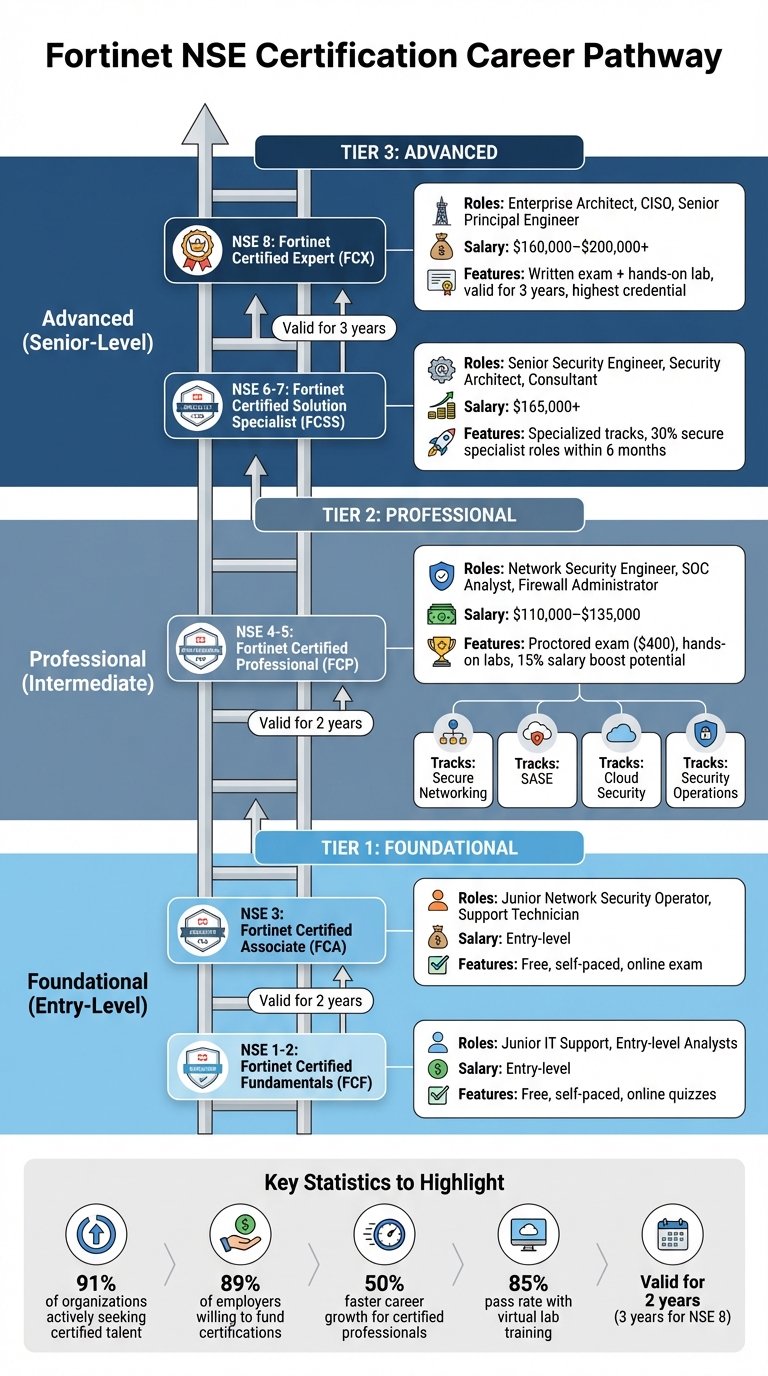
Fortinet NSE Certification Levels: Career Paths and Salary Ranges

Fortinet NSE Certification Levels: Career Paths and Salary Ranges

Fortinet Training & NSE Certification Updates – Deep Dive

sbb-itb-bf7aa6b

NSE Certification Levels and Career Applications

This section explains how the various NSE certification levels align with specific roles in cleared cybersecurity environments. The NSE program is divided into three career tiers, each tailored to different positions within the cybersecurity field. Knowing how each level fits into the broader career framework can help you select the right certification for your current role and future aspirations.

NSE 1–3: Foundational Knowledge for Entry-Level Roles

For those starting their journey in cleared cybersecurity, the first tier lays the groundwork. NSE 1–2 (Fortinet Certified Fundamentals) introduces basic cybersecurity concepts and raises awareness about network security. These certifications are particularly suited for junior IT support staff, entry-level analysts, and non-technical personnel transitioning into cleared cybersecurity roles [1][6].

NSE 3 (Fortinet Certified Associate) builds on this by validating operational skills with FortiGate devices. It’s designed for junior network security operators and support technicians handling daily tasks in smaller cleared environments [6]. Training for NSE 1–3 is offered online, self-paced, and includes quiz-based assessments [2].

Once this foundation is established, the next tier focuses on more advanced technical skills.

NSE 4–5: Technical Expertise for Intermediate Roles

This tier is ideal for cleared professionals managing classified network infrastructure. NSE 4 certification covers the configuration, installation, and management of FortiGate devices [1][7]. The exam costs $400 USD and requires practical technical knowledge [10].

NSE 5 certifications validate expertise in tools like FortiManager and FortiAnalyzer [6][10]. Clearing NSE 4 and one NSE 5 exam earns the Fortinet Certified Professional (FCP) designation, which can lead to an estimated 15% salary boost [4]. Certified professionals in this tier typically earn between $110,000 and $135,000 annually as of 2025 [10]. Specialization tracks such as Secure Networking, SASE, Cloud Security, and Security Operations prepare candidates to address specific challenges in cleared environments [6].

For those aiming to move into senior roles, the advanced certifications in the next tier provide the necessary credentials.

NSE 6–8: Advanced Credentials for Senior-Level Roles

This tier is tailored for professionals managing complex infrastructures and designing advanced security solutions. NSE 6 focuses on specialized areas like FortiMail, FortiWeb, Secure SD-WAN, and OT security, making it ideal for senior engineers [6][7].

NSE 7 targets security architects and senior engineers, emphasizing the design, deployment, and troubleshooting of large-scale security systems [1][6]. Completing NSE 6 and NSE 7 within the same track earns the Fortinet Certified Solution Specialist (FCSS) designation. Notably, 30% of FCSS-certified professionals secure specialist roles within six months [4].

At the top of the program is NSE 8 (Fortinet Certified Expert), which requires a written exam and a hands-on practical assessment. This certification demonstrates mastery in designing and troubleshooting complex network security systems [1][6]. NSE 8-certified professionals earn between $160,000 and $200,000+ annually [10]. Unlike lower-level certifications, NSE 8 is valid for three years [6]. It’s particularly suited for roles like Principal Architect, CISO, or senior consulting positions, where advanced technical expertise is essential for enterprise-level defense strategies.

NSE Level Certification Title Typical Cleared Job Roles Average Salary Range
1–2 Fortinet Certified Fundamentals (FCF) Junior IT Support, Entry-level Analysts Entry-level
3 Fortinet Certified Associate (FCA) Junior Network Security Operator, Support Technician Entry-level
4–5 Fortinet Certified Professional (FCP) Network Security Engineer, SOC Analyst, Firewall Administrator $110,000–$135,000 [10]
6–7 Fortinet Certified Solution Specialist (FCSS) Senior Security Engineer, Security Architect, Consultant
8 Fortinet Certified Expert (FCX) Enterprise Architect, CISO, Senior Principal Engineer $160,000–$200,000+ [10]

Skills Gained Through NSE Certifications

Core Technical Skills

NSE certifications are designed to build precise technical skills for managing network security. At the NSE 4 level, professionals develop expertise in FortiGate configuration and management, covering areas like firewall policies, NAT, IPsec/SSL VPNs, routing, High Availability (HA), and security profiles such as Antivirus, Web Filter, DNS, and Application Control [1][10].

For those pursuing NSE 5 certifications, the focus shifts to centralized management and analytics. This includes mastering tools like FortiManager for synchronizing configurations across multiple devices and FortiAnalyzer for monitoring, reporting, and incident correlation through FortiSIEM. These tools are essential for maintaining visibility across large-scale infrastructures [1][10].

The skill set deepens significantly at the NSE 6–8 levels. NSE 6 focuses on advanced areas such as Secure SD-WAN, Zero Trust Network Access (ZTNA), Public Cloud security (AWS, Azure, GCP), OT security, and automation using REST APIs [1][10]. Moving to NSE 7 and 8, professionals gain the ability to design, configure, and troubleshoot complex, multi-product security systems. These advanced skills are often required for roles like enterprise architects or CISOs, where strategic oversight and comprehensive security designs are critical [1][2]. Notably, professionals with NSE 7 or higher certifications have been shown to respond to breaches twice as quickly [4].

These technical capabilities align seamlessly with the evolving needs of cybersecurity professionals in high-security environments.

Job Role Alignment

Each NSE certification level is tailored to specific cybersecurity roles. For example, Network Security Engineers often hold NSE 4 certifications, enabling them to manage FortiGate deployments and enforce security policies within classified networks [1][7]. SOC Analysts, on the other hand, benefit from NSE 5 certifications, which equip them to use FortiAnalyzer and FortiSIEM for real-time monitoring and event correlation [1][11].

For more advanced roles, Security Architects and senior consultants typically pursue NSE 7 certifications, which validate their ability to design large-scale firewall configurations, secure hybrid cloud infrastructures, and troubleshoot advanced systems [1][7]. At the highest level, NSE 8-certified professionals take on roles like Enterprise Architect or CISO, where they oversee the design of intricate security frameworks and lead strategic defense efforts for National Security Systems [1][2].

NSE Level Core Technical Skills Aligned Cleared Roles
NSE 4 (Professional) FortiGate configuration, VPNs, Firewall policies Network Security Engineer, Firewall Administrator
NSE 5 (Professional) Centralized management, SIEM, EDR, Analytics SOC Analyst, Security Analyst, Systems Administrator
NSE 6 (Specialist) SD-WAN, FortiMail, FortiWeb, OT Security Email Security Specialist, Web App Firewall Expert
NSE 7 (Specialist) Advanced troubleshooting, Cloud Security, Architecture Security Architect, Cloud Security Engineer, Consultant
NSE 8 (Expert) Complex design, multi-product integration Enterprise Architect, CISO, Senior Security Lead

Using NSE Certifications to Advance Your Cleared Cyber Career

Finding Career Opportunities on Cleared Cyber Security Jobs

Cleared Cyber Security Jobs provides a direct link between NSE-certified professionals and employers who actively seek these qualifications. By uploading your resume and setting up job alerts based on your NSE level, clearance, and technical expertise, you can streamline your job search. Make sure to feature your NSE certifications prominently – using Credly digital badges can give employers instant, verified proof of your skills [12][2].

The platform’s search tools allow you to refine opportunities by clearance level, location, and specific technical skills, such as FortiGate administration or FortiAnalyzer knowledge. Since only direct-hire employers post jobs here – no staffing agencies – you’ll connect directly with hiring managers at defense contractors, federal agencies, and other cleared organizations. This is a significant advantage, especially considering that 89% of employers are willing to fund cybersecurity certifications for their employees [13]. Many roles even include certification sponsorship as part of professional development packages.

When applying, go beyond listing your certifications. Detail how your NSE training translates into real-world accomplishments, like configuring firewalls, deploying VPNs, or implementing security policies. If you’re a veteran, take advantage of the Fortinet Veterans Program "Battlecard" to adapt your military experience into industry-standard cybersecurity terms [14].

With this direct employer access, your NSE certifications become even more impactful, especially given the growing demand for certified professionals in the cleared cybersecurity field.

Industry Demand for NSE-Certified Talent

The cleared cybersecurity sector is experiencing a sharp demand for NSE-certified professionals, creating strong career opportunities. The shortage of certified talent is significant, with 91% of organizations actively looking to fill IT security roles with certified individuals [12]. Security leaders emphasize the importance of certifications, with 60% stating they enhance skills and knowledge, and 55% noting that certified practitioners perform tasks more effectively than their non-certified counterparts [13].

Certified professionals also enjoy faster career growth – nearly 50% faster than their non-certified peers – and higher salaries. For example, Network Security Engineers holding NSE 4-5 certifications earn an average of $120,000-$125,000 annually, while Security Architects with FCSS credentials can command $165,000 or more [10].

"Security leaders generally view certifications as strong indicators of cybersecurity expertise. In fact, 91% of respondents prefer to hire candidates with certifications." – Rob Rashotte, Vice President of Global Training & Technical Field Enablement, Fortinet [13]

The urgency for skilled professionals is underscored by the fact that nearly 90% of enterprises experienced a cyber breach in 2024, with 63% taking over a month to recover [13]. This has created a critical need for experts capable of designing, deploying, and managing complex security frameworks – precisely the expertise validated by NSE certifications. Moreover, NSE training aligns with the National Initiative for Cybersecurity Education (NICE) Workforce Framework, a standard often used for hiring in federal and cleared roles [13].

To maximize your career prospects, consider stacking multiple NSE certifications. For instance, combining NSE 4 and NSE 5 demonstrates both hands-on configuration skills and centralized analytics expertise, which are frequently required for leadership roles [12][9]. Keep in mind that most Fortinet certifications are valid for two years (three years for FCX), so staying current with recertifications is essential to meet government compliance and maintain your competitive edge in this fast-paced industry [6][12].

Certification Roadmap and Preparation Tips

Step-by-Step Certification Pathway

To navigate the NSE certification journey, follow this structured approach, which progresses from basic cybersecurity knowledge to expert-level expertise. Each level corresponds to role-based certifications such as FCF, FCA, FCP, FCSS, and FCX [6].

Start with Fundamentals (NSE 1–2) by completing the "Introduction to the Threat Landscape" course, then choose between "Getting Started in Cybersecurity" or "Technical Introduction to Cybersecurity" [2]. These courses are self-paced, include online quizzes, and do not require a proctored exam. Once completed, move on to the Associate level (NSE 3) by taking the "FortiGate Operator" course and passing the NSE 3 online exam [2].

For the Professional level (NSE 4–5), you’ll need to pass the NSE 4 (FortiOS Administrator) exam and one elective NSE 5 exam within your selected track – options include Secure Networking, SASE, Cloud Security, or Security Operations [2]. The Solution Specialist level (NSE 6–7) involves passing one NSE 6 exam and one NSE 7 exam within the same technical track [2]. Finally, the Expert level (NSE 8) requires a written exam and a hands-on lab assessment, testing your comprehensive knowledge of networking and security [2].

Most certifications are valid for two years, except for the FCX (NSE 8), which lasts three years [2]. Be careful to stick to a single track for electives, as mixing tracks can invalidate your designation [2]. This step-by-step pathway ensures clarity and builds the expertise needed for advanced cybersecurity roles.

Next, let’s dive into the tools and strategies that can help you prepare effectively.

Preparation Resources and Strategies

Fortinet offers all self-paced theoretical NSE courses free of charge through the Fortinet Training Institute at training.fortinet.com [2]. This includes foundational NSE 1–3 courses and theoretical materials for NSE 4–8. For hands-on experience, you can purchase on-demand lab access, which has been shown to boost exam success rates – virtual labs are linked to an 85% pass rate and are a strong predictor of success for NSE 6 exams [4].

Allocate 20–40 hours of study time per certification level [4]. Start by reviewing the official exam blueprint for each NSE level to familiarize yourself with the domains and topics that carry the most weight [15]. If you hold other certifications, Fortinet training can also earn you ISC² CPE credits (one credit per hour) or count toward renewal requirements for certifications like CompTIA Security⁺, PenTest⁺, and CySA⁺ [2].

Additional resources include CBT Nuggets, which offers Fortinet training for $59.00 USD monthly or $49.91 USD monthly with an annual subscription. Their courses include practice exams and quizzes to reinforce learning [1]. Veterans can take advantage of the Fortinet Veterans Program, which provides tailored support for transitioning into cybersecurity roles [5]. With 89% of organizations preferring certified candidates, consider seeking employer reimbursement for proctored exam fees (NSE 4–8) and lab costs [2].

Keep in mind that the NSE 8 exam will be updated in April 2026. If you plan to test after February 16, 2026, you’ll need to prepare for the revised version [3]. Once certified, upload your credentials to Credly to share digital badges that employers can verify instantly [12].

Conclusion

This guide has shown how Fortinet NSE certifications align with career progression in cleared cybersecurity roles. Now it’s time to chart your path forward.

Fortinet NSE certifications validate your technical skills and help fast-track your career in cybersecurity. With a modular structure – ranging from foundational courses like NSE 1–2 to the expert-level FCX (NSE 8) – you can tailor your certification journey to match specific career goals, such as Security Operations, Cloud Security, or Secure Networking.

Start with the free, self-paced NSE 1–3 courses offered by the Fortinet Training Institute to build a strong foundation. From there, aim for NSE 4 (FortiOS Administrator) as your first proctored exam. This certification qualifies you for mid-level roles with competitive salaries [10][8]. Advancing to NSE 6–8 will equip you with the high-level skills needed for senior roles, focusing on tasks like architecture design and troubleshooting [10].

Once certified, make the most of your achievements by uploading your Credly digital badges, earning ISC² CPE credits (one credit per training hour), and staying ahead with proactive recertifications. Since most NSE certifications are valid for two years, planning your recertification timeline early is crucial to maintaining active status [12][2]. These steps will position you to capitalize on new opportunities as they arise.

FAQs

Which NSE level should I start with for my cleared role?

To get started, consider beginning with NSE 1 or NSE 2. These levels focus on the fundamentals of network security, making them a great starting point for anyone looking to build a strong base. They’re especially useful for developing the core skills required in roles that demand security clearance.

How do I choose the right NSE track (Secure Networking, SASE, Cloud, SecOps)?

Choosing the right NSE track depends on your role, career aspirations, and the skills you aim to develop. Here’s a quick breakdown:

  • Secure Networking: Ideal for those involved in network security design and implementation.
  • Cloud: Focuses on securing cloud-based environments and solutions.
  • SASE: Tailored for secure access and edge security needs.
  • SecOps: Centers on incident response and security operations.

Each track aligns with specific roles and expertise, making it easier to build the skills that can propel your career forward.

How long does it take to progress from NSE 4 to NSE 7 or NSE 8?

Advancing from NSE 4 to NSE 7 or NSE 8 depends heavily on your experience level and how much time you dedicate to preparation. For most, the process can take anywhere from several months to over a year. This timeline includes building the required skills, gaining practical experience, and successfully passing the necessary exams. The pace of progression ultimately varies based on individual effort and commitment to studying and hands-on practice.

Related Blog Posts

  • GNFA Certification Career Guide for Cleared Network Forensics
  • GSEC Certification Career Guide for Cleared Security Essentials
  • Security Plus Certification Career Guide for Cleared Entry Level
  • Palo Alto PCNSE Career Guide for Cleared Firewall Engineers

Related Guides

  • Cisco CCIE Security Career Guide for Cleared Expert Engineers
  • Cisco CCNP Security Career Guide for Cleared Network Engineers
  • Cisco CCNA Security Career Guide for Cleared Network Professionals
  • Cybersecurity Salary Guide 2026
  • TS/SCI Salary Premium: Real 2026 Numbers

Palo Alto PCNSE Career Guide for Cleared Firewall Engineers

CyberSecJobs Editorial · March 4, 2026 ·

Looking to advance your career as a firewall engineer? The Palo Alto Networks Certified Network Security Engineer (PCNSE) certification is a powerful credential that validates your expertise with Palo Alto’s cutting-edge security solutions like Next-Generation Firewalls, Panorama, and Prisma Access. This certification is especially valuable for cleared professionals working in government or defense roles, where advanced network security skills are often mandatory.

Here’s what you need to know:

  • Certification Update: As of July 31, 2025, the PCNSE exam has been replaced by the "Next-Generation Firewall (NGFW) Engineer" certification. The new $250 exam must be taken in person at Pearson VUE test centers.
  • Salary Potential: PCNSE-certified professionals earn an average base salary of $107,000 annually, with senior roles reaching $147,395 or more.
  • Exam Details: The exam includes 70–80 questions, takes 80–90 minutes, and costs $175. A passing score is about 70% (scaled to 860/1000). Certification is valid for two years.
  • Preparation Tips: A 4-month study plan, hands-on lab experience, and resources like the PCNSE Study Guide, CBT Nuggets courses, and Palo Alto’s Beacon Platform are key to success.
  • Career Opportunities: Certification opens doors to roles like Network Security Engineer, Senior Cyber Security Engineer, and Network Architect, with salaries ranging from $107,000 to $162,135 or more.

This guide explores the certification’s benefits, preparation strategies, and career paths, helping you excel in network security and achieve professional growth.

Tutorial: How To Prepare for the PCNSE

PCNSE Exam Structure and Content

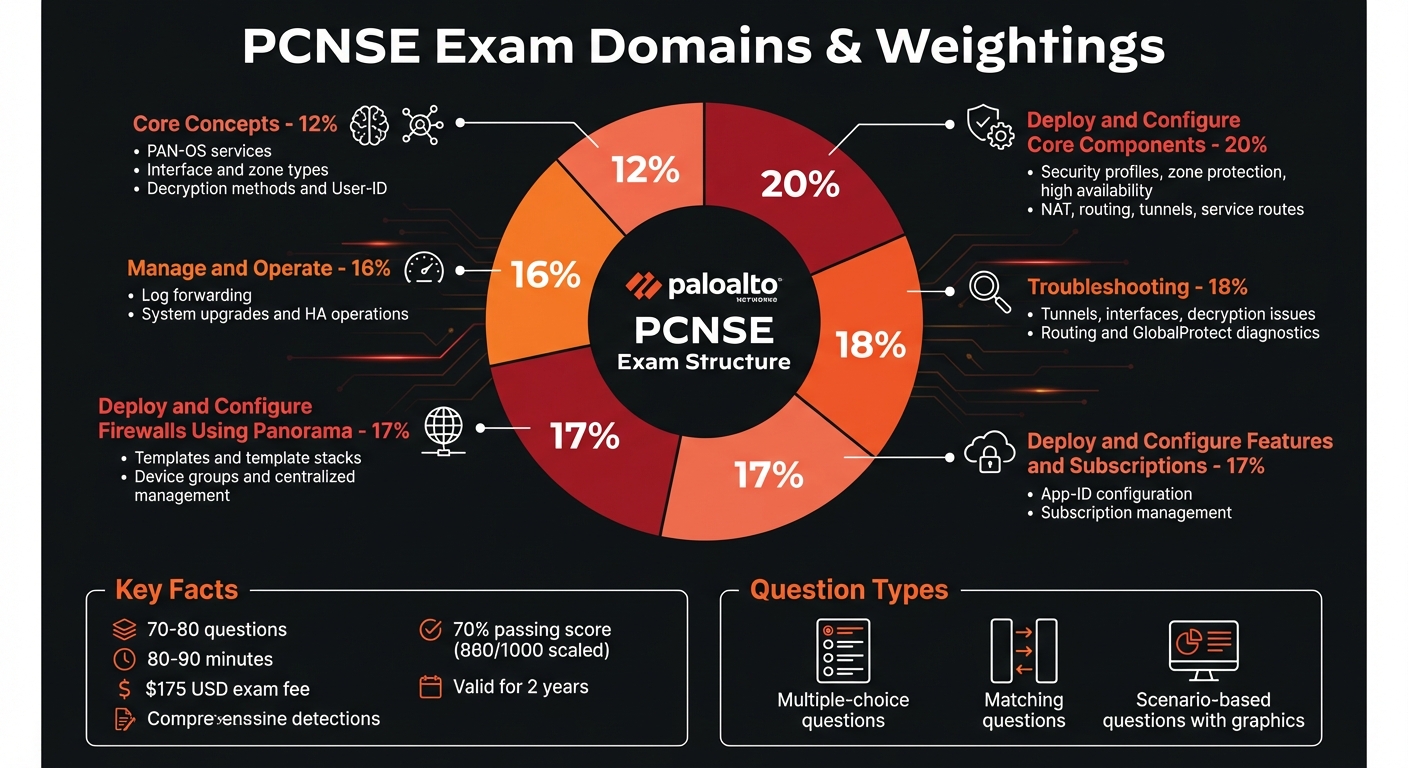
PCNSE Certification Exam Domains and Weightings Breakdown

PCNSE Certification Exam Domains and Weightings Breakdown

Exam Format and Requirements

The PCNSE exam includes 70–80 questions, which you’ll need to complete within 80–90 minutes [8]. Administered by Pearson VUE, the test can be taken in-person or through online proctoring. To pass, you’ll need a score of about 70%, which translates to a scaled score of 860 on a range from 300 to 1,000. The registration fee for the exam is $175 USD [8].

Palo Alto Networks suggests that candidates have 3 to 5 years of experience in networking or network security, along with 6 to 12 months of hands-on experience using their technologies [9]. If you don’t pass on your first try, you’ll need to wait 15 days before retaking it, and 30 days for a third attempt. Once earned, the certification is valid for two years.

The exam is divided into specific domains, each focusing on critical technical skills.

Exam Domains and Weightings

The PCNSE exam is broken into six key domains, each with a specific weighting to reflect its importance:

  • Deploy and Configure Core Components (20%): Covers topics like security profiles, zone protection, high availability, NAT, routing, tunnels, and service routes.
  • Troubleshooting (18%): Focuses on diagnosing and resolving issues with tunnels, interfaces, decryption, routing, and GlobalProtect.
  • Deploy and Configure Features and Subscriptions (17%): Tests your ability to configure App-ID and manage subscriptions.
  • Deploy and Configure Firewalls Using Panorama (17%): Involves using Panorama for firewall configurations, including templates, template stacks, and device groups.
  • Manage and Operate (16%): Evaluates skills like log forwarding, system upgrades, and high availability operations.
  • Core Concepts (12%): Includes topics such as PAN-OS services, interface and zone types, decryption methods, User-ID enforcement, and understanding the difference between management and data plane functions [8].

Question Types and Technical Skills Tested

The exam includes various question formats, such as multiple-choice, matching, and scenario-based questions. Many of these incorporate graphics to simulate real-world scenarios [9]. The focus isn’t on memorization – you’ll need to demonstrate how to apply Palo Alto’s security architecture in practical situations.

For example, you might encounter questions that require you to:

  • Differentiate between management and data plane functions.
  • Implement App-ID strategies.
  • Apply SSL decryption techniques.
  • Manage firewall configurations using Panorama.

Additionally, the test assesses your ability to use CLI commands like "show session all" and "debug dataplane" for advanced troubleshooting. To prepare effectively, it’s a good idea to build a lab environment with virtual firewalls. This allows you to practice configurations, NAT policies, and Panorama management in a hands-on setting.

How to Prepare for the PCNSE Exam

If you’re gearing up for the PCNSE exam, having a clear strategy can make all the difference. Here’s a detailed approach to help you balance theoretical knowledge with hands-on practice.

4-Month Preparation Timeline

A four-month plan can help you systematically cover all PCNSE blueprint objectives [2]. Here’s how to break it down:

  • Month 1: Start with the basics. Use the official PCNSE Study Guide and exam blueprint to build a strong foundation in Zero Trust architecture and PAN-OS fundamentals.
  • Month 2: Move on to deployment and configuration. Practice setting up NAT, security policies, App-ID, User-ID, and High Availability clusters. Spend extra time mastering these configurations.
  • Month 3: Focus on Panorama and advanced features. Practice centralized management using template stacks and device groups. Dive into GlobalProtect VPN and SSL decryption, as Panorama is crucial for managing larger environments.
  • Month 4: Wrap up with troubleshooting and review. Use CLI diagnostics and log analysis to resolve issues in simulated scenarios. Take practice exams to refine your timing and identify weak spots [2][5].

This timeline ensures you cover all the essentials while keeping your preparation organized.

Study Resources and Training Materials

To tackle the PCNSE exam, you’ll need the right resources. Start with the official PCNSE Study Guide and Exam Blueprint to understand the exam’s scope and technical requirements [3][11]. The Palo Alto Networks Beacon Platform is another great resource, offering free training videos and materials.

For more structured learning, consider these courses:

  • EDU-210: Firewall Essentials: Configuration and Management
  • EDU-220: Panorama: Managing Firewalls at Scale
  • EDU-330: Firewall: Troubleshooting

Additionally, CBT Nuggets provides a 15-hour video course led by Keith Barker, featuring 113 videos [2]. Engage with the LIVEcommunity forum and groups like PANgurus and the Indeni Community for insights from experienced professionals. Don’t forget to consult the PAN-OS Admin Guide and official documentation – they’re invaluable throughout your preparation [10].

These resources will help you build a strong knowledge base and prepare for hands-on practice.

Hands-On Lab Experience

Practical experience is essential for the PCNSE exam. Set up a simulated environment using VM-Series virtual firewalls on platforms like VMware Workstation, ESXi, AWS, or Azure to mimic real-world networks [3].

Focus on advanced, scenario-based configurations. For example, misconfigure GlobalProtect certificates or force HA failovers to sharpen your troubleshooting skills [3][12]. Use Panorama to push pre-rules and post-rules across multiple virtual firewalls, which will deepen your understanding of policy management and overrides. Additionally, practice binding User-ID agents to Active Directory to reinforce zero-trust principles – a key aspect of the exam [3].

This hands-on approach will not only enhance your technical skills but also boost your confidence for exam day.

sbb-itb-bf7aa6b

Career Opportunities with PCNSE Certification

Job Roles for PCNSE-Certified Engineers

Earning a PCNSE certification opens doors to specialized, higher-paying positions. For example, Network Security Engineers handle critical tasks like policy updates and software upgrades. Meanwhile, Senior Cyber Security Engineers focus on designing and deploying Palo Alto Next-Generation Firewalls tailored to meet specific business and security requirements. These roles can command salaries of around $153,865 annually [6][4].

For professionals with security clearances, the opportunities become even more targeted. Cyber Security SMEs working at Secret or Top Secret levels are responsible for high-level tasks, such as installing, configuring, and operating firewall products [14]. Similarly, IDS/IPS Security Engineers with TS/SCI clearances focus on intrusion detection and prevention within the Palo Alto ecosystem [13]. Top-tier roles like Network Architects average salaries of $162,135, and Senior Security Consultants typically earn about $147,395 [6][1].

To excel in these roles, a strong grasp of routing protocols like OSPF, EIGRP, and BGP is crucial. These skills help optimize traffic and ensure network stability, especially in government contracts [14]. As more government agencies adopt cloud-based solutions, expertise in deploying firewalls within hybrid and public cloud environments is increasingly sought after [4].

Salary Impact and Compensation

PCNSE certification doesn’t just expand job opportunities – it also has a noticeable impact on earnings. Certified professionals report an average base salary of around $107,000 annually as of January 2026, often complemented by bonuses averaging $9,912 [6][15]. In North America, this figure rises to approximately $126,573 [15]. Certification can lead to salary increases of $20,000 to $40,000 per year [7].

"The PCNSE validates the specific, high-demand skill set required for that upper tier. It signals to recruiters that you can handle complex Layer 7 security policies, not just basic routing" [7].

PCNSE-certified specialists typically earn between $135,000 and $160,000 or more, whereas generalist network engineers often make between $110,000 and $130,000 [7]. In Washington, D.C., a hub for cleared professionals, the average salary is about $132,000, with top earners reaching up to $172,000 [17]. For those who master Panorama and move into architectural roles, salaries can exceed $200,000 [7]. Additionally, 93% of PCNSE-certified professionals report feeling "extremely good" or "somewhat good" about their job security [15].

Why Cleared Employers Value PCNSE

The value of PCNSE certification extends beyond salaries, particularly for those in clearance-specific roles. It aligns with government and defense compliance requirements and often serves as a key qualification for contractor positions [7][18].

Palo Alto Networks is widely regarded as a standard among government agencies and large enterprises. Holding a PCNSE certification demonstrates your ability to implement advanced Layer 7 security policies, SSL decryption, and App-ID strategies – skills far beyond basic routing [7]. For roles involving sensitive infrastructure, the certification signifies expertise in managing complex and confidential systems [16].

Large-scale deployments are common in government work, making proficiency in Panorama a critical asset. PCNSE certification validates your ability to manage multiple firewalls efficiently using template stacks and device groups [16][3]. Combining a security clearance with PCNSE certification gives you access to roles with less competition and higher pay [17][18]. Interestingly, 33% of PCNSE holders reported changing employers within a year, primarily to secure better compensation [15].

Next Steps After PCNSE Certification

Additional Certifications to Consider

Earning the PCNSE certification is a stepping stone toward more specialized expertise. As of July 31, 2025, Palo Alto Networks transitioned from the traditional PCNSE exam to a role-based certification framework, designed to validate skills tailored to specific job roles [21][22]. You can now choose from three focused tracks: Network Security, Cloud Security, or Security Operations.

If your work involves cloud environments, the Cloud Security Professional certification (formerly PCCSE) is a great option. It demonstrates your ability to secure workloads and identities in hybrid and multi-cloud setups. The $175 exam covers topics like Cortex Cloud, runtime security, and cloud-native application protection. For those stepping into autonomous SOC roles, certifications like XSIAM Engineer or XDR Engineer are worth exploring. These focus on AI-driven security operations and automated incident response – skills in high demand as cybercrime costs are projected to hit $12 trillion globally [19].

Professionals managing Zero Trust architectures should consider certifications like Security Service Edge (SSE) Engineer or SD-WAN Engineer, which are crucial for Prisma Access deployments and network modernization. Meanwhile, if automation excites you, the Palo Alto Networks Certified Security Automation Engineer (PCSAE) covers orchestration using tools like Cortex XSOAR and is priced at $175.

Certification Track Certification Focus Area Exam Cost
Network Security SSE Engineer Prisma Access, SASE, Zero Trust $175
Cloud Security Cloud Security Professional CSPM, runtime security $175
Security Operations XSIAM Engineer AI-driven SOC, data ingestion $175
Automation PCSAE Cortex XSOAR orchestration $175

Once you’ve identified your next certification, consider enrolling in formal training to build the expertise needed for success.

Training and Education Options

Formal training bridges the gap between exam preparation and practical, hands-on expertise. Classroom sessions offer structured learning and access to advanced labs, while online live courses provide the same instructor-led experience with the convenience of remote participation. These sessions can be intensive, often lasting up to 12 hours per day. For ongoing learning, self-paced digital courses provide flexibility alongside official vendor content.

For engineers aiming to enhance their operational skills, the Firewall: Troubleshooting (EDU-330) course is highly recommended.

"Datacipher’s NGFW Engineer program filled in the gaps between what I knew and what I needed to lead complex deployments. The labs were enterprise-grade, and the instructor insights on automation and Panorama were invaluable" [19].

Although many advanced certifications don’t require prerequisites, it’s advisable to have 6–12 months of hands-on experience with products like Prisma Cloud or Cortex before attempting specialist exams.

Keeping Skills Current

PCNSE certification is valid for 24 months, after which you’ll need to retake the latest version of the exam to maintain your credentials [24]. This ensures you’re always up to date with the newest PAN-OS features and security advancements. Since 2005, Palo Alto Networks has trained over 100,000 learners [23]. Additionally, 91% of cybersecurity professionals agree that continuous skill updates are essential to counter evolving threats [20].

To stay sharp, join the Palo Alto Networks Live Community for access to technical boards, engineering blogs, and real-world troubleshooting discussions. Podcasts like PANCast™ and Threat Vector also offer valuable insights into emerging security trends and threat intelligence. Keeping up with PAN-OS updates not only ensures your certification remains valid but also strengthens your position as a skilled cybersecurity professional.

Conclusion

This guide has provided a thorough roadmap to help you advance your career with the PCNSE certification. More than just a line on your resume, this certification is a strategic step toward establishing yourself as a skilled firewall engineer. By mastering the exam structure, leveraging effective preparation strategies, and exploring the career opportunities it unlocks, you’re setting yourself up for long-term professional growth. The certification underscores your ability to design and manage security systems, elevating your role from technician to a trusted security strategist.

"The PCNSE certification is not just a validation of skill; it is a demonstration of readiness" – CertLibrary

With certified professionals earning an average salary of $107,000 annually and senior roles reaching up to $147,395 [1][6], the financial benefits are undeniable. But the real advantage lies in the career flexibility and credibility it brings, enhancing both your professional reputation and your influence within technical teams.

The two-year validity of the certification ensures you stay aligned with the latest developments in security technologies and emerging threats [1]. Additionally, Palo Alto Networks’ role-based framework opens the door to specialized career tracks in areas like cloud security, security operations, and network expertise [21][22]. Whether you’re focused on securing hybrid infrastructures, implementing Zero Trust models, or managing complex enterprise deployments, PCNSE lays a strong foundation for success.

FAQs

Which Palo Alto certification replaces PCNSE after July 31, 2025?

After July 31, 2025, the PCNSE certification will transition to Palo Alto Networks’ new role-based certification framework. This revamped approach emphasizes hands-on, job-specific skills tailored to real-world roles. The updated framework introduces certifications for positions like Network Security Generalist, Network Security Analyst, and Next-Generation Firewall Engineer. The goal is to align these certifications more closely with the changing demands of the industry and the responsibilities of modern job roles.

What lab setup is best for PCNSE-style hands-on practice?

To get hands-on experience for the PCNSE exam, consider setting up a virtual lab using platforms like VMware, VirtualBox, or EVE-NG. These platforms allow you to host Palo Alto VM-Series firewalls, giving you the chance to practice essential tasks like configuring firewalls, setting up policies, managing VPNs, and exploring various security features.

Additionally, Palo Alto Networks provides online and remote lab resources that can further enhance your training. A virtual lab environment offers scalable scenarios that closely mimic real-world setups, helping you prepare effectively for the PCNSE exam requirements.

How does PCNSE help cleared engineers land higher-paying roles?

The PCNSE certification demonstrates an engineer’s ability to effectively manage and troubleshoot Palo Alto Networks’ advanced security solutions. This expertise is in high demand, as organizations place significant value on professionals with specialized skills in network security. As a result, certified individuals often enjoy enhanced job prospects and higher salaries. Many employers offer a "specialist premium" for this niche expertise, making the PCNSE a powerful credential for advancing careers in roles that require advanced network security knowledge.

Related Blog Posts

  • GNFA Certification Career Guide for Cleared Network Forensics
  • GSEC Certification Career Guide for Cleared Security Essentials
  • GCWN Certification Career Guide for Cleared Windows Security
  • PNPT Certification Career Guide for Cleared Practical Pen Testers

Related Guides

  • Cisco CCIE Security Career Guide for Cleared Expert Engineers
  • Cisco CCNP Security Career Guide for Cleared Network Engineers
  • Cisco CCNA Security Career Guide for Cleared Network Professionals
  • Cybersecurity Salary Guide 2026
  • TS/SCI Salary Premium: Real 2026 Numbers

Splunk Certification Career Guide for Cleared SIEM Analysts

CyberSecJobs Editorial · March 4, 2026 ·

If you’re a security-cleared SIEM analyst, earning Splunk certifications can boost your career and salary. Certified professionals earn 40% more than their non-certified peers, and 71% report job satisfaction. Splunk is widely used in government and defense sectors for managing security events, threat hunting, and compliance. Certifications like Splunk Core Certified User and Splunk Enterprise Security Certified Admin validate your skills and open doors to roles like SOC Administrator or Security Architect. Exams cost $130 and must be renewed every three years. With 700,000 unfilled cybersecurity jobs in the U.S., demand for Splunk-certified talent is growing, making it a smart career move.

Key certifications include:

  • Splunk Core Certified User: Entry-level, no prerequisites.
  • Splunk Enterprise Security Certified Admin: For SIEM platform management.
  • Splunk Certified Cybersecurity Defense Analyst/Engineer: Focused on threat detection and automation.

Splunk-certified professionals can earn up to $156,000 annually, with certifications directly improving skills in log analysis, threat detection, and incident response. Preparation involves hands-on practice with Splunk tools, official study guides, and training programs. Pairing these certifications with DoD-compliant credentials like CompTIA Security+ can further enhance career prospects.

To succeed, focus on aligning certifications with your career goals, stay updated with Splunk advancements, and leverage job platforms like Cleared Cyber Security Jobs to connect with employers seeking cleared professionals.

How To Pass The Splunk Core Certified User Exam | Everything You Need To Study and Pass

Splunk Core Certified User

Key Splunk Certifications for Cleared SIEM Analysts

Splunk

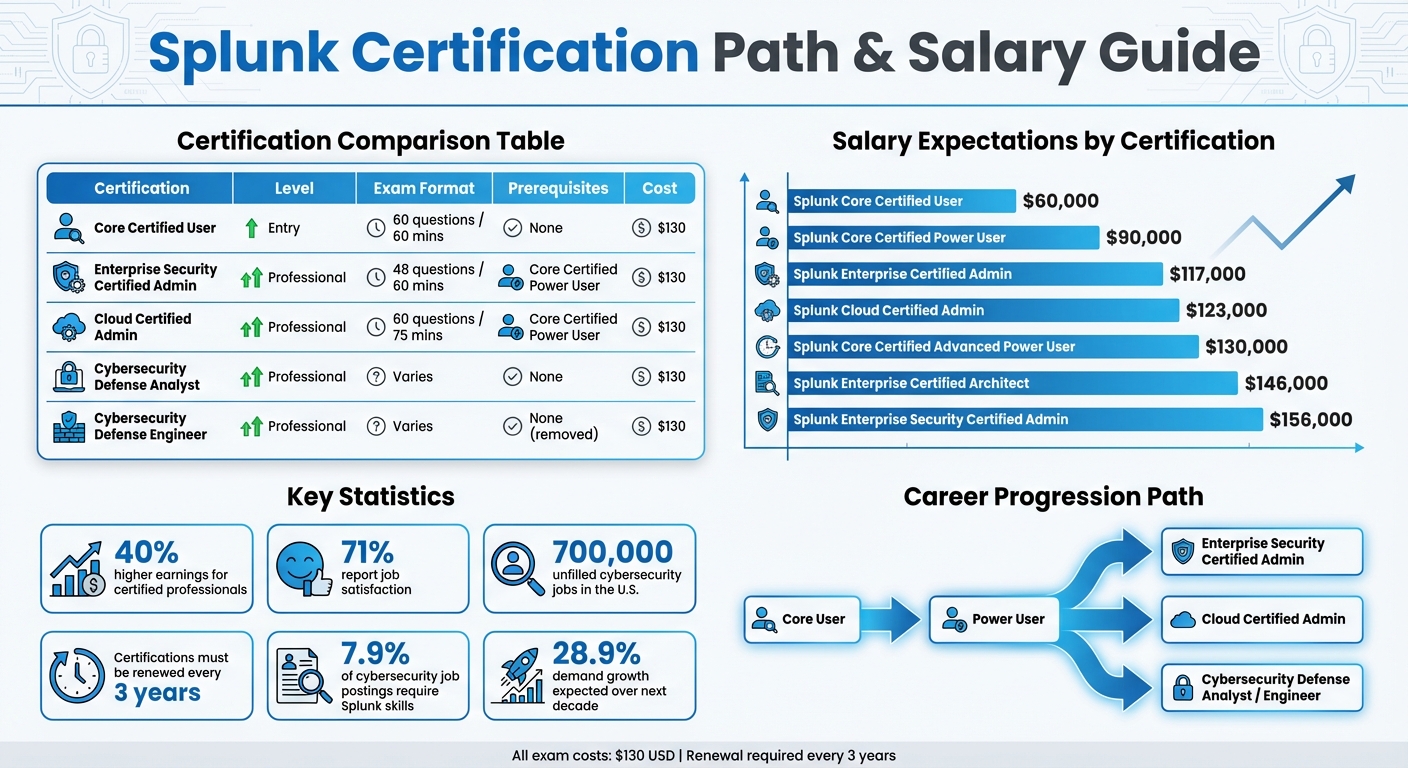
Splunk Certification Levels: Requirements, Costs, and Salary Expectations

Splunk Certification Levels: Requirements, Costs, and Salary Expectations

Choosing the right certification depends on your experience and career goals. Splunk offers a variety of certifications tailored to security professionals working in cleared environments, each focusing on different aspects of SIEM operations. Below is an overview of these certifications and their relevance to cleared roles.

Splunk Core Certified User

The Splunk Core Certified User is the starting point for anyone new to the platform. This certification demonstrates your ability to carry out essential tasks like performing basic searches, using fields, creating alerts, and building simple dashboards – key skills for daily SOC (Security Operations Center) activities[6]. The 60-minute exam includes 60 questions and tests your proficiency in using SPL (Search Processing Language) to manage incident triage and monitoring tasks within cleared environments[6]. No prior certifications are required[6].

Splunk Enterprise Security Certified Admin

If you’re responsible for managing SIEM platforms, the Splunk Enterprise Security Certified Admin certification is a solid choice. It focuses on tasks like installing, configuring, and maintaining the Splunk ES application, as well as data normalization and risk analysis to reduce false positives[1][10]. The exam consists of 48 multiple-choice questions[10]. While this certification has been reclassified as Legacy, it remains highly relevant for on-premises Splunk deployments in government and defense settings. Note: The Splunk Core Certified Power User certification is a prerequisite[7].

For those seeking more specialized expertise, there are additional certifications worth exploring.

Other Splunk Certifications to Consider

Splunk also offers advanced certifications that cater to specific roles, such as threat hunting, automation, and cloud management, all of which are critical for cleared SIEM operations.

  • Splunk Certified Cybersecurity Defense Analyst: Designed for SOC analysts, this certification covers threat hunting, risk-based alerting, and continuous monitoring best practices. These skills are directly applicable to the demands of cleared environments[1].
  • Splunk Certified Cybersecurity Defense Engineer: Aimed at security engineers, this certification focuses on detection tuning and automation using SOAR (Security Orchestration, Automation, and Response). With no prerequisites required anymore, it’s now more accessible for professionals looking to enhance incident response capabilities in cleared settings[9].
  • Splunk Cloud Certified Admin: Ideal for cleared environments shifting to cloud infrastructure, this certification addresses cloud-specific data management and monitoring. The exam includes 60 questions to be completed in 75 minutes and requires the Splunk Core Certified Power User as a prerequisite[8]. These skills are crucial for managing cloud-based SIEM operations.
Certification Level Exam Format Prerequisites Cost
Core Certified User Entry 60 questions / 60 mins None $130
Enterprise Security Certified Admin Professional 48 questions / 60 mins Core Certified Power User $130
Cloud Certified Admin Professional 60 questions / 75 mins Core Certified Power User $130
Cybersecurity Defense Analyst Professional Varies None $130
Cybersecurity Defense Engineer Professional Varies None (removed) $130

Career Benefits of Splunk Certifications for Cleared Professionals

Demand for Splunk-Certified Professionals in Cleared Environments

The government and defense sectors are grappling with a severe shortage of cybersecurity professionals. With 700,000 unfilled cybersecurity positions across the U.S. and 76% of IT employers struggling to find the specialized talent they need[17], Splunk certifications offer a strong edge. Around 7.9% of all cybersecurity engineer and analyst job postings specifically list Splunk skills as a requirement[11], and this demand is expected to grow by 28.9% over the next decade[11].

These certifications bridge the gap between general cybersecurity expertise and the specialized knowledge required by government contractors[15]. Since agencies rely on Splunk for real-time threat detection and operational intelligence, certified analysts play a crucial role in SOC operations and incident response. Additionally, as security operations merge with IT observability, the relevance of these credentials now extends beyond traditional SIEM roles[12]. This growing demand translates into better career opportunities, higher earning potential, and enhanced job performance.

Salary Expectations for Certified SIEM Analysts

Splunk certifications can lead to noticeable salary increases. Professionals with multiple Splunk certifications are 4.9 times more likely to see a salary boost within a year compared to those without certifications[16]. On average, Splunk users have reported a 14% increase in compensation, with younger professionals earning up to 52% more than their non-certified peers[14].

Certification Level Average US Salary
Splunk Core Certified User $60,000
Splunk Core Certified Power User $90,000
Splunk Enterprise Certified Admin $117,000
Splunk Cloud Certified Admin $123,000
Splunk Core Certified Advanced Power User $130,000
Splunk Enterprise Certified Architect $146,000
Splunk Enterprise Security Certified Admin $156,000

The median salary for professionals with Splunk expertise is $103,000, increasing to $114,000 for those with three to five years of experience[11]. For comparison, the average salary for an Information Security Analyst in 2026 is estimated at $124,910[17], while Splunk Enterprise Security Certified Admins earn a premium at $156,000[15]. Notably, 87% of technology leaders report offering higher salaries to candidates with specialized technical skills[17], making certifications a smart career investment.

How Certifications Improve Skills and Job Performance

Splunk certifications help professionals develop critical technical skills tailored for cleared environments. For example, mastering Splunk Processing Language (SPL) allows analysts to refine searches and extract actionable insights from vast amounts of log data – an essential skill in large-scale government operations[12]. Certifications like the Splunk Certified Cybersecurity Defense Analyst focus on areas such as threat hunting, detection engineering, and risk-based alerting, all of which are integral to SOC workflows[12][13].

Certified individuals excel at correlating logs, metrics, and event data across hybrid and cloud environments, enabling quicker handling of alerts, threat analysis, and forensic investigations. This efficiency boosts career stability: promotions for Splunk-certified professionals doubled in 2024 compared to the previous year[14], and many report increased job security.

"When you put in the effort to master your craft – and can show proof of that mastery – the market rewards you." – Eric Fusilero, VP of Global Education, Splunk[14]

The hands-on skills acquired during certification – like managing logs at scale, automating incident responses, and generating compliance reports – directly enhance performance in cleared SIEM roles. These abilities not only improve incident response workflows but also make SOC operations more efficient. This blend of technical expertise and practical application positions Splunk-certified professionals as standout candidates in the competitive cleared cybersecurity field[15].

sbb-itb-bf7aa6b

How to Prepare for Splunk Certifications

Study Resources and Training Options

Splunk offers a variety of learning paths tailored to different certification levels. For example, the Power User Fast Start eLearning program focuses on advanced SPL commands and working with knowledge objects, while the Administering Splunk Enterprise Security course delivers 13.5 hours of training on ES installation, configuration, and management. For those pursuing architectural roles, the Architecting Splunk Enterprise Deployments course covers essential design principles in just 9 hours of training[18].

If you’re just starting, check out Splunk’s free Search Tutorial, which includes sample data and teaches you the basics of SPL[19]. Other must-have resources include the Splunk Certification Candidate Handbook, Splunk Certification Exams Study Guide, and the Test Blueprint for your chosen certification. The Test Blueprint is especially useful – it breaks down the exam topics and their weightings, helping you focus on the most critical areas[1][5][21].

For additional support, explore community tools like Splunk Lantern, the official documentation site, and the Boss of the SOC (BOTS) program. These resources provide hands-on scenarios and technical insights that mimic real-world challenges[1][5]. Since exam attempts cost $130 USD each[5], investing time in preparation is key to avoiding unnecessary retakes.

Once you’ve gathered these materials, shift your attention to mastering test-taking strategies and building real-world experience.

Exam Preparation Tips for Cleared Professionals

Splunk certification exams are fast-paced and require proficiency with SPL commands, so you’ll need to rely on muscle memory rather than reference materials. Use the official Test Blueprint as a checklist to ensure you’ve practiced every required task – such as creating field aliases or building workflow actions – manually and thoroughly[20][21].

"The goal of having Splunk certifications is to prove your ability to use the product, not your ability to memorize test questions." – Kinney Group[20]

Avoid the temptation of using exam dumps. Not only do they violate Splunk’s certification policies, but they can also lead to a permanent ban from future certifications[20]. Instead, focus on fully understanding key concepts. For example, practice refactoring slow searches that use the transaction command into more efficient alternatives like stats or tstats – a skill often tested on exams[21].

Plan your study schedule over 2–4 weeks, integrating exam prep with your daily job tasks. Activities like building health dashboards or optimizing resource-heavy queries can reinforce your learning while improving your on-the-job skills[21].

Hands-on practice is a crucial part of this process – let’s explore how to make the most of it.

Using Hands-On Experience with Splunk

Practical experience is essential for certification success. Start by downloading a free Splunk Enterprise trial, which you can convert to a perpetual free license for use in a personal lab environment[19][21]. To practice SPL in a safe setting, load the Buttercup Games dataset from Splunk’s official search tutorial. This lets you work with realistic data without touching production systems[21].

Set up a Splunk Sandbox on your local workstation, VirtualBox, or Docker to experiment freely[19]. Here are some tips for effective lab work:

  • Use the head command to limit search results and avoid overloading your system resources[19].
  • Clone dashboards or saved searches so you can edit them without risk[19].
  • Practice creating and managing knowledge objects like field aliases, macros, tags, and event types[21].
  • Learn to normalize data using the Common Information Model (CIM) and accelerate data models for better performance[21].

Take on small projects that align with exam topics. For instance, you could build a health dashboard that uses base search macros, timechart panels, and severity buckets. These activities not only help you prepare for the exam but also enhance your job performance – especially in high-security environments where efficient log analysis and incident response are critical to success.

Next Steps for Certification Success in Cleared Careers

With a strong foundation and practical experience, it’s time to chart the course for your next career moves.

Aligning Certifications with Career Goals

To align your certifications with your career ambitions, start by focusing on your 3–5 year professional goals. If you’re aiming for SOC or security analytics roles, begin with the Splunk Core Certified Power User to sharpen advanced search skills. Afterward, pursue the Splunk Enterprise Security Certified Admin to gain specialized knowledge in SIEM operations[22][23]. For system administration or DevOps paths, the Splunk Enterprise Certified Admin confirms your proficiency in installation, configuration, and data ingestion[23]. If leadership or architectural roles are your target, the Splunk Certified Architect demonstrates expertise in managing distributed deployments and ensuring high availability[23].

A suggested path for progression includes starting with Core User, moving to Power User, and then advancing into specialized certifications. In cleared environments, where practical skills are often prioritized over theory, these certifications validate hands-on expertise[22]. Keep an eye on certification expiration dates, as Splunk credentials must be renewed every three years[1]. Plan your certification timeline carefully.

For professionals in cleared roles, pairing Splunk certifications with DoD 8570/8140-compliant credentials, such as CompTIA Security+ (cost: $392), can help meet government requirements[2]. Additionally, specialized certifications like the Splunk Certified Cybersecurity Defense Analyst or Engineer are excellent for those focused on threat detection and mitigation using Splunk Enterprise Security and SOAR[1].

Using Cleared Cyber Security Jobs for Career Growth

Cleared Cyber Security Jobs

Once you’ve mapped out your career path, leverage Cleared Cyber Security Jobs to connect your Splunk certifications with employers actively seeking security-cleared talent. This platform specializes in matching cybersecurity professionals with roles that align with their certifications and clearance levels. You can filter job searches by certification, clearance status, and preferred roles. Be sure to highlight your Splunk credentials on your profile and set up job alerts to stay connected with opportunities[4].

The platform also hosts job fairs, offering a chance to meet employers face-to-face and discuss how your certifications meet their SIEM and cybersecurity needs. As a veteran-founded platform, it’s tailored specifically for cleared professionals, making it easier to connect with employers who recognize the value of both your technical skills and your security clearance.

Tips for Long-Term Success

To stay competitive, it’s essential to keep up with Splunk’s advancements. Build on your certification prep by engaging in continuous learning and networking within the Splunk community. Join the Splunk Community and local user groups to exchange ideas and discover new opportunities in cleared environments[4][3]. Attending annual events like .conf can help you stay ahead by learning about updates and connecting with other professionals[4].

Make use of Splunk Lantern, a self-service tool offering guides and best practices to help you adapt as the platform evolves[1]. If you’ve gained substantial experience, consider becoming a Splunk Exam Subject Matter Expert (SME). This role allows you to stay at the forefront of product developments while contributing to the certification program[1].

As Splunk integrates more SOAR, Observability, and AI-driven workflows, keeping your skills current is critical[4]. With the global cybersecurity market expected to reach $345.4 billion by 2026[24], professionals who combine Splunk expertise with active security clearances will be in high demand. Regularly update your professional profiles to showcase new certifications and skills, making it easier for cleared employers to find you when urgent positions arise.

FAQs

Which Splunk certification should I get first for a cleared SIEM role?

The Splunk Core Certified User certification is an excellent first step for anyone aiming to start in a cleared SIEM role. This certification focuses on foundational skills like searching, navigation, and creating dashboards – key areas that every entry-level analyst needs to master. It equips you with the basic knowledge required to work efficiently with Splunk in a cybersecurity setting.

How do I choose between Splunk Enterprise Security and Splunk Cloud certifications?

When deciding between Splunk Enterprise Security (ES) certification and Splunk Cloud certification, the choice largely depends on your organization’s infrastructure and your career objectives. If your company operates with on-premises systems, the Splunk ES certification is a better fit. On the other hand, if your focus is on cloud-based environments, the Splunk Cloud certification aligns with that expertise. Evaluate your current setup – whether it’s on-premises or cloud – and choose the certification that supports both your organization’s direction and your personal career growth.

What’s the fastest way to get hands-on Splunk practice for the exams?

To get practical experience with Splunk quickly, start by diving into official study guides and working with actual datasets. Take advantage of Splunk’s free trial or sandbox environments to practice crafting search queries, utilizing SPL (Search Processing Language), building dashboards, and working with knowledge objects. Boost your learning by sticking to a structured study plan, tackling mini-projects, and reviewing exam blueprints to zero in on the key skills needed for certification success.

Related Blog Posts

  • Cleared Cybersecurity Career Assessment – Your Success Scorecard and Action Plan
  • GSEC Certification Career Guide for Cleared Security Essentials
  • Security Plus Certification Career Guide for Cleared Entry Level
  • CySA Plus Certification Career Guide for Cleared SOC Analysts

Related Guides

  • ECSA Certification Career Guide for Cleared Security Analysts
  • GICSP Certification Career Guide for Cleared ICS Security
  • Cybersecurity Salary Guide 2026
  • TS/SCI Salary Premium: Real 2026 Numbers

BTL2 Certification Career Guide for Cleared Blue Team Level 2

CyberSecJobs Editorial · February 24, 2026 ·

The Blue Team Level 2 (BTL2) certification is a hands-on, intermediate-to-advanced cybersecurity credential designed for professionals with 2–4 years of experience in security roles. It focuses on practical skills like malware analysis, threat hunting, vulnerability management, and advanced SIEM operations. The certification includes a 72-hour practical exam where candidates investigate a simulated network intrusion and submit a detailed technical report.

Key Details:

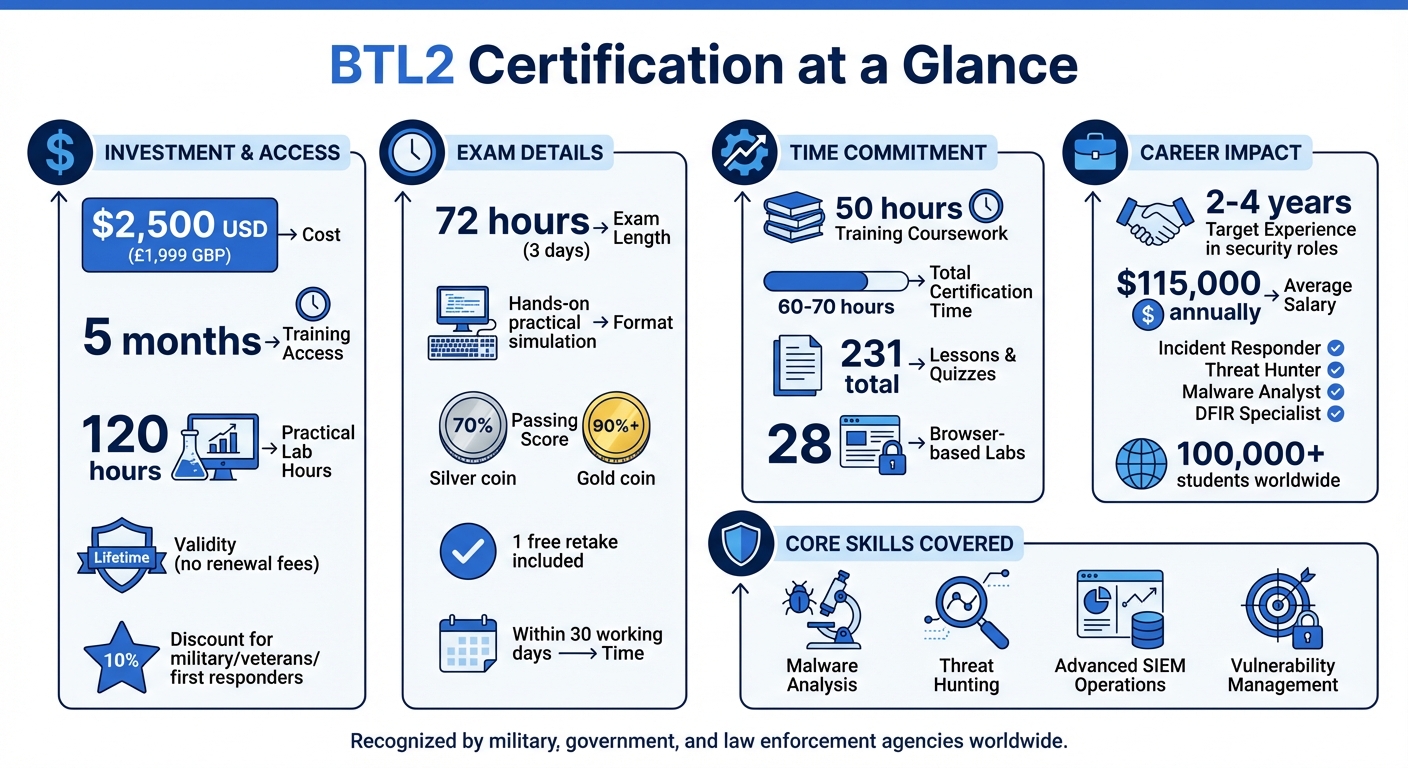
  • Cost: ~$2,500 USD (£1,999 GBP)
  • Exam Length: 72 hours (includes one free retake)
  • Validity: Lifetime (no renewal fees)
  • Target Roles: Incident Responders, Threat Hunters, Malware Analysts, DFIR Specialists
  • Average Salary: ~$115,000 annually
  • Training Access: 5 months, includes 120 hours of practical labs

Why it matters: BTL2 is highly regarded by government, military, and law enforcement agencies, making it a strong credential for cleared professionals aiming to advance in cybersecurity careers.

Preparation Tips:

  1. Complete all training materials and labs.
  2. Practice malware analysis and report writing.
  3. Use additional resources like Blue Team Labs Online and TryHackMe for extra practice.
  4. Plan for a dedicated 4-day period to complete the exam and report.

This certification validates advanced skills and is ideal for cleared professionals looking to excel in high-demand cybersecurity roles.

BTL2 Certification Overview: Cost, Duration, and Career Benefits

BTL2 Certification Overview: Cost, Duration, and Career Benefits

Eligibility and Prerequisites for BTL2 Certification

Experience and Knowledge Requirements

While there are no mandatory prerequisites for BTL2, the exam is best suited for professionals with some relevant experience [2]. It’s designed for those already familiar with security roles and practices. Security Blue Team describes the training as "intense", covering advanced topics like static and dynamic malware analysis, threat hunting, and advanced SIEM operations [2].

If you’re unsure whether your background aligns with BTL2 requirements, you can try the free one-hour BTL2 Demo, which offers sample content from the Malware Analysis, Threat Hunting, and SIEM modules [7]. For those who lack a strong foundation in security operations, completing the Blue Team Level 1 (BTL1) certification is highly recommended before attempting BTL2 [2]. The course assumes candidates have intermediate knowledge of Windows and Linux system administration. It does not cover basic operating system concepts or enterprise Active Directory fundamentals [6].

"BTL2 is aimed at security professionals with 2-4 years’ experience in a practical role, but can be suitable for individuals with less experience provided they can commit to the intense training." – Security Blue Team [2]

Cleared Professional Considerations

For professionals with security clearances, no specific clearance level is required to pursue BTL2 [2]. Your clearance status won’t impact your eligibility to enroll or take the exam. However, the certification’s cost – £1,999.00 GBP (around $2,500 USD) – often necessitates employer sponsorship [2]. To assist with this, Security Blue Team provides a pre-written funding request letter that professionals can use to seek training budget approval from their organizations [3,8].

This certification is particularly valuable in cleared environments, as it is recognized by military, government, and law enforcement agencies worldwide for training their defensive teams [4]. Additionally, military personnel, veterans, and first responders can receive a 10% discount by verifying their status through the Security Blue Team support portal [2]. Since BTL2 is generally considered a corporate training investment rather than a personal expense, many cleared professionals secure funding through their agency’s professional development or training budgets [5].

In the next section, we’ll explore the training structure, exam format, and the time commitment required to earn the BTL2 certification.

sbb-itb-bf7aa6b

BTL2 Training, Exam, and Time Commitment

Training Structure and Resources

The BTL2 certification program is tailored for cleared professionals, focusing on practical, hands-on skills through simulated incident response scenarios. The training is divided into four key areas: Malware Analysis, Threat Hunting, Advanced SIEM, and Vulnerability Management [8][2]. Across 231 lessons and quizzes, students build a strong theoretical foundation before diving into practical labs [2]. To accommodate busy schedules, participants are given five months of access to all materials, allowing them to learn at their own pace [2][9].

The practical portion includes 28 browser-based labs, providing 120 hours of dedicated access [2][7]. Using industry-standard tools like YARA, Velociraptor, Wireshark, and malware analysis utilities, students engage in a "Role Simulation" exercise. Here, they take on the role of an incident responder tasked with addressing sophisticated intrusions in a corporate environment [1]. This hands-on approach not only prepares candidates for the exam but also aligns closely with real-world scenarios.

"BTL2 is designed to strengthen technical defenders that already have experience and exposure to security operations. BTL2 will develop you in niche areas that make you stand out as an advanced defender." – Security Blue Team [2]

To make the most of the official lab time, it’s recommended to focus on exam-specific preparation and final reviews during the 120-hour lab access period. This ensures a smooth transition from training to the exam.

Exam Format and Assessment Process

The BTL2 exam is a 72-hour practical simulation where you act as an incident responder investigating a complex intrusion in a corporate network [1][2]. Unlike multiple-choice tests, this assessment requires you to submit a detailed technical report documenting your findings and evidence [1][3]. Security Blue Team provides a report template for this purpose, which you’ll complete during the investigation and submit for manual grading.

The exam is evaluated by instructors within 30 working days [2][9]. To pass, you’ll need a score of at least 70%, earning a silver challenge coin [1][2]. Achieving 90% or higher on your first attempt will earn you a gold challenge coin [1][2]. The certification remains valid for four years [2].

"The exam spans 3 days (72 hours) to provide flexibility, allowing you to take breaks, rest, and manage other commitments." – Security Blue Team Support [1]

If you don’t pass on your first attempt, the program includes one free retake, valid for 12 months [1]. Additional retakes cost $125 each, with a mandatory 10-day waiting period between attempts to prevent burnout [1]. Feedback is provided for unsuccessful attempts, helping candidates target areas for improvement before trying again [1][3].

Jeff Domedion, a SOC Analyst who completed the BTL2 exam, shared his experience:
"The report felt very redundant… I felt like with some pieces of information I was providing the same pieces of evidence 2 or 3 times. I also thought it would be quicker than it truly was." [3]
He suggests reviewing the entire report template before starting your analysis to avoid unnecessary repetition and ensure all required evidence is captured during the live lab session [3].

Time Commitment for Certification

Security Blue Team estimates that most candidates need 60 to 70 hours to complete the entire certification process. This includes approximately 50 hours for training coursework and labs [2]. The 72-hour exam window is continuous – once started, the timer doesn’t stop – so it’s important to plan time for analysis, breaks, report writing, and tool setup [1][3].

Many professionals prefer starting the exam on a Friday morning to make full use of the weekend [3]. Jeff Domedion shared his strategy:
"I dedicated 72 hours to it and submitted the report with only 10 hours left. So I feel it’s important to set time aside for this and let others know that you’ll be doing it." [3]

Here’s a breakdown of the time requirements:

Component Time Required Access Duration
Training Coursework ~50 hours 5 months
Practical Labs Included in training 120 lab hours
Certification Exam 72 hours (3 days) 12 months to start
Total Commitment 60–70 hours N/A

The exam voucher is valid for 12 months [10][2]. Even if you start the exam on the final day of this window, you’ll still have the full 72 hours to complete it [10]. This flexibility is especially helpful for professionals managing busy schedules or clearance-related travel.

Career Impact of BTL2 Certification

Roles and Career Paths Requiring BTL2

The BTL2 certification validates hands-on expertise, making it a direct qualifier for advanced roles in cleared cybersecurity. Aimed at seasoned professionals, it prepares candidates for positions like Security Analyst, Incident Responder, Threat Hunter, Malware Analyst, and DFIR Specialist.

Each of these roles aligns with the certification’s focus areas. For example, Threat Hunters leverage practical lab exercises to proactively identify adversaries, while Malware Analysts apply reverse engineering and analysis techniques to uncover indicators of compromise. The rigorous 72-hour exam simulation is particularly beneficial for DFIR Specialists, as it mirrors the intensity of real-world incident response scenarios.

For professionals in cleared environments, specialized skills such as adversary emulation and memory forensics are especially valuable in government and defense contracting roles. The hands-on, report-based exam serves as proof of technical proficiency, which is highly sought after by employers in these fields. These advanced roles not only offer competitive salaries but are also in high demand within the cleared cybersecurity market.

Salary Expectations and Market Demand

On average, BTL2-certified professionals earn approximately $115,000 annually [8], underscoring the certification’s value as an advanced credential for experienced cybersecurity defenders. The multi-day practical exam adds credibility by showcasing real-world incident response capabilities, which employers prioritize.

The certification’s focus on niche defensive skills addresses critical gaps in the cleared job market. Roles requiring expertise in malware analysis, large-scale threat hunting, and advanced SIEM operations are particularly sought after. To make the certification more accessible, Security Blue Team offers a 10% discount for verified students, military personnel, first responders, and veterans. The investment, when converted from £1,999, is approximately $2,600.

Additionally, the exam employs a manual grading process, where experts review your technical report within 30 working days. This feedback not only enhances your reporting skills but also strengthens your qualifications for senior-level roles.

Integration with Other Certifications

BTL2 certification not only boosts earning potential but also serves as a stepping stone for building a comprehensive professional credential portfolio. For those on a management track, pairing BTL2 with CISSP highlights both technical expertise and strategic security knowledge. Professionals aiming for a "purple team" skill set often combine BTL2 with OSCP, demonstrating mastery in both defensive and offensive operations.

The certification is featured on Paul Jerimy‘s Security Certification Roadmap, alongside advanced credentials like GCFA and CCD. Many professionals complement BTL2 with certifications such as eCDFP, eCTHP, and eCIR to establish a well-rounded defensive profile. For newcomers, starting with BTL1 provides a strong foundation before tackling BTL2’s advanced material.

While the digital badge and printed certificate are valid for four years, the BTL2 certification itself is lifetime valid. The expert evaluation of your technical report further enhances its credibility, making it a standout credential for advancing your cybersecurity career.

Preparing for BTL2 Certification Success

Study Strategies and Time Management

The BTL2 certification requires a well-organized preparation plan, especially for professionals juggling demanding cybersecurity roles. To set yourself up for success, make sure to complete all the course materials, quizzes, and labs before tackling the exam. This groundwork is essential for building the skills you’ll need for the 72-hour practical assessment [11].

A good strategy is to break your learning process into three phases. First, focus on understanding the theory behind the tools covered in the course. Next, practice using these tools in the BTL2 labs. Finally, expand your experience by working on external platforms. This approach, often referred to as a "capture-the-flag" mindset, prepares you for situations where no step-by-step instructions are available. Creating a personalized reference document with command-line switches and tool usage descriptions can also be a game-changer during the exam [11].

Plan for a continuous four-day block for the exam, including 72 hours for the test itself and an additional 24 hours for writing the report. Many professionals take Friday and Monday off to create this window [3]. To enhance your preparation, make use of targeted resources to deepen your understanding and sharpen your practical skills.

Recommended Learning Resources

Your primary resource is the Security Blue Team self-paced course, which includes 231 lessons and 28 browser-based labs, offering 120 hours of access over five months [2]. While this course is the foundation, supplementing it with external resources can give you a broader perspective. Platforms like Blue Team Labs Online (BTLO) provide gamified, scenario-based investigations in incident response and digital forensics, which are great for applying BTL2 concepts in diverse scenarios [12]. For those seeking even more depth, BTLO PRO subscriptions offer advanced scenario-based challenges [12].

Jeff Domedion, a security professional who successfully passed the BTL2 exam, highlighted the importance of using varied resources:

"I used outside resources heavily, both BTLO and TryHackMe. I did this because some of the TryHackMe labs gave me a better experience with the tools I was learning than what I found in BTL2 labs." [3]

To fill in any knowledge gaps, consider exploring content from experts like John Hammond, HuskyHacks, Didier Stevens, Josh Stroschein, and Matt Weiner. Regularly reading The DFIR Report can also deepen your understanding of threat actor tactics and techniques [11]. If you’re unsure about committing to the full course, check out the free BTL2 Demo course to gauge the difficulty and teaching style [7].

Common Challenges and How to Overcome Them

Malware analysis often emerges as the most difficult area for candidates. This domain requires advanced deobfuscation skills and familiarity with tools like CyberChef [9, 6]. Many struggle with intricate obfuscation techniques and analyzing beacons or C2 payloads. To build confidence, dedicate time to practicing these skills on platforms like BTLO or within personal VM environments before the exam [11].

Another challenge is the reporting process. Some candidates find the provided template repetitive, which can make it harder to stay organized. Reviewing the template early on can help you efficiently capture all necessary evidence during the exam [4, 9]. Additionally, technical issues with the labs can arise, so plan for extra time and document every step in real time using tools like Cherrytree or Obsidian. Screenshots are also crucial, as they may be required in your final report [6].

Lastly, be prepared for the wait after submitting your exam. Reports are graded manually within 30 working days, though some candidates have reported waits of up to 38 business days [3, 6]. Use this time to continue honing your skills and refining your approach based on the strategies outlined in this guide.

HackTheBox CDSA vs BTL2 | Detailed Comparison | Cyber Security Certifications

HackTheBox

Conclusion

The BTL2 certification stands out as a lifetime credential that confirms your expertise in four key areas highly sought after by cleared cybersecurity employers: Malware Analysis, Threat Hunting, Vulnerability Management, and Advanced SIEM. Its 72-hour hands-on simulation goes beyond theory, immersing you in a realistic corporate network intrusion scenario. This practical approach ensures you’re prepared for the challenges of mid-to-senior-level defensive roles [1][2].

With a strong track record, BTL2 has trained over 100,000 students worldwide [2][4]. It’s designed for professionals with 2–4 years of experience who are aiming for roles such as DFIR Specialist, Senior SOC Analyst, or Threat Hunter [2]. The certification provides the real-world skill validation necessary to excel in advanced defensive positions.

Priced at £1,999.00 GBP (around $2,500 USD), BTL2 offers lifetime validity with no recurring renewal fees, making it a cost-effective long-term investment [2]. Additionally, cleared professionals with military backgrounds can take advantage of a 10% discount and access pre-written funding request letters provided by Security Blue Team [2]. This combination of affordability and practical training solidifies BTL2’s appeal for cybersecurity professionals looking to advance their careers.

FAQs

Is BTL2 worth it for cleared roles?

The BTL2 certification holds strong relevance for cybersecurity professionals working in cleared roles, especially those focused on advanced defensive security. It confirms expertise in critical areas like threat hunting, incident response, malware analysis, and vulnerability management. Tailored for individuals with over two years of experience, this certification aligns with the unique requirements of cleared environments. Its practical, hands-on focus and recognition across the industry make it an excellent step for advancing careers in high-level defensive cybersecurity positions.

How should I schedule the 72-hour exam?

You can start the 72-hour BTL2 exam whenever it fits your schedule. Once you begin, the countdown starts, giving you exactly 72 hours to complete it. You’re free to take breaks and step away, but remember, the clock keeps ticking. Plan your time wisely to ensure you finish within the allotted window.

What should I include in the exam report?

Your BTL2 exam report is a critical component of your certification process. It must provide a detailed account of your investigation into the simulated cyber intrusion. Here’s what your report should cover:

  • Steps Taken: Clearly outline the sequence of actions you performed during the investigation. This includes identifying the breach, analyzing its scope, and any containment measures implemented.
  • Tools and Techniques: Highlight the specific tools and methodologies you used. Whether it’s log analysis, network traffic monitoring, or forensic tools, explain how each was applied and why.
  • Evidence Collected: Document the evidence gathered during the investigation. This may include logs, screenshots, malware samples, or any other relevant artifacts. Ensure the evidence is well-organized and supports your findings.
  • Attack Assessment: Provide a thorough analysis of the attack. Describe its nature, entry points, and potential impact. Discuss the tactics, techniques, and procedures (TTPs) used by the adversary and link them to any known threat actors or frameworks like MITRE ATT&CK.
  • Mitigation Strategies: Detail the measures you implemented to contain and remediate the intrusion. Explain why these strategies were effective and how they addressed the specific attack vectors.
  • Prevention Recommendations: Offer actionable advice to prevent similar incidents in the future. This should include policy changes, system hardening, employee training, or any other proactive measures.

Remember, your report should reflect advanced cybersecurity expertise. Ensure it is well-structured, concise, and professional. Submit the completed report within the 72-hour exam window, as it is the primary factor in your certification evaluation.

Related Blog Posts

  • GSEC Certification Career Guide for Cleared Security Essentials
  • CTIA Certification Career Guide for Cleared Threat Intel Analysts
  • CRTL Certification Career Guide for Cleared Red Team Leads
  • BTL1 Certification Career Guide for Cleared Blue Team Level 1

Related Guides

  • BTL1 Certification Career Guide for Cleared Blue Team Level 1
  • CySA Plus Certification Career Guide for Cleared SOC Analysts
  • Security Plus Certification Career Guide for Cleared Entry Level
  • Cybersecurity Salary Guide 2026
  • TS/SCI Salary Premium: Real 2026 Numbers

BTL1 Certification Career Guide for Cleared Blue Team Level 1

CyberSecJobs Editorial · February 24, 2026 ·

The Blue Team Level 1 (BTL1) certification is a practical, entry-level credential for cybersecurity professionals, especially those in government, defense, and military roles requiring security clearances. It tests your ability to handle security incidents through a 24-hour, task-based exam focusing on six domains: Security Fundamentals, Phishing Analysis, Threat Intelligence, Digital Forensics, SIEM, and Incident Response.

Key Points:

  • Cost: $490 USD (includes training, labs, and 2 exam attempts; discounts available for students, military, and first responders).
  • Format: Open-book, browser-based, unproctored, with 20 challenges using tools like Splunk, Wireshark, and Autopsy.
  • Passing Criteria: 70% for certification; 90%+ on the first attempt earns a gold challenge coin.
  • Preparation: 30–50 hours of study, with access to 100 hours of labs and free resources like the Blue Team Junior Analyst pathway.
  • Lifetime Validity: No renewal fees or continuing education requirements.

BTL1 aligns with the NICE Framework, making it ideal for roles like SOC Analyst or Incident Responder. It’s a one-time investment that directly demonstrates your hands-on skills to employers. With over 10,000 certified professionals and a 99% pass rate with retakes, it’s a strong option for building your cybersecurity career.

BTL1 Certification Quick Reference Guide: Cost, Format, and Key Benefits

BTL1 Certification Quick Reference Guide: Cost, Format, and Key Benefits

BTL1 Exam Structure and Prerequisites

Exam Format

The BTL1 exam is a 24-hour, open-book, browser-based simulation that includes 20 task-based challenges. These challenges are designed to mirror real-world cybersecurity incidents, using industry-standard tools like Splunk, Wireshark, Autopsy, and DeepBlueCLI for tasks such as SIEM, network analysis, forensics, and log review.

The exam is unproctored, meaning you can complete it from home or work, with access to your notes, course materials, and even search engines. However, using AI tools like ChatGPT is strictly prohibited and will result in disqualification. To pass, you’ll need a 70% score, which earns you the silver challenge coin. Achieving a 90% or higher on your first attempt secures the coveted gold challenge coin.

"The exam guides you through a very realistic incident response scenario in which you have to combine mostly your Splunk/Wireshark/Autopsy knowledge." – Synack12, Security Researcher [9]

If you don’t pass on your first try, you’re entitled to one free retake. Additional retake vouchers are available for $123 each, with a mandatory 10-day waiting period between attempts. Encouragingly, over 99% of candidates who use their free retake eventually pass.

A strong understanding of core security concepts is essential to navigate the challenges effectively.

Prerequisites and Required Knowledge

The BTL1 exam has no formal prerequisites, making it ideal for professionals with 0–2 years of experience, including students, career changers, and IT generalists exploring cybersecurity. However, candidates are expected to have a foundational understanding of six key areas: Security Fundamentals, Phishing Analysis, Threat Intelligence, Digital Forensics, SIEM, and Incident Response.

To boost your chances of success, Security Blue Team advises completing all 23 browser-based labs included with your exam purchase. These labs provide 100 hours of hands-on practice with the tools featured in the simulation. Additionally, the Blue Team Junior Analyst (BTJA) pathway, offered for free, serves as a helpful self-assessment tool to measure your readiness.

For optimal results, organize your notes by domain before the exam. A well-prepared, searchable document containing Splunk queries, Wireshark filters, and phishing analysis workflows can save you precious time during the 24-hour window.

sbb-itb-bf7aa6b

How to Prepare for the BTL1 Exam

Study Plan and Core Domains

The BTL1 exam focuses on six key domains, but the real emphasis is on practical, hands-on skills rather than rote memorization. To prepare effectively, aim for 30–50 hours of study spread over 6–8 weeks. This pace allows for consistent practice without overwhelming yourself [1].

Break your preparation into weekly segments. Dedicate one week each to topics like Phishing Analysis, Threat Intelligence, SIEM (Splunk), and Digital Forensics. Reserve two weeks toward the end for integrated incident response scenarios and final reviews. Here’s a suggested timeline to guide your studies:

Study Week Focus Area Key Tools/Tasks
Week 1 Security Fundamentals Basic Splunk syntax
Week 2 Phishing Analysis Header analysis, artifact extraction
Week 3 Threat Intelligence MISP, VirusTotal, WHOIS pivots
Week 4 SIEM (Splunk) Scoping activity, filtering malicious logs
Week 5 Digital Forensics Volatility, KAPE, FTK Imager, Wireshark
Week 6 Incident Response PICERL framework, report writing practice
Week 7-8 Review Redoing challenging labs, refining notes

Completing all 23 browser-based labs is a great way to boost your chances of earning the coveted gold challenge coin. With a solid plan in place, the next step is to leverage the best study resources.

Study Resources

Your exam purchase includes 4 months of on-demand training access and 100 hours of lab time. To start, explore the free Blue Team Junior Analyst (BTJA) pathway. This resource covers OSINT, Digital Forensics, and Threat Hunting, giving you a chance to identify any knowledge gaps before diving into the paid curriculum.

For additional practice, platforms like Blue Team Labs Online (BTLO) offer extra scenarios, including Malicious PowerShell and Phishing Analysis. TryHackMe‘s SOC Level 1 path is another excellent option, helping you sharpen investigative skills through realistic challenges. If you’re undecided about committing to the course, Security Blue Team provides a free limited-access demo, allowing you to preview the structure and content.

Once you’ve built a strong foundation, focus on refining your strategy for acing the exam.

Exam Success Tips

Since the BTL1 exam is open-book, effective note-taking is far more important than memorizing details. Use tools like Notion or Obsidian to create a searchable database organized by domain. Include sections for Splunk search commands (e.g., stats, eval, rex) and Wireshark display filters (e.g., http.request, dns.qry.name). This setup will help you quickly find the information you need during the exam.

"Complete the theory part as quickly as you can… Instead, focus on the labs and make procedural notes." – drsh, Security Professional [7]

Plan your exam day carefully. Schedule breaks for rest, meals, and sleep to stay sharp. In the first two hours, focus on creating a timeline of attacker activity and drafting answers externally to avoid losing work due to browser timeouts. For the forensics section, keep a reference list of Windows Event Log IDs handy to speed up artifact analysis.

BTL1 Pricing and Benefits

Certification Cost

The BTL1 certification is more than just a credential – it’s an investment in your future within the cleared cybersecurity field. The cost is £399 GBP (around $490 USD) and includes everything you need: comprehensive training, lab access, and exam attempts. Specifically, this price gives you 4 months of on-demand access to over 330 lessons, 100 hours of browser-based lab time, and one initial exam attempt with a free retake included. The exam voucher is valid for 12 months, offering flexibility to schedule your exam even after your course access expires [2][5].

If you’re a verified student, military personnel, veteran, or first responder, you can take advantage of a 10% discount on the bundle price [2][5]. Need extra time to prepare? You can extend your training access for £100 GBP (31 days) or £150 GBP (62 days) without affecting the 12-month exam window. If both attempts are unsuccessful, a final attempt is available for £100 GBP, provided you submit a success plan. This fee structure is specific to the certification bundle [10].

For U.S. professionals, it’s worth keeping an eye on currency exchange rates. The all-in-one bundle ensures there are no hidden fees – training materials, lab access, and even physical rewards like your printed certificate and challenge coin are all included.

This upfront cost is designed to deliver value not just during the course but throughout your career.

Lifetime Certification Value

One of the standout benefits of BTL1 is its lifetime validity. Once you earn this certification, there are no renewal fees or continuing education requirements [4][5]. That means the $490 investment is a one-time cost that permanently enhances your resume. Over the past five years, more than 10,000 students have earned this certification, with about 70% passing on their first attempt. For those who use the free retake, the success rate jumps to over 99% [5].

The certification also comes with exclusive physical rewards. Passing the exam earns you a silver challenge coin, but if you score 90% or higher on your first attempt, you’ll receive the prestigious gold coin [2][8].

"The hands-on training gave me everything I needed to gain the coveted gold when I finally took the exam, and the confidence to jump straight into a senior SOC analyst role." – Tom, Tier 2 SOC Analyst [11]

BTL1’s alignment with the NIST NICE Framework for Cyber Defense Analyst roles further enhances its value. It covers 60% of topics, 60% of knowledge, and 67% of ability requirements, making it a strong choice for cleared professionals aiming for government or defense roles [5].

Using BTL1 to Advance Your Cleared Career

Showcasing BTL1 on Resumes and in Interviews

Earning your BTL1 certification highlights your ability to handle practical defensive operations, not just theoretical concepts. To make the most of this credential, emphasize your active clearance level (like Secret or TS/SCI) in your professional summary. In the technical skills section of your resume, list the tools you’ve mastered – such as Splunk, Wireshark, Autopsy, Volatility, KAPE, and MISP – to ensure your resume catches the attention of Applicant Tracking Systems.

When it comes to interviews, the STAR method is your best friend. Use it to describe specific BTL1 lab scenarios where you applied the PICERL process (Preparation, Identification, Containment, Eradication, Recovery, Lessons Learned) to tackle incidents during the 24-hour exam. These examples demonstrate your ability to handle real-world cybersecurity challenges.

Make sure to feature your BTL1 Credly digital badge on LinkedIn and in your email signature for easy skill verification. If you scored 90% or higher on your first attempt, mention earning the Gold Challenge Coin – it’s a standout achievement. To further strengthen your profile, consider publishing 2–3 write-ups of your lab work to showcase your hands-on investigative skills.

"Many students have told us that recruiters are very impressed when candidates discuss the projects and labs they have completed during the interview stage!"

By following these strategies, you’ll position yourself effectively for roles that match your specific expertise.

Finding Cleared Roles with Job Boards

Platforms like Cleared Cyber Security Jobs are tailored for professionals with active security clearances, connecting them with direct-hire employers in cybersecurity. Use job board filters to zero in on roles that align with your BTL1 skills and clearance level. Upload your resume and set up job alerts to stay informed about positions that fit your qualifications.

BTL1’s alignment with the NICE Framework makes it particularly valuable for government and defense roles. When searching for jobs, include keywords like "SOC Analyst", "Incident Response", "Cyber Defense Analyst", or "Digital Forensics" to ensure your applications match the roles seeking these competencies.

After applying, keep an eye on the job market to stay ahead of new opportunities.

Monitoring Job Market Demand

Keep tabs on openings for positions such as Tier 1 and Tier 2 SOC Analysts, Incident Responders, Digital Forensics Analysts, and Threat Intelligence Analysts – roles that align closely with the skills your BTL1 certification validates. Pay attention to job descriptions that mention tools like Splunk, Wireshark, and Volatility.

The certification’s recognition by military, government, and law enforcement sectors highlights the steady demand for BTL1-certified professionals[3]. Set up alerts for job postings that reference the "NICE Framework" or "hands-on defensive operations."

"BTL1 is hands-on and relates directly to our daily work."

How I Passed The Blue Team Level 1 (24-Hour Practical Exam) | Security Blue Team Guide + Tips

Security Blue Team

Conclusion

The BTL1 certification provides a practical, hands-on credential that demonstrates your ability to manage real-world defensive operations through an intense 24-hour incident simulation. With lifetime validity and no renewal fees, it’s a one-time investment tailored for cleared professionals aiming for junior SOC or Incident Response roles.

BTL1’s credibility is underscored by its recognition from military, government, and law enforcement organizations worldwide [1]. Its alignment with the NICE Framework makes it especially relevant for federal and cleared positions. Plus, the open-book exam format mirrors real-world problem-solving, testing your investigative skills as you would use them on the job.

Priced at £399 GBP (about $490 USD), the training bundle includes 100 hours of browser-based labs, two exam attempts, and four months of course access [1][2]. Cleared professionals should explore available discounts before purchasing. Achieving a score of 90% or higher on your first try earns you a physical "Gold" challenge coin – a standout credential for recruiters [1].

This certification is not only affordable but also a standout addition to your resume, recognized as a mark of quality by industry leaders. As Steffan J, Cyber Security Services Manager at Fortra, shared:

"This methodology helps Fortra ensure that our analysts have a consistent education with sufficient hands-on training to competently approach many of the complicated scenarios which they are likely to encounter" [6].

With around 6,000 job openings requiring BTL1-related skills and a demand score of 8/10 [12], now is an excellent time to pursue this credential.

To maximize your success, integrate your BTL1 training into your career strategy. Build searchable notes during your coursework, practice extensively with the labs, and use platforms like Cleared Cyber Security Jobs to connect with employers seeking cleared defensive analysts. Your active clearance and proven hands-on expertise set a solid foundation for career growth.

FAQs

Is BTL1 worth it for cleared jobs?

BTL1 is definitely worth considering for those aiming for cleared cybersecurity jobs. It provides hands-on, practical skills tailored to cybersecurity defense, making it ideal for entry-level SOC analyst roles. By earning this certification, you can showcase your expertise and boost your prospects in the competitive field of cleared cybersecurity positions.

How do I prep if I’m new to SOC work?

If you’re stepping into the world of SOC (Security Operations Center) work, it’s essential to concentrate on developing core cybersecurity skills. Some key areas to focus on include phishing analysis, threat intelligence, SIEM (Security Information and Event Management) investigation, digital forensics, and incident response.

To get started, explore beginner-friendly courses that cover these topics. Pair your learning with practical experience by using virtual machines to simulate real-world scenarios and practicing basic scripting skills, such as Python. Hands-on labs or simulations that mimic SOC workflows can be incredibly helpful in building confidence and understanding.

For those with 0-2 years of experience, the BTL1 program is specifically tailored to your level. Prioritize practical learning to lay a strong foundation for your cybersecurity career.

What should I do during the 24-hour exam?

During the 24-hour BTL1 exam, managing your time effectively and staying organized are key to success. Start by creating a clear timeline of the artifacts you uncover – this will make it easier to reference them when tackling later questions. Before the exam, prepare playbooks for common procedures so you can follow a structured approach without wasting time figuring out each step.

The exam centers on investigating a compromised environment and answering task-specific questions, so maintaining focus is crucial. Avoid using any prohibited AI tools, as this could jeopardize your results. Lastly, ensure you’re well-rested before the exam begins – your ability to concentrate for the full 24 hours will make all the difference.

Related Blog Posts

  • CTIA Certification Career Guide for Cleared Threat Intel Analysts
  • LPT Certification Career Guide for Cleared Pen Test Leads
  • PNPT Certification Career Guide for Cleared Practical Pen Testers
  • CRTO Certification Career Guide for Cleared Red Team Operators

Related Guides

  • BTL2 Certification Career Guide for Cleared Blue Team Level 2
  • CySA Plus Certification Career Guide for Cleared SOC Analysts
  • Security Plus Certification Career Guide for Cleared Entry Level
  • Cybersecurity Salary Guide 2026
  • TS/SCI Salary Premium: Real 2026 Numbers
  • « Go to Previous Page
  • Go to page 1
  • Interim pages omitted …
  • Go to page 20
  • Go to page 21
  • Go to page 22
  • Go to page 23
  • Go to page 24
  • Interim pages omitted …
  • Go to page 32
  • Go to Next Page »
  • Facebook
  • Instagram
  • LinkedIn
  • Twitter
  • YouTube

Cleared Cyber Security Jobs | CyberSecJobs.com

  • Contact
  • About
  • Privacy Policy