• Skip to primary navigation
  • Skip to main content
Cleared Cyber Security Jobs | CyberSecJobs.com

Cleared Cyber Security Jobs | CyberSecJobs.com

Cleared Cyber Security Jobs

  • Home
  • Search Cleared Cyber Jobs
  • Job Fairs
  • Career Resources

CyberSecJobs Editorial

GRID Certification Career Guide for Cleared Incident Response

CyberSecJobs Editorial · February 11, 2026 ·

The GRID certification is a must-have for cleared professionals safeguarding critical infrastructure like power grids and water treatment facilities. It equips you with specialized skills to secure Industrial Control Systems (ICS) against cyber threats while ensuring operational continuity. Here’s what you need to know:

  • What is GRID? A certification focused on defending ICS/OT environments, covering protocols like Modbus and DNP3, incident response, network monitoring, and digital forensics.
  • Why it matters: Cyberattacks on ICS are increasing, and GRID proves you can handle threats in high-stakes environments without disrupting operations.
  • Exam details: 75 questions, 2 hours, passing score of 74%, $999 fee.
  • Career impact: Opens doors to roles like ICS Security Engineer, Incident Responder, OT SOC Analyst, and Threat Hunter in critical industries.

Preparing for GRID: Use the SANS ICS515 course, practice exams, and tools like Wireshark and Splunk to master exam topics. Focus on hands-on practice and real-world scenarios to build confidence.

Next steps: Update your job profile to highlight GRID certification, leverage cleared job platforms, and attend networking events to connect with employers in the ICS/OT sector. This certification positions you for impactful roles where your expertise protects essential operations.
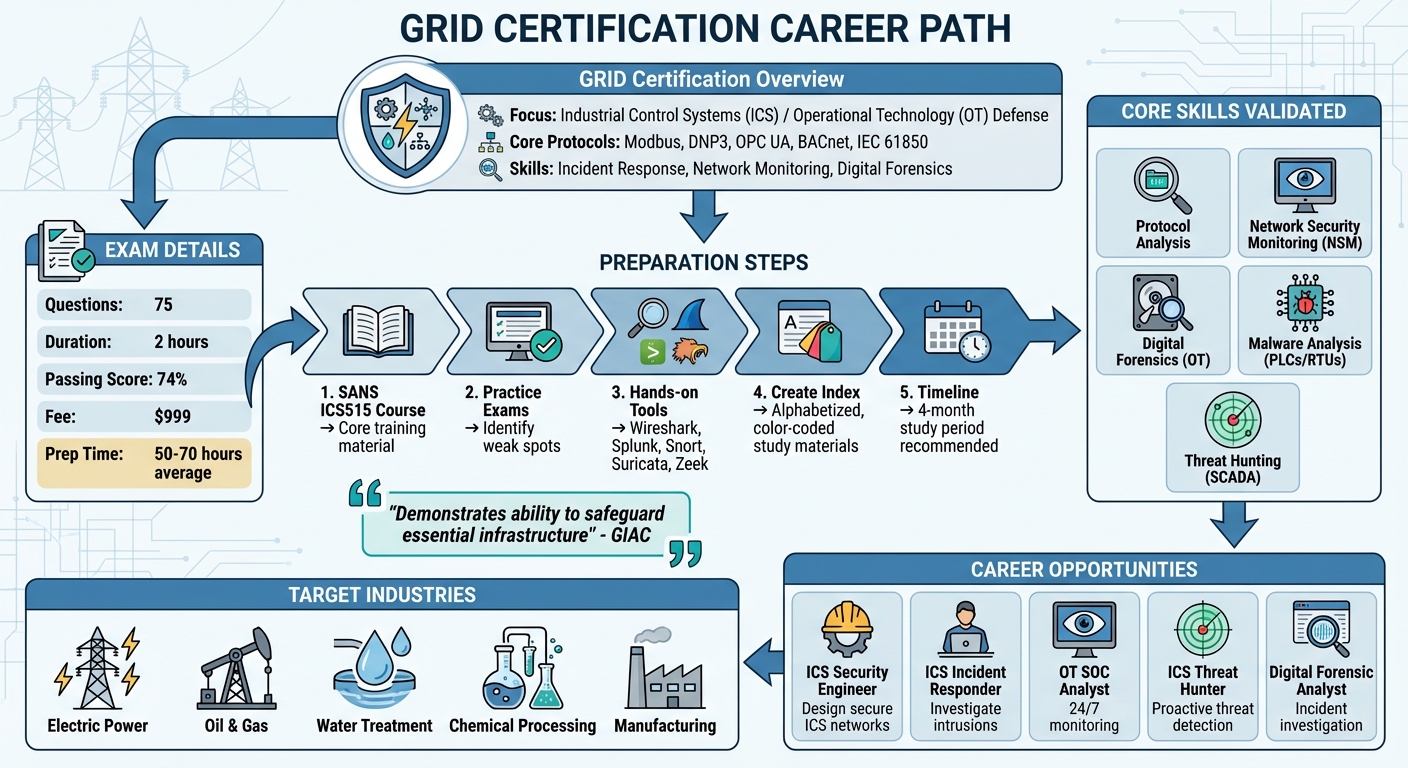
GRID Certification Path: From Preparation to Career Success

GRID Certification Path: From Preparation to Career Success

Skills and Competencies Validated by GRID

Core Skills for ICS Security

The GRID certification confirms a range of technical skills tailored to securing industrial control system (ICS) networks. It goes beyond passive monitoring, focusing on mitigation and threat detection informed by real-world attack strategies [1]. This certification ensures you understand adversary tactics and how to strengthen ICS defenses accordingly.

A key area of expertise is protocol analysis, which is essential for understanding and protecting industrial networks. GRID-certified professionals are skilled in analyzing protocols like Modbus, DNP3, OPC UA, BACnet, and IEC 61850. These protocols are the backbone of systems ranging from power grids to manufacturing operations but often lack built-in security features like authentication. With GRID, you demonstrate the ability to identify normal protocol behavior and detect malicious deviations. Additionally, you gain proficiency in network security monitoring (NSM) – capturing and interpreting ICS network traffic, maintaining visibility across operational technology (OT) environments, and spotting early signs of threats.

Digital forensics in OT environments presents unique challenges, as critical systems can’t simply be taken offline for investigation. GRID certification validates your ability to analyze system memory, logs, and artifacts to investigate breaches without disrupting operations. You’ll also develop skills in malware analysis for industrial components, such as programmable logic controllers (PLCs) and remote terminal units (RTUs). On top of that, you’ll be equipped for threat hunting, proactively identifying anomalies and hidden dangers in SCADA networks.

"Earning this credential demonstrates that you’re not only well-versed in threat detection and incident response, but also capable of applying these skills in real-time, high-risk environments where mistakes can have serious consequences."
– André Hammer, Readynez [5]

Mastering these techniques involves hands-on experience with specialized tools. GRID certification ensures you’re proficient with tools like Wireshark for packet analysis, Snort for intrusion detection, Splunk for log analysis, TCPdump, and Security Onion. You’ll learn to interpret outputs to detect malformed packets or unusual command sequences in industrial traffic. GRID also emphasizes integrating threat intelligence, enabling you to anticipate adversary tactics and protect critical infrastructure effectively. These skills are essential for incident response teams operating in high-stakes environments.

How GRID Applies to Cleared Incident Response Teams

The skills validated by GRID are indispensable for incident response teams working in classified and high-risk ICS operations. For professionals safeguarding classified ICS infrastructure, this certification translates directly into operational readiness. It ensures you can detect, contain, and resolve attacks while maintaining operational continuity – where even a minor error can have serious repercussions. GRID-certified experts are equipped to handle advanced persistent threats (APTs) in critical OT environments and manage incidents in sectors like energy.

In cleared environments, asset visibility is a top priority. Many of these systems are legacy setups with undocumented networks, making it challenging to maintain oversight. GRID certification demonstrates your ability to conduct asset discovery and maintain network visibility across complex ICS setups. These skills are vital for securing infrastructure that may have been designed decades ago without modern cybersecurity considerations. With GRID, you’ll be capable of mapping attack surfaces, identifying vulnerable components, and maintaining situational awareness during active incidents. The certification also confirms your ability to apply threat intelligence, helping you anticipate how state-sponsored actors and other sophisticated adversaries might target critical systems.

sbb-itb-bf7aa6b

How to Prepare for the GRID Certification Exam

Study Resources and Training Options

The cornerstone of preparing for the GRID certification is the SANS ICS515: ICS Visibility, Detection, and Response course[2]. This course delivers essential material, hands-on labs, and exercises designed to help you succeed in the exam. To accommodate busy professionals, SANS provides flexible delivery options, making it easier to fit studying into a packed schedule.

Beyond the official course, GIAC practice exams are a must-have tool. These practice tests mimic the actual exam, giving you a feel for the question style and helping you pinpoint areas that need more attention. On average, candidates spend 50 to 70 hours preparing, but this can vary depending on your prior experience with ICS/OT systems[2].

Practical skills are just as important as theoretical knowledge. Spend time working with tools like Wireshark, Splunk, and intrusion detection systems such as Snort, Suricata, and Zeek. Familiarize yourself with the MITRE ATT&CK for ICS framework and study incident analyses like Triton, Industroyer, and Stuxnet. These resources will deepen your understanding of real-world scenarios and align with the GRID certification’s focus.

Preparation Tips for Cleared Professionals

For cleared professionals juggling operational duties, having a focused strategy is critical. Start by creating a personalized, alphabetized, color-coded index of your printed study materials. Highlight key terms, protocol behaviors (e.g., "Modbus = no authentication"), and reference specific pages in the SANS courseware. A well-organized index is invaluable since you’ll have about 90 seconds per question to locate information during the exam.

Schedule your practice tests strategically. Take one midway through your study period to identify weak spots and another 3–5 days before the exam to simulate test conditions and improve your indexing speed. Use active study methods – complete labs on your own first, then review the solutions and note key takeaways.

GIAC recommends starting your preparation immediately after the training, aiming for a four-month study timeline. For professionals with limited time, prioritize hands-on practice over passive reading. Capture and analyze ICS protocol traffic – such as Modbus, DNP3, and BACnet – using tools like Wireshark. This approach reinforces your practical skills and ensures you’re ready for the GRID exam.

Career Opportunities with GRID Certification

Cleared Job Roles That Require GRID

Earning a GRID certification can open doors to specialized roles in industries like electric power, oil & gas, water treatment, chemical processing, and manufacturing. These sectors rely on professionals with the skills to secure and defend Industrial Control Systems (ICS) networks – precisely what the GRID certification validates.

ICS Security Engineers are responsible for designing and implementing secure ICS network systems in cleared environments. They collaborate with control system experts and operational teams to manage firewall logs, intrusion detection systems, and endpoint security tools. Their work also ensures compliance with regulations like NERC CIP. Meanwhile, ICS Incident Responders focus on investigating intrusions in industrial environments, providing remediation, and maintaining constant vigilance to ensure operational safety and uptime.

OT SOC Analysts monitor ICS protocols around the clock, using security intelligence and anomaly detection to identify malicious activity in industrial networks. ICS Threat Hunters apply their expertise in ICS-specific threat analysis to actively track adversaries within critical infrastructure. Additionally, Digital Forensic Analysts investigate incidents and analyze data from Windows and Linux systems in industrial settings, applying digital forensics and incident response (DFIR) techniques tailored to ICS environments.

These roles highlight why GRID certification is a powerful asset for advancing careers in cleared, high-security environments.

How GRID Advances Your Career

The GRID certification signals to employers that you have over two years of relevant experience and a specialized skill set. It’s particularly valuable because it bridges the gap between traditional IT security and Operational Technology (OT) – a combination crucial for protecting national infrastructure.

"Earning an ICS certification confirms your ability to safeguard essential infrastructure and demonstrates your value in the workplace." – GIAC Certifications [3]

This certification validates a wide range of skills, including ICS-focused digital forensics, incident response, network security monitoring, and threat hunting. For cleared professionals, it paves the way to higher-paying roles and career growth in industries where safeguarding sensitive assets is critical. With a $999 investment [4], GRID positions you for senior roles that demand proven expertise in ICS defense. Beyond enhancing your technical skills, it sharpens your focus for pursuing job opportunities in high-stakes environments where your contributions truly matter.

Using Cleared Cyber Security Jobs for GRID-Certified Job Searches

How to Optimize Your Job Search

Cleared Cyber Security Jobs allows you to leverage your security clearance and GRID certification to stand out in the specialized field of ICS incident response. Start by building a complete profile that clearly displays your clearance level – whether it’s Secret, TS/SCI, or TS/SCI with CI Poly – and highlights essential skills like GRID, ICS Security, Active Defense, and Network Security Monitoring. The platform uses AI-driven matching, combining Boolean and semantic search methods, to pair you with roles that align with both your security clearance and ICS/OT expertise.

To refine your search, set up alerts using keywords like ICS Incident Response, OT Security, and Active Defense so you’re notified as soon as relevant positions are posted. You can also use Boolean search strings (e.g., "GRID" OR "ICS Security") to narrow down results effectively. Be sure to select all applicable clearance levels and include a Zip Code with a specific mileage radius to broaden your reach.

Your profile is often the first thing recruiters see, even before your resume, so make sure it emphasizes your GRID certification and ICS-related skills. Keeping your profile updated ensures you’re visible to recruiters and ready for new opportunities. These adjustments also lay the groundwork for successful networking, which we’ll explore next.

Networking and Job Fairs

In addition to optimizing your online profile, attending networking events and job fairs is a key step in advancing your career. Cleared Cyber Security Jobs organizes both virtual and in-person hiring events, giving you direct access to recruiters from defense and intelligence contractors. Upcoming events include:

  • Cleared Careers Virtual Huntsville Hiring Event – February 19, 2026
  • Cleared Careers Hiring Event at UCCS in Colorado Springs – April 2, 2026
  • Cleared Careers Nationwide Virtual Hiring Event – May 12, 2026

These events are a great chance to showcase the unique value of your GRID certification and demonstrate how your expertise in ICS incident response and active defense contributes to protecting critical infrastructure.

When you upload your resume to the platform, it’s tagged for specific job fairs, making it easier for employers to find professionals with specialized certifications like GRID. Subscribing to the Cleared+ newsletter can also keep you informed about GovCon companies, providing insights into contract activity, hiring trends, and mission priorities – valuable information for targeting employers actively hiring for ICS/OT roles.

As you network, be ready to discuss real-world incident response scenarios and explain how GRID equips you with a practical, effective approach to safeguarding operational technology environments.

"Intrusion detection, incident response and digital forensics are my everyday working areas. My GIAC certs provided a practical framework that is comprehensive and effective. Clients trust my work when they know I’m certified." – Juan Manzano, GSE [6]

Conclusion and Next Steps

Key Takeaways

The GRID certification stands out as a vital credential for professionals focused on defending industrial control systems (ICS). It equips cleared incident response experts with the skills needed to tackle the unique challenges of operational technology (OT). Unlike general IT certifications, GRID zeroes in on defending critical infrastructure where uptime, safety, and resilience are non-negotiable. From asset discovery and network monitoring to digital forensics and incident response, this certification validates your ability to safeguard systems like power grids and water treatment facilities against advanced cyber threats.

Earning the GRID certification requires thorough preparation. Understanding the exam’s format, duration, passing criteria, fees, and renewal process is essential for success. These details not only prepare you for the exam but also guide your next steps as you plan your career in ICS defense.

Next Steps for GRID-Certified Professionals

Now that you’ve earned your GRID certification, it’s time to put it to work. Start by updating your Cleared Cyber Security Jobs profile to highlight your clearance and GRID expertise, ensuring you’re visible to employers looking for professionals with your skills.

Stay informed about the latest ICS threats by making daily reading a habit. Cybersecurity recruiter Josh Fullmer from Dragos advises, "Pick one or two relevant resources and read something every day" [7]. Hands-on experience is just as important – continue honing your skills with tools like Wireshark, Splunk, and Snort.

Expand your professional network by joining organizations such as ISSA or (ISC)² and attending industry events like RSA, Black Hat, or AFCEA conferences. These opportunities not only keep you ahead of emerging threats but also connect you with potential employers in the critical infrastructure sector. Your GRID certification positions you to take on roles where you’ll play a key part in protecting systems that millions depend on daily.

ICS515: ICS Visibility, Detection, and Response | GRID

FAQs

Is GRID worth it if I’m new to ICS/OT?

Yes, the GRID certification is worth pursuing, even for beginners in ICS/OT. It lays a solid groundwork in areas like active defense, ICS-specific threats, and incident response strategies. These skills are crucial for safeguarding industrial control systems, making this certification a meaningful step toward developing expertise in this specialized domain.

What hands-on skills should I practice most for the GRID exam?

To prepare effectively for the GRID exam, concentrate on mastering active defense concepts, detection and analysis techniques, and ICS-focused digital forensics. It’s equally important to gain practical experience in areas like incident response, malware analysis, threat analysis, and threat intelligence fundamentals. These skills not only align with the exam’s core objectives but are also critical for success in the field.

How do I translate GRID into cleared incident response job interviews?

When it comes to protecting industrial control systems (ICS), active defense strategies are essential. These systems, which often manage critical infrastructure like power grids, water treatment facilities, and transportation networks, face unique threats that require specialized approaches. Active defense involves not just reacting to threats but proactively identifying and mitigating risks before they escalate. This includes monitoring network traffic for anomalies, deploying intrusion detection systems tailored to ICS protocols, and implementing segmentation to limit lateral movement within the network.

ICS-Specific Digital Forensics

Digital forensics in ICS environments is a highly specialized field. Unlike traditional IT systems, ICS devices often use proprietary protocols and hardware, making forensic investigations more complex. Expertise in ICS-specific digital forensics means understanding how to extract, analyze, and preserve data from these systems without disrupting operations. This skill is critical for identifying the root cause of incidents and ensuring that evidence is admissible for legal or regulatory purposes.

Threat Analysis and Incident Response Techniques

Threat analysis in ICS environments requires a deep understanding of the unique attack vectors and vulnerabilities these systems face. From supply chain risks to insider threats, the ability to analyze and prioritize risks is crucial. Incident response techniques for ICS must be tailored to minimize downtime and avoid further damage. This includes creating detailed response plans, coordinating with operational technology (OT) teams, and ensuring compliance with industry regulations.

Protecting Critical Infrastructure and Addressing ICS-Specific Threats

The stakes are incredibly high when it comes to ICS. A single breach can have far-reaching consequences, from economic disruption to public safety risks. By combining active defense, specialized forensics, and targeted incident response, it’s possible to address ICS-specific threats effectively. These skills not only protect critical infrastructure but also demonstrate the ability to navigate the unique challenges of cleared incident response roles, where precision and expertise are non-negotiable.
Related Blog Posts

  • OT Security Clearance Jobs – The Critical Infrastructure Opportunity
  • GCIH Certification Career Guide for Cleared Incident Handlers
  • GSEC Certification Career Guide for Cleared Security Essentials
  • GICSP Certification Career Guide for Cleared ICS Security

Related Guides

  • CHFI Certification Career Guide for Cleared Forensic Investigators
  • GREM Certification Career Guide for Cleared Malware Analysts
  • GNFA Certification Career Guide for Cleared Network Forensics
  • Cybersecurity Salary Guide 2026
  • TS/SCI Salary Premium: Real 2026 Numbers

GICSP Certification Career Guide for Cleared ICS Security

CyberSecJobs Editorial · February 11, 2026 ·

The Global Industrial Cyber Security Professional (GICSP) certification is designed for professionals securing industrial control systems (ICS) in critical environments. It focuses on bridging IT and operational technology (OT) skills, addressing unique challenges in sectors like energy, water, and manufacturing. GICSP is recognized by the U.S. Department of Defense (DoD) 8570.0.1 program and qualifies for roles such as IAT Level II, CND-A, and CND-IS.

Key Takeaways:

  • Who Should Consider GICSP? IT professionals, OT security analysts, engineers, and managers in ICS environments.
  • Exam Details: 82 questions, 3 hours, 71% passing score, costs $1,899. Open-book format with printed materials allowed.
  • Career Benefits: Average salary of $135,000; applicable to roles in critical infrastructure and defense sectors.
  • Preparation Tips: Study SANS ICS410, practice with tools like Wireshark, and create a detailed index for the open-book exam.

This certification is ideal for cleared professionals looking to validate their ICS security expertise and advance in high-demand roles.

Who Should Get GICSP Certification?

Cleared Professionals in ICS/OT Security

The GICSP certification is designed for IT professionals, OT security analysts, security engineers, and managers responsible for safeguarding industrial control system (ICS) environments [8].

"The GICSP assesses a diverse set of professionals who engineer or support control systems and share responsibility for the security of these environments." – GIAC [8]

Roles that benefit the most include SCADA Security Engineers, OT Cybersecurity Specialists, Critical Infrastructure Analysts, and ICS Consultants [9][10]. These professionals often operate in critical sectors like energy (including nuclear facilities), manufacturing, water treatment facilities, and transportation hubs such as airports [10]. For cleared professionals working in defense and critical infrastructure, the certification validates their expertise in securing environments where failures can lead to severe consequences.

The certification is especially useful for those transitioning from IT security into operational technology (OT) roles. Control system engineers and SCADA technicians leverage GICSP to demonstrate their ability to protect industrial processes [12]. With an average base salary of around $135,000 for GICSP-certified professionals [10], it’s clear that the certification holds strong value in the job market for specialized OT security skills.

This focus on specialized knowledge lays the groundwork for the experience and skills required, as outlined below.

Experience and Skills Needed

Although GICSP doesn’t mandate extensive experience, candidates should have a solid grasp of IT and OT fundamentals, making it an accessible option for those moving into critical infrastructure roles [9][10]. Many candidates pursue the certification after gaining 1–2 years of ICS or IT experience to further develop their expertise.

Before diving into GICSP, candidates should understand basic computer networking and security protocols. Earning a CompTIA Network+ certification is often recommended as a foundational step [11]. For cleared professionals, maintaining an active security clearance is crucial, as many roles tied to GICSP involve sensitive defense and critical infrastructure systems. Additionally, the certification can be applied toward fulfilling one year of the five-year experience requirement for the CISSP certification, making it a valuable stepping stone for those aiming for leadership positions in the future [10].

sbb-itb-bf7aa6b

Career Benefits of GICSP Certification

Bridging the IT-OT Skills Gap

The GICSP certification is a game-changer for professionals working at the intersection of IT and OT in critical infrastructure security. As industrial systems become more interconnected, there’s a growing demand for individuals who can effectively operate in both domains. This certification equips you with the expertise to blend IT security protocols with OT-specific needs seamlessly [7][14].

"GICSP holders are not constrained by silos – they are the integrators, the polymaths who can explain to a field technician why a firewall rule matters, or to a CISO why a firmware update might compromise uptime." – Prepaway [7]

This ability to navigate both worlds is especially valuable in industries where cyber threats can cause physical harm, such as disrupting energy grids or halting production lines. The certification’s focus on dual-domain knowledge not only boosts your technical versatility but also enhances your career prospects, including compensation and advancement opportunities.

Job Market Demand for GICSP-Certified Professionals

The GICSP credential isn’t just about technical know-how – it’s also a powerful career asset. With IT and OT integration becoming a priority, certified professionals are in high demand. Financially, the numbers speak volumes: GICSP holders in the U.S. earn an average annual salary of $104,852, with top earners reaching $139,500 [14]. On top of that, these professionals typically earn 15% to 25% more than their non-certified counterparts, with salary increases often ranging from 10% to 30% [14].

The certification also opens doors to senior-level roles such as ICS Security Architect, Industrial Systems Analyst, and Cybersecurity Program Manager [7]. For those working in defense or government sectors, the GICSP is approved under the U.S. Department of Defense (DoD) 8570.0.1 Information Assurance Workforce Improvement program. It qualifies for categories like CND-A, CND-IS, and IAT Level II, making it a valuable credential for positions requiring validated ICS security expertise [14][5].

One of the standout advantages of GICSP is its adaptability across industries. Certified professionals are recognized as experts in cyber-physical systems, making them sought after in fields like oil and gas, utilities, manufacturing, transportation, and healthcare automation [7]. This cross-sector relevance ensures that your certification remains valuable, no matter where your career takes you.

Compliance and Industry Standards

As regulatory scrutiny tightens across critical infrastructure sectors, having a GICSP certification positions you as a key player in ensuring governance and audit readiness. The skills you gain directly support compliance with major frameworks such as NERC CIP (North American Electric Reliability Corporation Critical Infrastructure Protection), NIST 800-82, and IEC 62443 [7][14]. For those in defense-related roles, the certification also helps meet Cybersecurity Maturity Model Certification (CMMC) requirements, which are becoming increasingly important for contractors [7].

Global organizations also value GICSP-certified professionals for their expertise in international compliance standards, including the European NIS Directive [7]. As cyberattacks on industrial systems grow in frequency and complexity, industries face stricter enforcement of these standards [2][7][14]. Your certification demonstrates not only technical proficiency but also a solid understanding of the regulatory landscape surrounding critical infrastructure.

Independent contractors and consultants find the GICSP particularly beneficial when navigating diverse compliance requirements. It validates your ability to adapt security principles to the unique needs of different industries, making you a trusted advisor in managing complex regulatory environments [7].

How to Prepare for the GICSP Exam

Preparation Steps

Start by reviewing the GIAC GICSP blueprint, which outlines key areas like ICS architecture, attack surfaces, defense strategies, incident response, and governance [8]. A great resource to consider is the SANS ICS410: ICS/SCADA Security Essentials course. This course is tailored to match these objectives and dives into topics like the Purdue Reference Architecture (Levels 0–3) and hands-on protocol analysis [17].

To make the most of your open-book exam, create a well-organized physical index. Alphabetize definitions and explanations from your study materials for quick reference [14]. Since digital resources aren’t allowed, this index can be a lifesaver. Tools such as Voltaire or Lesley Carhart’s GIAC Indexing Guide offer helpful tips for structuring it [17]. If you’re working full-time, aim to dedicate 2–3 hours on weekday evenings and full days on weekends, allowing about 3–4 weeks for preparation [17].

Hands-on skills are also critical. Practice using tools like Wireshark for analyzing industrial protocols, and get comfortable with PowerShell, Linux command-line operations, and basic PLC programming (like ladder logic) [18]. These skills are especially important for the CyberLive sections of the exam, where you’ll solve practical security challenges using real code and virtual machines [8]. This blend of theoretical study and hands-on practice will prepare you for both the exam and real-world scenarios.

Study Resources and Tools

Alongside the SANS ICS410 course, GIAC’s official practice tests are a must. They simulate the 3-hour exam environment and help you identify any weak areas [17]. As Keirsten Brager, a Lead Security Engineer, points out:

"The practice tests in the course are meant to reinforce the knowledge gained in the course, not pass the GIAC exam. GIAC has its own practice exams that simulate the real environment."

These practice exams cost around $399 and closely mirror the actual test format [14].

For additional study, consider the book Practical Industrial Cybersecurity: ICS, Industry 4.0, and IIoT by Wiley, which is specifically designed to support GICSP exam preparation [19]. Spending time in virtual lab environments like CyberLive is also highly recommended. These labs let you work with real programs and code, sharpening your practical skills [8]. During the exam, aim to answer multiple-choice questions in about one minute each, leaving enough time for the hands-on scenarios [18].

Once you’ve gathered your resources and mapped out your study plan, take time to familiarize yourself with the exam format and related costs.

Exam Format, Cost, and Requirements

You can take the exam remotely through ProctorU or in person at PearsonVUE testing centers [8]. It’s open-book, meaning you can bring printed materials and your index, but digital resources are strictly prohibited [14]. The exam structure emphasizes hands-on skills, reflecting the practical focus of the certification.

For remote testing, you’ll need two forms of government-issued ID, such as a driver’s license and passport, and these must match the details on your exam record [17].

The exam costs $1,899 for the initial attempt, with retakes priced at about $899 after a required 30-day waiting period [14]. Other expenses include a $175 reseating fee for missed exams and a certification renewal fee of approximately $499 every four years [14]. Keep in mind, you have 120 days from the activation date to complete your certification attempt [8], so plan your schedule wisely.

How to Prepare for GICSP Certification Without SANS Training | Your Self-Study Guide

SANS

Cleared ICS Job Roles That Value GICSP Certification

GICSP Certification Salary Ranges by Job Role

GICSP Certification Salary Ranges by Job Role

Common Cleared ICS Security Roles

The GICSP certification is a game-changer for professionals aiming to secure roles in critical infrastructure protection. It’s especially relevant for positions like ICS Security Engineers and ICS Security Specialists, who are responsible for designing, implementing, and maintaining the security of networked control systems. These roles often involve monitoring firewall logs, managing intrusion detection systems, and ensuring endpoint security in industrial environments [20]. A solid grasp of the Purdue Reference Architecture and hands-on experience with both IT and operational technology are essential for these positions.

Another key role is that of OT Cybersecurity Analysts, who focus on investigating intrusions and identifying vulnerabilities in systems that manage physical processes [1][20]. Similarly, Cyber Security Software Engineers work on creating software solutions tailored to address industrial security challenges [20]. The GICSP certification is particularly valuable in these roles because of its vendor-neutral approach, bridging the gap between IT, engineering, and cybersecurity disciplines [1][13].

Industries like electric power, oil and gas, water, chemical production, and critical manufacturing place a high value on this certification [20].

Finding GICSP-Aligned Roles on Cleared Cyber Security Jobs

Cleared Cyber Security Jobs

For those with a GICSP certification, Cleared Cyber Security Jobs offers a tailored platform to connect with employers in the ICS space. Their search tools help you identify positions that specifically list GICSP as a preferred or required qualification. By uploading your resume, you can directly apply for cleared ICS roles with hiring organizations.

The platform also provides job alerts customized to your certification, notifying you when relevant openings arise. Since all employers on the site are direct-hire organizations, you’ll bypass third-party recruiters and connect directly with companies looking for cleared professionals. Additionally, job fairs hosted by the platform offer a chance to meet hiring managers from critical infrastructure sectors in person. Importantly, these services are free for job seekers, though U.S. citizenship and an active security clearance are required to access the full range of opportunities. This streamlined process makes it easier to transition from certification to career advancement.

Salary Ranges and Role Comparisons

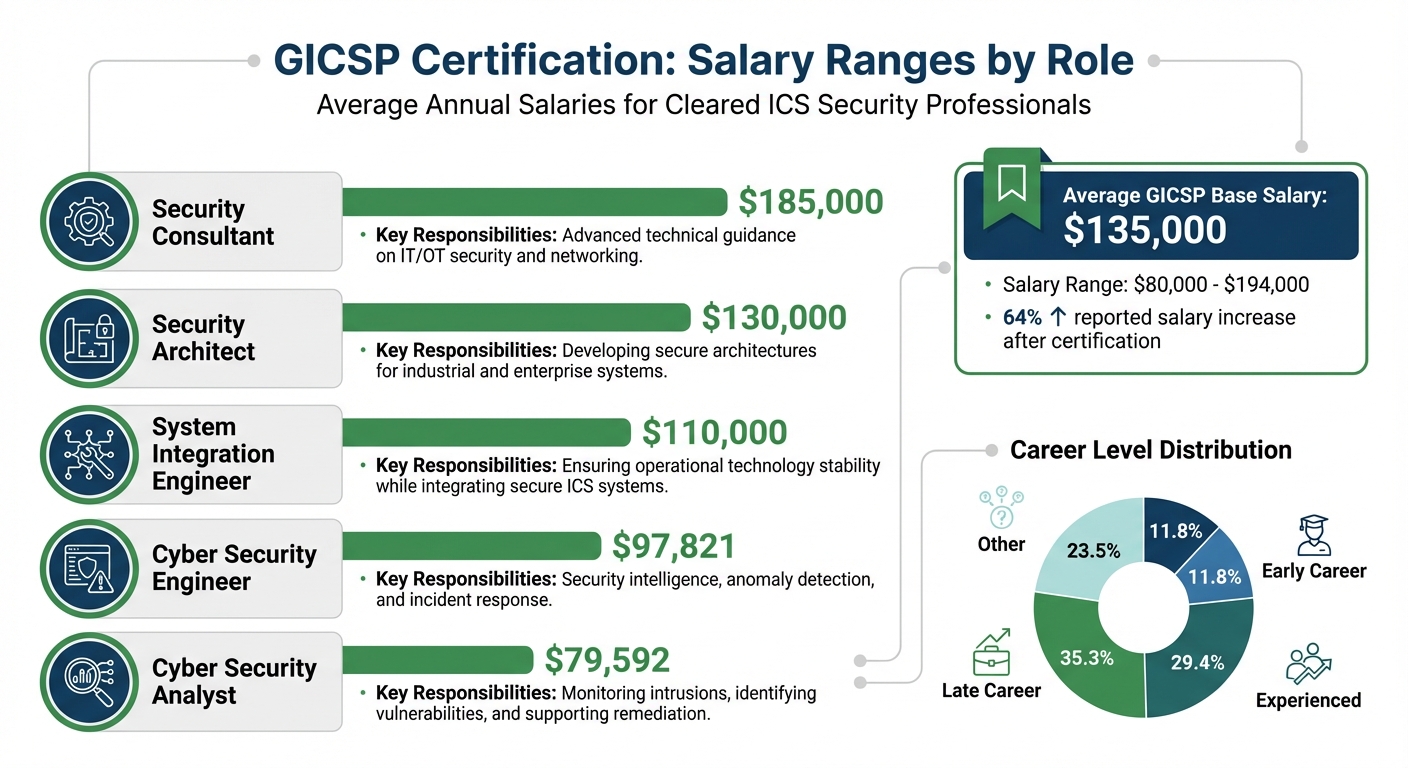
GICSP-certified professionals enjoy competitive salaries, with an average base salary of around $135,000 per year. Depending on the role, experience, and complexity of the systems involved, salaries range from $80,000 to $194,000 [15][16].

Job Title Average Salary Key Responsibilities
Security Consultant $185,000 Offering advanced technical guidance on IT/OT security and networking [16]
Security Architect $130,000 Developing secure architectures for industrial and enterprise systems [16]
System Integration Engineer $110,000 Ensuring operational technology stability while integrating secure ICS systems [16]
Cyber Security Engineer $97,821 Conducting security intelligence, anomaly detection, and incident response [15][20]
Cyber Security Analyst $79,592 Monitoring for intrusions, identifying vulnerabilities, and supporting remediation [15][20]

Statistics show that 64% of professionals reported a salary increase after earning certifications like the GICSP [13]. The majority of GICSP holders are seasoned professionals, with 35.3% in "Late Career" and 29.4% classified as "Experienced." Only 11.8% fall into the "Early Career" category [15]. This distribution aligns with the certification’s prerequisites, which include at least two years of work experience and post-secondary education [3].

Next Steps for Certification and Career Growth

Steps to Get Certified

Once your study plan is in place, it’s time to take action and secure your certification. To qualify, you’ll need at least two years of work experience and two years of post-high school education or training [3]. While these are the baseline requirements, many candidates choose to prepare through the SANS ICS410: ICS/SCADA Security Essentials course [6]. If you decide to take this course, it’s a smart move to schedule your exam as soon as you complete it – this helps keep the momentum going [2].

The process itself is straightforward: submit your application, formally agree to the GIAC Code of Ethics, and schedule your exam. You’ll have 120 days from account activation to complete the exam, which can be taken through ProctorU or PearsonVUE [1][3][4].

Using GICSP to Find Job Opportunities

Once you’ve earned your GICSP certification, it’s time to put it to work. Start by updating your resume on Cleared Cyber Security Jobs, a platform that connects you directly with hiring managers looking for GICSP-certified professionals. Use the platform’s search tools to pinpoint jobs where GICSP is listed as a preferred or required qualification, and set up job alerts to get notified about new opportunities tailored to your certification.

The GICSP certification also meets several Department of Defense (DoD) requirements, including IAT Level II, CND-A, and CND-IS, under DoD 8570.0.1 [5]. Highlighting this compliance on your resume can open doors to federal positions in critical sectors like energy, transportation, and federal network defense [13][5]. Once you’ve secured a role, staying current with your certification will ensure long-term career success.

Maintaining Your Certification

Your GICSP certification is valid for four years, but to renew it, you’ll need to earn 36 CPE credits or retake the latest version of the exam [21][3][22]. To make the renewal process smoother, it’s a good idea to track your CPE credits early by regularly logging into your GIAC account. Attending SANS training events and industry conferences can help you earn these credits while staying up-to-date with the latest industry trends [21].

Maintaining your certification not only keeps you competitive but also enhances the career benefits you’ve already gained. For instance, 64% of professionals reported salary increases after earning certifications like the GICSP [13]. To take your career further, consider adding related certifications to your portfolio, such as GIAC Response and Industrial Defense (GRID) or GIAC Critical Infrastructure Protection (GCIP) [2][6].

FAQs

Is GICSP worth it if I’m new to ICS/OT?

The GICSP certification can be a great asset, even for those just starting in the ICS/OT field. It introduces key concepts and provides a solid base in industrial control systems security, making it accessible to professionals regardless of their experience level. Beyond foundational knowledge, it also helps you develop practical skills and enhances your credibility in the ICS/OT domain, which can open doors for career advancement and align well with industry demands.

What should I bring to the GICSP open-book exam?

For the GICSP open-book exam, make sure to bring a valid form of identification and any reference materials that the exam provider specifically allows. Since this is an online, proctored exam, it’s important to carefully review the official instructions provided by GIAC or the testing service ahead of time. Double-check the guidelines to ensure you’re fully prepared and have all necessary items ready for exam day.

Which cleared job titles most often require GICSP?

The GICSP certification is frequently associated with roles like ICS Security Engineer and ICS Security Specialist. These positions typically focus on protecting industrial control systems, making this certification a sought-after qualification for professionals working in cleared ICS security roles.

Related Blog Posts

  • OT Security Clearance Jobs – The Critical Infrastructure Opportunity
  • GCIH Certification Career Guide for Cleared Incident Handlers
  • GSEC Certification Career Guide for Cleared Security Essentials
  • GCWN Certification Career Guide for Cleared Windows Security

Related Guides

  • Splunk Certification Career Guide for Cleared SIEM Analysts
  • ECSA Certification Career Guide for Cleared Security Analysts
  • Cybersecurity Salary Guide 2026
  • TS/SCI Salary Premium: Real 2026 Numbers

GCWN Certification Career Guide for Cleared Windows Security

CyberSecJobs Editorial · February 11, 2026 ·

The GCWN certification, offered by GIAC, validated skills in securing Microsoft Windows systems, especially in government and military environments. However, as of early 2026, it is no longer available for new candidates. Current holders can maintain it through Continuing Professional Education (CPE) credits every four years.

Key points about the GCWN certification:

  • Focus Areas: PowerShell security, PKI management, Group Policy, AppLocker, system hardening, and Zero Trust policies.
  • Target Audience: Professionals with over two years of experience in Windows security, especially in cleared environments.
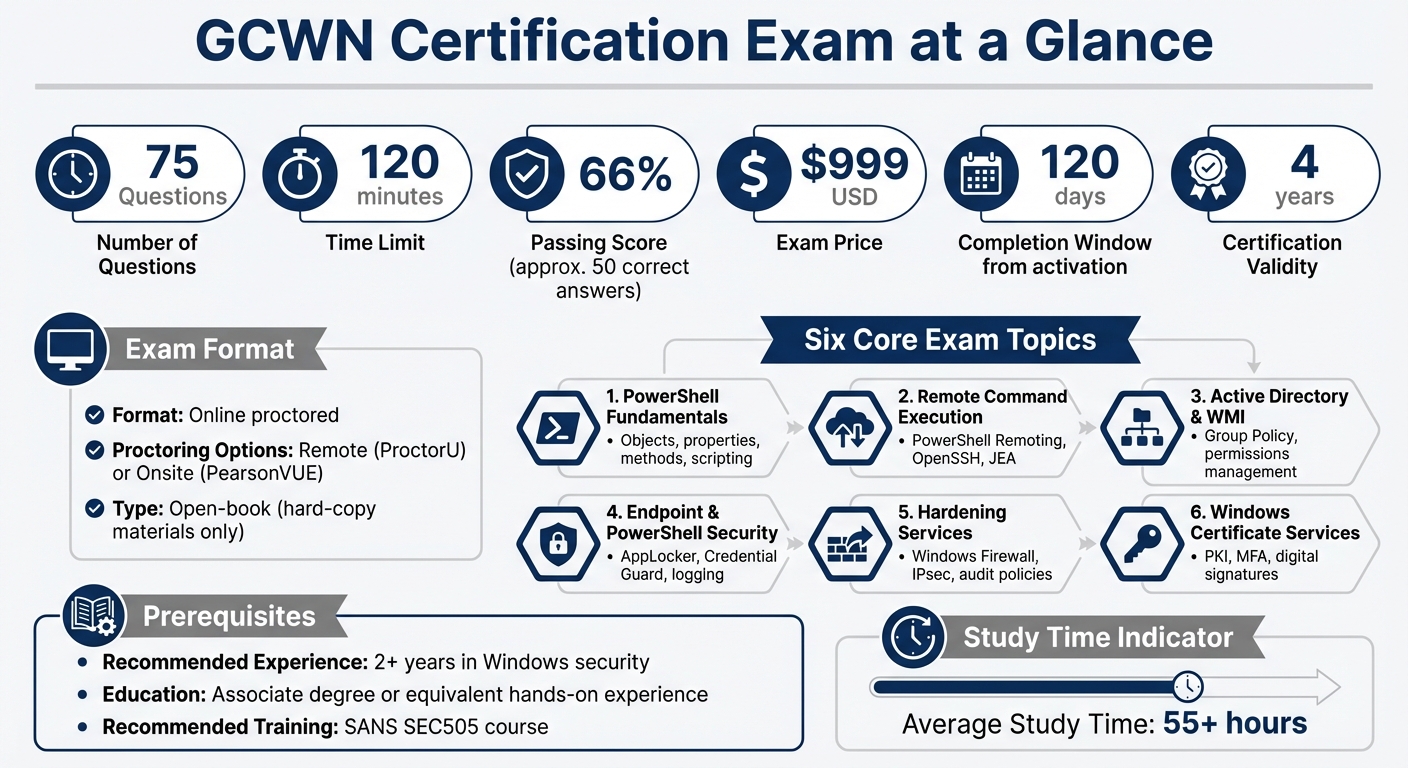
  • Exam Details: 75 questions, 120 minutes, passing score of 66%, and open-book format.
  • Training: SANS SEC505 course is recommended for preparation, with materials like textbooks, MP3s, and hands-on labs.
  • Recognition: Aligned with DoD 8570.01-M and 8140 frameworks, making it valuable for information assurance roles in government and military sectors.

Although the certification is now in abeyance, those who already hold it can leverage its benefits for career growth, salary increases, and specialized roles in cleared environments. Maintaining the certification ensures continued relevance in the cybersecurity job market.

GCWN Certification Requirements and Exam Details

GCWN Certification Exam Requirements and Specifications

GCWN Certification Exam Requirements and Specifications

Prerequisites for the GCWN Certification

The GCWN certification is aimed at professionals with over two years of experience in Windows security administration [5]. While GIAC doesn’t enforce formal prerequisites, having at least an Associate degree or equivalent hands-on experience is strongly recommended [5]. A solid background in Windows installation, configuration, and security – particularly with tools like PowerShell and PKI – can greatly enhance your readiness for the exam [1][7].

The SEC505: Securing Windows and PowerShell Automation course, offered by SANS, is the primary recommended training [7]. This certification is tailored for Windows administrators, blue team members, and professionals involved in government or military cyber defense [1]. If you’ve worked in these roles, your practical experience will be a valuable asset when preparing for the exam.

Exam Format and Core Topics

The GCWN exam includes 75 questions to be completed within a 120-minute time limit [6]. To pass, you’ll need a score of at least 66%, which translates to about 50 correct answers out of 75 [6]. The exam is conducted online and is proctored either remotely through ProctorU or onsite at PearsonVUE testing centers [1]. Once you activate your certification attempt, you’ll have 120 days to complete the exam [1].

Exam Component Specification
Number of Questions 75 [6]
Time Limit 120 minutes [6]
Passing Score 66% [6]
Exam Price $999 USD [6]
Completion Window 120 days from activation [1]
Certification Validity 4 years [5]

The exam focuses on six major areas:

  • PowerShell fundamentals: Covers objects, properties, methods, and scripting [6].
  • Remote command execution: Includes configuring PowerShell Remoting, OpenSSH, and Just Enough Admin (JEA) [6].
  • Active Directory and WMI scripting: Focuses on managing Group Policy and permissions [6].
  • Endpoint and PowerShell security: Involves implementing tools like AppLocker, Credential Guard, and advanced logging [6].
  • Hardening services and features: Covers Windows Firewall, IPsec zero trust policies, and audit policies [6].
  • Windows Certificate Services: Focuses on PKI for multi-factor authentication and digital signatures [6].

These areas are designed to address the unique security demands of environments where protecting sensitive or classified networks is a top priority.

sbb-itb-bf7aa6b

How to Prepare for the GCWN Exam

Study Materials and Resources

The SANS SEC505 course is a comprehensive package that includes textbooks, MP3 recordings, and lab exercises, all offered at a lower price when bundled with the exam voucher. Opting for this bundle is a more budget-friendly choice compared to purchasing the exam voucher separately, which costs $999. The course provides five to six textbooks that align with the exam objectives, along with audio files and hands-on lab exercises to enhance learning.

SANS also caters to different schedules with its flexible training formats. The Live Online format allows you to join instructor-led sessions from anywhere, while the OnDemand option lets you progress at your own pace. These formats are particularly helpful for professionals with security clearances who need to balance their classified work with exam preparation.

The GCWN exam is open-book, meaning you can bring hard-copy materials like textbooks and a personal index (electronic devices are not allowed). Crafting a detailed, color-coded index is crucial for quickly locating information during the test. GIAC emphasizes the importance of creating your own index as part of the learning process:

The whole point in building your own index is so you’ll learn and retain the material. Asking for mine or taking someone else’s is a shortcut that will likely lead to your own disappointment come exam time.

Additionally, candidates have access to practice exams, which are invaluable for identifying weak areas early in the 120-day study period. These resources form the foundation for effective preparation, as outlined below.

Study Tips for Cleared Professionals

GIAC exam candidates typically dedicate over 55 hours to studying. With a four-month window to prepare, you can break your study time into manageable sessions that fit around work and personal obligations. Using the provided materials and adopting consistent study habits will help you meet your exam goals.

Set up a study schedule with regular time blocks each week, choosing moments when you’re least likely to be interrupted – early mornings or evenings often work well. Use commute time to listen to the MP3 audio summaries, reinforcing key topics. Take a practice test early on to pinpoint areas that need extra attention, then adjust your study plan to focus on those gaps.

Hands-on practice is essential for mastering skills like PowerShell automation and Windows hardening. Repeat the course labs until you can confidently execute scripts and configurations without needing to refer to instructions. Whenever possible, apply what you’re learning to real-world tasks at work. This not only reinforces your understanding but also demonstrates the practical value of your skills.

Teaching a concept to someone else is another powerful way to solidify your knowledge. GIAC highlights this approach:

If you can teach someone else how a concept works, you’ve successfully mastered that idea or skill.

Start studying as soon as you complete the training to keep concepts fresh in your mind. Following these strategies will not only prepare you for the exam but also enhance your expertise in securing Windows environments, a critical skill for cleared professionals.

Career Benefits of the GCWN Certification

Career Growth in Cleared Windows Security Roles

Earning the GCWN certification opens doors to specialized roles in government and military cyber defense. It validates expertise in key areas like PowerShell automation, PKI management, Group Policy, and AppLocker – skills that are critical for safeguarding classified Windows environments[1][2]. These abilities are highly relevant for Blue Team roles and positions focused on implementing CIS Critical Security Controls within cleared networks, building on the technical and compliance knowledge discussed earlier.

GIAC certifications are listed as preferred qualifications in thousands of job postings globally, giving hiring managers confidence in a candidate’s technical capabilities[3]. For professionals already working in the field, this certification acts as a trusted credential. Nate Gonzalez, a professional who holds multiple GIAC certifications, shared:

Now that I am certified, I truly see the value of GIAC credentials – they helped me secure my dream role thanks to the skills and knowledge I’ve learned via taking SANS courses and passing GIAC exams

[3].

The GCWN certification is particularly beneficial for transitioning military personnel. Recognized by the U.S. Department of Labor as relevant to military occupational specialties, it helps veterans convert their service experience into civilian roles within cleared contractor environments[5]. Federal agencies officially recommend more than 20 GIAC certifications, including the GCWN, for government and military cybersecurity teams[4].

Although the GCWN is now in abeyance and no longer available for new purchase, current holders retain a competitive edge in the cleared job market by renewing their credentials through Continuing Professional Education (CPE) credits[1][2]. This ongoing certification maintenance ensures professionals remain relevant and well-positioned for career advancement.

Salary and Job Market Impact

The GCWN certification not only broadens career opportunities but also enhances earning potential. As an advanced credential, it signifies that candidates possess over two years of experience and relevant post-secondary education[5]. This makes them eligible for higher-level roles that demand proven expertise in securing Microsoft operating systems within classified environments. Arlin Halstead, Strategic HR Business Partner at NTT Security, highlighted:

The job function specific, technical certification ensures that their employees have proven expertise gained through GIAC certification

[4].

The certification’s emphasis on specialized skills meets critical needs in cleared environments where such expertise is in high demand[1][2]. Professionals who can demonstrate their ability to harden Windows systems are well-positioned for roles with increased responsibilities and higher salaries. By maintaining the certification through CPE credits, individuals continue to enjoy these career and financial benefits over time.

Using GCWN Skills in Cleared Environments

Strengthening Windows Security Systems

GCWN-certified professionals play a critical role in safeguarding cleared environments by leveraging tools like PowerShell and WMI. These tools allow precise management of Active Directory, Group Policy, and permissions – eliminating the risks associated with manual GUI methods and ensuring the integrity of classified networks [1][6].

To harden Windows services, professionals configure Firewall rules, implement IPsec zero-trust policies, and set up audit policies that align with federal logging requirements [1][6]. Additional layers of protection come from deploying AppLocker, Credential Guard, and Just Enough Administration (JEA). Public Key Infrastructure (PKI) management is also used to address multi-factor authentication (MFA), smart card integration, and encryption needs [1][2].

Practical hardening strategies often involve using DISA Security Technical Implementation Guides (STIGs) to create secure baselines for Privileged Access Workstations, which are critical for managing high-value resources like domain controllers [8]. For example, to address vulnerabilities like the "Printer Bug", GCWN professionals use Group Policy Objects (GPOs) to disable the Print Spooler service on domain controllers [9]. Replacing standard service accounts with Group Managed Service Accounts (GMSAs) further enhances security by enabling Active Directory to automatically manage and rotate passwords, reducing the risk of credential theft [9]. Regular audits of Foreign Security Principals in privileged groups and transitioning Kerberos delegation from unconstrained to constrained models are additional steps taken to prevent cross-forest compromises and unauthorized impersonation [9].

These techniques not only secure systems but also demonstrate your technical expertise and problem-solving skills.

Showing Your Value to Employers

Your technical contributions can translate into measurable career advantages. Highlight your GCWN skills by quantifying the impact of your security enhancements – for instance, explaining how implementing JEA reduced administrative exposure or how automating GPO audits identified and resolved misconfigurations. When interviewing, share real-world examples of how you used PowerShell automation to enforce CIS Critical Security Controls or configured IPsec policies to isolate sensitive networks. Employers value professionals who can clearly articulate system improvements and the results of their automation efforts.

On the job, keep your expertise visible by documenting your work and providing training to your team on essential Windows hardening techniques. Sharing your knowledge not only strengthens your team but also reinforces your position as a key contributor.

Conclusion

The GCWN certification showcases your ability to secure Windows systems in environments that handle national security and classified data. While this certification is currently unavailable for new candidates, those who already hold it continue to demonstrate expertise in areas like PowerShell automation, PKI management, and Zero Trust policies [1][2]. These are the exact skills that employers in cleared environments depend on to combat persistent threats and ransomware attacks.

If you’re a current GCWN holder, make sure to earn the required 36 CPEs every four years to keep your certification active [10]. This credential highlights your technical proficiency, making you a standout choice for many job opportunities [3].

The GCWN exam focused on practical Windows hardening skills – such as configuring IPsec policies and deploying AppLocker – ensuring certified professionals are ready to secure cleared networks from day one [1][6].

Your GCWN expertise can directly impact your career growth. As Nate Gonzalez shared, "Trust Me, I’m Certified" rings true – his certification helped him secure his dream job [3]. By documenting your achievements, measuring security improvements, and sharing knowledge with your team, you establish yourself as an invaluable resource in the cleared cybersecurity space. These efforts not only reinforce your position but also pave the way for future career milestones.

Whether you maintain your GCWN or continue expanding your skill set, these capabilities are crucial for safeguarding America’s most sensitive systems and staying ahead in the competitive world of cleared cybersecurity.

FAQs

If GCWN is unavailable, what should I do instead?

If the GCWN certification isn’t an option, look into other GIAC certifications that align with your career aspirations, such as those focusing on cyber defense or security management. Additionally, consider well-regarded cybersecurity credentials from trusted organizations to boost your qualifications. Prioritize certifications that build on your Windows security expertise and contribute to your ongoing professional growth.

How do I keep my GCWN active after 2026?

To keep your GCWN certification active beyond 2026, you’ll need to renew it every four years. This can be done in two ways: earning Continuing Professional Education (CPE) credits or retaking the exam. Be sure to review the certification requirements so you remain in line with the renewal guidelines.

What cleared jobs benefit most from GCWN skills?

Professionals in government, military, and defense roles – particularly those centered on Windows security and system administration – gain the most from GCWN skills. This includes Windows administrators, cybersecurity engineers, and blue team members responsible for managing security tools like PKI, Group Policy, and PowerShell. The GCWN certification not only boosts their credibility but also sharpens their ability to secure and strengthen Windows systems, which is especially critical in sensitive or classified settings. It’s a valuable credential for anyone in these fields.

Related Blog Posts

  • GPEN Certification Career Guide for Cleared Penetration Testers
  • GCIH Certification Career Guide for Cleared Incident Handlers
  • GSEC Certification Career Guide for Cleared Security Essentials
  • GCIA Certification Career Guide for Cleared Intrusion Analysts

Related Guides

  • Cisco CCIE Security Career Guide for Cleared Expert Engineers
  • Cisco CCNP Security Career Guide for Cleared Network Engineers
  • Cisco CCNA Security Career Guide for Cleared Network Professionals
  • Cybersecurity Salary Guide 2026
  • TS/SCI Salary Premium: Real 2026 Numbers

GCIA Certification Career Guide for Cleared Intrusion Analysts

CyberSecJobs Editorial · February 9, 2026 ·

The GIAC Certified Intrusion Analyst (GCIA) certification is a key credential for cybersecurity professionals in government and defense sectors. It validates expertise in network traffic analysis and intrusion detection, making it essential for cleared roles under Department of Defense (DoD) requirements.

Here’s what you need to know:

  • Certification Overview: The GCIA focuses on hands-on skills through a practical, lab-based exam. It tests proficiency in tools like Wireshark, Snort, and Zeek, and requires knowledge of network protocols and intrusion detection systems.
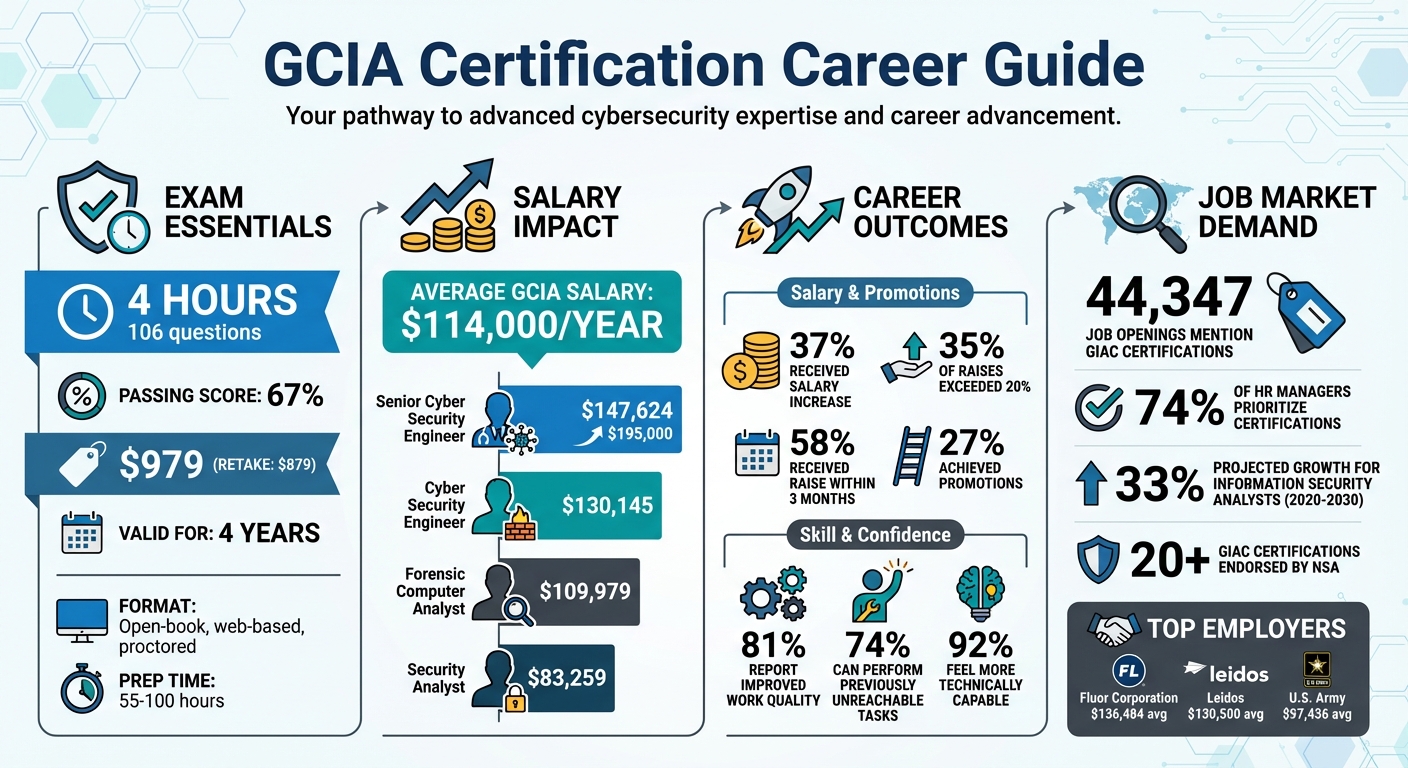
  • Exam Details: 106 questions in 4 hours, with a passing score of 67%. The cost is $979, and the certification is valid for 4 years.
  • Preparation: The SANS SEC503 course is the primary training resource, complemented by practice tests and hands-on experience with key tools.
  • Career Impact: GCIA holders earn an average salary of $114,000, with roles like Cyber Security Engineer and Forensic Analyst offering even higher pay. Over 37% of certified professionals report salary increases, and 27% achieve promotions.
  • Employer Demand: The certification is highly sought after by government agencies, defense contractors, and cleared employers like Leidos and the U.S. Army.

This certification not only meets DoD requirements but also boosts job performance, salary potential, and career opportunities in the cybersecurity field.

GCIA Certification Career Impact: Salary, Exam Details, and Professional Outcomes

GCIA Certification Career Impact: Salary, Exam Details, and Professional Outcomes

Ultimate Guide to GIAC Certified Intrusion Analyst (GCIA) Certification | Exam Domains & Prep Tips

sbb-itb-bf7aa6b

GCIA Certification Requirements and Exam Details

Here’s a breakdown of what you need to know about the GCIA certification, including its requirements, exam structure, and renewal process.

Prerequisites for GCIA Certification

One of the standout features of the GCIA certification is its lack of formal prerequisites – you don’t need a specific degree or prior certification to take the exam [1][9]. This makes it an accessible option for professionals at different stages of their careers. That said, GIAC suggests having 2-3 years of hands-on experience in network security, especially in areas like network monitoring and intrusion detection systems [6].

To succeed, you’ll need a solid understanding of network protocols (TCP/IP, UDP, ICMP), hexadecimal, basic Linux commands, and tools such as Wireshark, tcpdump, and Snort [6]. While anyone can register without this background, the exam’s practical nature means these skills are crucial for success. The GCIA exam is also open-book, allowing you to bring hardcopy books and notes (but no electronic devices). Crafting a well-organized index of your study materials can be a game-changer [7][8].

Exam Format and Scoring

The GCIA exam consists of 106 questions, and you’ll have 4 hours to complete it [1][2]. To pass, you’ll need a minimum score of 67%, a standard that applies to all exams activated on or after January 21, 2023 [1][2]. The exam is web-based and proctored, with two options for delivery: remote proctoring through ProctorU or onsite testing at PearsonVUE centers [1][3].

A key feature of the exam is the CyberLive testing component, which involves performing real-world tasks in virtual lab environments. This section tests your ability to apply intrusion detection skills under pressure [1][2]. Once you activate your certification attempt, you’ll have 120 days to schedule and complete the exam [1]. The exam fee is $979, while a retake costs $879 if needed [6][8][9].

Certification Renewal and Maintenance

The GCIA certification is valid for four years from the date you pass the exam [10]. To renew, you have two options: earn 36 Continuing Professional Education (CPE) credits or retake the current version of the exam [10]. The renewal fee is $499, and you can start the process up to two years before your certification expires [10].

You can earn the required 36 CPE credits through various activities, such as SANS courses, graduate-level coursework, accredited certifications (e.g., CISSP or Security+), conferences (up to 18 CPEs), or field work (1 CPE per month, capped at 12 CPEs) [10][11]. If you hold multiple GIAC certifications, you’ll pay the full renewal fee for the first one but get a $249 discount on additional renewals within the same two-year window [10].

These details lay the groundwork for preparing effectively, which will be explored further in the next section.

How to Prepare for the GCIA Certification

To excel in the GCIA certification exam, it’s essential to have a solid preparation plan. This includes structured training, hands-on practice, and efficient time management. On average, candidates dedicate between 55 and 100 hours to preparation, including lab work [12][13]. Thankfully, you’ll have 120 days from the date you activate the exam to complete it, giving you about four months to prepare [1].

A key part of your preparation should involve leveraging the SANS SEC503 course as your primary study resource.

SANS SEC503: Intrusion Detection In-Depth

SANS

The SANS SEC503: Network Monitoring and Threat Detection In-Depth course is the cornerstone for GCIA exam prep [13][14]. It includes detailed textbooks, a virtual machine, and a lab workbook to help you develop practical skills. The course is available in various formats – Live, Live Online, and OnDemand – making it convenient to fit into your schedule [12]. Although the course costs over $7,000, it’s one of the most direct paths to certification [13].

Network engineer Andre Roberge shares his experience with the course:

"I probably spent 100 hours in the exercises alone… I went through the first time as I was following along with the course… The second time through, I did almost all the exercises without using any of the hints" [13].

Revisiting the lab exercises, first with hints and then independently, is an effective way to master essential tools like Wireshark, Snort, and tcpdump.

Tools for GCIA Preparation

Hands-on experience with key tools is a must, as the GCIA exam includes a CyberLive component that tests your ability to use real security tools [1]. Familiarity with the following tools will be crucial:

  • Wireshark: For deep packet analysis.
  • tcpdump and tshark: For command-line packet capture.
  • Snort: For writing intrusion detection system (IDS) rules.
  • Zeek (formerly Bro): For network security monitoring.
  • SiLK: For analyzing network flow records.
  • Scapy: For packet crafting.

Hexadecimal analysis is another critical focus area. You’ll need to parse protocols like TCP, UDP, ICMP, and DNS in hex format, as this is a recurring theme throughout the course [13][15]. SANS also offers official cheat sheets that cover port numbers, IPv4 breakdowns, and tool syntax, which can be valuable study aids [14]. If you’re short on time, consider listening to MP3 versions of course lectures during your commute to reinforce key concepts [14].

Study Tips and Time Management

Since the GCIA exam is open-book, creating a custom index of the SANS course books is a vital step [12][15]. SANS instructor Dr. Johannes Ullrich emphasizes this point:

"The way to pass is the good index" [15].

An alphabetized, personalized index not only speeds up information retrieval during the four-hour exam but also strengthens your understanding of the material.

Make good use of the two practice tests included with the course. These are excellent tools for identifying weak areas, testing your index, and refining your study approach [12]. Avoid taking both practice tests on the same day; instead, review your results, update your index, and tackle the second test later. Start studying immediately after completing SEC503, and schedule your exam when you feel ready [12]. Many candidates report using the entire four-hour exam window, so time management is critical [16].

Career Benefits of GCIA Certification in Cleared Cybersecurity

Higher Salary and Job Opportunities

Earning the GCIA certification can lead to better pay and access to specialized roles in the defense and intelligence sectors. On average, GCIA-certified professionals earn a base salary of $114,000 annually. Specific roles offer even higher compensation: Senior Cyber Security Engineers average $147,624 per year (with top earners reaching $195,000), Cyber Security Engineers average $130,145, Forensic Computer Analysts earn around $109,979, and Security Analysts make approximately $83,259 [17].

The certification also accelerates career growth. About 37% of professionals report receiving a salary increase after earning their GCIA, with 35% of those raises exceeding 20%. Furthermore, 58% of these salary boosts occur within three months of certification. Promotions are another common outcome, with 27% of certified individuals advancing to higher roles [19].

GCIA certification prepares professionals for advanced positions in network traffic analysis and intrusion detection. Key roles include Forensic Computer Analyst, Senior Cyber Security Engineer, and Information Security Manager [17][5]. These competitive salaries and career advancements reflect the high demand for GCIA-certified talent in the cybersecurity field.

Employer Demand for GCIA-Certified Analysts

Employers highly value GCIA-certified professionals because the certification proves hands-on expertise through CyberLive testing [1][21]. The demand is clear: as of 2025, Cyberseek data highlights 44,347 job openings that specifically mention GIAC certifications [18]. Additionally, 74% of HR managers consider certifications a key factor when hiring, and the need for information security analysts is expected to grow by 33% between 2020 and 2030 [20].

Arlin Halstead, Strategic HR Business Partner at NTT Security, emphasizes the employer perspective:

"GIAC certifications help an organization’s hiring managers and HR with a quick ROI for information security professionals. The job function specific, technical certification ensures that their employees have demonstrable knowledge and skills" [22].

Major cleared employers, including Fluor Corporation (average salary $136,484), Leidos (average salary $130,500), and the U.S. Army (average salary $97,436), actively seek GCIA-certified professionals [17]. The certification is also endorsed by the United States National Security Agency (NSA), with over 20 GIAC certifications recommended for federal workforce development in government and military sectors [18][22].

Beyond hiring advantages, the certification enhances job performance. Eighty-one percent of GCIA holders report improved quality and value in their work, while 74% state they can now take on tasks or roles that were previously out of reach [19]. Additionally, GCIA-certified professionals rate their job satisfaction at 4 out of 5 [17]. This strong employer demand and professional satisfaction make GCIA certification a valuable asset for cleared cybersecurity roles.

Using Cleared Cyber Security Jobs to Find GCIA Roles

Cleared Cyber Security Jobs

Cleared Cyber Security Jobs offers a direct way to connect with employers seeking GCIA-certified professionals in the cleared community. As a veteran-founded platform, it focuses on pairing security-cleared talent with direct-hire employers in the defense and intelligence sectors.

The platform’s job search filters allow you to pinpoint positions requiring or preferring the GCIA certification. You can also set up job alerts to stay updated on new postings, ensuring you’re among the first to apply. Additionally, the site hosts job fairs, providing opportunities to meet hiring managers and recruiters from government agencies and defense contractors face-to-face.

Since the platform works exclusively with direct-hire employers, you bypass staffing agencies and connect directly with organizations that have immediate openings for intrusion analysts. The career resources section provides tailored advice to help you showcase your GCIA certification, emphasizing your expertise in network traffic analysis, intrusion detection, and hands-on skills proven through the certification’s practical testing.

Applying GCIA Skills in Cleared Environments

With a solid foundation of preparation and career advantages, using GCIA skills in cleared environments strengthens network defense strategies.

Use Cases for GCIA Skills

GCIA-certified analysts bring a deep understanding of packet-level data, which is critical for addressing threats in secured networks. By performing deep packet inspection, you can analyze the TCP/IP stack to uncover threats that standard signature-based tools might overlook [23].

Another essential application is protocol analysis. Examining protocols like DNS, SMB/CIFS, and HTTP/3 can reveal hidden anomalies within large datasets – an invaluable skill when adversaries exploit legitimate protocols to disguise their activities. Additionally, creating custom packets allows you to test your organization’s firewalls and IDS rules against newly identified vulnerabilities [23].

Network forensics is another key area where GCIA skills shine. By extracting files and data from network traffic, analysts can reconstruct incidents, pinpoint timelines, and identify those involved. On a broader scale, analyzing traffic patterns can help detect lateral movement across both traditional and cloud-based infrastructures [23].

Enhancing Security Operations with GCIA

These technical capabilities directly contribute to improving security operations.

GCIA-certified professionals help reduce alert fatigue and improve detection accuracy by fine-tuning IDS systems like Snort, Suricata, and Zeek. This ensures detectors generate fewer false positives, allowing SOC teams to concentrate on actual threats [6][2].

In addition to signature-based detection, behavioral threat hunting expands your ability to identify unusual activities. For example, creating automated correlation scripts in Zeek can help uncover behaviors that might indicate zero-day attacks. As Amit K from CBTProxy notes:

"There’s no better course to take if you want to learn how to perform effective threat hunting to detect zero-day activities on your network before they become public" [23].

Tools like Berkeley Packet Filters (BPF) are invaluable in high-volume environments, enabling analysts to focus on specific traffic traits at scale. Combining signature-based systems with behavioral monitoring creates a hybrid defense approach, offering protection against both known and unknown threats. Visualizing network flow data further simplifies operations and speeds up the identification of protocol anomalies [23].

Strengthening Team Collaboration and Processes

GCIA-certified analysts play a crucial role in bridging the gap between technical teams, such as network administrators and engineers, and security operations staff. By translating complex packet-level data into actionable insights, they help non-specialists understand and respond effectively to threats [1][24]. This collaborative approach is especially important during active incidents that require quick, coordinated action.

Fine-tuning IDS systems and creating custom signatures not only reduces false positives but also enhances the efficiency of SOC teams. These analysts also provide valuable input to software engineers, ensuring security is baked into the development process [24]. Automated correlation scripts in Zeek further streamline the detection of related malicious activities across the network.

Strategic sensor placement, informed by a deep understanding of network architecture, optimizes visibility in secured environments. By analyzing anomalies and tracking lateral movement, multidisciplinary teams can make smarter decisions about resource allocation and incident prioritization [23]. This combination of technical expertise and team coordination underscores the importance of GCIA certification in advancing careers in cleared cybersecurity roles.

Conclusion

The GCIA certification demonstrates expertise in intrusion detection and network traffic analysis, skills that are critical in secure environments. This is validated through CyberLive testing, ensuring hands-on proficiency [1][2]. In a competitive job market, where 74% of HR managers prefer hiring certified professionals, this credential can help you stand out [20].

On top of technical validation, the GCIA opens doors to roles like Network Security Analyst, Incident Response Specialist, and Cybersecurity Engineer, with average salaries hovering around $102,000 [20][4]. With information security analyst positions expected to grow by 33% from 2020 to 2030, this ANSI-accredited certification can position you for sustained career advancement across both government and private sectors [20][3].

Additionally, earning the GCIA enhances professional confidence. A reported 92% of candidates feel more technically capable after certification, and 80% achieve career milestones such as promotions or salary increases [25].

FAQs

What skills are assessed in the GCIA certification exam?

The GCIA certification exam focuses on the critical skills needed for intrusion analysts. These include setting up and managing intrusion detection systems, examining network traffic, interpreting log files, and grasping the basics of traffic analysis and network forensics.

The exam also assesses your understanding of application protocols, network behavior patterns, and your ability to spot potential threats in practical scenarios. Building expertise in these areas equips you to efficiently detect and respond to security incidents in sensitive environments.

How can the GCIA certification boost my career and salary in cybersecurity?

The GCIA certification can boost your career opportunities and increase your earning potential in the cybersecurity field. In the United States, professionals holding this credential typically earn an average salary of $110,000 per year, highlighting the strong demand for skills in areas like intrusion detection, network traffic analysis, and incident response.

Beyond validating your technical expertise, this certification paves the way for roles such as security analyst, intrusion detection specialist, and network security engineer. These positions are highly sought after by organizations focused on enhancing their cybersecurity defenses. With an emphasis on practical, hands-on problem-solving, the GCIA showcases your ability to tackle complex issues, making you a more sought-after professional in the cybersecurity sector.

What are the best strategies to prepare for the GCIA certification exam?

To succeed in the GCIA exam, a mix of structured learning, practical experience, and consistent review is essential. Begin by enrolling in SANS training courses, which cover critical topics like intrusion detection, network traffic analysis, and traffic forensics in depth. Make the most of these sessions by staying engaged – ask questions, take detailed notes, and apply what you learn to practical, real-world scenarios. This approach helps cement your understanding of complex concepts.

In addition to formal training, use practice exams to get comfortable with the test format and pinpoint areas where you need to improve. Develop a study plan that focuses on core topics such as IDS fundamentals, network protocols, and traffic analysis. Regular practice and targeted reviews will boost your confidence and readiness for the exam. Combining comprehensive training, active learning, and consistent practice is your best strategy for achieving success.

Related Blog Posts

  • GCIH Certification Career Guide for Cleared Incident Handlers
  • GCFA Certification Career Guide for Cleared Forensic Analysts
  • GNFA Certification Career Guide for Cleared Network Forensics
  • GSEC Certification Career Guide for Cleared Security Essentials

Related Guides

  • BTL2 Certification Career Guide for Cleared Blue Team Level 2
  • BTL1 Certification Career Guide for Cleared Blue Team Level 1
  • CySA Plus Certification Career Guide for Cleared SOC Analysts
  • Cybersecurity Salary Guide 2026
  • TS/SCI Salary Premium: Real 2026 Numbers

GSEC Certification Career Guide for Cleared Security Essentials

CyberSecJobs Editorial · February 9, 2026 ·

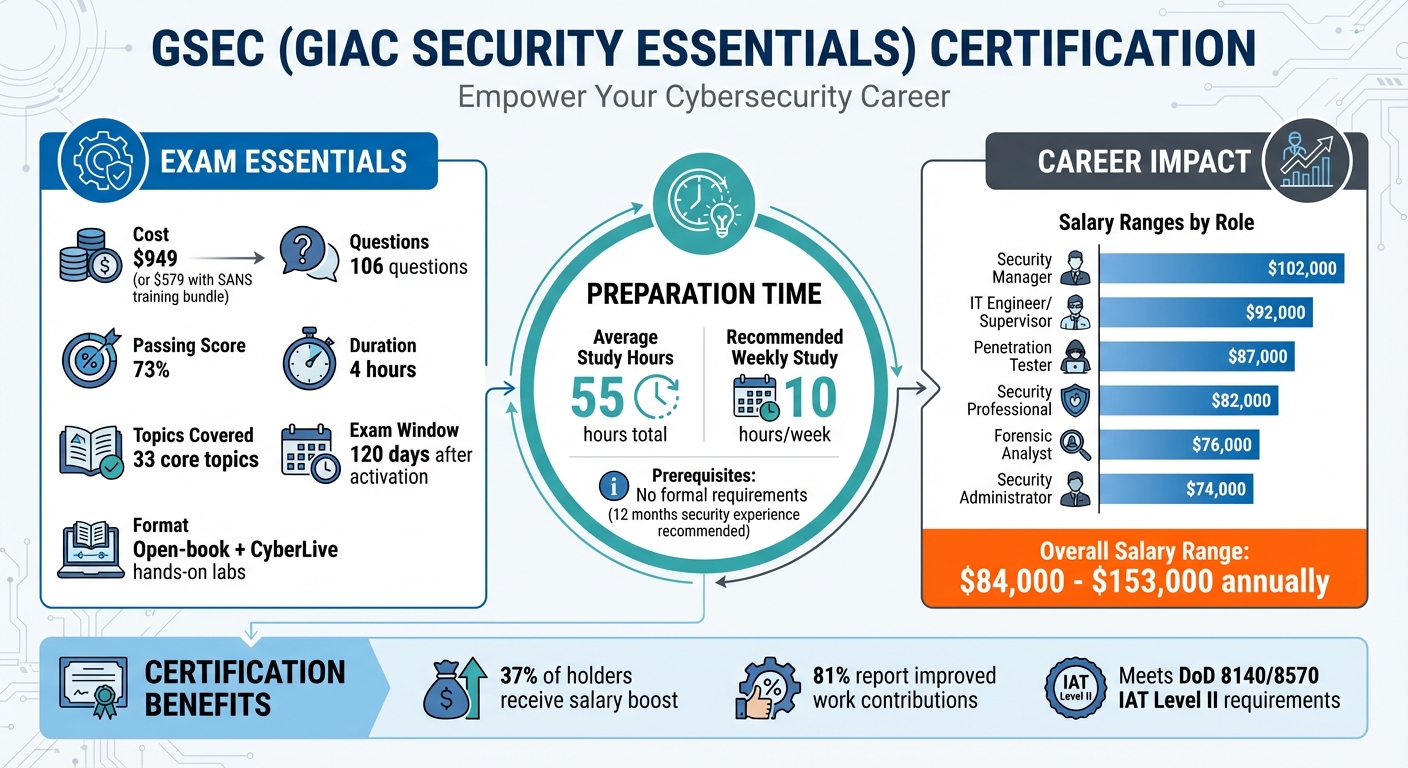
The GIAC Security Essentials (GSEC) certification is a globally recognized credential that validates your ability to handle hands-on cybersecurity tasks. It’s especially valuable for professionals with U.S. government security clearances, as it aligns with DoD 8140/8570 IAT Level II requirements. The exam costs $949 (or $579 with a SANS training bundle) and includes 106 questions with a passing score of 73%. Its standout feature is the CyberLive testing component, which tests your practical skills in a lab environment using tools like Wireshark and PowerShell.

Key Details:

  • Who Should Take It: Ideal for roles like forensic analysts, network administrators, and penetration testers.
  • Core Topics: Access control, cryptography, cloud security (AWS, Azure, GCP), Linux hardening, Windows security, and incident response.
  • Preparation Tips: Use the SANS SEC401 course, practice exams, and hands-on labs. Build a home lab with tools like Kali Linux and virtual machines.
  • Career Impact: GSEC-certified professionals earn between $84,000 and $153,000 annually, with increased job opportunities in high-security environments.

This certification not only boosts your technical skills but also enhances your career prospects in cybersecurity roles requiring high levels of trust and expertise.

GSEC Certification Quick Reference Guide: Exam Details, Costs, and Career Salaries

GSEC Certification Quick Reference Guide: Exam Details, Costs, and Career Salaries

GSEC Exam Structure and Prerequisites

Exam Objectives and Core Topics

The GSEC exam spans 33 topics, includes 106 questions, and gives you 4 hours to complete it. To pass, you’ll need a score of 73% or higher [1][2][5][6]. It’s an open-book exam, which means you can bring hard-copy materials. But don’t think that makes it easy – it’s all about how quickly and effectively you can find and apply the right information, not just memorizing facts.

The exam dives into essential areas like access control theory, password management, and cryptography applications (covering tools like VPNs, GPG, and PKI). It also tests your knowledge of Linux hardening and auditing, Windows security infrastructure (like Active Directory and Group Policy), network architecture and protocols, incident handling processes, cloud security across AWS, Azure, and GCP, and vulnerability scanning and penetration testing. These topics align with the DoD 8140/8570 requirements for Information Assurance Technical (IAT) Level II roles [5][7], making them especially relevant for high-security environments.

The CyberLive component adds a hands-on layer to the exam. You’ll use tools like tcpdump, Wireshark, and PowerShell within virtual machines to solve practical challenges [5][6]. This section emphasizes applying your skills in real-world scenarios. As Garrett Brown, a GCIH holder, puts it:

Excellent examination of skills. GIAC does a good job of leveraging knowledge and skill ability with IT intuition – an important pairing in a real cybersecurity position [3].

Prerequisites and Recommendations

While there are no formal prerequisites for the GSEC exam – anyone can register and take it [8] – GIAC strongly suggests having at least 12 months of security experience or a background in information systems and networking [8]. This advice stems from the practical nature of the CyberLive labs, which require you to perform real tasks, not just recall textbook knowledge [1].

If you’re already working in a security-focused role, especially one involving tools, protocols, and system hardening, you’re likely in good shape. For those just starting out, gaining some entry-level experience in security before tackling the exam is a smart move. After all, the exam costs $949, so it’s worth being well-prepared [8]. Once you activate your exam, you’ll have 120 days to complete it [1][2]. You can take the test remotely through ProctorU or in person at PearsonVUE testing centers.

sbb-itb-bf7aa6b

How to Prepare for the GSEC Exam

Study Materials and Tools

A key resource for preparing for the GSEC exam is the SANS SEC401: Security Essentials – Network, Endpoint, and Cloud course. Many successful candidates recommend it. This course is offered in various formats – Live, Live Online, or OnDemand – so you can choose what works best with your schedule. It includes detailed materials, such as textbooks and workbooks, covering everything from access control and cryptography to cloud security and incident handling [5].

The CyberLive hands-on labs are another vital component. These labs provide a virtual machine environment where you can work with real tools and code, helping you tackle practical security challenges. Skipping hands-on practice can hurt your performance on the exam, so make sure to take full advantage of these labs [12].

If you’re a cleared professional, setting up a home lab can be a game-changer. Aim for a setup with at least 16GB of RAM and a 4-core processor, which allows you to run multiple virtual machines. Platforms like VMware Workstation, Oracle VirtualBox, or Microsoft Hyper-V are excellent choices. For your lab, consider using Kali Linux or ParrotOS as your main security workstation. Add tools like Metasploitable for vulnerability testing, along with Windows 11 and Ubuntu instances for configuration and hardening exercises. This setup will help you practice critical skills, including network scanning, packet analysis, password cracking, and exploitation techniques [13].

Don’t underestimate the importance of GIAC practice exams. These are crucial for assessing your readiness and getting familiar with the CyberLive interface. Most successful candidates complete at least one practice test, using the results to target weak areas before the real exam [9].

Since the exam allows open-book resources, creating a custom index early in your preparation can make a huge difference. A good index – typically 4–6 pages, single-sided – helps you quickly find key information during the test. Include charts, definitions, and other essential details to make it as efficient as possible [11].

Study Strategies for Cleared Professionals

Balancing work and exam prep requires a solid plan. Most candidates spend around 55 hours preparing for GIAC exams. With a 120-day window from activation to completion, aim for about 10 hours of study time per week. This schedule works even if you have a busy routine [9][6].

The OnDemand training format is especially helpful for those with tight schedules. You can study during breaks, commutes, or downtime. Some candidates also listen to course audio recordings to reinforce key concepts [10].

Start with a 10-hour weekly study schedule, and build your custom index early. Taking a practice test early in your 120-day window will help you pinpoint areas that need more focus, allowing you to adjust your study plan effectively [10].

For cleared professionals, focus your hands-on practice on areas that are critical for your role. These include Linux hardening and auditing, Windows security infrastructure (like Active Directory and Group Policy), network architecture, and incident handling. These skills align with DoD 8140/8570 IAT Level II requirements and are often part of your daily responsibilities [5][7]. If you’re already working with tools like SIEM platforms, vulnerability scanners, or endpoint security solutions, try applying what you learn from the SEC401 course to real-world scenarios. This approach reinforces your knowledge while preparing you for the exam [10].

Start reviewing your materials as soon as your training is complete to keep the information fresh. Being well-prepared not only boosts your chances of passing but also ensures you get the most out of your investment – especially with the $949 exam registration fee [5].

Using GSEC for Career Advancement in Cleared Roles

Career Benefits of GSEC Certification

Earning a GSEC certification can open doors to roles with salaries ranging from $84,000 to $153,000, depending on your position and experience level [7][14]. Its approval under DoD 8140/8570 IAT Level II makes it a sought-after qualification for government and contractor jobs, meeting essential Department of Defense requirements and simplifying the hiring process [5][7].

One of the standout features of GSEC is its CyberLive testing format, which assesses practical, hands-on skills. This ensures hiring managers can trust your abilities from day one. Nate Gonzalez, a professional holding both GSEC and GCIH certifications, shared his experience:

Before I was GIAC certified, when I would interview for a role, I would get grilled over so many foundational topics as they tried to see how to stump me. I feel now that I am certified that the whole ‘Trust Me, I’m Certified’ actually does exist and I was able to land my dream role thanks to the skills and knowledge I’ve learned. [4]

The GSEC certification doesn’t just validate your current skills – it also sets you up for advanced certifications like the GIAC Security Expert (GSE), one of the toughest credentials in the industry [4]. With this foundation, you can specialize in areas such as Offensive Operations, Cloud Security, or Industrial Control Systems [3]. According to research, 37% of certification holders receive a salary boost, and 81% report improved contributions and value in their work after earning their credentials [15].

Here’s a quick look at average salaries for some roles that GSEC certification can help you qualify for:

Job Role Average Annual Salary
Security Manager $102,000
IT Engineer/Supervisor $92,000
Penetration Tester $87,000
Security Professional $82,000
Forensic Analyst $76,000
Security Administrator $74,000

With these career benefits in mind, the next step is finding roles that align with your GSEC qualifications.

Finding GSEC-Aligned Jobs with Cleared Cyber Security Jobs

Cleared Cyber Security Jobs

Cleared Cyber Security Jobs is a platform designed to connect security-cleared professionals with employers actively seeking candidates with high-demand certifications like the GSEC. Using the platform’s job search filters, you can zero in on positions that require or prefer DoD 8140/8570 IAT Level II certifications. Additionally, setting up job alerts ensures you’re notified about openings in competitive markets as soon as they’re posted.

The site’s resume upload feature allows you to showcase your GSEC certification directly to employers who prefer to hire without going through staffing firms. This streamlines the hiring process, making it easier for certified professionals to connect with employers looking for their skills.

Beyond job listings, Cleared Cyber Security Jobs offers resources to support your career growth. The platform hosts job fairs where you can network face-to-face with employers who value proven expertise. It also provides tools to help you leverage your GSEC certification during interviews and salary negotiations. Best of all, these services are free for job seekers – though eligibility is restricted to U.S. citizens with active security clearances.

Mastering the GSEC: Complete Guide to Passing the GIAC Security Essentials Certification

GIAC Security Essentials

Conclusion: Starting Your GSEC Journey

The GSEC certification offers a clear path for security-cleared professionals to boost their earning potential, expand career opportunities, and gain recognition as skilled cybersecurity practitioners. With its hands-on CyberLive testing format, this credential demonstrates the practical expertise that government agencies and defense contractors prioritize.

Embarking on your GSEC journey requires focused preparation. Completing the SANS SEC401 training course is essential, along with dedicating significant time to studying and organizing your course materials. Planning exam logistics in advance ensures you’re fully prepared when test day arrives.

The benefits of certification are evident. Validated skills and industry recognition open doors to career advancement and higher salaries. Many professionals have successfully used their GSEC credentials to secure roles in high-security environments, where expertise is both valued and rewarded.

Once certified, you’re equipped to take your career to the next level. Platforms like Cleared Cyber Security Jobs can help you maximize your opportunities. Use their tools to search for positions requiring IAT Level II certifications, set up job alerts, and connect directly with employers eager to hire professionals with your qualifications. For U.S. citizens with active clearances, these services are free, making it easier to find roles where your GSEC certification and clearance give you a competitive advantage. With rigorous preparation and a sought-after credential, you’re ready to step into secure and rewarding cybersecurity roles. Start your journey today and connect with employers who value your expertise.

FAQs

What hands-on skills are assessed in the GSEC certification’s CyberLive section?

The CyberLive portion of the GSEC certification focuses on testing your ability to tackle practical cybersecurity challenges through hands-on exercises. It emphasizes skills such as network analysis, incident response, vulnerability assessment, and security configuration, all within scenarios that closely mirror tasks you’d encounter in a professional setting.

These exercises take place in a virtual environment, where you’re expected to identify, troubleshoot, and resolve security issues. This hands-on approach ensures you’re ready to translate your knowledge into action, making the certification especially valuable for professionals in operational cybersecurity roles.

What’s the best way to prepare for the GSEC exam while working full-time?

Balancing a full-time job while preparing for the GSEC exam can feel like a juggling act, but it’s entirely doable with the right strategy. One smart move is to explore flexible study options like on-demand or live online training from reputable providers. These formats let you fit learning into your schedule, whether it’s early mornings, lunch breaks, or late evenings.

To make your study time count, focus on active learning techniques. Take detailed notes, ask questions to clarify concepts, and connect what you’re learning to practical, real-world scenarios. This approach not only helps with retention but also makes the material feel more relevant. Additionally, practice exams and study guides are your best friends – they’ll help you measure progress and pinpoint areas that need extra attention.

Carve out a consistent study routine, even if it’s just a few hours each week, and prioritize the key topics that will appear on the exam. By staying organized and disciplined, you can prepare effectively for the GSEC without letting it take over your life.

What career paths are available for GSEC-certified professionals with security clearances?

GSEC-certified professionals with security clearances can explore a variety of career paths in the cybersecurity field, especially in roles that involve managing classified or sensitive information. Typical positions include cybersecurity engineers, security analysts, incident response specialists, security architects, and compliance or risk analysts. These jobs are commonly available in sectors like government, defense, and critical infrastructure, where holding a security clearance is a must.

Pairing a GSEC certification with a security clearance can also lead to advanced roles such as Information Systems Security Manager (ISSM), cyber threat analyst, penetration tester, or security engineer. Professionals in these roles often tackle tasks like safeguarding classified networks, performing vulnerability assessments, responding to security incidents, and creating effective security frameworks. Salaries for these positions typically range from $73,000 to over $130,000 annually, highlighting their critical role within the cybersecurity landscape that requires clearances.

Related Blog Posts

  • CEH Certified Ethical Hacker Career Guide for Cleared Pen Testers
  • GPEN Certification Career Guide for Cleared Penetration Testers
  • GCIH Certification Career Guide for Cleared Incident Handlers
  • GNFA Certification Career Guide for Cleared Network Forensics

Related Guides

  • BTL2 Certification Career Guide for Cleared Blue Team Level 2
  • BTL1 Certification Career Guide for Cleared Blue Team Level 1
  • CySA Plus Certification Career Guide for Cleared SOC Analysts
  • Cybersecurity Salary Guide 2026
  • TS/SCI Salary Premium: Real 2026 Numbers
  • « Go to Previous Page
  • Go to page 1
  • Interim pages omitted …
  • Go to page 46
  • Go to page 47
  • Go to page 48
  • Go to page 49
  • Go to page 50
  • Interim pages omitted …
  • Go to page 68
  • Go to Next Page »
  • Facebook
  • Instagram
  • LinkedIn
  • Twitter
  • YouTube

Cleared Cyber Security Jobs | CyberSecJobs.com

  • Contact
  • About
  • Privacy Policy