• Skip to primary navigation
  • Skip to main content
Cleared Cyber Security Jobs | CyberSecJobs.com

Cleared Cyber Security Jobs | CyberSecJobs.com

Cleared Cyber Security Jobs

  • Home
  • Search Cleared Cyber Jobs
  • Job Fairs
  • Career Resources

Career Paths

Digital Forensics Examiner Career Path for Cleared Professionals

CyberSecJobs Editorial · March 8, 2026 ·

Digital forensics examiners with security clearances play a critical role in investigating cyberattacks, insider threats, and national security cases. These professionals analyze digital evidence from devices, networks, and cloud systems to support federal agencies like the FBI, NSA, DHS, and DoD. With cybercrime increasing, demand for these roles is high, offering salaries starting at $53,000 and reaching over $100,000 for those with advanced skills and clearances.

Key Takeaways:

  • Certifications Matter: GIAC (GCFE, GCFA), CFCE, and EnCE are top certifications to boost career prospects and earning potential.
  • Tools of the Trade: Proficiency in forensic tools like EnCase, FTK, and Cellebrite is essential.
  • Career Progression: Entry-level salaries range from $60,000 to $80,000, while senior roles can exceed $145,000, especially with specialized expertise.
  • Security Clearance: Highlighting your clearance (e.g., Secret, TS/SCI) is vital for accessing classified roles and increasing job opportunities.

Whether you’re starting out or aiming for senior roles, combining technical expertise, certifications, and clearance can lead to a lucrative and impactful career in digital forensics.
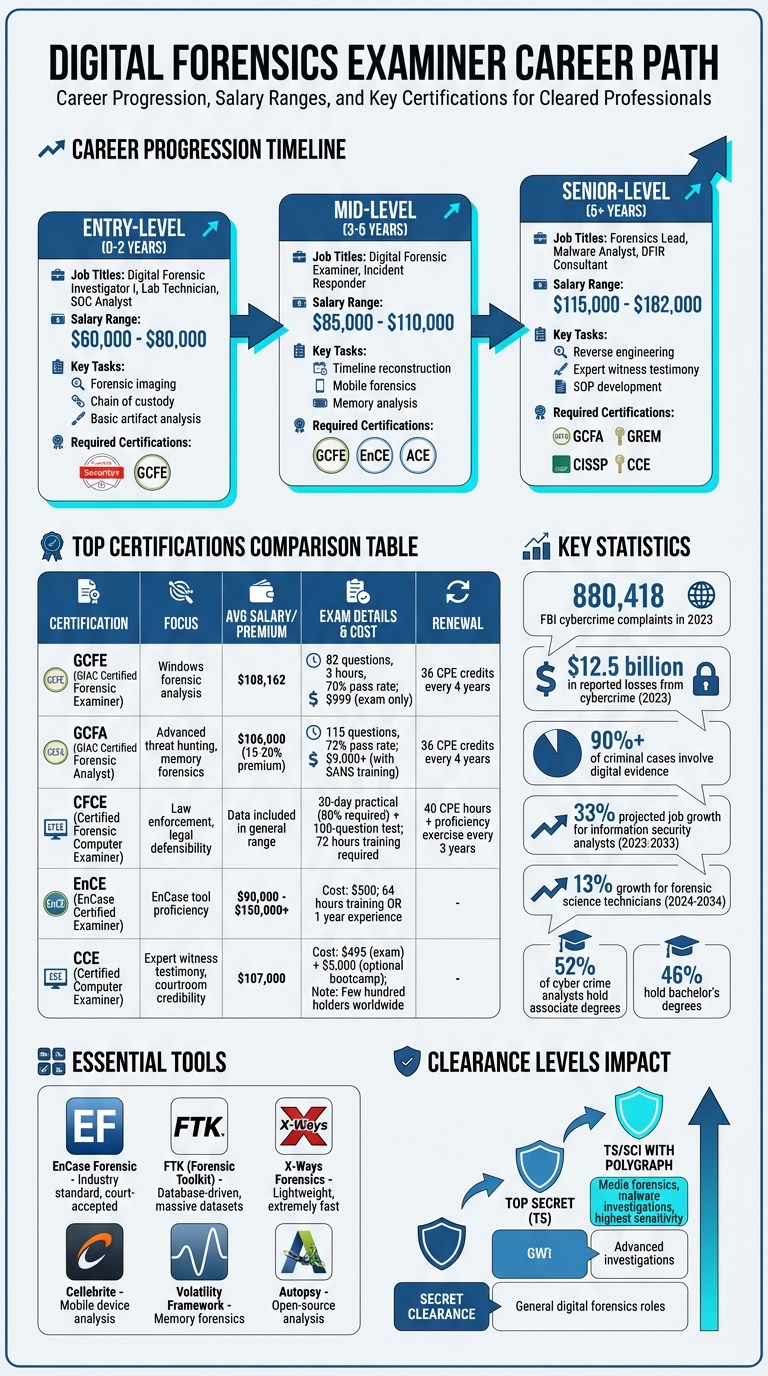
Digital Forensics Career Path: Salary Progression and Key Certifications

Digital Forensics Career Path: Salary Progression and Key Certifications

What Digital Forensics Examiners Do

Primary Job Duties

Digital forensics examiners specialize in recovering, analyzing, and preserving electronic evidence from devices like computers, smartphones, servers, and cloud storage systems. Their work supports criminal investigations, counterintelligence efforts, and legal cases. To ensure that this evidence is admissible in court or security reviews, examiners must follow strict protocols when handling and documenting it.

Their daily tasks often include creating exact copies of hard drives or mobile devices, analyzing file systems to locate deleted or hidden files, and meticulously recording their findings for investigators, attorneys, or intelligence analysts. In some cases, they may also testify as expert witnesses, breaking down complex technical details for judges and juries. For classified cases, their responsibilities might extend to investigating insider threats, espionage attempts, or cyberattacks targeting sensitive government systems. This role requires a deep technical skillset and provides a strong foundation for career growth.

Where Cleared Professionals Work

Cleared digital forensics examiners have opportunities in various settings, including federal agencies, defense contractors, and private firms involved in government work. Agencies like the FBI, NSA, DHS, and DoD rely on these professionals to investigate national security threats. Meanwhile, defense contractors such as Booz Allen Hamilton, Leidos, and Northrop Grumman employ examiners to support government programs on long-term contracts.

Some cleared examiners work in consulting firms that focus on cybersecurity and incident response for government clients. Others may serve as civilian employees or uniformed personnel in military branches, conducting forensic investigations on bases or in field operations. These work environments highlight the critical role that security clearances play in enabling access to sensitive investigations and projects.

Why Security Clearances Matter

Security clearances are essential for accessing classified investigations and government contracts that non-cleared professionals cannot handle. Cleared examiners are authorized to work with classified networks and sensitive intelligence during incidents like cyberattacks, ensuring the confidentiality of investigations. This exclusivity not only increases demand for their skills but also leads to better pay and job opportunities.

To maintain clearance eligibility, examiners must demonstrate personal integrity, financial responsibility, and transparency about foreign associations [3]. Background checks are rigorous because mishandling classified information could jeopardize national security. For those who qualify, security clearances open doors to specialized roles, greater job stability, and higher earning potential.

sbb-itb-bf7aa6b

Required Certifications for Cleared Digital Forensics Examiners

Top Industry Certifications

Certifications not only validate your technical expertise but also help you stand out when applying for cleared positions. Let’s break down some of the key certifications in the field:

  • GIAC Certified Forensic Examiner (GCFE): This certification focuses on Windows forensic analysis, covering areas like registry examination, web browser artifacts, and user activity tracking. It’s a solid choice for entry-level and mid-level analysts, with an average salary of $108,162 per year. The exam includes 82 questions, must be completed in three hours, and requires a 70% pass rate to succeed [4][6].
  • GIAC Certified Forensic Analyst (GCFA): Often seen as the gold standard for senior-level roles in corporate incident response, this certification delves into advanced topics like threat hunting, memory forensics, and timeline reconstruction. The exam consists of 115 questions, and candidates need about 72% to pass. GCFA-certified professionals typically earn around $106,000 annually. Its alignment with the DoD 8140/NICE framework makes it particularly valuable for government contracting [7].
  • Certified Forensic Computer Examiner (CFCE): Offered by IACIS, this certification is highly regarded in law enforcement and government roles. Candidates must pass a demanding two-part test: an 80% score on a 30-day hard-drive practical and a 100-question knowledge exam. Known for its rigorous standards and anti-cheating measures, the CFCE is often a requirement for police cyber units [5].
  • Tool-Specific Certifications: These certifications focus on specific forensic tools, such as:
    • EnCase Certified Examiner (EnCE): Costs $500 and is commonly required for federal contracting roles.
    • AccessData Certified Examiner (ACE): Free for those with an FTK license [7].
  • Certified Computer Examiner (CCE): This certification emphasizes legal defensibility and expert witness testimony, making it a great fit for those involved in court proceedings. With only a few hundred holders worldwide, it offers strong courtroom credibility and an average salary of around $107,000. The exam costs $495, and optional bootcamp training is available for approximately $5,000 [7].

These certifications not only enhance your skill set but also open doors to specialized roles in digital forensics.

How to Prepare for Certification Exams

Earning these certifications takes more than just sitting for the exam – it requires thorough preparation to ensure your skills are applicable in real-world scenarios. Here’s how you can get ready:

  • Experience Requirements: While formal degrees aren’t mandatory for most certifications, relevant experience is often recommended. For example:
    • GIAC suggests at least two years of work experience for the GCFE [6].
    • EnCE candidates need either 64 hours of authorized training or one year of professional experience [9].
    • CFCE external candidates must document 72 hours of relevant training [5].
  • Cost Considerations: Certifications can be expensive. SANS training and GIAC exam bundles, for instance, can cost over $9,000 [6]. To manage these costs, look into employer sponsorship or programs like the SANS Work Study. The GCFE exam alone costs $999, with retakes priced at $899 [6].
  • Study Strategies: For GIAC open-book exams, create an alphabetized index of study materials to quickly find keywords during the test [6]. For hands-on certifications like the CFCE, focus on a "manual first, tool second" approach – use hex editors to verify findings. This method not only sharpens your skills but also builds a defensible process for legal scrutiny [5].
  • Renewal Requirements: Most certifications need to be renewed every three to four years. For example:
    • GCFE and GCFA require 36 CPE credits every four years.
    • CFCE demands 40 CPE hours and a proficiency exercise every three years [6][7][5].

Proper preparation ensures these certifications go beyond just a title, equipping you with the expertise to excel in the field.

Technical Skills and Tools You Need

Forensic Software and Tools

When it comes to digital investigations, having the right forensic tools in your arsenal is essential. These tools allow investigators to analyze digital evidence with speed and precision, making them indispensable for solving cases effectively.

The "Big Three" forensic tools – EnCase Forensic, Forensic Toolkit (FTK), and X-Ways Forensics – are staples in the field. They form the foundation of most computer forensics investigations [10].

  • EnCase Forensic is widely recognized as the industry standard. Its scripting capability (EnScript) and the universally accepted .E01 disk imaging format make it a trusted choice in courtrooms.

    "Proficiency in EnCase is almost a mandatory requirement for senior forensic roles. Its legacy and court acceptance mean that verification by EnCase is often the final word in a digital dispute" [10].
    Professionals skilled in EnCase often earn salaries ranging from $90,000 to over $150,000 [10].

  • Forensic Toolkit (FTK) stands out for its database-driven PostgreSQL architecture, which is ideal for managing massive datasets. This makes it a go-to option for teams where multiple analysts need simultaneous access [19,20].
  • X-Ways Forensics is known for its lightweight design and exceptional speed. It’s particularly valued for its precision and deep understanding of file systems, making it a favorite for targeted investigations [10].

For specialized scenarios, other tools come into play. The Volatility Framework is a leader in memory forensics, often used to uncover active malware and encryption keys [11]. For mobile device analysis, Cellebrite is a top-tier option, offering deep data extraction and app artifact analysis [11]. Many of these commercial tools require a physical USB security dongle for licensing [10].

Feature FTK (Forensic Toolkit) EnCase Forensic X-Ways Forensics
Architecture Database-driven (PostgreSQL) Evidence file-based Lightweight/Portable
System Resources High (RAM & CPU intensive) High Very Low
Processing Speed Fast (Distributed) Moderate Extremely Fast
Learning Curve Moderate Steep Very Steep (Technical)
Best For Massive datasets & e-discovery Law enforcement & scripting Speed & precision

Mastering these tools is just the start. To excel in digital forensics, you also need a solid foundation in technical skills.

Core Technical Skills

Beyond using the tools, technical expertise plays a huge role in ensuring accurate investigations. One of the most critical skills is evidence preservation and integrity. Creating bit-by-bit forensic copies (forensic imaging) ensures that the original data remains untouched during analysis [23,24]. This is especially important given that digital evidence is a factor in most criminal cases [12].

Metadata analysis is another key skill, allowing investigators to examine file attributes and histories to piece together user activity, authorship, and modification timelines [13]. Similarly, network and log analysis is vital for identifying unauthorized access or suspicious behavior by reviewing firewall, server, and access logs [13]. The scale of cyber threats is staggering – just in 2023, the FBI’s Internet Crime Complaint Center received 880,418 complaints, with reported losses exceeding $12.5 billion [13].

Scripting skills, particularly in Python and PowerShell, are increasingly important for handling large datasets efficiently [22,23]. Investigators also need to understand anti-forensic techniques, as adversaries often use tools like VPNs, encryption, and even AI to obscure their tracks [23,24].

The field is evolving rapidly, with advancements like AI-powered forensics, which uses machine learning to identify key artifacts and detect unusual patterns in large datasets [11]. Additionally, cloud-native forensics tools now allow investigators to access data directly from platforms like Azure, AWS, and Office 365, eliminating the need for physical devices [19,20]. Remote acquisition is another game-changer, enabling evidence to be streamed back from endpoints using deployed agents [10].

Working with Classified Data

Handling classified data requires a unique set of skills and procedures. Investigators working in these environments must have a deep understanding of government regulations, secure communication protocols, and the heightened chain-of-custody standards. Even minor mistakes can jeopardize national security or render evidence inadmissible in high-profile cases.

In such settings, every action must be meticulously documented, and strict access controls are enforced to secure evidence. Many organizations provide virtual lab environments, allowing professionals to test new forensic tools without risking live classified systems.

The demand for skilled professionals in this field is growing. Employment for information security analysts, including digital forensics experts, is expected to increase by 33% between 2023 and 2033 [14]. To stay competitive, it’s important to keep up with emerging tools like advanced versions of X-Ways or platforms such as Axiom. Many employers, particularly cleared defense contractors, offer annual stipends for continuing education and certifications, ensuring their teams stay ahead in this ever-evolving field.

Education and Career Progression

Recommended Degrees and Education

A strong academic foundation in fields like cybersecurity, digital forensics, or computer engineering is key for success in cleared positions. While no single degree is mandatory, these areas provide the technical expertise needed to thrive.

To excel in digital forensics, you’ll need to understand data storage, access, and deletion at the system level. This includes proficiency in file systems such as NTFS, ext4, and APFS, as well as knowledge of computer architecture, operating systems, and scripting languages like Python, Bash/Shell, and PowerShell. These skills are essential for practical forensic work [2][15].

Statistics reveal that approximately 52% of cyber crime analysts – a closely related role – hold at least an associate degree, while 46% have earned a bachelor’s degree [15]. Employment in this field, particularly for forensic science technicians (which includes digital forensics professionals), is expected to grow by 13% between 2024 and 2034 [15]. Salaries are competitive, with digital forensics experts earning an average of $95,000 annually in 2025, and some roles offering as much as $171,000 [15].

"Many digital forensic experts are employed by governments or government contractors. For a large portion of these positions, a security clearance is necessary." – Cybersecurity Guide [15]

Keeping up with the latest developments is crucial. Organizations like the High Technology Crime Investigation Association and the Scientific Working Group on Digital Evidence (SWGDE) offer valuable resources to help professionals stay current [15].

Once you’ve built a solid educational foundation, you can start exploring entry-level roles to gain practical experience.

Getting Started with Entry-Level Roles

Most professionals begin their digital forensics careers in roles such as Digital Forensic Investigator I, Digital Forensics Lab Technician, or related jobs like SOC Analyst or Incident Responder [2][1]. These positions focus on essential tasks like creating forensic images, maintaining the chain of custody, and performing basic artifact analysis.

Building the necessary skills for these roles typically takes about 12 to 18 months. Start by mastering IT and operating system basics in 3-4 months, then spend 2-3 months learning security and incident response fundamentals. Dedicate another 3-4 months to developing core forensic skills using tools like Autopsy and FTK Imager [2].

Entry-level analysts can expect to earn between $60,000 and $80,000 annually [2]. To stand out, create a portfolio showcasing your work from Capture The Flag (CTF) challenges on platforms like CyberDefenders. This demonstrates your technical abilities and analytical skills to potential employers. Certifications like CompTIA Security+ or GCFE can further strengthen your credentials, especially for cleared positions [2][1].

After gaining foundational experience, you’ll be ready to take on roles with greater technical and leadership responsibilities.

Advancing Your Career

As you progress in digital forensics, you’ll take on more responsibility and enjoy higher compensation. Professionals with 3-5 years of experience often move into roles like Digital Forensic Examiner or Incident Responder, focusing on tasks such as timeline reconstruction, mobile forensics, and memory analysis. Salaries for these positions generally range from $85,000 to $110,000 [2].

At the senior level, roles like Forensics Lead, Malware Analyst, or DFIR Consultant require advanced expertise. This includes skills in reverse engineering, developing standard operating procedures, and serving as an expert witness. Salaries for these roles typically range from $115,000 to $145,000, with some high-level federal or specialized positions offering up to $182,000 depending on expertise and location [2][1].

Specializing in areas like memory forensics, network forensics, mobile device analysis, cloud forensics (AWS/Azure/GCP), or Industrial Control Systems (ICS) forensics can significantly boost your career prospects [2]. Analysts with GCFA certification, for example, tend to earn 15-20% more than their peers without it [8]. Advanced certifications like GCFA, GREM, or CISSP are particularly valuable for securing senior-level cleared positions [2][1].

"The role offers something increasingly rare in cybersecurity: the satisfaction of deep, methodical investigation rather than reactive firefighting." – Unihackers Career Guide [2]

As you advance, developing "soft skills" becomes increasingly important. The ability to explain complex technical findings to non-technical audiences, such as juries, executives, or legal teams, sets top performers apart [2][1]. For those working in law enforcement forensics, emotional resilience is also essential, particularly when dealing with sensitive or distressing material [2][3].

How to Find Jobs as a Cleared Digital Forensics Examiner

Highlighting Your Security Clearance

Make sure your active security clearance is easy to spot on your resume – place it right under your contact information. Include the clearance level (e.g., Secret, Top Secret, or TS/SCI with polygraph) and the date it was granted or last updated. This tells potential employers you’re ready to hit the ground running.

In interviews, emphasize your history of financial and personal integrity, as these factors play a role in clearance renewals or upgrades. Showcasing your responsibility with classified materials highlights your professionalism and readiness for sensitive roles. This clear focus on your clearance makes you stand out and prepares you to explore specialized job platforms.

Leveraging Cleared Cyber Security Jobs
Cleared Cyber Security Jobs

Platforms like Cleared Cyber Security Jobs are a direct link to government contractors. Upload your resume, set up job alerts tailored to your forensic expertise – whether it’s mobile forensics, malware analysis, or incident response – and start connecting with the right opportunities.

These platforms often provide career resources, offering tips on maintaining your clearance, earning certifications, and preparing for interviews. They also host job fairs where you can meet hiring managers from top government contractors face-to-face, giving you a chance to make a strong impression.

What Employers Are Looking For

Employers want more than certifications – they’re looking for hands-on experience in forensic investigations. After fine-tuning your resume and leveraging job alerts, focus on showcasing your technical skills and practical expertise during the hiring process.

Digital forensics roles for cleared professionals are often categorized by clearance levels. For example, Secret-level roles may focus on general digital forensics, while TS/SCI with polygraph positions often involve advanced tasks like media forensics or malware investigations.

Proficiency with forensic tools like EnCase, FTK, Autopsy, Cellebrite, and X-Ways is essential. Employers also value scripting skills in Python, PowerShell, or Bash to automate evidence processing tasks [12][15]. Your resume should highlight specific investigations you’ve worked on, the data volumes you’ve handled, and any courtroom testimony experience. Certifications such as GCFE, GCFA, or EnCE further demonstrate your ability to tackle complex forensic challenges. With digital evidence now playing a role in over 90% of federal and state criminal cases [12], employers are looking for examiners who understand chain-of-custody protocols and can deliver findings that hold up in court.

My life as Cyber Forensic Investigator and what Certifications you should

Wrapping It Up

To excel in digital forensics, you need a mix of active security clearance, industry-recognized certifications, and strong technical skills. Whether it’s a Secret, Top Secret, or TS/SCI clearance, this qualification can unlock opportunities with federal agencies like the FBI, NSA, or Department of Defense, giving you access to high-stakes, classified investigations.

Certifications such as GCFA, GCFE, or CFCE validate both your technical and legal expertise. For example, analysts with the GIAC Certified Forensic Analyst (GCFA) certification often earn 15–20% more than peers without it, with seasoned professionals earning $133,000 or more annually [8]. These certifications prove you’re capable of delivering legally sound, court-ready findings that can withstand intense scrutiny.

On the technical side, proficiency with tools like EnCase, FTK, Cellebrite, and X-Ways, combined with skills in scripting languages like Python or PowerShell, is essential. Expertise in imaging, memory forensics, and maintaining a strict chain of custody for evidence ensures you’re prepared for even the most complex investigations. Employers also value professionals who can translate highly technical findings into clear, compelling courtroom testimony. These skills not only enhance your career prospects but also position you for roles with greater responsibility and influence.

FAQs

Which clearance level is most useful for digital forensics roles?

The Top Secret clearance holds immense importance for digital forensics roles, particularly those tied to national security or military operations. High-level positions in this field often demand this clearance to manage classified information and contribute to essential missions.

What’s the fastest certification path to land a cleared forensics job?

The fastest path to landing a forensics job with security clearance is by obtaining well-known certifications such as the EnCase Certified Examiner (EnCE) or GIAC Certified Forensic Examiner (GCFE). With dedicated effort, you can usually complete these in just 3 to 4 months. These certifications showcase your skills in digital forensics and meet the criteria for many security-cleared positions.

How do I get hands-on forensics experience without real casework?

To build practical skills in digital forensics, creating a home lab is a great starting point. This setup allows you to practice techniques, experiment with forensic tools, and simulate scenarios such as data recovery or evidence analysis. You can use free, open-source tools and virtual machines to keep things accessible and cost-effective.

Additionally, participating in Capture the Flag (CTF) challenges can sharpen your problem-solving abilities in a fun, competitive way. Online courses and certifications also offer structured learning paths, giving you the chance to gain hands-on experience in a controlled, risk-free environment. These activities are excellent ways to strengthen your expertise and confidence in digital forensics.
Related Blog Posts

  • GCFA Certification Career Guide for Cleared Forensic Analysts
  • GNFA Certification Career Guide for Cleared Network Forensics
  • CHFI Certification Career Guide for Cleared Forensic Investigators
  • Incident Response Analyst Career Path for Cleared Professionals

Related Guides

  • Threat Intelligence Analyst Career Path for Cleared Professionals
  • Malware Analyst Career Path for Cleared Reverse Engineers
  • TS/SCI Salary Premium: Real 2026 Numbers
  • Security Clearance Interview: What to Expect

Incident Response Analyst Career Path for Cleared Professionals

CyberSecJobs Editorial · March 7, 2026 ·

When cyberattacks hit government or defense networks, Incident Response Analysts are the first line of defense. These cybersecurity experts detect, investigate, and neutralize threats to protect sensitive systems. For cleared professionals, this role offers high demand, competitive pay ($80,000–$138,000 annually, with some earning $200,000), and career stability.

Key takeaways:

  • Role Overview: Analysts monitor systems, respond to alerts, perform forensic investigations, and secure classified data.
  • Career Path: Progression includes Tier 1 (entry-level), Tier 2 (intermediate), Tier 3 (advanced), and management roles, with salaries increasing at each level.
  • Skills & Certifications: Proficiency with tools like Splunk and EDR, strong communication skills, and certifications (e.g., CompTIA Security+, CISSP) are essential.
  • Security Clearance: Secret or Top Secret clearance is often required, with a rigorous background check process.
  • Job Market: The U.S. has over 663,000 cybersecurity job openings, with a projected 28% growth through 2026.

This career combines technical expertise, clearances, and certifications to protect critical systems while offering lucrative opportunities for growth.

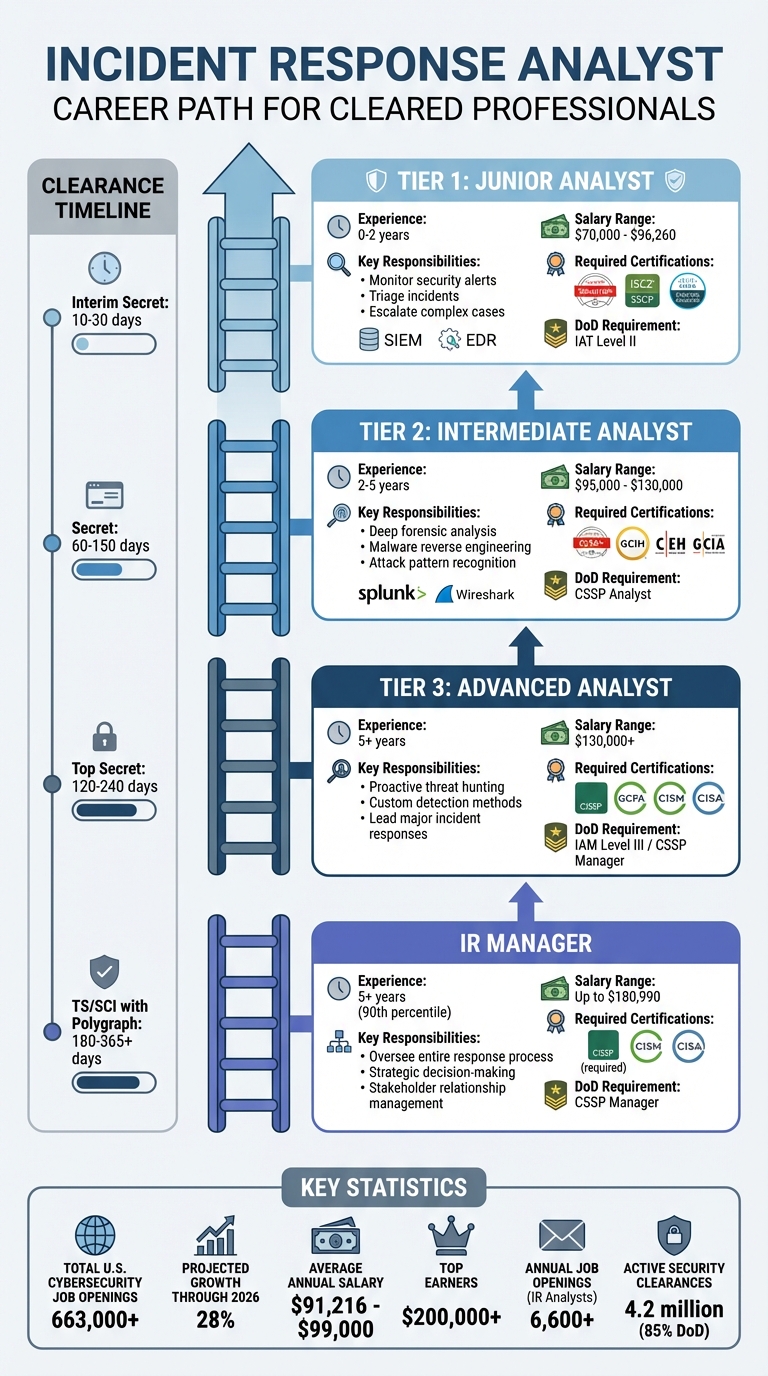
Incident Response Analyst Career Path: Tiers, Salaries, and Certifications

Incident Response Analyst Career Path: Tiers, Salaries, and Certifications

Main Duties of a Cleared Incident Response Analyst

Daily Tasks and Responsibilities

Cleared Incident Response Analysts are on the front line, monitoring classified networks with tools like Security Information and Event Management (SIEM) and Endpoint Detection and Response (EDR). Their goal? Spot unusual activity that might signal a breach [8, 10, 11]. When an alert pops up, they dig into its origins, pinpoint vulnerabilities, and act fast – whether that means isolating a compromised system or disabling an affected account [9, 11]. These steps are crucial for maintaining the integrity of classified environments.

Forensic analysis is another key part of the job. Analysts sift through system data, log files, and network traffic to piece together what happened during a breach and figure out what information was exposed [9, 10]. Collaboration is also essential. They work closely with IT teams, legal departments, and even law enforcement to ensure a coordinated response that meets regulatory standards [5]. In classified settings, every finding is meticulously documented to comply with frameworks like SOC 2 and ISO 27001 and to support post-incident reviews [8, 10]. The best Security Operations Centers aim to detect threats in under 15 minutes and respond to critical alerts within an hour [6].

Working With Classified Information

Handling classified data adds another layer of complexity. Analysts must follow strict Chain of Custody protocols, carefully documenting every step of evidence collection, transfer, and analysis to ensure it holds up in legal or governmental settings [8]. Tools like write-blockers are used to prevent accidental changes during data collection, and forensic images are verified with cryptographic hashes to maintain accuracy [8]. Organizations with advanced data classification systems report 68% fewer unauthorized data exposures, highlighting the importance of these processes [7].

Beyond technical work, analysts must communicate findings clearly to stakeholders. This involves translating complex technical details into straightforward explanations while adhering to notification rules based on the classification level of the data [14, 16]. As the field evolves, so do the skills and responsibilities required at different experience levels.

Job Levels in Cleared Incident Response

Careers in cleared incident response follow a structured path, with increasing responsibilities tied to technical expertise and the management of classified data.

  • Tier 1 (Junior) analysts: With 0–2 years of experience, these analysts handle initial tasks like monitoring alerts, triaging incidents, and escalating more complex cases. Salaries for this level range from $74,390 to $96,260 [10, 11].
  • Tier 2 (Intermediate) analysts: With 2–5 years under their belts, these professionals take on deeper forensic analysis, malware reverse engineering, and pattern recognition to identify attack methods [6].
  • Tier 3 (Advanced) analysts: With over 5 years of experience, these analysts focus on proactive threat hunting, crafting custom detection methods, and leading major incident responses [6].
  • IR Managers: At the senior level, managers oversee the entire response process, make strategic decisions, and maintain relationships with stakeholders. Those at the 90th percentile of experience can earn around $180,990 [8, 9, 10].

Each tier reflects a blend of technical skill and the ability to handle increasingly sensitive and complex responsibilities.

Required Skills, Education, and Certifications

Technical and Soft Skills

To excel as a cleared Incident Response Analyst, a blend of technical expertise and strong communication skills is essential. Analysts must have a solid grasp of network security and traffic analysis, including TCP/IP, networking ports, protocols, and the OSI model. Tools like Wireshark, Zeek (Bro), and Suricata are critical for identifying malicious traffic. Familiarity with SIEM platforms such as Splunk, IBM QRadar, ArcSight, and ELK Stack is also a must for real-time monitoring and correlating security events. Additionally, proficiency with endpoint detection and response tools strengthens analytical capabilities.

Digital forensics skills are another cornerstone of the role. Analysts rely on tools like Autopsy, FTK Imager, and Volatility to investigate compromised systems, recover evidence, and trace attacker activity. For advanced roles, knowledge of malware analysis becomes critical. This involves understanding malware behavior and reverse engineering it using tools like IDA Pro, Ghidra, or Cuckoo Sandbox. Command-line expertise in Unix/Linux and Windows system administration is also key for navigating large log files and connecting data points efficiently.

Beyond technical abilities, soft skills play a vital role. Critical thinking helps analysts break down complex attack scenarios, especially under classified conditions. Clear communication is equally important for creating reports that both technical and non-technical audiences can understand. These skills ensure that analysts can navigate the strict protocols tied to security clearances [9][2].

Education Options for Cleared Professionals

Most employers (70%) require a bachelor’s degree in Computer Science, Cybersecurity, or a related field [10]. Advanced degrees are often seen as an advantage. For cleared professionals, military service or federal government experience can provide an alternative pathway, offering both technical training and the necessary security clearances. This combination not only simplifies the clearance process but also builds a strong foundation in cybersecurity.

Practical, hands-on experience is equally important. Building a home lab to practice forensic techniques, participating in Capture the Flag (CTF) competitions on platforms like TryHackMe and Hack The Box, and contributing to open-source projects like TheHive, Wazuh, or Cortex are excellent ways to gain real-world skills. Many professionals begin their careers in entry-level roles such as Network Administrator or SOC Analyst (Tier 1), often spending 2–3 years in these positions before transitioning into Incident Response Analyst roles. With the cybersecurity field expected to grow by 28% through 2026 and an average annual salary for incident analysts around $99,000, the time and effort invested in education and training are well worth it [10].

Certifications for Each Career Stage

Certifications are a critical stepping stone, especially for those without traditional degrees. In fact, 70% of hiring managers prioritize certifications that validate job-specific skills [10][1].

  • Entry-level professionals (0–2 years, earning $70,000 to $95,000) should focus on certifications like CompTIA Security+, ISC2 SSCP, or Cisco CyberOps Associate, which align with IAT Level II under DoD 8570/8140 requirements.
  • Mid-level analysts (3–5 years, earning $95,000 to $130,000) benefit from certifications such as CySA+, GCIH, CEH, or GCIA, which emphasize incident detection and response. These map to CSSP Analyst roles.
  • Senior analysts (5+ years, earning $130,000 or more) are expected to pursue advanced certifications like CISSP, GCFA, GCFE, CISM, or CISA, which focus on forensic investigation and leadership. These certifications align with IAM Level III or CSSP Manager positions [9][10][1][2].

For Department of Defense (DoD) roles, candidates often start with a baseline certification but must achieve a CSSP-A level certification within 180 days of hire [2].

Additionally, scripting proficiency and familiarity with the NIST SP 800-61 guide are crucial for career advancement [11]. Combining certifications with practical experience and formal education creates a strong foundation for navigating the rigorous clearance process, which will be explored in the next section.

Getting and Maintaining Security Clearance

Clearance Levels and What They Mean

Security clearance isn’t just about access – it’s a cornerstone of many careers in government and defense. It’s required for roles that deal with classified networks and sensitive intelligence, and the level of clearance you hold dictates what systems you can use and which incidents you can investigate [13].

Here’s a breakdown of the main clearance levels:

  • Secret (Tier 3): Grants access to information that could cause serious harm to national security if disclosed. This level, common among Department of Defense (DoD) contractors, involves a National Agency Check with Law and Credit (NACLC) review.
  • Top Secret (Tier 5): Opens the door to information that could cause "exceptionally grave damage" to national security. It requires a Single Scope Background Investigation (SSBI), covering a detailed 10-year history.
  • Top Secret/Sensitive Compartmented Information (TS/SCI): The highest level, often required for intelligence and cyber threat roles. This clearance may include a polygraph and grants access to highly sensitive sources [13].

Currently, around 4.2 million government and contractor employees hold security clearances, with 85% of them working for the DoD [15][12]. Next, let’s dive into how these clearances are vetted and approved.

The Background Investigation Process

To get started, you’ll need a government agency or authorized contractor to sponsor your application after offering a conditional job based on a "need-to-know" basis [13][14]. Once sponsored, you’ll fill out the Standard Form 86 (SF-86) using the eApp platform, which replaced the older e-QIP system in 2026. This form requires extensive details about your last 10 years, including residences, jobs, foreign contacts, and financial history [13][18].

The Defense Counterintelligence and Security Agency (DCSA) handles the bulk – 95% – of federal background checks [13][16]. During the investigation, they’ll verify your employment, credit history, and criminal records, and they’ll interview references. For Top Secret clearances, the process goes deeper, with investigators speaking to neighbors, coworkers, and personal contacts.

Here’s how long it typically takes:

  • Interim Secret: 10 to 30 days
  • Secret: 60 to 150 days
  • Top Secret: 120 to 240 days
  • TS/SCI with polygraph: 180 to over 365 days [13]

"The SF-86 application process creates more problems when candidates hide information than the actual issues they try to conceal." – JOBSwithDOD [17]

Clearance denials happen most often due to financial issues (40%), followed by criminal conduct (24%) and dishonesty (15%) [17][18]. Certain factors will disqualify you outright, such as non-U.S. citizenship, illegal drug use (including marijuana, which remains federally illegal), dishonorable military discharge, or being declared mentally incapacitated [12][13].

This rigorous process directly ties into the career options available to you, as outlined below.

How Clearance Affects Your Career Options

Your clearance level doesn’t just define what you can access – it shapes your career path. High-level roles like Information Systems Security Officer (ISSO), Cyber Threat Intelligence Analyst, and Network Defense Forensics Analyst require active clearances [13]. If you leave a cleared position, your clearance becomes inactive after 24 months, but a new sponsor can reactivate it within that time [13].

Since 2026, the Trusted Workforce 2.0 (TW 2.0) framework has replaced periodic reinvestigations with Continuous Vetting (CV). This system keeps tabs on criminal records, credit issues, and foreign travel in real-time. It also requires you to self-report significant events like arrests, major debts, or financial changes. Not reporting such events is often seen as a bigger violation than the issue itself.

"A security clearance is a privilege, not a right. Mishandling classified documents can lead to criminal charges, job loss, and fines." – US Federal Contractor Registration (USFCR) [14]

Adjudicators also check publicly available information like social media, GitHub contributions, and other online activity to assess your judgment and operational security awareness [13][15]. Before applying, it’s wise to:

  • Pull your credit report and address any issues.
  • Review your social media privacy settings.
  • Compile a complete list of foreign contacts, including names and nationalities.

Honesty is critical on your SF-86. Disclosing past issues, like financial troubles or minor drug use, is often viewed more favorably under the "whole-person concept" than trying to hide them [13][15].

Clearance Level Investigation Tier Typical Scope 2026 Avg. Timeline
Secret Tier 3 5-10 year record verification; some interviews 60 – 150 Days
Top Secret Tier 5 10-year scope; in-person interviews 120 – 240 Days
TS/SCI Tier 5 + Polygraph Tier 5 scope plus specialized polygraph exam 180 – 365+ Days
Interim Secret N/A Initial fingerprint and database checks 10 – 30 Days

Finding Jobs and Building Your Network

Writing a Resume for Cleared Positions

When crafting a resume for cleared incident response roles, it’s crucial to balance showcasing your skills with maintaining operational security. Start with a clear and concise summary at the top. Highlight your years of experience, certifications, and specific incident response expertise. Skip the buzzwords and keep it factual – this isn’t the place for subjective self-praise [19][20].

Include a technical skills section that lists tools you’ve worked with, like SIEM platforms, intrusion detection systems, forensics software, and vulnerability scanners [21]. For your work history, use the STAR method (Situation, Task, Action, Result) to frame your accomplishments in measurable terms. For example, instead of saying "Handled security incidents", you could write, "Reduced detection time by 35% through automated SIEM correlation rules across 12 classified networks" [21].

Operational security is non-negotiable. Clearly state your clearance level and issuing agency at the top of your resume, but avoid mentioning classified project names, colleague identities, or sensitive budget details [19][20]. Also, be mindful of how much experience you highlight. Surprisingly, listing "30+ years of experience" can sometimes deter recruiters, who may interpret it as a sign of inflexibility or high salary expectations. Many cleared positions cap requirements at 10 years [19][20].

Keep your resume simple and streamlined – 1-2 pages max, with no graphics or shading that might confuse applicant tracking systems [19][20]. If you’re working toward certifications like CISSP or CEH, include them along with expected completion dates. This can sometimes satisfy a job requirement and prompt a recruiter to reach out [21].

"Your security-cleared resume is not a biography or a mere list of qualifications. It’s an ad designed to help you land that coveted cleared job interview…" – Ashley Jones, Editor, ClearedJobs.Net [19]

One more thing: don’t list your clearance on public LinkedIn profiles. While it’s essential for specialized job boards, displaying it publicly can be a red flag for some contractors [19][20]. Once your resume is polished, focus on connecting with recruiters through dedicated cleared job platforms.

Using Cleared Cyber Security Jobs for Your Search

Cleared Cyber Security Jobs

For those in the cleared community, using platforms tailored to your field can make job searching more efficient. Cleared Cyber Security Jobs is a veteran-founded job board designed exclusively for professionals like you. It connects incident response experts directly with employers offering cleared positions, cutting out staffing firms and third-party recruiters.

Upload your resume to the platform’s database so employers can find you directly. Set up job alerts to have relevant postings sent straight to your inbox. Use search filters to narrow results by clearance level (Secret, Top Secret, TS/SCI), location, and specific roles like "SOC analyst", "threat hunter", or "digital forensics."

Here’s a pro tip: stay active on the platform. Many cleared job boards prioritize the most recently active profiles in search results. Even if you’re not actively job hunting, logging in weekly keeps your profile visible to recruiters [23]. The platform also offers job fairs, providing a rare chance to meet employers face-to-face – a crucial advantage in the often discreet world of cleared hiring.

Networking in the Cleared Community

Building a network in the cleared world takes effort and strategy. Attending conferences like BSides, Black Hat, DEF CON, and RSA is a great way to meet peers and hiring managers. But the real magic often happens during "HallwayCon" – those informal chats between sessions [22]. If the cost of attending is a barrier, consider volunteering. Not only will you gain free access to sessions, but you’ll also build trust within the community and get valuable face time with industry leaders [22].

Another underused strategy is conducting informational interviews. Reach out to professionals whose careers you admire and ask for a brief conversation about their journey. These chats can lead to learning about job openings that never make it to public listings [22].

The secret to networking is staying engaged. It’s not a one-and-done activity. Keep in touch with your contacts, share articles they might find useful, and offer assistance when you can. An active approach to maintaining relationships ensures your network remains a valuable resource throughout your career. If your efforts seem to stall, it’s often because you’ve let those connections fade after the initial meeting [22].

"In the competitive field of cyber security, networking can be the key to unlocking new opportunities." – CyberSecJobs.com [22]

sbb-itb-bf7aa6b

Advancing Your Career in Cleared Incident Response

Choosing a Specialty Area

Once you’ve established a solid foundation in incident response, diving into a specialty can open doors to higher earnings and career growth. One intriguing path is malware analysis – breaking down malicious code to uncover its purpose, origin, and potential impact [26]. If you’re drawn to proactive measures, threat hunting lets you uncover hidden dangers before they escalate. Alternatively, incident readiness and resilience focuses on creating response plans, crafting playbooks, and running tabletop exercises to strengthen an organization’s defenses [25].

Your choice of specialty should align with your interests and long-term goals. For instance, if you enjoy unraveling complex technical puzzles, areas like malware analysis or digital forensics might be a great fit. On the other hand, if you’re inclined toward leadership, moving into incident response management could be the right move. This role involves overseeing teams, delivering threat assessments, and leading responses to major incidents [27]. For those who prefer staying hands-on, becoming a subject matter expert (SME) or engineer allows you to master advanced tools and techniques while avoiding management responsibilities [26].

Some specialized roles, such as Cyber Incident Response Analysts working in OT/ICS/SCADA environments, may involve travel – up to 25% in some cases [24]. Meanwhile, emerging fields like cloud incident response and AI security are gaining traction, supported by certifications like the AI Red Teamer (OSAI+) [26]. Companies like LevelBlue, which has handled over 9,000 incidents and conducted more than 1,000 tabletop exercises, are shifting focus from reactive responses to proactive readiness with offerings like "Resilience Retainers" [25].

Continuing Education and Skill Development

After narrowing down your specialty, staying ahead of the curve is crucial. The cybersecurity landscape evolves rapidly, so continuous learning is non-negotiable. Advanced certifications can help you maintain your edge. For example, the GIAC Certified Incident Handler (GCIH) is highly regarded for managing security events, while the Computer Hacking Forensic Investigator (CHFI) certifies expertise in evidence collection and maintaining a legal chain of custody [3][28]. For leadership roles, the CISSP is often a must-have for positions like Intrusion Detection Specialist or Incident Manager [27].

Certifications like the CHFI need to be renewed every three years, requiring EC-Council Continuing Education credits to stay valid [28]. But formal credentials are just one piece of the puzzle. Hands-on experience is equally important. Setting up a home lab with virtual environments lets you practice critical skills like monitoring, reverse engineering, and forensics without risking production systems [3]. You can also participate in Capture The Flag challenges or contribute to open-source projects to sharpen your abilities and build your professional reputation [3][26].

The field is expanding into areas like IoT forensics, cloud forensics, and mobile device encryption countermeasures [28]. With AI becoming integral to faster case triage and hybrid environments – spanning cloud, mobile, and operational technology – being the new norm [1][28], staying updated through webinars, industry publications, and community forums is essential.

Salary and Job Stability

Specializing and keeping your skills sharp naturally leads to better pay and job security. Cleared incident response roles are known for their strong financial rewards. As of September 21, 2023, the average annual salary for an Incident Responder in the U.S. was $91,216, with most professionals earning between $56,000 and $118,000 [26]. Top earners can take home over $136,000, while mid-level professionals with certifications like CHFI typically earn $70,000 to $120,000 [26][28]. Senior or highly specialized roles often command salaries ranging from $75,000 to over $130,000 [11].

Location plays a big role in compensation. For instance, jobs in the Washington, D.C. metro area often come with higher pay to offset the region’s higher cost of living. Transitioning from an entry-level role, such as Cybersecurity Specialist, to a mid-level role like Incident Response Analyst typically takes 2–3 years, with each step up bringing a noticeable salary bump [1].

Job stability in this field is exceptional. Cybersecurity threats are constant across industries like finance, healthcare, and government, ensuring that skilled professionals remain in demand [26]. Unlike some tech roles that can be outsourced or automated, incident response relies heavily on human expertise – especially when dealing with classified information. This makes it a reliable and resilient career path, highlighting the importance of specialization and lifelong learning for sustained success.

From NOC Analyst to Incident Response Analyst

Conclusion

Building a successful career as a cleared Incident Response Analyst requires a combination of technical expertise, strategic certifications, and effective networking. Mastering tools like SIEM and EDR is just the start – you also need the ability to explain complex findings clearly and calmly under pressure. As Hemant Patkar, CISSP, emphasizes:

Maintaining a calm demeanor is essential, ensuring clear and timely communication with all stakeholders who need to be informed [29].

Certifications play a crucial role in validating your skills and advancing your career. Start with beginner-level certifications like CompTIA Security+ or Cisco CyberOps Associate. As you gain experience, move on to intermediate options such as the Certified Ethical Hacker (CEH) and then pursue advanced credentials like GIAC GCIH or CISSP. These certifications not only demonstrate expertise but also pave the way to higher-paying roles [3][4].

With rapid changes in the cybersecurity landscape – highlighted by over 69% of professionals noting significant industry shifts [29] – staying ahead is critical. Hands-on practice through home labs, Capture the Flag challenges, and open-source projects can help sharpen your skills [3]. As Louis Eriakha from Techloy points out:

Incident response is one of the most in-demand roles in cybersecurity right now – and it’s only growing [4].

Networking is equally important. Platforms like Cleared Cyber Security Jobs connect you with employers who understand the unique requirements of cleared positions. With more than 6,600 incident analyst job openings annually and a projected 28% growth in cybersecurity roles [10], the field offers immense opportunities for those who continually invest in their skills and maintain their clearances.

Climbing the ladder from SOC Analyst to Senior Incident Response Lead demands dedication, but the rewards – both financial and professional – are well worth it. By staying curious, documenting your processes, and honing your ability to detect, contain, and recover from cyber threats, you position yourself as an indispensable asset in safeguarding national security.

FAQs

How do I move from SOC Tier 1 into incident response?

To move from a SOC Tier 1 position into incident response, you’ll need to strengthen your technical skills and expand your knowledge base. Start by earning certifications such as CySA+ or CISSP, which are highly regarded in the field. Focus on mastering areas like log analysis, threat detection, and digital forensics – these are core components of incident response work.

Practical experience is equally important. Get hands-on with tools like SIEM and EDR platforms, as these are essential for monitoring and responding to security incidents. Networking within your organization can also open doors; connect with colleagues in the incident response team to learn from their expertise. Finally, seek out specialized training programs to further hone your skills and prepare for the more advanced challenges of incident response.

What clearance issues most often delay or derail hiring?

Lengthy processing times are one of the biggest hurdles in hiring for security-cleared roles, with investigations often stretching out for 6–12 months or even longer. Backlogs in cases add to the delays, particularly when the investigations are more complex. Issues like drug use or financial concerns can make the process even slower, creating significant challenges for meeting hiring timelines.

Which certification should I get next for my tier?

The next certification that’s right for you depends on your career path and goals. If you’re aiming to grow in incident response or cybersecurity, the CISSP is a strong choice, especially for senior-level roles. For those looking to sharpen technical skills in threat detection, CySA+ is a great option. If you want to dive deeper, certifications like Security+ or CISSP can help you access higher-level opportunities. Choose certifications that align closely with your professional aspirations and current expertise.

Related Blog Posts

  • CIO-SP3 Cybersecurity Positions vs DISA Encore III – Which Vehicle Drives Your Career?
  • GRID Certification Career Guide for Cleared Incident Response
  • CySA Plus Certification Career Guide for Cleared SOC Analysts
  • SOC Analyst Career Path for Cleared Professionals Tier 1 to Lead

Related Guides

  • Endpoint Security Engineer Career Path for Cleared Professionals
  • Application Security Engineer Career Path for Cleared Professionals
  • Cloud Security Engineer Career Path for Cleared Professionals
  • TS/SCI Salary Premium: Real 2026 Numbers
  • Security Clearance Interview: What to Expect

SOC Analyst Career Path for Cleared Professionals Tier 1 to Lead

CyberSecJobs Editorial · March 7, 2026 ·

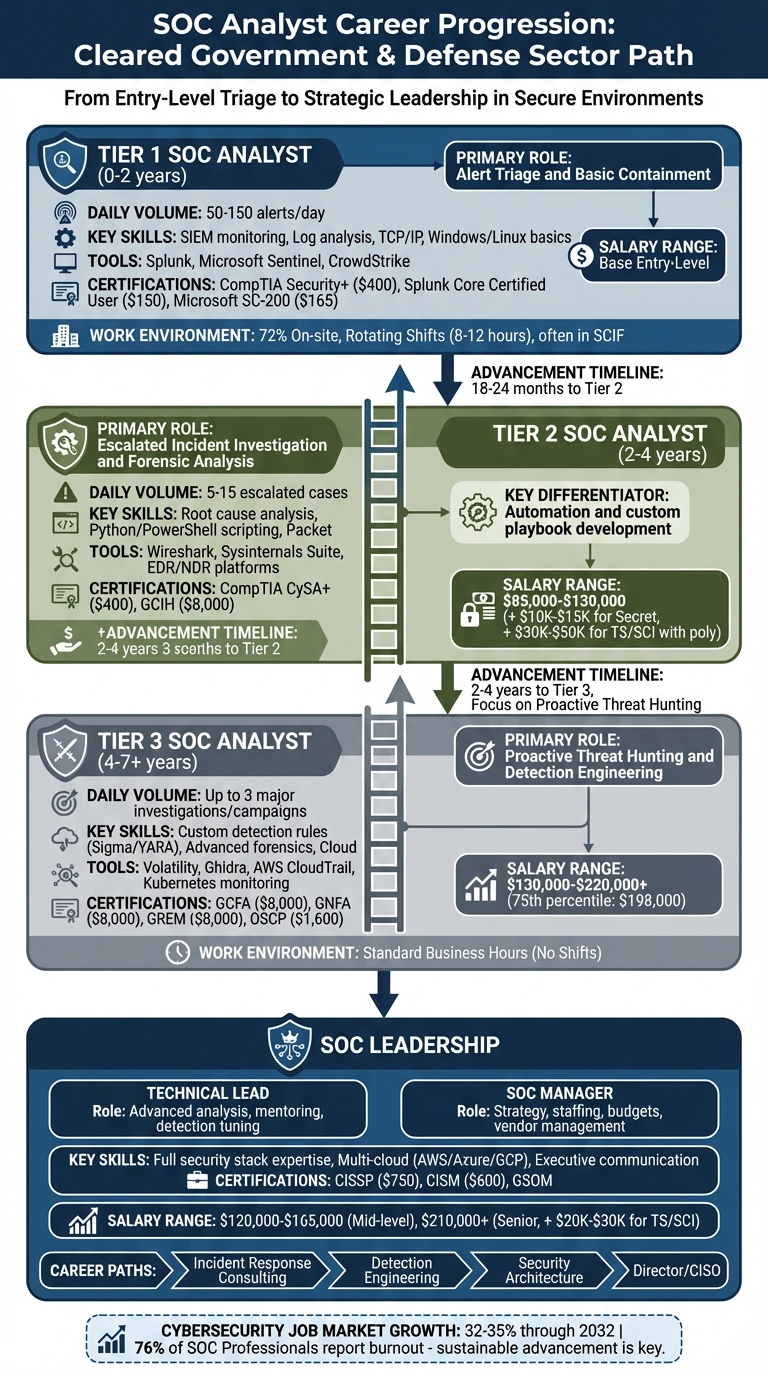
SOC analysts are the frontline defenders in cybersecurity, especially in U.S. government and defense sectors. Their work involves monitoring networks, analyzing threats, and responding to incidents in real-time. For professionals with security clearances, SOC roles offer structured career growth and substantial salary boosts – up to $50,000 more for those with a TS/SCI clearance and polygraph.

SOC teams are organized into tiers:

  • Tier 1 (0–2 years): Handles alert triage and basic containment.
  • Tier 2 (2–4 years): Investigates escalated incidents and performs forensic analysis.
  • Tier 3 (4–7+ years): Focuses on threat hunting and detection engineering.
  • Leadership roles: Oversee team operations and strategy.

Certifications like CompTIA Security+ (Tier 1), CySA+ (Tier 2), and CISSP (leadership) are critical for career progression. Analysts also benefit from technical skills like scripting (Python, PowerShell) and expertise in tools like Splunk and Microsoft Sentinel.

Key tips for advancing:

  • Automate repetitive tasks to showcase initiative.
  • Gain hands-on experience with SIEM tools and cloud security.
  • Build a portfolio of projects to highlight technical depth.

Cleared SOC roles are in high demand, with salaries ranging from $85,000 for Tier 2 analysts to over $200,000 for Tier 3 and leadership positions. High-performing SOCs aim for rapid detection and response times, making skilled analysts indispensable.

SOC Analyst Career Progression Path from Tier 1 to Leadership

SOC Analyst Career Progression Path from Tier 1 to Leadership

From Beginner to LEVEL 3 SOC Analyst in Cybersecurity

Required Skills and Certifications for Cleared SOC Analysts

To succeed in a cleared SOC (Security Operations Center) role, a combination of security clearance, technical expertise, and specific certifications is essential. Here’s a breakdown of what it takes to thrive in this field.

Understanding Security Clearance Levels

Security clearances are divided into three main categories, each granting access to different levels of sensitive information:

  • Confidential: Grants access to information that could harm national security if disclosed improperly[10].
  • Secret: Covers information that could cause serious harm and is commonly required for SOC analysts dealing with secure government networks[10][11].
  • Top Secret (TS): Protects information that could cause grave damage, requiring a Single Scope Background Investigation (SSBI)[10][11].

For those handling highly classified intelligence, a TS/SCI (Top Secret/Sensitive Compartmented Information) clearance is necessary. This level includes access to compartmented intelligence methods and sources[10].

The clearance process evaluates 13 factors, such as financial stability, foreign influence, and personal conduct[10][11]. In 2026, processing times for clearances varied:

  • Secret clearances: 60–150 days
  • Top Secret clearances: 120–240 days
  • TS/SCI with polygraph: 180–365+ days[11]

Under the Trusted Workforce 2.0 framework, periodic reinvestigations have been replaced by Continuous Vetting. This system monitors criminal records, credit reports, and foreign travel in real time. Applicants must self-report events like arrests, significant debts, or foreign contacts. Before applying through the eApp platform, it’s wise to:

  • Conduct a self-audit of financial records.
  • Resolve any credit issues.
  • Gather documentation for a 10-year history of residences, employment, and foreign contacts for the SF-86 form[11].

Once clearance requirements are met, the focus shifts to acquiring the technical skills needed for SOC roles.

Technical Skills Needed for Entry-Level SOC Work

At the Tier 1 level, analysts handle tasks like triaging alerts, monitoring SIEM (Security Information and Event Management) and EDR (Endpoint Detection and Response) platforms, and following playbooks for incidents like phishing or malware attacks[1][8]. Key skills include:

  • Networking basics (e.g., TCP/IP, DNS).
  • Familiarity with operating systems like Windows and Linux.
  • Log analysis using tools like Splunk, Microsoft Sentinel, and CrowdStrike[1].

Tier 2 analysts take on advanced investigations, such as root cause analysis, and use scripting languages like Python or PowerShell to automate tasks. Scripting expertise is often a stepping stone to higher roles[1][5].

At the Tier 3 level, responsibilities include proactive threat hunting, detection engineering (e.g., writing Sigma and YARA rules), and applying the MITRE ATT&CK framework[1][9].

For hands-on practice, platforms like TryHackMe, LetsDefend, and Security Onion offer simulations of real-world scenarios. Documenting these projects in a professional portfolio can help showcase your skills[6][9]. Additionally, specializing in a major SIEM tool – such as Splunk or Microsoft Sentinel – can boost your expertise and earning potential[1].

Entry-Level Certifications for Cleared SOC Careers

Certifications play a pivotal role in meeting job requirements and advancing your career. Here are some key certifications to consider:

  • CompTIA Security+: A must-have for entry-level roles, this certification is required for about 70% of SOC analyst positions and satisfies the DoD 8140/8570 IAT Level II requirement. Cost: approximately $400[1][6][7].
  • CompTIA CySA+: Ideal for Tier 2 roles, this certification focuses on behavioral analytics and threat detection. It also fulfills the DoD 8140 CSSP Analyst requirement. Cost: approximately $400[1][7].
  • Microsoft SC-200 (Security Operations Analyst): While not DoD 8140-compliant, this certification is highly regarded in organizations using Azure-based security tools, particularly for those working with Microsoft Sentinel. Cost: approximately $165[1].
Certification Career Level DoD 8140/8570 Relevance Approximate Cost
CompTIA Security+ Tier 1 / Entry IAT Level II $400
CompTIA CySA+ Tier 2 / Mid CSSP Analyst $400
Microsoft SC-200 Tier 1–2 / Specialist No (Vendor-Specific) $165

These certifications, combined with technical skills and clearances, form the foundation for a successful career in cleared SOC environments.

Tier 1 SOC Analyst: Entry-Level Cleared SOC Positions

Daily Tasks and Work Environment

As a Tier 1 SOC analyst, you’re the first responder in the world of cybersecurity, acting as the initial line of defense in a SOC (Security Operations Center). Your main job? Monitoring SIEM (Security Information and Event Management) dashboards – tools like Splunk, Microsoft Sentinel, or IBM QRadar – to sift through anywhere from 50 to 150 alerts a day[12]. The tricky part is separating true positives (real threats) from false positives (noise), all while working within tight timelines. High-severity alerts often require action within 15 to 30 minutes.

Every alert you handle gets logged in a ticketing system like ServiceNow or Jira. Your tasks include assessing the "blast radius" of an incident – figuring out which endpoints, user accounts, or networks are affected. Depending on the situation, you might resolve the issue yourself or escalate it to Tier 2. Basic containment steps, like blocking a malicious IP or isolating a compromised device, are carried out using pre-written playbooks.

If you’re working in a cleared environment, expect to be on-site in a SCIF (Sensitive Compartmented Information Facility), where personal devices are strictly off-limits. Shifts usually rotate in 8- or 12-hour blocks and often include nights, weekends, and holidays. Fully remote SOC positions are rare – only 6% of roles offer this flexibility, and for cleared positions, on-site work is even more common at 72%[1]. A typical shift involves a handover from the previous team, continuous alert monitoring, and thorough documentation.

"Tier 1 analysts are the triage nurses who assess every patient walking through the door and determine severity." – Nora Grace, Training Camp[13]

This demanding role sets the foundation for the skills and certifications essential to succeed as a Tier 1 analyst.

Skills and Certifications for Tier 1 Analysts

The CompTIA Security+ certification is often the starting point for Tier 1 analysts, but vendor-specific certifications can make you stand out. For example, the Splunk Core Certified User (costing around $150) highlights your ability to navigate one of the most popular SIEM platforms. Similarly, the Microsoft SC-200 certification (costing $165–$200) demonstrates expertise in Microsoft Sentinel environments[12][1].

Your day-to-day work will involve analyzing logs from firewalls, proxies, and endpoints to detect unusual activity. You’ll need to understand how SIEM correlation rules work, recognize what triggers alerts, and communicate your findings effectively – whether it’s to technical teams or non-technical stakeholders. Writing clear, concise incident summaries (usually five sentences) is just as critical as your technical skills[8].

Modern SOC environments are increasingly focused on cloud-native signals like AWS CloudTrail logs, Azure Activity Logs, and identity-based anomalies such as MFA (multi-factor authentication) issues. Familiarity with the MITRE ATT&CK framework is also crucial for categorizing adversary tactics and techniques during escalations[12][7]. With organizations facing an average of 4,484 alerts daily and 67% of them going uninvestigated due to alert fatigue, your ability to prioritize and triage effectively becomes a key asset[1].

Mastering these skills and certifications lays the groundwork for advancing into more challenging roles, like Tier 2 analyst positions.

How to Move from Tier 1 to Tier 2

Most analysts spend 18 to 24 months in a Tier 1 role before moving up to Tier 2[1]. The key to advancing is shifting from simply following playbooks to building automation tools. Learning Python or PowerShell is a game-changer, enabling you to automate repetitive tasks like creating shift reports or parsing VirusTotal API data. This not only shows initiative but also reduces the manual workload for your team[1][3].

Volunteer to take on escalated incidents to demonstrate your investigative skills. Documenting your approach to root cause analysis can highlight your ability to work independently. Additionally, maintaining a log to fine-tune noisy detection rules showcases leadership potential and your commitment to improving SOC efficiency[8].

"The jump from Tier 1 to Tier 2 is where many analysts stall. It’s not enough to be good at triaging alerts. You need to demonstrate investigative ability and technical depth." – Safwan Azeem, Advanced Cybersecurity & Management Certification[3]

To strengthen your qualifications, consider earning the CompTIA CySA+ certification (around $400) or specializing in areas like network forensics or malware analysis. Participating in incident post-mortems and tracking action items can also help you gain visibility with senior management[5]. High-performing SOCs aim for a Mean Time to Detect (MTTD) of under 15 minutes and a Mean Time to Respond (MTTR) of under 1 hour for critical alerts. Consistently meeting these benchmarks can fast-track your career progression[4].

Tier 2 and Tier 3 SOC Analysts: Mid-Level and Senior Positions

Tier 2: Advanced Analysis and Incident Response

Tier 2 analysts take on escalated incidents, diving deeper into investigations and coordinating containment strategies[2][12]. These analysts typically handle 5–15 escalated cases daily, focusing on detailed analysis rather than sheer volume[12]. A significant part of the job involves working with tools like SIEM, EDR, and NDR to piece together attack timelines and uncover the root cause of incidents. This often means identifying how attackers initially gained access and which systems were affected.

Expect to rely heavily on tools like Wireshark for packet inspection and the Sysinternals Suite for Windows analysis. While malware analysis is part of the role, especially for identifying known threats, more complex samples are usually escalated to Tier 3.

"Tier 2 is the escape hatch. Most burnout concentrates at Tier 1… The 1-2 year push to Tier 2 dramatically improves quality of life." – Cybersecurity Jobs List[1]

In the U.S., Tier 2 analysts earn between $85,000 and $130,000 annually[12]. Holding a Secret clearance can add $10,000–$15,000 to your salary, while a TS/SCI with polygraph may increase it by $30,000–$50,000[1]. Companies like Booz Allen Hamilton and Leidos actively hire for these roles, with Booz Allen offering salaries ranging from $88,000 to $201,000 for senior positions[1].

Tier 2 work serves as a stepping stone to Tier 3, where the focus shifts from reactive incident response to proactive threat hunting and detection engineering.

Tier 3: Threat Hunting and Detection Engineering

Tier 3 analysts take their expertise to the next level, focusing on anticipating and uncovering hidden threats rather than responding to alerts. This role, the highest technical level in a SOC, involves proactive threat hunting. Analysts look for signs of lateral movement or persistence mechanisms that automated systems might miss. Typically, Tier 3 analysts manage up to three major investigations or proactive campaigns daily[12].

Detection engineering is a core responsibility at this level. Analysts create custom detection rules using tools like Sigma or YARA while conducting advanced forensics with platforms such as Volatility and Ghidra[1]. In cloud-native environments, you’ll monitor AWS CloudTrail logs, Kubernetes pod activity, and other cloud-specific signals[4].

Salaries for Tier 3 analysts range from $130,000 to $220,000+, with the 75th percentile reaching $198,000 in total compensation[12][1]. These roles, which are significantly more expensive for organizations than Tier 1 positions, reflect the advanced expertise required. Unlike lower-tier roles, Tier 3 analysts often work standard business hours instead of shifts[12].

Mid-Level and Advanced Certifications

To move into Tier 2 roles, certifications like the CompTIA CySA+ (around $400) focus on behavioral analytics and threat detection[1]. For analysts working with Microsoft Sentinel, the Microsoft SC-200 (approximately $165) is a cost-effective option[1][3]. Another valuable certification is the GCIH (GIAC Certified Incident Handler), priced at about $8,000, which is often employer-sponsored due to its comprehensive approach to incident response frameworks like NIST and SANS PICERL[12].

Tier 3 roles demand more specialized certifications. Options like the GCFA (GIAC Certified Forensic Analyst), GNFA (GIAC Certified Network Forensic Analyst), and GREM (GIAC Certified Reverse Engineering Malware), each costing roughly $8,000, are highly regarded[12]. The OSCP (Offensive Security Certified Professional), priced at around $1,600, is another strong choice for developing an adversary mindset and enhancing threat-hunting skills[12]. Additionally, expertise in specific SIEM tools such as Splunk (featured in 37% of SOC analyst job postings) or Microsoft Sentinel (26% of postings) can command a higher salary premium than being a generalist[1].

sbb-itb-bf7aa6b

SOC Leadership: Lead Analyst and Manager Positions

What SOC Leads and Managers Do

SOC leadership typically splits into two paths: technical leads and managers. Technical leads focus on day-to-day operations, such as managing alert queues, mentoring junior team members, and being the go-to person for high-severity incidents[14]. They stay heavily involved in hands-on investigations, often diving into process trees, logs, and other forensic details during active incidents.

On the other hand, managers concentrate on the bigger picture – strategy and administrative responsibilities. Their work includes hiring, managing budgets, negotiating with vendors, and briefing executives on the organization’s security posture[14]. While technical leads fine-tune the SOC’s response to threats, managers ensure the team has the workforce, tools, and funding needed to thrive.

Feature Technical Lead SOC Manager
Primary Focus Advanced analysis & threat hunting Strategy, people, and budget
Daily Task Tuning detection rules & hunting Staffing, reporting, & vendor management
Primary Metric Detection coverage & accuracy MTTA, MTTR, & team retention
Stakeholders Tier 1/2 analysts & engineers CISO, Legal, HR, & Finance

A challenge faced by SOC managers is the high burnout rate among analysts. According to Splunk’s 2025 Global State of Security report, 52% of SOC analysts have considered leaving their jobs due to the overwhelming volume of alerts and urgent incidents[14]. To combat this, managers must prioritize sustainable shift schedules and monitor team well-being.

These two leadership roles demand distinct skill sets, paving the way for certifications and expertise that define top-tier SOC leaders.

Leadership Skills and Required Certifications

To excel in SOC leadership, you need a strong grasp of the entire security stack. This includes expertise in SIEM platforms like Splunk or Sentinel, SOAR tools such as Cortex XSOAR, and EDR/XDR solutions like CrowdStrike[14]. As many SOCs now operate in multi-cloud environments, familiarity with AWS, Azure, or GCP is increasingly valuable[14].

But technical skills are only part of the equation. Communication is just as critical. SOC leaders must translate complex incidents into language that executives can understand, focusing on business risks rather than technical jargon[14]. During major breaches, they often act as coordinators, aligning responses across legal, HR, and PR teams – a task sometimes referred to as "escalation diplomacy."

Certifications play a key role in building credibility. The Certified Information Systems Security Professional (CISSP) remains a top credential, costing about $750 and appearing in 47% of security management job postings[1]. The Certified Information Security Manager (CISM), priced at around $600, is particularly valued in governance-heavy roles[1]. For SOC-specific leadership, the GIAC Security Operations Manager (GSOM) certification is another strong option[5].

"Holding CISSP doesn’t guarantee promotion – but not holding any cert often guarantees you’ll be overlooked."

  • Safwan Azeem[5]

These certifications also meet DoD 8140/8570 requirements for management roles[15]. In the U.S., mid-level SOC managers with 5–8 years of experience typically earn between $120,000 and $165,000, with senior managers in major metro areas earning upwards of $210,000[14]. A TS/SCI clearance can boost these figures by an additional $20,000–$30,000[1].

Career Options Beyond SOC Operations

SOC leadership is more than just a job – it’s a launching pad for broader opportunities in cybersecurity. Many professionals leverage their experience to transition into specialized roles.

One common option is Incident Response Consulting, where experts help organizations navigate major breaches as external advisors[14]. Others move into Detection Engineering, a growing field focused on creating detection logic rather than reacting to alerts[1].

Another path is Security Architecture, where you can apply your understanding of threats to design stronger defensive systems[14]. For those aiming to climb even higher, SOC leadership can lead to positions like Director of Security Operations or even Chief Information Security Officer (CISO)[14].

At the senior level, success hinges on your ability to link technical work to business outcomes – whether you stay in the SOC or branch out into enterprise security roles.

Planning Your Cleared SOC Career Path

Using Job Listings to Identify Required Skills

Job postings can be a goldmine for understanding the skills needed to climb the SOC career ladder. For instance, SIEM tools appear in a whopping 82% of SOC job listings, while Python shows up in 24% of mid-level roles – hinting that scripting skills are a must for moving from Tier 1 to Tier 2[1]. When browsing job descriptions on Cleared Cyber Security Jobs, don’t just skim the basics. If a Tier 2 role mentions "automation" or "custom playbooks", it’s a signal to focus on automation skills. Similarly, mentions of AWS CloudTrail or Azure Activity Logs highlight the growing importance of cloud security expertise[4].

On top of technical skills, holding a security clearance can significantly boost your earning potential. A Secret clearance might add $10,000–$15,000 to your salary, while a TS/SCI clearance could mean an extra $20,000–$30,000. Combine these advantages with in-demand technical skills, and you’re setting yourself up for success[1].

Developing Skills and Choosing a Specialty

Breaking out of Tier 1 often means shifting from reactive tasks to proactive problem-solving. One of the quickest ways to advance is by automating repetitive tasks like shift reports, VirusTotal lookups, or indicator enrichment. Tools like Python and PowerShell can help you streamline these processes[1]. To showcase your skills, document your automation projects on GitHub – this portfolio can be a game-changer during interviews[8][18].

When it comes to specialization, most SOC career paths branch into three main areas:

  • Detection Engineering: Focus on mastering query languages like KQL (for Microsoft Sentinel) or SPL (for Splunk). Learn how to deploy detection rules using APIs and adopt "Detection-as-Code" practices[17].
  • Cloud Security: Dive into monitoring Kubernetes, serverless environments, and cloud audit logs to address the growing demand for cloud expertise[4].
  • Threat Intelligence: Hone your skills in researching adversary tactics and integrating that knowledge into detection systems[3].

Certifications can also fast-track your progress. For example, CompTIA CySA+ (around $400) is a great investment for moving from Tier 1 to Tier 2[1]. If you’re working with Microsoft Sentinel, the Microsoft SC-200 certification (about $165) is a cost-effective way to deepen your expertise[1][3]. For those aspiring to leadership roles, the CISSP certification (approximately $750) is highly respected, though it requires five years of experience[1].

While building your technical skills is vital, maintaining balance and avoiding burnout is equally important for long-term growth.

Preventing Burnout in SOC Roles

SOC roles can be demanding, with 76% of security professionals reporting burnout in 2025[1]. Transitioning to Tier 2 can often provide relief from the high-pressure environment of Tier 1 work.

Start by looking into shift schedules during interviews. SOCs offering 4×10 schedules (four 10-hour days with three days off) or 3×12 shifts can be more manageable compared to traditional rotating 8-hour shifts[1]. Defense contractors often provide more predictable schedules compared to MSSPs, where burnout tends to be more common[1].

Automation isn’t just a career booster – it can also lighten your mental load by reducing repetitive, mundane tasks[3]. Set aside time for deep, uninterrupted work away from the constant barrage of alerts. Volunteering for tasks like incident retrospectives can also help you build leadership visibility while giving you a break from the alert queue. Seek out mentors who have successfully navigated their way to Tier 3 or management roles – they can offer invaluable guidance[5][16].

If you start feeling burned out, address it early. Open communication can help you manage the situation while maintaining your visibility and keeping your career progression on track[5].

Conclusion: Building a Successful Cleared SOC Career

Climbing the ladder from a Tier 1 SOC Analyst to a leadership role in the SOC world takes more than just time. It’s about consistently sharpening your skills, making smart certification decisions, and fully leveraging the advantages of your security clearance. The typical career path involves excelling at alert triage, moving into incident response, mastering threat hunting, and eventually stepping into leadership positions.

The jump between tiers often hinges on specific skills. For example, developing automation expertise can help you move to Tier 2, while honing threat hunting capabilities is crucial for Tier 3 [1]. Leadership, on the other hand, demands a shift in focus – from hands-on technical tasks to managing teams and overseeing strategic goals [5].

Your security clearance isn’t just a qualification – it’s a major asset that can significantly boost your career and salary. A Secret clearance can add $10,000–$15,000 to your annual pay, while a TS/SCI with polygraph might increase it by $30,000–$50,000 [1]. With the cybersecurity job market expected to grow by 32% to 35% through 2032 [4][19], cleared professionals are well-positioned to secure high-paying, stable roles, especially in government and defense sectors that remain steady even during economic uncertainty.

"Security leadership doesn’t wait for permission. It moves forward when you do." – Safwan Azeem [5]

To stand out, focus on hands-on experience, earn progressively advanced certifications (like Security+, CySA+, and CISSP), and build a strong portfolio [8]. And don’t underestimate the importance of a sustainable work environment – better schedules and reduced repetitive stress are key to thriving in the long run [1].

FAQs

Do I need an active clearance to get hired?

Yes, most SOC analyst positions that require security clearances, like Secret or Top Secret, typically demand an active clearance. This is often a crucial qualification for these roles.

Which certification should I get first for Tier 1?

The CompTIA Security+ certification is an excellent starting point for anyone aiming to become a Tier 1 SOC analyst. It covers the basics of cybersecurity and is widely acknowledged as a standard entry-level credential for many jobs in the industry.

How can I move from Tier 1 to Tier 2 faster?

To move from Tier 1 to Tier 2 more quickly, concentrate on developing essential skills such as understanding systems, automating repetitive tasks, and crafting detection rules that go beyond just handling alerts. Certifications like Security+ or CySA+ can help demonstrate your technical abilities. Alongside this, connect with mentors, build relationships within your organization, and stay informed about cloud-native threats and the latest security tools. These steps can help you stand out and speed up your career progression.

Related Blog Posts

  • Top 10 Cyber Security Jobs for Cleared Professionals
  • Cleared Cyber Management Transition – From Technical to Leadership Roles
  • Python Cleared SOC Analyst Skills – The $20K Programming Premium
  • CySA Plus Certification Career Guide for Cleared SOC Analysts


Related Guides

  • Endpoint Security Engineer Career Path for Cleared Professionals
  • Application Security Engineer Career Path for Cleared Professionals
  • Cloud Security Engineer Career Path for Cleared Professionals
  • TS/SCI Salary Premium: Real 2026 Numbers
  • Security Clearance Interview: What to Expect

Leaving Cleared Positions – Exit Strategies That Preserve Your Options

CyberSecJobs Editorial · October 12, 2025 · Leave a Comment

Leaving a security-cleared cybersecurity role comes with unique challenges. Unlike regular job transitions, your clearance is a critical asset that requires careful planning to maintain. A poorly managed exit can lead to clearance lapses, strained relationships, and lost opportunities in a highly specialized job market.

Here’s what you need to know for a smooth transition:

  • Protect Your Clearance: Avoid gaps longer than 24 months between cleared roles to prevent reactivation delays or reinvestigations.
  • Strengthen Your Network: Build connections with colleagues, supervisors, and industry professionals. Many cleared roles are filled through referrals, not public listings.
  • Exit Professionally: Leave on good terms by providing proper notice, documenting ongoing work, and maintaining a positive attitude.
  • Plan Ahead: Anticipate contract cycles and use cleared job boards to find roles that align with your expertise and clearance.

A well-thought-out strategy ensures you maintain your clearance, uphold your reputation, and stay connected to future opportunities in the cleared cybersecurity field.

Security Clearances and Your Military Transition

Maintaining Your Security Clearance During Transitions

Your security clearance plays a crucial role in keeping your career opportunities open in cleared cybersecurity roles. It’s important to understand how transitions can impact your clearance status and take steps to ensure it remains valid. This approach helps maintain the career momentum we touched on earlier.

Understanding Clearance Expiration and Reactivation

When transitioning between jobs, you have a 24-month window to move into another cleared position before a full reinvestigation becomes necessary. Once this period passes, you’ll likely need to undergo the entire reinvestigation process to reactivate your clearance.

Avoiding Gaps That Could Impact Your Clearance

To avoid complications, aim to maintain continuous cleared employment during that 24-month period. Extended gaps in employment can trigger additional screenings or even require you to start the reinvestigation process from scratch.

Leveraging Cleared Job Boards

Once you’ve got a plan to keep your clearance active, the next step is finding the right role. Specialized job boards can be a valuable resource for identifying positions that align with your clearance. Platforms like Cleared Cyber Security Jobs connect you directly with employers who prioritize candidates with active clearances. Features such as job alerts and networking tools make it easier to find roles that allow for a smooth transition while safeguarding your clearance as a key career asset.

Building and Using Professional Networks

When transitioning between cleared cybersecurity positions, your professional network can be one of your greatest assets. The cleared cybersecurity community is relatively small, meaning the connections you cultivate can directly influence your career path. These relationships often lead to job referrals, insider tips about potential openings, and guidance from others who’ve successfully navigated similar transitions. Here’s how you can strengthen your network and make the most of it during this critical time.

Strengthening Connections Within the Cleared Community

Start by keeping in touch with colleagues, supervisors, and team members. These individuals know your work firsthand and can provide credible recommendations to prospective employers. Even when you’re not actively job hunting, it’s smart to check in with your contacts periodically to maintain those relationships.

Seek mentorship for valuable insights on timing your career moves and negotiating offers. This could be through formal mentoring programs offered by your employer or informal relationships you’ve developed on your own. Additionally, peer-to-peer networking with professionals at your level can help you stay informed about job openings and industry trends early in the process.

Attending Industry Events and Conferences

Networking isn’t limited to direct connections – it’s also about expanding your reach. Security-focused conferences like the RSA Conference, BSides events, and SANS conferences are excellent opportunities to meet cleared professionals from across the cybersecurity field. These gatherings provide a more casual setting to connect with potential employers or colleagues compared to formal interviews.

Government contractor events and meetups for cleared professionals are also worth exploring. Many cities with a strong defense contractor presence host regular events tailored to cleared professionals. These smaller, targeted gatherings often allow for deeper conversations and direct interactions with hiring managers.

For those unable to travel, virtual events have become an excellent alternative. Webinars and online networking sessions specifically designed for cleared professionals make it easier to connect, no matter where you’re located or what restrictions you face.

Joining Professional Organizations

Professional organizations are another powerful way to build and maintain your network. Groups like (ISC)² and ISACA offer local chapters and events that often cater to cleared professionals. These organizations frequently host networking opportunities and events tailored to your career needs.

If you have a military background, veterans’ organizations can be especially helpful. Groups such as Veterans in Security (VetsInSecurity) and Student Veterans of America professional chapters provide both networking opportunities and career transition resources.

For those with specialized skills, industry-specific associations can be invaluable. Whether you focus on incident response, penetration testing, or compliance, connecting with others in your niche ensures you stay informed and aligned with professionals who understand your expertise. These connections are particularly useful when seeking roles that require a mix of technical skills and security clearances.

Finally, platforms like Cleared Cyber Security Jobs can help you network beyond just submitting applications. With job fairs and networking tools, these platforms connect you directly with other cleared professionals and employers, opening doors to relationships that can benefit your career long-term.

sbb-itb-bf7aa6b

Securing Strong References and Recommendations

In the world of cleared cybersecurity roles, trust and credibility are everything. Because the cybersecurity community is so interconnected, your reputation can precede you. That’s why securing solid references from supervisors and colleagues who can attest to your technical expertise and professionalism is absolutely crucial.

Leaving on Good Terms

How you leave a job can have a lasting impact on your career. In cybersecurity, former colleagues often turn into key contacts or even future collaborators. A positive exit can lead to strong endorsements that play a significant role in advancing your career [1][2].

Stick to professional resignation practices. Follow your company’s protocol by notifying your manager and HR with a 2–4 week notice period – or longer, depending on your responsibilities. Be ready to explain your reasons for leaving, share your future plans, and discuss your availability for training or transitioning tasks [1].

Before you leave, take the time to update any manuals, guides, or procedures. Document ongoing projects, unresolved issues, and transition plans to ensure your replacement has everything they need to succeed [1]. This level of thoroughness not only boosts your reputation but also helps maintain your eligibility for cleared positions.

Finally, maintain a positive and professional attitude during your last weeks on the job. These efforts not only leave a lasting impression but also set you up to receive strong references that highlight your skills and work ethic.

Conclusion: Key Takeaways for a Smooth Transition

Leaving a cleared cybersecurity role requires more than just handing in your resignation. Every decision you make during this transition can influence your future career prospects, making it essential to approach your exit thoughtfully and strategically.

Keeping your security clearance active should be a top priority. Clearances can expire quickly when not in use, and reactivating them is often a lengthy process. To avoid unnecessary delays, consider securing a new cleared role before your current one ends.

Your professional network within the cleared community is another critical asset. Cybersecurity is a tightly connected field – today’s colleague could be tomorrow’s hiring manager or the reference that helps you land your ideal position. Nurturing these relationships is key to long-term success.

Attention to documentation and relationships also plays a major role in shaping your future opportunities. Properly transitioning your responsibilities, keeping detailed project records, and securing written recommendations show the kind of professionalism that employers value. These steps can strengthen the foundation of your career in the cleared sector.

The cleared cybersecurity job market favors those who plan ahead and keep their options open. By maintaining your clearance, expanding your network, and exiting with professionalism, you’re not just moving on to a new job – you’re laying the groundwork for a lasting career in the cleared community.

That next big opportunity could be closer than you think. Take the time now to turn every connection into a stepping stone for future success.

FAQs

What are the potential risks of letting your security clearance lapse during a career transition in cybersecurity?

Letting your security clearance expire during a job change can seriously affect your career. In the cybersecurity world, many roles tied to classified work demand an active clearance, and losing yours could shrink your job options. Plus, reactivating a lapsed clearance often involves a lengthy and expensive process, which might delay your next job opportunity.

To sidestep these issues, it’s essential to take steps to keep your clearance intact. This might mean quickly landing a new cleared role or finding temporary positions that help maintain your clearance. Staying proactive ensures you remain eligible for future opportunities in the cleared job market.

What are the best ways to use my professional network to find new opportunities in cleared cybersecurity roles?

To get the most out of your professional network, focus on forming real, meaningful connections with peers, mentors, and leaders in your industry. Attend events like conferences, webinars, and meetups to stay active and visible within the cleared cybersecurity community. Engaging in discussions and contributing to forums is another great way to share your insights and showcase your expertise.

Building strong relationships can lead to opportunities you might not find elsewhere, such as unlisted job openings, valuable mentorship, or guidance for long-term career growth. Keep in touch with former colleagues and supervisors – they can often provide referrals or recommendations that boost your credibility. Remember, networking isn’t just about landing the next opportunity; it’s about creating a reliable support system that helps you navigate your career path with confidence.

What should I do to leave a cleared cybersecurity position on good terms while keeping future opportunities open?

When stepping away from a cybersecurity position, it’s important to approach the process thoughtfully to maintain professionalism and keep future opportunities intact. Start by nurturing positive professional relationships – reaching out to industry contacts and broadening your network can be a big boost to your career trajectory. Additionally, make sure to keep your security clearance active, as it’s a key asset for roles within the cleared community.

As you prepare to resign, give sufficient notice, wrap up any pending tasks, and offer to assist with the transition process. Departing on good terms not only safeguards your reputation but also ensures that doors remain open for future roles in the cybersecurity world.

Related Blog Posts

  • Contract Recompete Job Security – Your 90-Day Survival Action Plan
  • GS to Contractor Transition – Timing Your Federal Exit for Maximum Value
  • Switching Cleared Contractors – The Strategic Jump for 20% More Salary
  • Cleared Resume OPSEC Guidelines – What NSA Says You Can and Can’t Say

Related Guides

  • TS/SCI Salary Premium: Real 2026 Numbers
  • Security Clearance Interview: What to Expect

Cleared Career Planning – Building Your 5-Year Strategic Roadmap

CyberSecJobs Editorial · October 11, 2025 · Leave a Comment

Planning a cybersecurity career with a security clearance requires more than technical skills – it demands a clear, forward-looking strategy. This 5-year roadmap helps you navigate the unique challenges of cleared roles while aligning your goals with industry trends and regulatory requirements. Here’s what you need to know to build a successful plan:

  • Why Planning Matters: Cleared roles require continuous employment to maintain your clearance, making long-term planning essential. The tight-knit cleared community also emphasizes reputation and relationships.
  • Impact of Clearance Levels: Higher clearance levels unlock advanced roles but come with added requirements and challenges like relocation or limited public sharing of work.
  • Setting SMART Goals: Use Specific, Measurable, Achievable, Relevant, and Time-bound goals to focus your efforts on certifications, skills, and career milestones.
  • Key Skills and Certifications: Cloud security, threat detection, and DevSecOps are in high demand. Certifications like Security+, CISSP, and GCIH can boost your qualifications.
  • Networking and Development: Attend cleared-specific events, engage in mentorship, and pursue continuous learning through hands-on activities and vendor training.
  • Creating Your Roadmap: Break your 5-year plan into yearly milestones for certifications, roles, and skill-building. Regularly review and update your plan to stay aligned with industry changes.

This roadmap ensures you stay competitive, grow your expertise, and protect your clearance while advancing in the cybersecurity field.

(How To Get A Cleared Job) – Security Clearance

Setting Your 5-Year Career Goals

Building meaningful career goals takes careful planning. For cleared professionals, every step matters – not just for career growth but also to maintain your clearance. Having clear, strategic objectives can guide your decisions over the next five years, whether you’re pursuing certifications or targeting specific roles. Without a solid roadmap, you risk bouncing between opportunities instead of achieving focused, long-term success.

Creating SMART Goals for Cleared Careers

The SMART framework is a practical way to turn vague ambitions into actionable plans. It stands for Specific, Measurable, Achievable, Relevant, and Time-bound, ensuring your goals are clear and realistic [1][2].

  • Specific goals leave no room for guesswork. Instead of saying, "I want to grow in cybersecurity", aim for something precise, like moving from a SOC analyst to a senior incident response specialist who handles advanced persistent threats in government networks. This clarity helps you identify the exact skills, certifications, and experience needed.
  • Measurable goals let you track your progress with concrete benchmarks. For example, instead of saying, "I want to improve my technical skills", you could set a goal to complete hands-on incident response simulations every quarter or achieve specific performance metrics in your current role.
  • Achievable goals are realistic, considering your current clearance level, location, and other commitments. For instance, if you hold a Secret clearance but aim for roles requiring Top Secret access, plan for the time it takes to secure a clearance upgrade.
  • Relevant goals align with both your personal interests and industry needs. For example, cloud security and threat detection are highly sought-after specialties projected to grow through 2026 [3]. If you enjoy solving technical puzzles, these areas could be a great fit. On the other hand, if you’re more drawn to compliance and structured problem-solving, governance, risk, and compliance roles might suit you better.
  • Time-bound goals set clear deadlines to keep you on track. Break your five-year vision into smaller milestones, such as earning an entry-level certification first, then working toward leadership roles or advanced credentials over time.

Finding Your Target Roles and Career Path

Start by mapping your skills to the roles you’re interested in through honest self-assessment and market research. Tools like the NIST NICE Framework and CyberSeek Career Pathway Tool can help you align your current skills with specific job opportunities [3].

Evaluate your technical skills to guide your planning. For example, if you’re experienced with SIEM tools, log analysis, and basic scripting, you might aim for senior analyst roles or specialized positions in threat hunting. If you’re skilled at communication and enjoy mentoring, roles in security awareness or compliance could be a better match.

Consider how your interests align with market trends. Fast-growing areas like DevSecOps and threat intelligence require both technical know-how and strategic thinking. If you prefer more established processes, roles in network security or risk assessment might be a better fit.

Your clearance level is another critical factor. Higher clearances, such as Top Secret or SCI, open doors to specialized roles in intelligence, defense contracting, and critical infrastructure protection. If you currently hold a Secret clearance, research roles that require higher clearance levels and plan for the time it takes to upgrade.

Geographic flexibility can also shape your career path. Many senior cleared positions are concentrated in areas like Washington, D.C., and Colorado Springs. If relocating isn’t an option, focus on remote-friendly roles or specializations that support distributed teams.

Balance your planning between short-term and long-term goals. Short-term objectives might include earning an entry-level certification, setting up a home lab for hands-on learning, or attending local cybersecurity meetups to expand your network [3]. Long-term goals could involve transitioning into cloud security architecture, leading an incident response team, or earning advanced certifications – achievements that typically take years of dedicated effort.

Job leveling matrices can serve as a helpful guide for career progression. These frameworks outline the skills, competencies, and experience needed at each level, from entry-level analyst to executive roles. Use them to identify gaps in your profile and create targeted development plans.

Keep in mind that cleared cybersecurity careers often take non-linear paths. Your five-year plan should be flexible enough to adapt to unexpected opportunities, industry changes, and personal growth, while still providing a clear framework to guide your decisions.

Understanding Industry Trends and Required Skills

The world of cybersecurity is constantly shifting, and staying ahead of emerging trends is crucial for cleared professionals aiming to remain competitive. Knowing where the industry is headed allows you to make informed decisions about which skills to sharpen and which certifications to pursue. This insight becomes even more important when mapping out a five-year career plan, as today’s in-demand skills may evolve into tomorrow’s essentials. Let’s take a closer look at the trends shaping the field and how they influence the skills and certifications you’ll need.

Current Cybersecurity Workforce Trends

The cybersecurity workforce is experiencing rapid growth, fueled by the rise in cyber threats and the ongoing digital transformation. For cleared professionals, this expansion presents a wealth of opportunities, especially for those adept at navigating both technical challenges and stringent security protocols.

The migration to cloud platforms like AWS, Microsoft Azure, and Google Cloud is a major trend. This shift is driving demand for expertise in cloud security architecture, identity access management, and compliance frameworks. For professionals with security clearance, this is especially relevant as government agencies and defense contractors increasingly adopt cloud-first strategies while adhering to strict security standards.

Another key trend is the heightened focus on threat detection and incident response. Organizations are prioritizing these areas to combat threats like ransomware, phishing, and zero-day exploits. Cleared professionals skilled in analyzing security logs, responding to breaches, and performing root cause analyses are highly sought after. These capabilities are essential for mitigating attacks in real time and ensuring long-term security.

DevSecOps is also transforming the field by embedding security into every phase of development. This evolution opens doors for cleared professionals who can bridge the gap between development teams and security requirements, particularly in government contracting environments.

Regulatory compliance remains a critical area, with organizations navigating frameworks like GDPR, HIPAA, CCPA, and SOC 2. For cleared professionals, expertise in government-specific compliance and risk management processes can provide a distinct advantage.

These trends directly shape the technical skills that will be most valuable in the years ahead, offering a roadmap for aligning your career goals with industry needs.

Top Skills and Certifications for Cleared Roles

Technical know-how is the backbone of a successful cybersecurity career, but the skills in demand are constantly evolving. A combination of technical expertise and soft skills can significantly influence your career trajectory over the next five years.

Here are the key skills to focus on:

  • Cloud Security Expertise: Cloud security remains one of the most in-demand skills. This includes a deep understanding of cloud security architecture, identity access management, and compliance frameworks. Professionals who can secure cloud migrations and prevent data breaches are especially valuable.
  • Threat Detection and Incident Response: Skills in using SIEM tools and mitigating ransomware are critical for cleared roles. The ability to respond in real time and conduct thorough root cause analyses is a standout quality in government and defense cybersecurity operations.
  • Network Security: Designing, monitoring, and securing networks is fundamental. This includes expertise in firewalls, VPNs, intrusion detection systems, and zero-trust models. Preventing DDoS attacks and safeguarding sensitive data are key responsibilities.
  • Application Security and DevSecOps: Specialization in secure software development is increasingly important. Experience with secure coding, penetration testing, OWASP standards, and CI/CD pipelines can open doors to specialized roles.
  • Regulatory Compliance Knowledge: Understanding cybersecurity regulations and data privacy frameworks can give you an edge, especially when aiming for leadership roles.
  • Ethical Hacking and Penetration Testing: Practical experience in vulnerability scanning and exploit simulation is highly valued. Identifying weaknesses before they’re exploited is critical for protecting infrastructure.

In addition to technical skills, analytical and problem-solving abilities are indispensable. The capacity to interpret security logs, assess emerging threats, and develop actionable strategies is particularly important in high-stakes environments.

Certifications also play a pivotal role. A foundational certification like Security+ is often a baseline requirement, while advanced credentials such as CISSP signal readiness for senior roles. Specialized certifications in incident response, like those from EC-Council or SANS GIAC, can further boost your qualifications for roles focused on threat detection and response.

Keeping your certifications up to date and staying informed about best practices will ensure you remain competitive in the fast-paced world of cleared cybersecurity throughout your five-year career journey.

sbb-itb-bf7aa6b

Using Certifications, Networking, and Professional Development

Building a successful cleared cybersecurity career requires a thoughtful approach to certifications, networking, and ongoing learning. These three elements not only open doors but also validate your skills and help you stay competitive in a rapidly evolving field.

Choosing the Right Certifications

Certifications are a cornerstone of any cybersecurity career, but not all certifications are created equal – especially in the cleared community. It’s crucial to align your choices with your career goals, available resources, and the time you can commit. For those just starting out, foundational certifications like Security+ are a great entry point. As you gain experience, you can pursue advanced credentials such as CISSP, GCIH, CCSP, or CISM, which are highly regarded and can propel you into more senior roles. A step-by-step approach – starting with basics and moving toward advanced certifications – ensures you’re building the right foundation for long-term success.

Building Your Network in the Cleared Community

Networking within the cleared community requires a targeted strategy. Industry events like the RSA Conference, BSides, and specialized cleared cybersecurity gatherings are excellent venues to meet peers, stay informed about trends, and discover job opportunities. Professional associations such as ISACA, ISC², and SANS offer access to webinars, special interest groups, and mentorship programs that can lead to valuable connections and referrals. Cleared-specific job fairs are another key resource, providing direct access to recruiters and hiring managers who understand the clearance process.

Online platforms also play an important role. For instance, Cleared Cyber Security Jobs connects cleared professionals with employers and offers resources to expand your network. Don’t underestimate the power of alumni networks from your military service, past employers, or educational institutions. These connections often provide unique insights and opportunities that are hard to find elsewhere. Strengthening these relationships complements your professional growth and opens doors to new possibilities.

Advancing Through Professional Development

Continuous learning is essential for staying ahead in cybersecurity. Incorporating vendor-specific training from Microsoft, AWS, and Google Cloud into your development plan keeps your skills sharp and relevant. Trusted organizations like SANS and Cybrary offer regular webinars that allow you to explore emerging threats and technologies at your own pace. Many employers also provide internal training tailored to their specific tools and processes, so take full advantage of these programs.

Hands-on activities, such as Capture the Flag competitions, not only enhance your practical skills in areas like threat detection and incident response but also provide opportunities to connect with other professionals. Staying informed through professional reading – drawing from reputable industry sources – helps you keep up with the latest trends and challenges. Additionally, mentorship can be transformative. Learning from seasoned professionals and mentoring others not only deepens your expertise but also broadens your perspective.

Documenting your professional development efforts is equally important. Keeping a record of certifications, training, and other activities not only supports credential renewals but also demonstrates your commitment to growth during performance reviews and job interviews. This proactive approach ensures you remain a strong candidate in a competitive field.

Creating and Managing Your 5-Year Roadmap

Once you’ve outlined your SMART goals and strategic plans, the next step is to put it all together into a practical 5-year roadmap. This roadmap will serve as your guide, combining your objectives, industry knowledge, and certification plans into a clear, actionable timeline.

Building Your Personal 5-Year Roadmap

To create a roadmap that works, break your long-term goal into smaller, yearly milestones. Think of each year as a stepping stone toward your ultimate objective. For instance, if your aim is to become a Chief Information Security Officer (CISO) at a federal contractor, your plan might include earning a CISSP certification in the first year, landing a senior analyst role in the second, and taking on management responsibilities by the third.

Start by drafting a simple spreadsheet or document that outlines your goals for each year. Include columns for certifications to complete, roles to target, salary goals, networking objectives, and skill-building priorities. Be realistic about timelines – advanced certifications often take 6–12 months, and job transitions can require 3–6 months, especially in industries with lengthy security clearance processes.

A visual timeline can also help you see how different elements – like certifications, networking, and job experience – overlap. For example, you might work on a certification while attending industry events and gaining hands-on experience in your current role. This approach helps you stay focused while also identifying ways to speed up your progress.

Don’t forget to account for clearance upgrades, which can take 12–18 months, and plan for ongoing education to maintain certifications alongside new learning goals.

Once your roadmap is set, make it a habit to review and update it regularly.

Regular Reviews and Updates

Your roadmap isn’t something you create once and forget about – it should evolve with you and the industry. Set aside time every quarter to review your progress and make adjustments as needed. During these reviews, check whether your goals still align with your priorities and the current job market.

Stay flexible to adapt to industry changes. For example, the rise of cloud security and zero trust architectures has opened up career paths that didn’t exist a few years ago. Keep up with these trends by reading industry news and engaging with peers, and adjust your roadmap to take advantage of new opportunities.

Personal changes, like a family move, a shift in clearance status, or an unexpected job offer, might also require you to revisit your plan. The key is to stay adaptable while keeping your momentum.

Track short-term activities, like the hours you spend networking or training, instead of focusing only on big outcomes like promotions. These smaller metrics can signal whether you’re on the right track and help you address issues before they become bigger obstacles.

After each review, document your progress to keep a clear record of your achievements.

Recording Your Progress and Milestones

Keeping a detailed record of your accomplishments is crucial for performance reviews, job interviews, and security clearance renewals. A well-maintained career portfolio can set you apart when opportunities arise.

Create a master document to log all your professional achievements. Include dates for certifications, projects you’ve led, measurable results you’ve delivered, and any recognition you’ve received. For each entry, provide context, describe your role, and explain the impact on your organization. This level of detail turns simple bullet points into compelling career stories.

Don’t overlook your networking efforts. Track the industry events you’ve attended, relationships you’ve built, and mentoring roles you’ve taken on – whether you were the mentor or mentee. This not only highlights your professional growth but also helps you identify gaps in your network.

Keep your professional profile updated on platforms like Cleared Cyber Security Jobs. Regular updates showcase your growing expertise and can attract potential employers while reinforcing your value in the field.

Consider wrapping up each year with a career summary that highlights your biggest accomplishments, lessons learned, and goals for the next year. This reflection can reveal patterns in your growth and help you craft a cohesive story about your professional journey. Many professionals find that connecting the dots between seemingly unrelated experiences strengthens their overall career narrative.

Conclusion: Reaching Long-Term Career Success

Achieving lasting success in the cleared cybersecurity field goes beyond mastering technical skills – it requires strategic planning, adaptability, and leveraging the right tools to tackle the unique challenges of this niche industry. Your 5-year roadmap serves as a critical guide, giving you an edge in a space where security clearances and specialized expertise create both opportunities and obstacles.

The pace of this field demands that you stay ahead of the curve. The cleared cybersecurity market evolves rapidly, with new threats and shifting government priorities shaping the landscape. Professionals who plan ahead are better positioned to take advantage of these changes. For example, when agencies focus on zero trust architecture or cloud security, those with the foresight to develop relevant skills and certifications can step into leadership roles while others scramble to catch up.

Ongoing learning is one of the most powerful investments you can make. Every certification you earn, every relationship you build, and every skill you refine contributes to your long-term growth. A certification like CISSP, earned early in your career, can open doors to senior positions within just a few years. Similarly, connections made at industry events can lead to unexpected opportunities down the road. These efforts compound over time, creating a foundation for sustained success.

Your professional network amplifies these gains even further. Relationships within the cleared cybersecurity community become increasingly valuable as your career progresses. A peer you meet today could become the hiring manager for a future role, or a government client you assist early on might recommend you for an executive position later. These connections, built on mutual trust and shared experiences, often unlock opportunities that traditional job searches cannot.

Platforms like Cleared Cyber Security Jobs play a pivotal role in connecting you with employers who value your clearance and are committed to your professional development. These platforms are tailored to the unique needs of cleared professionals, linking you directly to roles that align with your skills and goals.

Your roadmap isn’t set in stone. Goals may shift as new technologies emerge or as your personal priorities evolve. The key is to maintain forward momentum while staying flexible enough to embrace unexpected opportunities. Regularly reassessing your plan ensures that you remain focused on clear objectives, even if the path takes unexpected turns.

Success in the cleared cybersecurity field isn’t just about achieving a specific title or salary. It’s about cultivating a career that delivers professional satisfaction and the ability to adapt to an ever-changing environment. By combining thoughtful planning, consistent effort, and the right resources, you position yourself to thrive no matter what challenges or opportunities come your way. Your 5-year roadmap is just the beginning of a fulfilling and dynamic career journey.

FAQs

How can I use SMART goals to advance my career in cleared cybersecurity?

Using the SMART goals framework is a practical way to chart a clear course for advancing your career in cybersecurity. The idea is to set goals that are Specific, Measurable, Achievable, Relevant, and Time-bound. For instance, you could decide to earn a certification like CISSP within the next 12 months. Alternatively, you might focus on honing your expertise in a particular area, like threat analysis, by completing specialized training and hands-on projects within a defined period.

It’s important to revisit your goals regularly to ensure they still align with the latest industry developments and the needs of your organization. This habit not only helps you stay on track but also prepares you for long-term success in a field that’s constantly changing. By committing to ongoing learning and professional growth, you’ll remain competitive and well-positioned to reach your career objectives.

What key skills and certifications should I focus on to advance my career in cleared cybersecurity?

To advance in the cleared cybersecurity field, it’s essential to hone in-demand skills like cloud security, threat detection, network defense, and data protection. These areas are becoming increasingly important as the industry continues to adapt to new and evolving threats.

When it comes to certifications, focus on earning well-recognized credentials such as CISSP, CISA, CISM, CompTIA Security+, CEH, and CCSP. These certifications not only showcase your technical know-how but also highlight your leadership capabilities, positioning you as a strong contender for future roles. Keeping up with industry trends and aligning your expertise with employer expectations will help secure a lasting and successful career in the United States.

How can I adjust my 5-year career plan if unexpected changes arise in the cybersecurity field or my personal life?

Adjusting your 5-year career plan means staying open to change and being ready to make proactive updates. Regularly revisit your goals to ensure they align with shifts in the industry or changes in your personal life. Keep up-to-date with developments in cybersecurity, whether it’s emerging technologies or the latest in-demand skills, and tweak your plan to reflect these changes.

Focusing on building a broad skill set and earning relevant certifications can help you move into new roles or specialties as opportunities arise. At the same time, nurturing a strong professional network can provide valuable connections and insights, helping you stay ahead of the curve. By remaining flexible and planning with the future in mind, you can navigate unexpected challenges while keeping your career on course.

Related Blog Posts

  • Contract Recompete Job Security – Your 90-Day Survival Action Plan
  • Cleared Cyber Management Transition – From Technical to Leadership Roles
  • SES Cybersecurity Positions – Your Path to Senior Executive Service
  • AI Security Clearance Jobs – Get Ahead of the Emerging Threat Landscape

Related Guides

  • TS/SCI Salary Premium: Real 2026 Numbers
  • Security Clearance Interview: What to Expect
  • « Go to Previous Page
  • Go to page 1
  • Interim pages omitted …
  • Go to page 4
  • Go to page 5
  • Go to page 6
  • Go to page 7
  • Go to page 8
  • Interim pages omitted …
  • Go to page 10
  • Go to Next Page »
  • Facebook
  • Instagram
  • LinkedIn
  • Twitter
  • YouTube

Cleared Cyber Security Jobs | CyberSecJobs.com

  • Contact
  • About
  • Privacy Policy