

Crafting a resume as a security-cleared professional requires careful attention to Operational Security (OPSEC). Sharing too much can risk national security, while being too vague may hurt your chances with employers. Here’s what you need to know:
- What to Avoid: Never include classified details, mission specifics, facility names, or personal/colleague information. Even vague references to sensitive programs can pose risks.
- What to Include: Stick to general job titles, unclassified role descriptions, and measurable achievements. Clearly state your clearance level (e.g., "Top Secret/SCI") and its current status.
- Best Practices: Review your resume for OPSEC compliance. Avoid clearance ID numbers, investigation timelines, or agency-specific details. Focus on skills, certifications (e.g., CISSP, Security+), and general technologies.
Key Tip: Employers value your ability to handle sensitive information responsibly. A well-crafted, OPSEC-compliant resume not only protects your clearance but also demonstrates professionalism.
For job seekers, platforms like Cleared Cyber Security Jobs offer secure tools, vetted job postings, and resources tailored to cleared professionals, ensuring your career growth stays aligned with OPSEC standards.
NSA OPSEC Requirements for Resumes
What is OPSEC in Resume Writing?
Operational Security (OPSEC) in resume writing is all about safeguarding sensitive information while showcasing your qualifications. For individuals with security clearances, even seemingly minor details can unintentionally reveal patterns or information that could compromise national security. Every element of your resume – like job titles or project descriptions – needs to be carefully reviewed to ensure nothing sensitive slips through.
Federal Rules and Clearance Requirements
Federal guidelines explicitly prohibit cleared professionals from including sensitive or classified information in public documents, such as resumes. Breaking these rules can put your security clearance, and even national security, at risk. Legal frameworks, including the Espionage Act, emphasize the seriousness of maintaining confidentiality when handling national defense information. Violations of these rules come with severe consequences.
What Happens When You Break OPSEC Rules
Failing to follow OPSEC guidelines can have immediate and severe consequences. The most direct impact is often the loss of your security clearance, which can end your ability to work on classified projects. For civilians and contractors, such breaches might lead to immediate termination and even civil penalties.
The legal consequences can be equally harsh. Under the Espionage Act, unauthorized disclosure of national defense information can result in significant fines or even imprisonment [2].
Real-world examples highlight the seriousness of these violations. For instance, in 2017, NSA contractor Reality Winner was sentenced to over five years in prison for leaking a classified report [2]. Military personnel who violate OPSEC rules face penalties under the Uniform Code of Military Justice, which can include non-judicial punishment, loss of rank or pay, additional duties, confinement, or, in extreme cases, a court-martial [2].
where to put #securityclearance on your #resume
Information You Cannot Include on Your Resume
When crafting your resume, adhering to NSA OPSEC standards is non-negotiable. These guidelines are in place to ensure operational security and protect sensitive information. Understanding what to leave out is just as important as knowing what to include. Federal regulations, including those from the NSA, emphasize the importance of keeping classified and sensitive details off your resume. Here’s what you need to avoid to safeguard your clearance.
Classified and Sensitive Program Details
Your resume must not include any information about classified missions, technologies, operations, or high-level programs. Even vague references to these areas can pose a security risk [1]. For instance, avoid mentioning specific facility names or details tied to mission objectives. Instead, describe your responsibilities and achievements in broad, unclassified terms. This approach ensures you highlight your skills without risking sensitive disclosures.
Facility or Mission Information
It’s critical to leave out facility names or mission-specific information from your resume. Including such details can inadvertently expose sensitive aspects of your work. Resume.io offers this guidance:
"Disclose sensitive Information about your work under security clearance: specific details such as names of classified projects, missions, tools, or programs; or the department, location, job title, and supervisor." [3]
By omitting these specifics, you help prevent any potential leaks of operational patterns or security vulnerabilities. Familiarize yourself with government regulations to ensure you’re keeping confidential information secure.
Personal and Colleague Information
Protecting personal and affiliation details is equally important. Never include the names, roles, or personal identifiers of colleagues, supervisors, or team members involved in classified work. Sharing such information not only risks your own clearance but also compromises the security of others. As Resume.io advises:
"At the same time, take extra care not to compromise yourself or anyone else associated with your security clearance." [3]
When describing your work experience, focus on your personal contributions and accomplishments without naming individuals or revealing classified associations. This ensures your resume remains professional and secure.
What You Can Include on Your Cleared Resume
When crafting a resume for a cleared position, it’s crucial to follow OPSEC guidelines by sharing only unclassified information. Despite these restrictions, you can still create a strong resume that highlights your skills and accomplishments. The trick is to present your experience in a way that emphasizes your qualifications while staying compliant with security protocols. Here’s what you can safely include to impress potential employers without crossing any lines.
General Job Titles and Role Descriptions
Stick to unclassified job titles that clearly convey your role. Titles like "Cybersecurity Analyst", "Intelligence Specialist", "Systems Administrator", or "Project Manager" are excellent examples. These terms give hiring managers a clear understanding of your professional background without straying into sensitive territory.
When describing your responsibilities, focus on general tasks and accomplishments. Use strong action verbs to showcase your contributions. For instance, you might describe how you supported secure communications for global operations while adhering to cybersecurity protocols, all within the scope of your Top Secret/SCI clearance [1]. This method allows you to highlight the impact of your work without disclosing classified details. Don’t forget to include measurable achievements and emphasize the scope of your role.
Lastly, make sure to clearly state your clearance status. This is a key detail that reinforces your reliability and credibility to potential employers.
How to List Security Clearance Levels
It’s important to list your security clearance level and its current status clearly. Here’s how you can do it:
- Secret
- Top Secret
- Top Secret/SCI (Sensitive Compartmented Information)
- Q Clearance (specific to Department of Energy roles)
Be transparent about the status of your clearance – whether it’s active, current, or due for reinvestigation. If your clearance has recently expired, include the expiration date to clarify your eligibility timeline. Many professionals choose to highlight this information in the resume header or summary section for better visibility.
If applicable, you can also mention polygraph requirements such as "Full Scope Polygraph" or "Counterintelligence Polygraph." These details are administrative in nature and not classified, so they’re safe to include. Pairing your clearance information with technical skills and certifications can further strengthen your resume.
Skills and Technologies You Can Mention
Your resume should prominently feature technical skills and certifications, but be mindful to avoid revealing any classified details. Certifications like CISSP, CISM, CEH, or CompTIA Security+ are highly regarded and demonstrate your expertise and dedication to professional growth.
You can also list widely recognized technologies, programming languages, and methodologies. Examples might include experience with Windows Server, Linux distributions, network security protocols, or database management systems. Just ensure that you don’t reference any classified tools, project names, or sensitive systems.
Additionally, soft skills such as leadership, project management, team coordination, and communication are completely safe to include and can help set you apart in a competitive job market. These attributes often serve as key differentiators for cleared professionals.
The golden rule? Avoid mentioning project names, specific office details, or any information that could inadvertently breach security guidelines. By focusing on your skills, certifications, and general accomplishments, you can create a resume that’s both impactful and compliant.
sbb-itb-bf7aa6b
Best Practices for OPSEC-Compliant Resumes
It’s important to carefully review your resume to ensure it doesn’t reveal any sensitive information.
How to Review Your Resume for OPSEC Issues
When reviewing your resume for Operational Security (OPSEC) compliance, shift your focus from grammar and formatting to identifying any potential security risks. Go through your resume thoroughly, keeping an eye out for any details that could compromise security. Stick to unclassified, general descriptions of your roles and accomplishments [1][3].
Pay close attention to the section about your clearance information. Avoid including clearance identifiers like your clearance ID number, the specific agency that issued it (e.g., NSA or DoD), or any internal codes. These specifics aren’t necessary for hiring managers and could create security risks [1]. Instead, simply mention your clearance level and status in a general, administrative manner.
When it comes to dates and timelines, leave out exact investigation dates. It’s fine to state whether your clearance is "active" or "eligible for reinstatement" and to include the month and year it was granted or last updated. However, avoid providing exact timelines or detailed background check information [1].
To ensure your resume stays OPSEC-compliant, create a checklist for reviewing job descriptions. Make sure each entry avoids disclosing specifics that could identify classified programs. If you’re unsure, err on the side of generalizing your roles, responsibilities, and accomplishments. Use these principles when drafting descriptions for projects as well.
Writing Generic Project Descriptions
Once you’ve reviewed your resume, focus on crafting project descriptions that align with OPSEC guidelines. Highlight your role, achievements, and measurable impact without naming specific programs or technologies. For instance, instead of mentioning a particular cybersecurity initiative, you could describe how you "implemented security protocols that enhanced system protection and minimized vulnerabilities."
Choose active verbs to clearly convey your contributions. Words like "developed", "managed", "coordinated", and "analyzed" are effective for showcasing your involvement. Use general metrics to quantify your achievements. For example, instead of specifying the number of classified systems you worked on, you might say you "supported multiple high-priority initiatives" or "oversaw security protocols for large-scale systems." This approach highlights your expertise while staying within security guidelines.
When detailing technical work, focus on widely recognized technologies and industry standards. This allows you to demonstrate your technical abilities and experience without revealing information about sensitive environments.
Using Cleared Cyber Security Jobs for Secure Career Growth
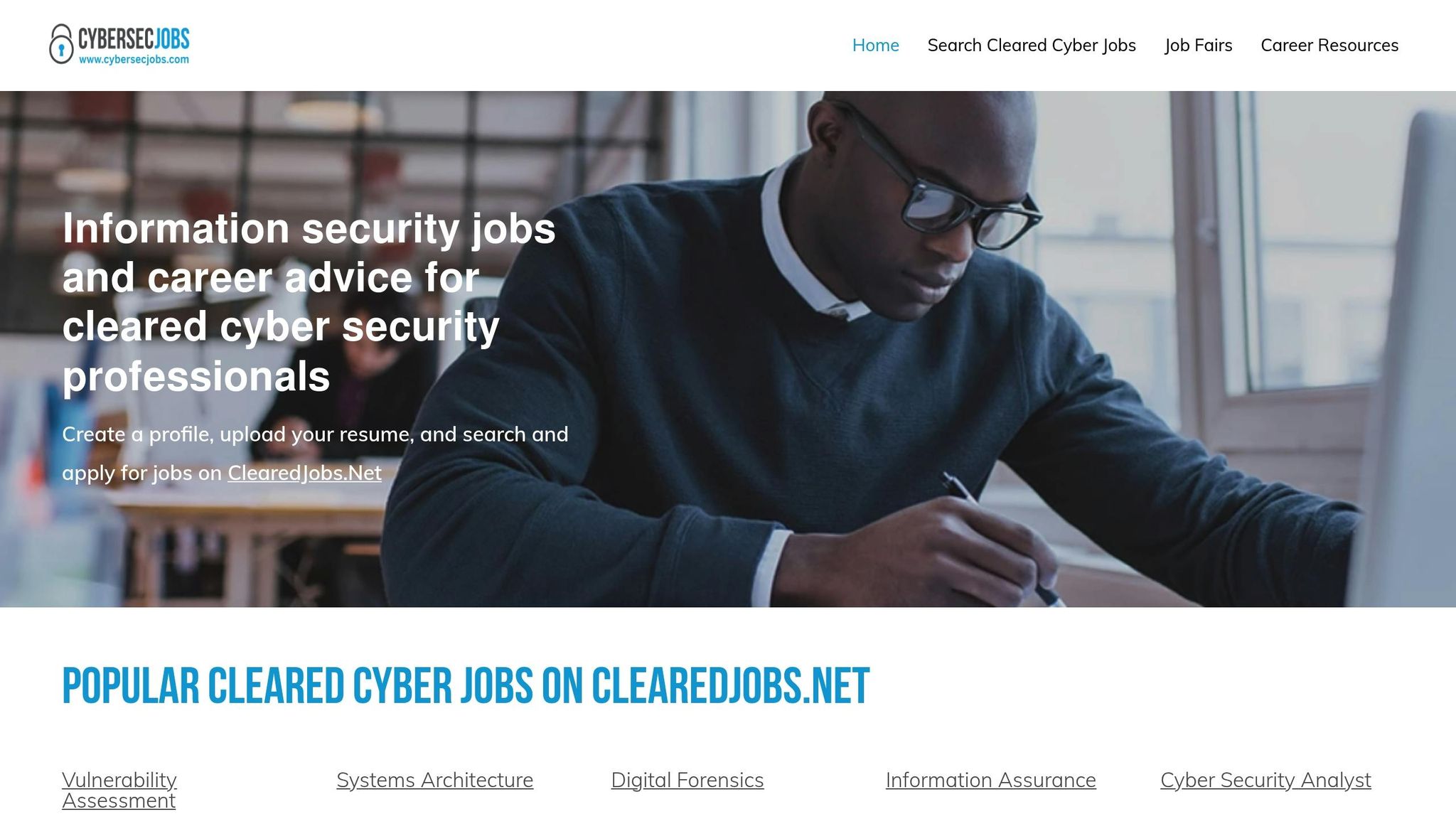
Building a career as a cleared professional means walking a fine line between advancing your opportunities and protecting sensitive information. Cleared Cyber Security Jobs offers tools designed specifically to help professionals in the cybersecurity field maintain their operational security (OPSEC) while progressing in their careers. Let’s dive into how this platform simplifies resume management and job searching without compromising security.
Secure Resume Tools and Employer Verification
Cleared Cyber Security Jobs provides a secure way to upload resumes, complete with advanced filters for location, job title, and company preferences. These tools allow you to create a professional profile while safeguarding your personal and career details [4][5]. Unlike general job boards, this platform is tailored for individuals with security clearances, offering an added layer of protection when sharing sensitive career information.
What sets this platform apart is its Job Alerts feature, which delivers daily job postings customized to your clearance level and career goals. Instead of sifting through public job boards, you receive curated notifications that match your qualifications and security requirements [4]. This approach not only saves time but also ensures privacy by keeping your search targeted and secure.
Another standout feature is the employer verification process. Every job posting is rigorously vetted to meet strict security, confidentiality, and compliance standards [6]. This ensures that you’re connecting only with legitimate opportunities, shielding you from fraudulent postings or potential security risks.
Career Resources for Cleared Professionals
Cleared Cyber Security Jobs goes beyond job listings by offering a variety of career resources tailored to the needs of cleared professionals [4]. These resources include expert advice on navigating the cybersecurity industry, tips for job hunting while maintaining clearance requirements, and detailed employer background information to help you make informed decisions.
The platform’s cleared job seeker newsletter provides regular updates on industry trends, policy changes, and new opportunities in the cybersecurity space [4]. This keeps you informed without requiring you to search multiple sources or risk accessing unverified information.
One of the platform’s most valuable offerings is its Cleared Job Fairs. These events bring together top employers in the cleared cybersecurity field, giving you the chance to meet directly with hiring recruiters [4][5]. Such fairs offer a secure environment where you can openly discuss your qualifications, knowing that all participants meet the necessary clearance and security standards.
Additionally, the platform offers recruiter database access, allowing verified employers to search for candidates who match their specific clearance levels and skill sets [4][5]. This feature enables passive job searching, where your profile can attract opportunities without you actively broadcasting your availability.
Together, these resources create a secure and supportive environment for cleared professionals. Whether you’re looking to expand your network, explore new roles, or stay informed about industry developments, the platform ensures you can do so without compromising OPSEC. It’s a thoughtful solution for professionals who need to balance career growth with strict security requirements.
Conclusion: Protecting Your Career and Clearance
Sticking to NSA OPSEC guidelines isn’t just about following rules – it’s about safeguarding your career and playing a vital role in national security. As a cleared professional, you’re expected to showcase your abilities while keeping sensitive details under wraps. Ignoring these guidelines can lead to severe consequences, including the risk of exposing critical defense information and jeopardizing missions and lives.
When crafting your resume, it’s essential to strike the right balance. Use clear, sanitized project descriptions and skill statements to highlight your qualifications without revealing anything classified. This not only protects sensitive information but also shows potential employers that you understand the importance of confidentiality – an essential trait in the cleared cybersecurity field.
For those looking to advance their careers securely, Cleared Cyber Security Jobs offers a trusted platform. With features like employer verification, secure resume tools, and tailored daily job alerts, the platform ensures you can explore new opportunities without compromising your clearance. Plus, vetted job fairs designed specifically for cleared professionals provide a safe way to connect with legitimate employers.
Your clearance is more than just a credential – it’s a responsibility. By following NSA guidelines, consulting with your security officer, and leveraging secure tools, you’re not just protecting your career – you’re upholding the defense interests you’ve sworn to protect.
FAQs
How can I create an OPSEC-compliant resume that highlights my qualifications for security-cleared roles?
When putting together an OPSEC-compliant resume, the key is to highlight your expertise and accomplishments while steering clear of classified information, specific project details, or sensitive technical tools. Start by clearly stating your security clearance level (e.g., Top Secret) at the top of your resume. This immediately signals your qualifications while respecting confidentiality requirements.
Focus on describing your experience in terms of broad responsibilities, leadership roles, and quantifiable results. For instance, instead of referencing specific systems or operations, you might say something like, "Improved cybersecurity protocols, increasing system resilience by 30%." This way, your resume remains professional, informative, and aligned with security protocols, all while safeguarding sensitive details.
What happens if I include sensitive information on my resume, and how can I avoid it?
Including sensitive information on your resume can lead to serious consequences, like losing your security clearance, facing legal action, or harming your career and reputation. To steer clear of these risks, it’s essential to follow NSA guidelines and leave out any classified details about projects, locations, or individuals.
Instead, emphasize your skills, achievements, and clearance level in a way that demonstrates your qualifications without breaching security protocols. Stick to general descriptions and avoid mentioning classified work directly, ensuring your resume maintains professionalism while adhering to operational security standards.
What tools and resources can cleared professionals use to protect sensitive information while advancing their careers?
Cleared professionals have a wealth of resources at their disposal to help protect sensitive information while demonstrating their expertise. For instance, official training programs like OPSEC Awareness for Military Members, DOD Employees, and Contractors deliver crucial insights into spotting and safeguarding critical information.
Beyond training, organizations such as the National Industrial Security Program (NISP) provide toolkits and guidelines packed with practical strategies. These resources focus on identifying vulnerabilities and implementing countermeasures effectively. Together, they empower cleared professionals to uphold operational security while advancing their careers.
Leave a Reply