
• Skip to primary navigation
  • Skip to main content
Cleared Cyber Security Jobs | CyberSecJobs.com

Cleared Cyber Security Jobs | CyberSecJobs.com

Cleared Cyber Security Jobs

  • Home
  • Search Cleared Cyber Jobs
  • Job Fairs
  • Career Resources

CyberSecJobs Editorial

Switching Cleared Contractors – The Strategic Jump for 20% More Salary

CyberSecJobs Editorial · September 29, 2025 · Leave a Comment

Switching contractors in the cleared cybersecurity job market can lead to a 20% salary increase or more. Here’s why:

  • High demand, low supply: With 73,000 open roles and only 5% filled by new clearances, experienced professionals are highly sought after.
  • Clearance value: Security clearances boost pay by 15–25%, with higher levels like TS/SCI commanding even more.
  • Contract cycles: New federal contracts often spark hiring surges, creating opportunities to negotiate better pay.
  • Remote work impact: Post-COVID, fewer professionals in defense roles mean higher competition for cleared talent.

To maximize earnings:

  1. Research salaries: Use government pay tables and focus on high-paying roles like penetration testers or incident response specialists.
  2. Leverage platforms: Use specialized job boards like Cleared Cyber Security Jobs to find roles tailored to your clearance level.
  3. Network strategically: Attend industry events and connect with peers to uncover unadvertised positions.
  4. Negotiate effectively: Highlight your clearance, skills, and contributions to secure better compensation.

Timing is key – align your move with contract cycles or clearance renewal dates to avoid gaps in eligibility. With preparation, you can secure a better role and a significant pay boost.

How to Get $100,000+/yr Government Security Clearance for Free (Full Guide Without the Military)

How the Cleared Cybersecurity Job Market Works

The cleared cybersecurity job market operates differently from standard tech hiring, offering distinct opportunities for professionals with active security clearances. With organizations often facing urgent staffing needs, the limited pool of cleared talent gives candidates a strong edge in negotiations.

This market is heavily influenced by government contracts. Agencies like the Department of Defense, the NSA, and the Department of Homeland Security frequently award new projects, prompting contractors to quickly fill roles with qualified, cleared professionals. This creates hiring surges, often aligning with the start of new fiscal years or major project launches.

Candidates who change roles tend to have an advantage. Employers highly value individuals with active clearances, as this eliminates the lengthy and complex process of obtaining new credentials. As a result, experienced professionals are in high demand.

How Security Clearance Affects Salary Negotiations

Your security clearance level significantly impacts your salary and bargaining power. Simply having a clearance often leads to a pay boost compared to non-cleared roles. Higher or more specialized clearance levels are particularly sought after, further enhancing earning potential.

Clearances that require rigorous vetting processes add to your market value, as they are harder to obtain and in greater demand. Additionally, if your clearance can be easily transferred between government clients, it makes you an even more attractive hire, giving you more leverage during salary discussions.

Maintaining your clearance is essential. Employers prefer candidates who can start immediately without delays caused by re-investigation processes. Location also plays a role – regions with a high demand for cleared professionals usually offer competitive salaries, while employers in areas with fewer opportunities may offer higher pay to attract scarce talent.

Salary Ranges and Total Pay for Cleared Roles

When considering cleared cybersecurity roles, it’s important to evaluate the full compensation package, not just the base salary. Total pay often includes performance bonuses, project-based incentives, and comprehensive benefits. Additional perks like overtime or on-call pay can also contribute to overall earnings.

Finding Jobs That Pay 20% More

You can uncover higher-paying roles with cleared contractors by combining focused market research, specialized job platforms, and proactive networking.

Researching Market Salaries and High-Paying Roles

Start with government salary databases, like OPM’s General Schedule (GS) pay tables, to establish baseline compensation figures. Keep in mind that contractor salaries often exceed these benchmarks. Focus your job search on roles like cybersecurity architects, penetration testers, and incident response specialists – positions that typically come with top-tier salaries.

Pay extra attention to contracts tied to major federal agencies, as these often include competitive compensation packages. Jobs requiring advanced clearances, such as TS/SCI with polygraph, frequently offer higher pay compared to roles with lower clearance demands.

Location also plays a big role in salary potential. For example, the Washington D.C. metro area – which covers parts of Northern Virginia and Maryland – tends to offer salaries above the national average. However, don’t forget to weigh the full compensation package, including locality pay and cost-of-living adjustments.

Timing is another factor. New contract awards and prime positions often come with better pay. To stay ahead, monitor contract announcements through resources like Federal Business Opportunities and GovWin, which can help you spot lucrative roles as they emerge.

Using Cleared Cyber Security Jobs to Find Better Opportunities
Cleared Cyber Security Jobs

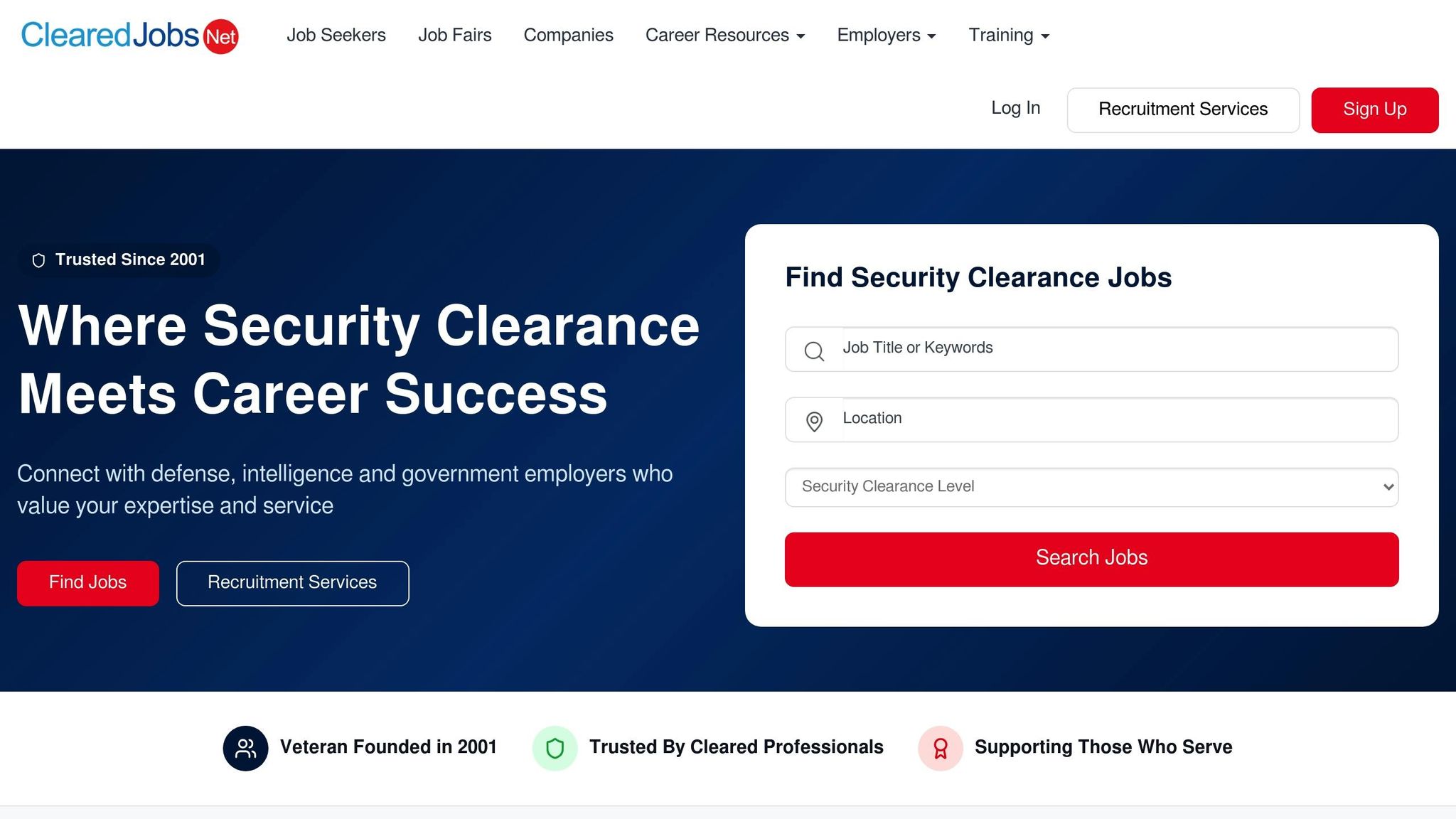
Platforms like Cleared Cyber Security Jobs cater specifically to professionals with security clearances, offering tools to help you target higher-paying positions. With advanced job search filters, you can refine your search by clearance level, salary range, and contract type, making it easier to zero in on roles that meet your financial goals.

Uploading your resume to the platform’s database can also give you an edge. Direct-hire employers can access your qualifications, potentially leading to unsolicited offers that surpass your current pay. Setting up job alerts with specific salary and clearance criteria ensures you’re notified about new opportunities as soon as they’re posted.

Additionally, attending job fairs through the platform lets you connect directly with hiring managers, which can simplify the hiring process and potentially lead to better compensation packages. Since the platform focuses on direct-hire employers, you often avoid middlemen, which can mean higher take-home pay and better benefits.

Combine these tools with strategic networking to uncover even more high-paying roles.

Building and Using Your Professional Network

Networking within the cleared community can open doors to unadvertised, high-paying positions. Many of these roles are filled through referrals, making professional relationships a critical part of your job search strategy.

Attend industry events like the RSA Conference, BSides gatherings, and SANS training sessions to meet other cleared professionals and exchange insights. Joining organizations such as ISACA, (ISC)² chapters, or local AFCEA chapters can also provide networking opportunities through regular meetings and special events.

Stay in touch with former colleagues and supervisors, as they can offer valuable information about compensation trends and upcoming job openings. The cleared community is relatively small, so maintaining these relationships can have long-term benefits.

Recruiters who specialize in cleared cybersecurity roles can also be valuable resources. They often have insights into current salary trends and can help you refine your negotiation tactics. Participating in job fairs hosted by platforms like Cleared Cyber Security Jobs can further connect you with hiring managers, potentially speeding up your path to a higher-paying role.

These strategies lay the groundwork for identifying the right time to switch jobs while keeping your clearance intact. By combining research, targeted tools, and networking, you’ll be better positioned to secure a role with a significant pay increase.

sbb-itb-bf7aa6b

When to Switch and How to Keep Your Clearance

Timing your career move is just as important as networking and doing your research. If you’re aiming to maintain your security clearance while securing a better paycheck, planning is everything. One smart strategy is to align your job switch with your clearance reinvestigation cycle. For example, if you’re approaching the five-year mark for your reinvestigation, consider completing it with your current employer first. This approach minimizes risks and gives you an edge when negotiating your salary.

Picking the Right Time to Switch

The federal fiscal year runs from October 1 to September 30, and planning your move during this period can help ensure your clearance stays active. Timing your transition carefully is crucial to avoid any lapses in your clearance status.

Keeping Your Security Clearance During the Switch

After determining the best time to make your move, focus on keeping your clearance intact throughout the transition. Remember, security clearances are tied to specific positions, not individuals, so they don’t automatically transfer when you change jobs. If there’s a gap in your employment of more than 24 months, your clearance will become inactive. Reactivating it could require a new investigation, which is both time-consuming and expensive for your new employer.

"Technically, security clearances are issued for a position and not a person. As a result, you cannot exactly take it with you to your next job." [1]

The Office of Management and Budget has a system of reciprocity in place, governed by 13 standardized adjudication guidelines, to help with clearance transfers. However, transferring a clearance between private contractors can be trickier than moving within government roles. Keeping your clearance active is essential for landing high-paying jobs – often with a salary boost of up to 20%.

To make the transition smoother, start the clearance transfer process as soon as you receive a job offer. Reach out to your current Facility Security Officer (FSO) to get a copy of your clearance records from DISS or Scattered Castles. These documents include vital details like your clearance level, investigation date, and eligibility status.

Once you’ve accepted your new role, your new employer’s FSO will need to submit a sponsorship request to take over your clearance. This process can take a few weeks, so stay in close contact with both FSOs and keep them updated on any developments. With Continuous Vetting initiatives now in place, cleared personnel are monitored automatically, but regular communication with your FSO and prompt reporting of changes can help ensure your clearance remains active.

Managing Notice Periods and Benefits

How to Negotiate a 20% Salary Increase

Securing a 20% salary increase requires preparation, strategy, and a solid understanding of your value in the market. By combining data-driven insights with a clear presentation of your contributions, you can set the stage for a successful negotiation.

Preparing for Negotiations with Market Data

Start by gathering reliable salary data from trustworthy sources to demonstrate how your skills and qualifications align with higher pay brackets. For example, if you hold a high-level security clearance, highlight how this credential often commands premium compensation. Pair this with tangible achievements – like improving security protocols or leading successful projects – to clearly show the value you bring to the table.

It’s also helpful to understand your employer’s financial structure. Research how your role contributes to their bottom line, and use this knowledge to frame your request. To strengthen your case, prepare a portfolio that includes your clearance level, certifications, years of experience, and major accomplishments. This portfolio serves as a concrete tool to back up your negotiation points.

Getting More Than Just Base Salary

Don’t limit your negotiation to base salary alone. Consider other elements that can enhance your total compensation package, such as:

  • Signing bonuses
  • Relocation assistance
  • Flexible work schedules
  • Professional development opportunities
  • Performance-based bonuses

These additional perks can increase the overall value of your offer and provide benefits that align with your personal and professional goals.

Common Negotiation Mistakes to Avoid

Reaching your goal of a 20% raise requires avoiding common missteps. First, don’t underestimate the value of your security clearance. An active clearance not only saves employers time and money but also allows you to contribute immediately – this is a key selling point you should emphasize.

Never accept the first offer without discussion. Employers in competitive fields often anticipate some level of negotiation, and engaging in a thoughtful conversation can lead to a better deal. Also, remember to evaluate the full compensation package, not just the base salary. Sometimes, benefits and bonuses can outweigh a slightly higher salary.

Timing is another crucial factor. Begin salary discussions after receiving a verbal offer but before signing any formal agreements. This timing gives you leverage to negotiate terms that work for both parties. Once agreements are made, ensure everything is documented in writing for clarity and accountability.

Finally, maintain a professional demeanor throughout the process. The cybersecurity community is tightly connected, and how you handle negotiations can impact your reputation. Treat every conversation with respect and clear communication – today’s hiring manager could be a future colleague or reference.

Conclusion: Making the Move for Career Growth

Boosting your salary by 20% through a strategic career move is well within reach for cleared contractors. To make it happen, focus on three essentials: solid research, well-timed decisions, and confident negotiation. These steps are the foundation for a successful transition.

Start by digging into the current market rates for your clearance level and skill set. Use this knowledge to identify roles that offer better compensation. Don’t rush – wait for the right opportunity that aligns with your career goals. Factor in your current project deadlines, clearance renewal dates, and personal needs to ensure a smooth transition without interruptions to your job or clearance.

When it’s time to negotiate, remember that your leverage isn’t just about the base salary. Signing bonuses, remote work options, and professional development perks can significantly enhance your overall package. Approach these discussions with confidence, backed by market data and a clear understanding of the value you bring to the table.

Platforms like Cleared Cyber Security Jobs can be a game-changer, connecting you with employers who are ready to offer competitive pay and benefits tailored to cleared professionals.

The demand for skilled professionals in the cleared cybersecurity field continues to outstrip supply, making this an opportune time to take charge of your career. By following a strategic plan, you can position yourself for a meaningful salary increase.

Take the time to assess your worth, expand your professional network, and put these strategies into action. With the right approach, you can achieve that 20% salary boost and set your career on a new, exciting path.

FAQs

How can I negotiate a 20% salary increase when switching to a new cleared contractor role?

To negotiate a 20% salary increase, start by gathering data on salary standards within your industry for your specific role and experience level. This research will help you set realistic expectations and provide a solid foundation to justify your target pay. Make sure to emphasize your specialized skills, certifications, and measurable accomplishments to showcase the value you bring.

If you receive an offer, consider countering with a number that aligns with the 20% increase you’re aiming for. Maintain a professional but assertive tone, and support your request with concrete examples of your expertise and the impact you’ve made in previous roles. Timing plays a crucial role – initiate these discussions when your contributions or qualifications are most evident, such as after highlighting your achievements during interviews.

The demand for security-cleared cybersecurity professionals is strong, and you can use this to strengthen your position. With thorough preparation and a confident approach, you can increase your earning potential while ensuring your clearance remains intact.

How can I keep my security clearance active when switching jobs?

To keep your security clearance active during a job transition in the U.S., make use of the 24-month grace period after your sponsorship ends. During this time, your clearance remains valid, provided you move into another role that requires clearance before the window closes. This eliminates the need for a new investigation.

It’s also crucial to stay on top of your clearance requirements. Regular reinvestigations, which typically occur every five years, are a key part of keeping your clearance current. Maintaining good standing and ensuring compliance with these requirements is essential. When transitioning to a new employer, work closely with them to facilitate reciprocity between agencies, which can help avoid unnecessary delays or complications. A well-thought-out plan and careful timing can make all the difference in preserving your clearance.

How do federal contract cycles impact hiring and salary prospects for cleared cybersecurity professionals?

Federal contract cycles significantly influence hiring trends and salary opportunities for cleared cybersecurity professionals. When contracts are up for renewal or new projects are being awarded, there’s typically a spike in demand for skilled experts. This heightened competition often translates into more job openings and better salary offers as organizations compete to attract top talent.

These cycles also tend to align with tighter cybersecurity regulations, pushing agencies to focus on bringing in highly qualified professionals. For cleared cybersecurity experts, this timing presents a prime chance to negotiate stronger compensation packages, particularly during peak hiring periods when demand reaches its peak.

Related Blog Posts

  • The 20% Slary Negotiation Rule For Cyber Security Contractors That Works Every Time
  • TS/SCI Salary Premium – The Real Numbers Behind Your Security Clearance
  • Government Contract Labor Rates Decoded – Know Your Worth as a Cleared Professional
  • GS to Contractor Transition – Timing Your Federal Exit for Maximum Value
Related Guides

  • Cybersecurity Salary Guide 2026: What Cleared Professionals Actually Earn
  • Government vs Private Sector: Salary Comparison
  • Five Strategies for Negotiating Your Next Cyber Security Job Offer
  • LCAT: Why Your Labor Category = Pay
  • Upgrade Secret to Top Secret: Worth $40K?

LinkedIn for Cleared Cybersecurity Professionals: OPSEC-Safe Profile Optimization

CyberSecJobs Editorial · September 29, 2025 · Leave a Comment

Building a LinkedIn profile as a cleared cybersecurity professional requires balancing career growth with strict Operational Security (OPSEC) compliance. Here’s how you can safely expand your professional network and showcase your expertise without risking sensitive information:

  • Headlines & Summaries: Highlight skills and certifications without mentioning clearance levels or specific employers. Example: "Cybersecurity Professional | CISSP | Threat Analysis Expert."
  • Work Experience: Focus on outcomes and methodologies, avoiding classified details. Use broad date ranges and general terms like "federal contractor" instead of naming agencies.
  • Privacy Settings: Limit profile visibility, hide your connections list, and disable activity broadcasts to reduce exposure.
  • Networking Safely: Vet connection requests carefully, avoid clustering connections from the same secure facility, and engage in relevant LinkedIn groups cautiously.
  • Content Sharing: Avoid posts or interactions that could reveal secure locations, projects, or affiliations.

Key Takeaway: A secure LinkedIn profile emphasizes transferable skills while safeguarding sensitive information. Regularly review your profile with an OPSEC mindset to ensure compliance and maintain professional visibility.

How To Optimize Your Cybersecurity LinkedIn Profile for Recruiters & Hiring Managers

LinkedIn Profile Sections and OPSEC Best Practices

Your LinkedIn profile is like a business card for cleared cybersecurity professionals. It’s about showcasing your expertise while staying mindful of security protocols. Let’s break down how to craft headlines and summaries that align with OPSEC standards.

Writing OPSEC-Safe Headlines and Summaries

Your LinkedIn headline is one of the most visible parts of your profile – it shows up in search results and connection requests. For cleared professionals, this 220-character space needs to strike a balance: attract the right opportunities while keeping sensitive details secure.

Focus on highlighting your skills and certifications rather than specific roles or employers. Avoid revealing anything that could compromise security. For example, instead of writing, "Senior Cybersecurity Analyst at [Classified Agency] – TS/SCI Cleared", opt for something like:
"Cybersecurity Professional | CISSP | Incident Response & Threat Analysis Expert."

This format emphasizes your qualifications without disclosing your clearance level or workplace.

The summary section gives you 2,600 characters to tell your story. Use this space to focus on your skills, certifications, and accomplishments, steering clear of specific employers or classified details. Concentrate on what you do and how you do it, not where you work or who you work for.

A strong example might be:

"Experienced cybersecurity professional with 8+ years specializing in network defense and vulnerability assessment. Proven track record in implementing security frameworks that significantly reduced incident response times. Certified in CISSP, GCIH, and CEH, with expertise in SIEM technologies, penetration testing, and risk management."

Stick to general terms like "federal contractor", "government agency", or "defense organization" rather than naming specific entities.

Listing Work Experience and Certifications

Describing work experience can be tricky for cleared professionals, as much of the work is classified. The key is to focus on outcomes and methodologies while avoiding sensitive details. For example, instead of detailing classified projects, you could write:

"Led vulnerability assessments using industry-standard tools to identify and mitigate critical security gaps. Developed incident response procedures that improved team efficiency."

Broad date ranges (e.g., "2020–2023") can help obscure sensitive timelines. Keep descriptions focused on the results you achieved and the tools or processes you used.

Certifications are a critical part of your profile since they’re publicly verifiable and highly valued in the cybersecurity field. Include links to your Credly badges or other verification platforms to add credibility. This keeps the focus on your proven skills rather than the classified environments where you gained them.

For ongoing education, be selective about how you present your training. Instead of naming specific courses tied to an agency, use generic descriptions like "Advanced Malware Analysis Training."

Using Featured Sections and Skills Lists

The Featured section is a great place to showcase your public achievements, but OPSEC remains a priority. Use this space to highlight conference presentations, published research, or open-source contributions – anything explicitly created for public consumption. Avoid including internal documents, classified briefings, or redacted materials, as even these can inadvertently reveal sensitive information.

The Skills section is another valuable tool, especially for keyword optimization in LinkedIn’s search algorithm. Focus on technical skills and widely used tools rather than anything classified or proprietary. For example, skills like "Network Security", "SIEM", "Python", and "Risk Assessment" are excellent choices that help recruiters find you without compromising sensitive details.

Pay special attention to your top three skills, as these appear most prominently on your profile. Choose ones that represent your strongest abilities and align with the roles you’re targeting. While LinkedIn allows up to 50 skills, a focused list of 15–20 relevant ones is usually more effective than a long, diluted list. Regularly updating this section ensures your profile stays aligned with evolving technologies and career goals in the cybersecurity field.

Building a Secure Professional Network

Growing your LinkedIn network takes more than just sending connection requests – it requires a strategic approach, especially when dealing with sensitive professional circles. By focusing on trusted connections and maintaining strong operational security (OPSEC), you can build a network that supports your career while safeguarding your privacy.

Connecting with Cleared Professionals and Recruiters

Cleared professionals are often targeted by foreign intelligence agencies using fake LinkedIn profiles [1]. To protect yourself, it’s essential to vet every connection request. Look out for warning signs like incomplete profiles, generic photos, or vague job titles. Only accept requests from contacts you can verify.

Recruiters and hiring managers can often deduce your clearance level based on your experience, job titles, and accomplishments – there’s no need to state it outright [1][2]. LinkedIn is designed for professional networking, and recruiters expect outreach from job seekers [3]. When reaching out, highlight your skills and experience rather than focusing on your clearance. For example, tailor connection requests to specific roles or shared professional interests. If you have a military or federal background, translate your titles into civilian terms like "Team Lead" or "Software Developer" to make your profile more accessible to a broader audience [1].

Once you’ve established a secure connection strategy, you can expand your network by joining relevant groups.

Joining Cleared Communities and Groups

LinkedIn groups are a powerful tool for networking, especially for professionals in specialized fields. Choose groups that align with your career goals, such as those focused on cloud security, malware analysis, or healthcare cybersecurity [6]. For veterans transitioning to civilian careers, groups dedicated to military personnel can provide support and advice from others who’ve been through similar experiences.

Be cautious about the groups you join. Avoid any that could be seen as anti-government or extremist, as this could jeopardize your clearance [4]. Before joining, review the group’s description and rules to ensure they align with your professional goals [5]. Once you’re in, introduce yourself thoughtfully. Share a brief overview of your background, why you joined, and what you hope to contribute [5]. Take time to engage with ongoing discussions and share your expertise, but always avoid disclosing classified or sensitive information.

Consistent engagement is key. Comment on posts, share relevant articles, and offer your insights to build credibility within the group [7]. For example, large cybersecurity groups like the "Information Security Network" (576,000 members) or the "Information Security Careers Network (ISCN)" are excellent spaces to connect with like-minded professionals and stay informed about industry trends.

Finally, reinforce these efforts by securing your LinkedIn profile.

Privacy Settings and Profile Security

Your LinkedIn privacy settings are your first line of defense when maintaining OPSEC. Start by controlling who can view your profile and connections. Limiting visibility to logged-in LinkedIn members can help prevent unauthorized access.

Decide whether your profile should appear in search engine results. For many cleared professionals, it’s safer to keep your profile visible only within LinkedIn’s platform, reducing exposure to external searches.

Be mindful of activity broadcasts. LinkedIn notifies your network when you update your profile or interact with content. While some visibility can attract recruiters, too much activity might draw unwanted attention. Strike a balance by selectively managing what updates are shared.

Keep your contact information private. Use LinkedIn’s messaging system for initial communication, and only share personal contact details after thoroughly vetting a connection. Similarly, avoid oversharing in posts or comments. Even small details about your schedule or projects could, when combined with other information, reveal more than you intended [4].

Lastly, consider making your connections list private. This prevents others from seeing who you’re connected to, which could inadvertently disclose details about your work environment or colleagues. Regularly review and update your privacy settings – doing so quarterly ensures they continue to meet your security needs.

sbb-itb-bf7aa6b

Using LinkedIn Features for Cleared Professionals

When working in a cleared environment, maintaining operational security (OPSEC) while building your professional brand on LinkedIn is crucial. By carefully configuring LinkedIn features, you can strengthen your cyber brand while adhering to clearance requirements.

Profile Photos and Banners

Your profile photo is often the first thing people notice on LinkedIn, so it’s essential to make a strong first impression. Choose a high-quality, professional headshot in business casual attire, avoiding any images that include identifiable government or agency details. A neutral background works best – think of a plain wall, an office setting, or an outdoor area without recognizable landmarks. If you’re transitioning from military service, opting for civilian attire can help signal your shift into the private sector.

Don’t overlook your LinkedIn banner, which offers a 1,584 x 396-pixel space at the top of your profile. Instead of leaving it blank or using a generic design, create a banner that reflects your technical expertise. For instance, you could incorporate cybersecurity icons, network diagrams, or coding-related visuals. Just be cautious to avoid any imagery that might hint at classified affiliations or projects.

Getting Recommendations and Endorsements

Beyond visuals, recommendations are a powerful way to boost your credibility. As a cleared professional, it’s important to approach this with care. Reach out to former colleagues, supervisors, or clients who are familiar with OPSEC guidelines and can craft concise, non-sensitive recommendations.

When requesting a recommendation, provide clear guidance on what to focus on. Encourage them to highlight transferable skills, leadership abilities, and technical accomplishments in general terms. Instead of referencing classified projects, a recommendation could emphasize your success in managing cross-functional teams under pressure or your expertise in implementing advanced security measures.

Endorsements, while less detailed than recommendations, are another way to validate your skills. Focus on building endorsements for technical competencies like penetration testing, risk assessment, incident response, or programming languages. Avoid emphasizing clearance-specific terms, as they don’t add value to your profile and may raise unnecessary questions.

To grow your endorsements, actively engage with others in your network. Endorse skills you can genuinely verify for your connections – this reciprocal approach helps maintain strong professional relationships while encouraging others to endorse your skills in return.

Integrating Verified Digital Badges

Verified digital badges are an excellent way to showcase your qualifications while providing proof of your expertise. LinkedIn’s "Licenses & Certifications" section integrates seamlessly with verification platforms that follow standards like Open Badges 2.0 and 3.0, ensuring that your credentials are instantly verifiable.

Platforms like Credly, for example, issue digital badges for certifications from recognized organizations. These badges include key details such as verification data, expiration dates, and links to the issuing organization, making it difficult for others to falsify your credentials.

Similarly, Badgr uses blockchain technology to create tamper-proof digital credentials. Adding verified badges for certifications like Security+, CISSP, CEH, or cloud certifications from AWS, Microsoft, or Google can further enhance your profile.

Common OPSEC Mistakes and How to Avoid Them

Cleared professionals often unintentionally share sensitive details on LinkedIn, which can put operational security (OPSEC) at risk. By recognizing these common mistakes, you can maintain compliance while still showcasing your professional expertise.

Common OPSEC Violations on LinkedIn

Location-based disclosures can be risky. Automatically sharing your current location or posting event photos might reveal secure facilities or movement patterns. Even seemingly harmless conference photos could accidentally include sensitive details in the background, like badge readers, security checkpoints, or restricted area signage.

Project and contract details can slip into profiles when describing work experiences. For example, phrases like "Led cybersecurity initiatives for Operation [Name]" or "Managed $2.3 million contract for [Agency] network modernization" provide specific information that adversaries could exploit. Mentioning contract vehicles, program names, or budget figures also poses risks.

Exact start and end dates of roles, when combined with location data, make it easier to map career paths and infer sensitive assignments. This issue becomes even more pronounced when paired with public records or other social media activity.

Network associations can also reveal too much. For instance, connecting with colleagues immediately after joining a classified position or having a network that consists mainly of people from the same secure facility could expose organizational structures or personnel assignments.

OPSEC-Compliant Profile Checklist

To ensure your LinkedIn profile remains secure, review each section with OPSEC in mind. Here are some key steps:

  • Profile information: Use broad location descriptors like "Washington, D.C. Metro Area" instead of specific cities or facilities. Disable automatic location sharing and LinkedIn’s online status feature.
  • Work experience descriptions: Focus on general accomplishments and transferable skills. Use phrases like "enterprise security initiative" instead of specific project names. Avoid mentioning contract values, team sizes, or timelines that could be cross-referenced with public records.
  • Connection strategy: Be thoughtful about your connections. Avoid connecting with new colleagues immediately after starting a position, and maintain a diverse network across industries and time periods to avoid revealing your current role.
  • Content sharing: Steer clear of sharing or engaging with posts related to your current organization. Even "liking" posts could unintentionally reveal focus areas or interests that compromise OPSEC.
  • Privacy settings: Limit what non-connections can see. Turn off activity broadcasts, hide your connections list, and disable the feature that shows who you’ve viewed recently.

Safe vs. Risky Profile Practices

The table below highlights the differences between secure practices and risky behaviors when creating a LinkedIn profile.

Profile Element Safe Practice Risky Practice
Location "Washington, D.C. Metro Area" "Fort Meade, MD" or specific facility addresses
Job Descriptions "Implemented advanced security protocols for federal systems" "Led penetration testing for NSA Cyber Command initiative"
Timeline Details "2022 – Present" or "3 years" Exact start/end dates like "March 15, 2022 – September 30, 2024"
Technical Skills General cybersecurity competencies Clearance-specific tools or classified system names
Network Connections Diverse professional contacts across industries and timeframes Exclusively colleagues from current secure facility
Content Engagement Industry-wide cybersecurity discussions Organization-specific news or insider commentary

Additional Considerations

Photo choices matter too. Avoid using images that include government badges, facility backgrounds, or identifiable security features. Conference photos should be reviewed carefully to ensure they don’t reveal attendance at classified briefings or restricted events.

Recommendations should align with OPSEC guidelines. A safe example might say:

"John demonstrated exceptional leadership in managing complex security implementations under challenging deadlines."

However, a risky version might include unnecessary specifics like:

"John successfully led our team through the critical Phase II deployment of the [Program Name] security architecture for the intelligence community."

Skills and endorsements should focus on general technical abilities, such as "network security analysis", rather than clearance-specific tools or systems.

The key to an OPSEC-compliant profile is to think like an intelligence analyst. Consider what patterns or details could be pieced together from your profile. When in doubt, keep descriptions broad and focus on showcasing your expertise in a way that doesn’t compromise security. Your professional achievements will still stand out without revealing sensitive information.

Building a Secure, Impactful Cyber Brand

Creating a strong cyber brand means finding the right balance between showcasing your professional expertise and maintaining security. By applying OPSEC (Operational Security) principles to your LinkedIn profile, you can turn it into a valuable career tool while safeguarding sensitive information. Here’s how to get started.

Key Takeaways for Cleared Professionals

Strategic sharing is essential. Cleared professionals excel when they focus on highlighting broad, transferable skills rather than diving into specific project details that could risk security. Employers often value the ability to articulate impact without revealing sensitive information.

Quality connections trump quantity. Building a diverse network not only expands career opportunities but also minimizes risks. Avoid clustering connections that could unintentionally expose organizational structures or assignments.

Privacy settings are your first line of defense. After reviewing your profile, adjust settings to disable activity broadcasts, hide your connections list, and restrict visibility to connections only. These steps help secure your professional presence without limiting meaningful networking.

In cybersecurity, technical expertise paired with security awareness is highly regarded. A LinkedIn profile that adheres to OPSEC principles demonstrates your ability to maintain this balance, making you stand out to potential employers.

Next Steps for Your LinkedIn Profile

Start by reviewing your profile with an OPSEC mindset. Pay close attention to sections like work experience, location details, and connection patterns that might inadvertently expose sensitive information.

  • Update your profile systematically. Revise your headline, summary, and other sections to emphasize your cybersecurity skills without mentioning classified systems, contracts, or specific programs.
  • Audit your activity and connections. Look for any recent posts or connections that could pose an OPSEC risk. If your network is heavily concentrated with colleagues from secure facilities, consider diversifying it.
  • Adopt ongoing OPSEC habits. Before posting or updating your profile, think critically about how the information could be combined with other public data to reveal sensitive details.

For more tips and guidance on advancing your cybersecurity career while staying compliant, check out Cleared Cyber Security Jobs. The platform offers tailored resources to help cleared professionals navigate their unique challenges.

Building a secure cyber brand is an ongoing process. Regularly reviewing your profile and sticking to OPSEC principles will ensure you maintain both your professional visibility and security throughout your career.

FAQs

How can I optimize my LinkedIn profile to showcase my cybersecurity expertise while staying compliant with OPSEC guidelines?

To create a strong LinkedIn profile while adhering to OPSEC guidelines, focus on showcasing your skills, certifications, and achievements without disclosing sensitive or classified information. Emphasize areas of expertise such as cyber threat analysis, incident response, or cloud security. Use industry-relevant keywords to boost visibility but avoid mentioning specific tools, projects, or operational details.

When describing your experience, skip exact job titles, locations, or any details that might compromise security. Instead, highlight your professional growth and contributions in a broader context. For instance, you can list certifications like CISSP or Security+ and frame your accomplishments in a way that demonstrates your expertise without delving into operational specifics. This approach allows you to maintain a professional online presence while safeguarding critical information.

How can security-cleared professionals network on LinkedIn while protecting sensitive information?

To make the most of LinkedIn while safeguarding sensitive information, focus on presenting your skills, certifications, and accomplishments in a broad, non-specific manner. Steer clear of mentioning classified projects, specific employers, or operational details that could compromise security. Be selective with connection requests, engaging only with trusted professionals, especially within the cleared community.

Participating in relevant LinkedIn groups can help you connect with peers, but always prioritize operational security (OPSEC). Avoid discussing sensitive topics or sharing information that could pose a risk. To further protect your account, use strong, unique passwords and enable multi-factor authentication. Regularly review your profile and activity to ensure it aligns with OPSEC guidelines while effectively showcasing your professional expertise.

How can I adjust LinkedIn privacy settings to protect my information and network while building a professional cyber brand?

To keep your LinkedIn profile secure while maintaining a strong professional presence, start by tweaking your privacy settings. For instance, adjust Profile Viewing Options to manage how your activity appears to others. Set your connections to private so your professional network stays protected. Take it a step further by limiting who can see your email address and phone number through the data visibility settings. You might also want to turn off features like profile discovery via contact information. Make it a habit to review these settings regularly. This way, you can confidently highlight your expertise without exposing sensitive details, staying aligned with OPSEC principles.

Related Blog Posts

  • Contract Recompete Job Security – Your 90-Day Survival Action Plan
  • LCAT Cybersecurity Contractor Categories – Why Your Title Matters Less Than Your Labor Category
  • Cleared Job Red Flags – Warning Signs in Contract Job Postings
  • IC to DoD Cybersecurity Transition – Making the Intelligence to Defense Jump

Related Guides

  • Job Search Checklist for Veterans in Cyber Security
  • How to Leverage Referrals in Your Cyber Security Job Search
  • Questions to Ask in an Interview: A Guide for Cyber Security Job Seekers
  • TS/SCI Salary Premium: Real 2026 Numbers
  • Top 10 Cybersecurity Jobs for Cleared Pros


Cleared Cyber Management Transition – From Technical to Leadership Roles

CyberSecJobs Editorial · September 28, 2025 · Leave a Comment

Transitioning from a technical role to leadership in cleared cybersecurity is challenging yet rewarding. It requires moving beyond hands-on tasks to managing teams, shaping strategies, and overseeing critical national security operations. Here’s what you need to know:

  • Leadership in Cleared Cybersecurity: Involves managing sensitive information, large projects, budgets, and risks while ensuring compliance with strict clearance and regulatory requirements.
  • Security Clearance Levels: Higher roles often demand Top Secret/SCI clearance, with some requiring polygraphs, impacting eligibility and responsibilities.
  • Key Skills for Leadership: Communication, decision-making, conflict resolution, and emotional intelligence are critical. Leaders must also manage stress and diverse teams effectively.
  • Certifications: Credentials like CISM, CISSP, and PMP demonstrate readiness for leadership roles. Government-specific programs like DAU courses enhance understanding of federal processes.
  • Challenges: Balancing technical and administrative duties, managing clearance requirements, and navigating government contracting can be complex but manageable with structured strategies.
  • Career Development: Networking, mentorship, and continuous learning through cleared community resources and professional associations are essential for growth.

This shift is not just about career advancement but an opportunity to influence national security strategies and mentor the next generation of cybersecurity professionals.

The Fearless Cybersecurity Leader and Future CISO

Leadership Requirements in Cleared Cybersecurity

Leadership in cleared cybersecurity is a world apart from its commercial counterpart. The stakes are higher, the scrutiny is intense, and the responsibilities go far beyond the usual management tasks. To step into these roles, it’s critical to grasp the unique demands tied to national security. Below, we’ll explore the key responsibilities, the role of security clearances, and the regulatory frameworks that shape leadership in this field.

Leadership Duties in Cleared Roles

In a cleared environment, leadership isn’t just about managing people or budgets. It’s about ensuring that operational excellence aligns with national security goals. Your role involves safeguarding sensitive information, maintaining mission continuity, and upholding rigorous security standards.

  • Project Oversight: You’ll manage large, multi-year projects that often span agencies and contractors. This requires not only technical expertise but also a clear understanding of how your team’s work supports broader national security objectives. Coordinating with government managers and ensuring compliance with classification protocols is a central part of this responsibility.
  • Personnel Management: Leading cleared teams means navigating the complexities of security clearance processes. This includes addressing clearance suspensions, managing morale during lengthy background checks, and mitigating risks tied to insider threats or foreign influence.
  • Budget and Resource Allocation: Justifying expenses through government contracting vehicles is a key part of the job. Leaders must demonstrate how investments align with mission goals and deliver value to government stakeholders.
  • Risk Management: In cleared roles, risk management takes on a heightened importance. You’ll oversee systems that protect classified networks, coordinate with government incident response teams, and ensure operational continuity during security events – all while understanding the potential national security implications of cybersecurity incidents.

Your security clearance level further defines the scope of your leadership responsibilities.

How Security Clearance Levels Affect Leadership Roles

The level of your security clearance directly impacts the leadership opportunities available to you. For instance:

  • Secret Clearance: This level typically qualifies you for roles like team lead or project manager on programs with lower sensitivity.
  • Top Secret Clearance: With this clearance, you can step into senior management positions overseeing systems critical to national security.

For those aiming at executive-level roles, Top Secret/SCI (Sensitive Compartmented Information) clearance is often a must. This clearance grants access to intelligence community systems and participation in high-level strategy sessions that shape cybersecurity policies across government entities.

Some positions may also require a polygraph clearance, particularly in intelligence agencies or roles involving highly sensitive information. Full-scope polygraph requirements add another layer of consideration for leaders in these environments.

Another factor to consider is clearance reciprocity. While your clearance may transfer between agencies, each organization might have unique requirements or additional processing steps. This can affect how quickly you can transition into leadership roles, especially when moving between defense and intelligence agencies.

Finally, citizenship requirements play a role. Some positions demand U.S. citizenship from birth, while others are open to naturalized citizens.

Working with Policy and Regulatory Frameworks

Cleared cybersecurity leaders must navigate a maze of federal regulations, compliance frameworks, and policies. These frameworks not only guide your organization’s operations but also shape your leadership approach.

  • NIST Frameworks: The National Institute of Standards and Technology (NIST) provides the foundation for federal cybersecurity requirements. Leaders must ensure compliance with NIST 800-53 security controls, the NIST Cybersecurity Framework, and any new guidelines as they emerge.
  • CISA Directives: The Cybersecurity and Infrastructure Security Agency (CISA) issues binding operational directives that require immediate action. Leaders must ensure their organizations can quickly implement these directives, meet tight deadlines, and report compliance to government stakeholders.
  • DoD RMF: The Department of Defense’s Risk Management Framework governs cybersecurity for defense systems. Leadership involves guiding teams through the Authorization to Operate (ATO) process, which can take months or even years. This requires close collaboration with system owners, authorizing officials, and security control assessors.
  • FedRAMP Compliance: For cloud service providers working with government agencies, meeting Federal Risk and Authorization Management Program (FedRAMP) standards is non-negotiable. Leaders oversee authorization processes, maintain continuous monitoring, and ensure cloud services meet stringent government security requirements.
  • FISMA Compliance: The Federal Information Security Modernization Act (FISMA) mandates annual reporting and continuous monitoring of federal systems. Leaders must coordinate with government customers to ensure accurate reporting, implement necessary security measures, and maintain documentation for compliance audits.

These frameworks are deeply interconnected. A change in one can ripple through others, requiring leaders to think holistically. Successful cleared cybersecurity leaders develop the ability to anticipate these ripple effects and adjust strategies accordingly, ensuring compliance while keeping mission objectives front and center.

Developing Leadership Skills for Cleared Professionals

Transitioning from a technical role to a leadership position in cleared cybersecurity requires more than just mastering advanced technical skills. While your technical expertise remains a cornerstone, success in leadership depends heavily on your ability to communicate, influence, and guide teams through intricate security challenges. The cleared environment brings its own set of complexities, making specialized leadership skills essential.

Core Soft Skills for Leadership

Clear communication is a must. As a leader, you’ll need to explain technical concepts to non-expert government stakeholders while also engaging effectively with technical teams. This dual communication challenge requires tailoring your message to fit your audience’s level of understanding.

In cleared environments, communication also involves navigating strict rules around classified information. For instance, during mixed-clearance meetings, you must convey urgency and importance without disclosing sensitive details. This skill becomes especially critical when managing incident responses that involve multiple agencies or contractor teams.

Strategic planning is another key skill. Unlike the fast-paced commercial sector, cleared cybersecurity leaders operate within the constraints of long-term government contracts and evolving threat landscapes. You’ll need to balance immediate security priorities with long-term objectives while adhering to government budget cycles and procurement processes.

Decisiveness under pressure is non-negotiable. Leaders must make confident decisions even when information is incomplete, understanding the broader impact those choices may have on interconnected government systems. Just as important is the ability to clearly explain your decision-making process to oversight bodies.

Conflict resolution plays a major role in leadership. Mediating between diverse government and contractor teams often requires diplomacy and the ability to find common ground. Leaders who can keep teams focused on the mission while resolving disputes effectively are better positioned to succeed.

Mastering these skills lays the groundwork for tackling the emotional and organizational challenges of leadership.

Emotional Intelligence and Cultural Awareness

Leading in the cleared space means navigating a variety of organizational cultures. Government agencies, prime contractors, and subcontractors all have distinct values, processes, and expectations. A successful leader understands these differences and fosters team cohesion while keeping the mission front and center.

Emotional intelligence is indispensable. Cleared cybersecurity roles come with high levels of stress. Team members may face anxiety from clearance investigations, the pressure of safeguarding critical infrastructure, or frustration with rigid government protocols. Recognizing and addressing these challenges can significantly impact team morale and retention.

The cleared workforce is also highly diverse. It includes military veterans transitioning to civilian roles, career government employees, and professionals from the commercial sector who are new to the cleared environment. Each group brings unique perspectives, communication styles, and expectations. Effective leaders learn to harness these diverse viewpoints while fostering an inclusive environment where everyone can contribute meaningfully.

Cultural sensitivity goes beyond traditional diversity. Understanding the unique operational cultures within different government agencies is equally important. For example, the Department of Defense operates differently from civilian agencies, while intelligence community organizations have their own approaches to cybersecurity. Leaders who can adapt their management style to fit these distinct cultures often find greater success in advancing their careers.

Leadership-Focused Certifications

Once you’ve honed your soft skills and cultural awareness, earning leadership certifications can further demonstrate your readiness for management roles. While technical certifications remain important, leadership-focused credentials can set you apart in the competitive cleared cybersecurity field.

  • The Certified Information Security Manager (CISM) from ISACA is particularly relevant for cleared leaders. It focuses on strategic thinking, risk management, and program development – skills directly applicable to leadership roles in cybersecurity.
  • The Certified Information Systems Security Professional (CISSP), though broad, includes significant content on governance and risk management, aligning well with the regulatory-heavy nature of cleared work.
  • For advanced leadership training, the CISSP Information Systems Security Management Professional (ISSMP) concentration provides in-depth frameworks for managing complex security programs.
  • The Project Management Professional (PMP) certification is highly valued, given the project-based nature of government cybersecurity work.

Additionally, government-specific programs like those offered by the Defense Acquisition University (DAU) can provide insight into Department of Defense acquisition processes and stakeholder management.

Combining technical certifications with leadership credentials creates a compelling profile. For instance, retaining certifications like the Certified Ethical Hacker (CEH) or GCIH (GIAC Certified Incident Handler) while pursuing leadership-oriented certifications showcases both technical expertise and management readiness.

Investing in these certifications not only opens doors to higher salaries and senior roles but also equips you with practical tools and methodologies to excel in leadership. By blending technical skills, soft skills, and leadership credentials, you’ll be well-prepared to tackle the challenges of cleared cybersecurity leadership and support critical missions effectively.

Using Resources for Career Development

Building on the importance of leadership skills, tapping into community resources can significantly speed up your career progression. While certifications are a great starting point, connecting with the cleared community through mentorship, networking, and ongoing education is what truly propels your journey. The cleared cybersecurity field operates differently than its commercial counterpart, making it essential to use resources tailored to this unique environment.

Mentorship and Networking Opportunities

Connections are the backbone of career growth in cleared cybersecurity. Leadership roles often emerge from professional relationships rather than public job postings. By building connections with seasoned leaders, you gain insights and access to opportunities that might otherwise remain hidden [1].

The cleared community offers networking settings that are rare in commercial cybersecurity. For example, ISACA and (ISC)² chapter meetings provide regular chances to meet professionals familiar with the demands of government work.

Industry conferences are goldmines for networking. Events like Black Hat, DEF CON, and RSA Conference attract a mix of cleared professionals. To make the most of these gatherings, it pays to prepare: research attendees, come with thoughtful questions, and follow up afterward on LinkedIn or via email. This kind of preparation signals dedication, something hiring managers look for in leadership candidates [1][2].

Veteran-founded networks also play a pivotal role. Many cleared cybersecurity leaders are military veterans who bring a deep understanding of both technical challenges and government culture. Groups like Veterans in Security and local veteran tech organizations provide mentorship from professionals who have successfully navigated the transition to leadership.

Federal leadership forums are another valuable resource. Events hosted by groups like the Armed Forces Communications and Electronics Association (AFCEA) and the Intelligence and National Security Alliance (INSA) bring together government leaders and industry professionals. These forums offer a unique perspective on government priorities and the broader context of cleared cybersecurity leadership.

Diversity within cleared teams also opens doors. Teams with higher diversity are 39% more likely to outperform their peers [3]. Building relationships across varied backgrounds, agencies, and contractors can enhance your leadership potential and broaden your network.

These connections naturally lead to exploring career-specific tools and resources.

Career Resources from Cleared Cyber Security Jobs

Cleared Cyber Security Jobs provides tools tailored to the cleared community. As a veteran-owned career site, it understands the challenges professionals face when moving into leadership roles [4].

  • Use advanced search filters for location, title, and company, and set up job alerts for early notifications about leadership roles [4]. This ensures you’re among the first to learn about new opportunities.
  • Create a detailed profile on ClearedJobs.Net. This makes you visible to recruiters actively seeking leadership candidates. Often, this approach uncovers roles that aren’t publicly listed.
  • The Career Resources section offers targeted advice, including job search tips and detailed employer insights, helping you better prepare for interviews and understand organizational priorities [4].

Blog resources address common leadership challenges. Topics like "Managing Your Cyber Career and Job Hunt" and "Cyber Security Skills Growth and Professional Development for Career Success" provide actionable advice for positioning yourself for leadership roles [5].

Cleared Job Fairs are invaluable for face-to-face networking. These events allow you to connect directly with recruiters and hiring managers, showcasing your communication skills and cultural fit – qualities that can’t always be conveyed through a resume.

"Our Career Resources deliver timely advice on the information technology industry, job hunting tips from career experts, and detailed employer background information." – Cleared Cyber Security Jobs [4]

Finally, subscribing to the cleared job seeker newsletter ensures you stay updated on industry trends that influence leadership decisions. This kind of knowledge is crucial for strategic thinking in leadership roles [4].

Ongoing Learning for Cleared Leadership

Federal training programs offer leadership development tailored to government roles. The Defense Acquisition University (DAU) provides courses on program management, stakeholder engagement, and acquisition processes – skills essential for managing complex programs with strict oversight.

For more advanced training, programs like the Federal Executive Institute focus on leadership expectations within government and contractor roles. Though competitive, these programs provide valuable insights and networking opportunities with senior officials.

Online learning platforms cater to the cleared community. The SANS Institute offers courses specifically designed for leadership in cybersecurity. Their MGT series covers topics like security leadership, risk management, and strategic planning, all within the regulatory frameworks cleared leaders navigate.

Professional associations ensure ongoing development. ISACA’s continuing education requirements keep you updated on governance and risk trends, while (ISC)² offers leadership tracks that build on certifications like the CISSP.

Government R&D initiatives provide exclusive insights. Programs from organizations like the National Institute of Standards and Technology (NIST) or the Cybersecurity and Infrastructure Security Agency (CISA) offer a glimpse into emerging threats and policy directions, sharpening your strategic decision-making.

Lastly, cross-agency collaboration programs provide a broader understanding of the cleared ecosystem. These initiatives bring professionals from different agencies together, offering insights into how leadership varies across government organizations. This perspective is essential for managing inter-agency teams or programs.

sbb-itb-bf7aa6b

Step-by-Step Transition Methods

Shifting from a technical role to a leadership position in the cleared cybersecurity field takes careful planning and targeted strategies. Success here hinges on understanding security protocols, government processes, and the nuances of federal contracting. Professionals who excel in this transition often map out deliberate steps to showcase their leadership potential while honing the skills required for management.

Transition Steps

Start by managing small projects. Volunteer to lead tasks like coordinating vulnerability assessments across multiple systems. This hands-on experience helps you develop essential leadership skills, such as managing timelines, communicating with stakeholders, and ensuring projects meet their goals.

Take on cross-functional and stretch assignments to expand your expertise. For instance, if you’re a network security analyst, try participating in incident response planning or risk assessment initiatives. You might also volunteer to present monthly security metrics or compliance updates to senior leadership. These opportunities not only broaden your skill set but also raise your visibility as a leader.

Use the STAR method to highlight your accomplishments. For example, describe how you led a team of five analysts to complete a security assessment that reduced risk exposure by 40% within 60 days. This approach makes your achievements clear and measurable.

Join cross-agency working groups or industry committees. These roles expose you to diverse approaches to cybersecurity challenges and help you build relationships beyond your immediate team. They also enhance your ability to think strategically and work collaboratively.

By following these steps, you’ll establish a strong foundation for showcasing your leadership abilities and readiness for advanced roles.

Tools for Tracking Professional Growth

Leverage leadership competency frameworks to measure your progress. The Office of Personnel Management’s Executive Core Qualifications (ECQs) provide a government-specific framework that focuses on key areas like leading change, managing people, and building coalitions. Use these categories to evaluate your skills and identify areas for growth.

Conduct a skills gap analysis. Create a spreadsheet that compares the qualifications listed in leadership job postings to your current experience. Look for recurring gaps – if many roles require budget management and you lack that experience, prioritize gaining financial oversight responsibilities in your current position.

Track your progress with performance review templates. Include measurable results, such as: "Reduced security incident response time from 4 hours to 90 minutes by implementing new communication protocols and training."

Seek 360-degree feedback. Ask for insights from colleagues, supervisors, and direct reports. Even informal questions like, "What leadership qualities should I work on?" or "How well do I handle high-pressure situations?" can provide valuable guidance.

Maintain a professional development log. Record your training, certifications, and conference attendance, but also note how you’ve applied this knowledge in your work. This helps you build a compelling story of continuous growth and practical application.

Presenting Cleared Experience for Management Roles

Leverage your technical background as a foundation for leadership. Emphasize your expertise with compliance frameworks like NIST, FedRAMP, or FISMA without disclosing classified details. Instead of focusing on specific vulnerabilities, highlight your experience implementing these frameworks and managing assessments.

Showcase your ability to handle sensitive data and personnel. Leadership in cleared environments requires discretion and sound judgment. Share examples of how you’ve managed security incidents, overseen access controls, or collaborated with security officers while maintaining operational security.

Demonstrate your communication skills with diverse stakeholders. Cleared cybersecurity leaders must navigate interactions with technical teams, government managers, contracting officers, and senior executives. Provide examples of translating technical details for non-technical audiences or aligning priorities across different groups.

Highlight your understanding of acquisition and contract management. Many leadership roles involve working with procurement officials, managing vendor relationships, or overseeing contract deliverables. Even if you’ve only supported these processes, mentioning this experience shows you understand the business side of cleared work.

Use the right language in your resume and interviews. Terms like "program management", "stakeholder engagement", "risk mitigation", and "compliance oversight" resonate with hiring managers in this field. Avoid overloading your application with acronyms or jargon that might confuse HR personnel unfamiliar with technical terminology.

Quantify your achievements with metrics that matter to government clients. Focus on outcomes like improving security posture, closing compliance gaps, reducing costs through process improvements, or boosting system availability. These results align with the performance measures that government clients value most.

The next section will explore strategies for overcoming challenges unique to leadership transitions in cleared environments.

Addressing Challenges in Cleared Leadership Transitions

Stepping into a leadership role from a hands-on technical position is no small feat, especially in a cleared environment. The unique combination of strict security protocols, government bureaucracy, and specialized compliance requirements can make the transition feel overwhelming. However, understanding these challenges and applying practical strategies can make the shift into leadership more manageable.

Common Transition Challenges

Balancing technical and administrative tasks – Leaders in cleared environments often find themselves wearing multiple hats. Limited delegation options mean juggling technical responsibilities with management duties, all while adapting to decisions shaped by federal regulations. These mandatory protocols, though sometimes cumbersome, are non-negotiable.

Managing personnel security requirements – Keeping track of team clearance statuses, coordinating compliance training, and resolving clearance-related issues can be particularly tricky. These concerns can directly affect project timelines, adding another layer of complexity to leadership roles.

Navigating acquisition and contracting processes – Government contracts come with strict rules governing scope changes, deliverables, and approvals. Even seemingly simple decisions can trigger a cascade of administrative procedures.

Communicating across security boundaries – Leaders must often explain sensitive or classified information to individuals with varying clearance levels. This requires clear, secure, and precise communication to ensure understanding without breaching security protocols.

Addressing these challenges calls for deliberate strategies, which are outlined below.

Methods for Overcoming Leadership Barriers

To successfully navigate these obstacles, consider implementing the following approaches:

  • Build strong relationships with compliance and security personnel. Regularly connect with your facility security officer (FSO) to stay informed about current requirements and anticipate changes. These connections can be invaluable when navigating tricky situations.
  • Establish structured feedback loops. Schedule regular one-on-one meetings with your team and maintain touchpoints with key stakeholders. This not only keeps you updated on technical challenges but also provides opportunities to mentor and coach effectively.
  • Engage in scenario-based training. Participate in incident response drills, business continuity exercises, or tabletop scenarios. These activities help you refine decision-making under pressure and build credibility with both your team and external partners.
  • Develop standardized processes for routine leadership tasks. Templates for tasks like performance reviews, project kickoffs, and status reporting can streamline administrative work and ensure consistent management practices.
  • Foster mentoring relationships. Seek advice from experienced leaders who have successfully transitioned into cleared leadership roles. Many industry associations offer mentoring programs that provide insights into managing government relationships and balancing competing priorities.
  • Deepen your understanding of your organization’s business side. Learn about contract structures, key performance metrics, and your team’s strategic role. This knowledge strengthens your ability to make informed decisions and align with organizational goals.

Comparing Leadership Development Approaches

Different strategies can help you develop the skills needed to overcome leadership challenges. The table below highlights several options to help you decide which path suits your goals:

Approach Timeline Cost Range Best For Key Benefits Limitations
Formal Graduate Programs 18–36 months $50,000–$150,000 Long-term career growth Offers in-depth business knowledge and networking opportunities Time-intensive and costly
On-the-Job Stretch Assignments 3–12 months Minimal direct cost Immediate skill application Provides hands-on experience and increases visibility Limited scope and dependent on available opportunities
Industry Certifications (PMP, CISSP-ISSMP) 3–6 months $2,000–$8,000 Skill validation and credibility Recognized credentials with structured learning Requires ongoing maintenance and may not address soft skills
Executive Coaching 6–18 months $15,000–$40,000 Personalized development Tailored guidance and confidential feedback Can be expensive, and quality depends on the coach

Each approach offers distinct advantages. Formal education programs combine technical depth with leadership and business training, making them ideal for those aiming for senior roles. On-the-job assignments allow for immediate application of new skills, building a track record of leadership. Certifications add credibility and industry recognition, while executive coaching provides personalized support to accelerate growth. Often, combining structured learning with real-world experience yields the best results.

Conclusion: Preparing for Leadership Success in Cleared Cybersecurity

Stepping into a leadership role in cleared cybersecurity means redefining how you approach problem-solving, communication, and strategy. As Rob Witcher highlights in the DestCert Guide, "What separates security experts from security leaders isn’t just more technical knowledge. Security leaders don’t just understand threats; they align security with business goals, shape risk strategies, and influence executive decision-making." [6]

Your technical expertise lays the groundwork, but thriving as a leader requires sharpening your strategic mindset, developing business acumen, and mastering cross-functional communication. The financial rewards alone make this transition appealing – while technical roles often cap at $110,000–$120,000, leadership positions such as security managers, directors, and CISOs typically range from $138,000 to well over $200,000 [6]. Beyond the paycheck, leadership roles offer the chance to shape enterprise security strategies and leave a lasting organizational impact. This guide provides actionable steps to help you bridge the gap between technical expertise and strategic leadership.

Success in this transition demands intentional effort in several areas. Start by seeking out leadership opportunities in your current role. Volunteer for high-visibility security initiatives, contribute to risk assessments, and assist in developing security policies. These experiences will hone the strategic thinking skills that set leaders apart from individual contributors.

Building strong relationships across your organization is equally important. Forge connections with established security leaders, CISOs, and business executives in finance, operations, and risk management. These relationships offer valuable insights into aligning security with business objectives and reveal how security decisions influence broader outcomes. As emphasized, "success is no longer just about technical accuracy – it’s about relationships and influence" [7].

Another key shift is moving from tactical problem-solving to strategic planning. Instead of focusing solely on technical vulnerabilities, leaders must guide teams and shape enterprise-wide strategies. As one expert puts it, "The most significant challenge is shifting your perspective from tactical implementation to strategic thinking. Many technical experts struggle to see beyond specific vulnerabilities to understand enterprise-wide risk and business impact." [6]

The cleared cybersecurity field needs technical professionals who can bridge the gap between security requirements and business priorities. Strengthening your soft skills and pursuing targeted certifications can help you make this leap. With the leadership strategies and resources outlined here, you’re well-equipped to take on this challenge. By developing your leadership capabilities and leveraging tools from Cleared Cyber Security Jobs, you can make a meaningful impact in safeguarding critical systems.

FAQs

What sets technical roles apart from leadership roles in cleared cybersecurity?

Technical roles in cleared cybersecurity are all about getting hands-on with the nitty-gritty. This includes tasks like penetration testing, analyzing threats, and strengthening system defenses. These positions demand a strong focus on technical know-how and the ability to solve operational challenges effectively.

On the flip side, leadership roles take a broader approach, focusing on strategy, team management, and high-level decision-making. Leaders shape cybersecurity policies, manage risks, and foster a workplace culture that prioritizes security. These roles lean heavily on soft skills like clear communication, critical thinking, and the ability to motivate and guide teams – qualities that typically take a back seat in more technical positions.

What steps can I take to move from a technical role to a leadership position in cleared cybersecurity?

To move from a technical role into a leadership position in the cleared cybersecurity field, it’s crucial to focus on developing soft skills such as communication, emotional intelligence, and strategic thinking. These abilities are key for effectively managing teams and making impactful, high-level decisions.

You might also want to consider earning leadership-oriented certifications like the GIAC Security Leadership (GSLC) or CISSP. These credentials not only demonstrate your management skills but also show your understanding of organizational priorities beyond technical expertise.

Building a strong professional network is another important step. Connecting with mentors and peers can provide valuable advice and insights into leadership opportunities. Participating in mentorship programs or attending networking events within the cleared cybersecurity community can help you learn from seasoned leaders. These connections can guide you through the unique challenges of leadership roles while preparing you to manage effectively in the cleared environment.

What certifications and skills are essential for moving into leadership roles in cleared cybersecurity?

Certifications such as Certified Information Systems Security Professional (CISSP), Certified Information Security Manager (CISM), and GIAC Security Leadership Certification (GSLC) carry significant weight for those aiming for leadership positions in cleared cybersecurity. These credentials emphasize critical areas like governance, risk management, and team leadership – essential components for stepping into managerial roles.

To excel in these positions, you’ll need a mix of strategic thinking, clear communication, and the ability to adapt to changing circumstances. Strong interpersonal skills are equally important for guiding teams and managing high-pressure scenarios. When combined with solid technical knowledge, these qualities can help you thrive in leadership roles within the cleared cybersecurity field.

Related Blog Posts

  • Top 10 Cyber Security Jobs for Cleared Professionals
  • CIO-SP3 Cybersecurity Positions vs DISA Encore III – Which Vehicle Drives Your Career?
  • Contract Recompete Job Security – Your 90-Day Survival Action Plan
  • IC to DoD Cybersecurity Transition – Making the Intelligence to Defense Jump

Related Guides

  • TS/SCI Salary Premium: Real 2026 Numbers
  • Security Clearance Interview: What to Expect

IC to DoD Cybersecurity Transition – Making the Intelligence to Defense Jump

CyberSecJobs Editorial · September 28, 2025 · Leave a Comment

Shifting from the Intelligence Community (IC) to the Department of Defense (DoD) cybersecurity roles involves navigating differences in mission focus, workplace culture, and operational speed. While IC jobs emphasize intelligence gathering and analysis, DoD roles prioritize immediate action to protect military systems and infrastructure. Success depends on aligning your IC experience with DoD requirements, understanding compliance frameworks, and acquiring relevant certifications. Here’s what you need to know:

  • Key Differences: IC focuses on long-term intelligence analysis, while DoD emphasizes fast-paced, mission-driven actions.
  • Security Protocols: Familiarize yourself with the DoD’s Risk Management Framework (RMF), STIG compliance, and stricter incident reporting procedures.
  • Certifications: Prioritize certifications like CompTIA Security+, CISSP, and CEH, which are often required for DoD roles.
  • Skills Transfer: Highlight expertise in network security, threat analysis, and incident response, but tailor your experience to defense priorities.
  • Networking: Leverage platforms like LinkedIn and Cleared Cyber Security Jobs to connect with DoD professionals and find opportunities.

Navigating and Implementing DoD Cyber Workforce Qualifications (8140)

Key Differences Between IC and DoD Work Environments

Understanding the core differences between the Intelligence Community (IC) and the Department of Defense (DoD) is crucial for anyone transitioning between these two distinct environments. Each organization approaches cybersecurity through the lens of its unique mission and operational demands. Let’s break down these differences to help you adjust effectively.

Mission Focus: Intelligence vs. Defense

The IC is all about gathering, analyzing, and sharing critical information to support national security decisions. Professionals in this space focus on areas like threat intelligence, counterintelligence, and safeguarding classified systems. Their work often involves building long-term threat assessments to anticipate and mitigate risks.

On the other hand, DoD cybersecurity is action-oriented, emphasizing active defense and offensive strategies to protect military networks and critical infrastructure. The shift here is from deep, analytical intelligence work to immediate, mission-driven actions that directly support military operations.

Workplace Culture and Team Collaboration

In the IC, information is tightly compartmentalized. This means team members often have limited visibility into the broader picture, a necessary trade-off to maintain security.

The DoD, however, thrives on collaboration. Cybersecurity efforts are woven into larger, cross-functional military operations, requiring close teamwork. Adapting to the DoD environment also means navigating formal military hierarchies and protocols, which can feel quite different from the IC’s structure.

Speed of Operations and Decision-Making

One of the most striking contrasts lies in the pace of decision-making. IC operations tend to follow deliberate planning cycles, prioritizing thorough analysis over speed. In contrast, the DoD operates at a much faster tempo, often requiring decisions to be made under tight time constraints.

Greg Hicks, a mathematician at Johns Hopkins University Applied Physics Laboratory‘s Air and Missile Defense Sector, captures this dynamic well:

"But our military likes to keep the initiative, to go on offense and keep adversaries on the defensive, so there’s not always time to work through the process in its entirety." [1]

This approach, often referred to as "decision-making at tempo", involves managing the tension between complexity and time. The DoD increasingly relies on automated decision-support tools and algorithmic planning to handle this challenge [1].

In this environment, you’ll need to embrace quantified risk assessments and learn to make decisions with incomplete data. The ability to balance detailed analysis with the urgency of mission-critical actions will be key to your success.

Adapting to the DoD’s rapid pace while maintaining the analytical depth honed in the IC is one of the biggest challenges you’ll face. Mastering this shift will be essential as you align your work with the DoD’s fast-moving operational goals.

DoD Security Protocols and Compliance Requirements

Transitioning from the Intelligence Community (IC) to the Department of Defense (DoD) involves adjusting to a distinct set of security protocols and compliance frameworks. Both organizations prioritize security, but their methods are shaped by their unique missions and operational needs. Understanding these differences is key to making a smooth transition, starting with the clearance process that underpins DoD compliance.

Security Clearance Transfer Process

If you already hold a security clearance from the IC, it can often be transferred to a DoD role. However, the process may include extra administrative steps, depending on the specific job requirements. Reciprocity agreements usually simplify the recognition of your clearance, but you might still encounter delays or need to undergo an updated background investigation.

One notable difference in the DoD is its focus on Continuous Evaluation (CE), which ensures ongoing monitoring of clearance holders. If your previous role didn’t heavily rely on CE, you should prepare for increased scrutiny. Additionally, polygraph testing requirements can vary by position. While some roles may accept your existing polygraph results, others might require new tests, potentially extending the clearance process.

DoD Cybersecurity Frameworks and Standards

The DoD uses the Risk Management Framework (RMF) to address cybersecurity risks through a structured process. If you’re coming from an environment that follows a different framework, it’s important to get acquainted with RMF’s key steps, which include system categorization, risk assessment, and continuous monitoring.

DoD security controls are based on NIST guidelines, such as NIST SP 800-53, but also incorporate additional DoD-specific directives, like those outlined in DoD Instruction 8510.01. The Defense Information Systems Agency (DISA) provides Security Technical Implementation Guides (STIGs), which define configuration standards for DoD systems. Gaining expertise in STIG compliance and the tools used for verification is essential. Additionally, the DoD’s Authority to Operate (ATO) process is typically handled through platforms like the Enterprise Mission Assurance Support Service (eMASS), requiring familiarity with these more standardized procedures.

Incident Response and Risk Management Procedures

Incident response within the DoD follows a hierarchical structure that involves national entities like US-CERT and military command channels. This approach can differ from the more streamlined processes often seen in the IC.

DoD environments also impose stricter incident reporting timelines. High-priority incidents demand immediate notification to enable rapid responses. For tasks like digital forensics and malware analysis, the DoD relies on the DoD Cyber Crime Center (DC3), which operates differently from similar IC resources.

Risk management in the DoD places a strong emphasis on quantifiable assessments tied directly to mission impact. You’ll encounter methodologies that prioritize systems based on their strategic importance, which may differ significantly from IC practices. Additionally, supply chain risk management plays a critical role, requiring a thorough understanding of how these practices influence cybersecurity acquisitions and vendor oversight.

Compliance audits in the DoD are rigorous, involving multiple oversight bodies and requiring meticulous documentation and audit trail maintenance. These audits are often more frequent and in-depth than those in the IC, so being prepared for detailed reviews is essential.

sbb-itb-bf7aa6b

Skills and Certifications That Transfer to DoD Roles

After understanding DoD protocols and compliance, the next logical step is aligning your skills and certifications to meet defense-related expectations. Your experience in IC cybersecurity offers a solid foundation, but success lies in identifying transferable skills and filling any gaps.

Technical and Soft Skills That Apply to DoD Work

Your expertise in network security and infrastructure protection directly applies to DoD roles, with only minor adjustments needed for compliance with DoD standards. Familiarity with firewalls, intrusion detection systems, and network monitoring tools remains highly relevant.

Threat intelligence analysis is another key strength. The methods you’ve used to evaluate adversary capabilities and intentions align closely with DoD threat assessments. However, DoD roles often require a broader understanding of threats, including those posed by nation-state actors, terrorist groups, and criminal organizations targeting defense systems.

If you have experience in digital forensics and incident response, it will translate seamlessly into DoD cybersecurity operations. Skills like preserving evidence, analyzing compromised systems, and reconstructing attack timelines are highly valued. That said, you’ll need to adapt to DoD-specific reporting tools and channels.

Your background in vulnerability assessments and penetration testing is also in demand. Identifying security weaknesses and testing defenses are critical tasks in DoD environments, but you may need to familiarize yourself with their approved methodologies and reporting formats.

Soft skills play an equally important role. Analytical precision, attention to detail, and the ability to handle classified information are essential in DoD roles. Additionally, your communication skills will be crucial, as you’ll often need to present technical findings to senior military leaders and collaborate across various organizational levels.

Required Certifications for DoD Cybersecurity Positions

Certain certifications are essential for securing DoD cybersecurity roles:

  • CompTIA Security+: This is the baseline certification for most DoD cybersecurity positions. It’s required under DoD Directive 8570.01-M for Information Assurance Technician Level II roles and higher. If you don’t already have it, obtaining Security+ should be a top priority.
  • Certified Information Systems Security Professional (CISSP): This certification is highly valued for senior-level roles. It demonstrates expertise in security principles and management, aligning well with the structured approaches DoD leaders expect.
  • Certified Information Security Manager (CISM): Ideal for roles involving program management and strategic planning, this certification emphasizes governance and risk management, both of which are central to DoD decision-making.
  • Systems Security Certified Practitioner (SSCP): This certification focuses on practical, hands-on skills in implementing and maintaining security controls, making it a great fit for technical DoD roles.

For specialized roles, certifications like CEH (Certified Ethical Hacker) and GSEC (GIAC Security Essentials Certification) can add credibility, showcasing your knowledge of evolving threats and cutting-edge security technologies. Additionally, the Certified Authorization Professional (CAP) certification is particularly relevant for understanding and implementing the DoD’s Risk Management Framework.

These certifications not only validate your skills but also demonstrate your readiness to meet DoD standards.

Tailoring IC Experience for DoD Applications

To position yourself effectively for DoD roles, focus on reframing your IC experience in terms that resonate with defense priorities:

  • Highlight mission-critical system protection: Shift the emphasis from intelligence-specific tasks to defending critical infrastructure, ensuring operational security, and maintaining mission continuity. These are key concerns for DoD hiring managers.
  • Quantify your impact: Use metrics that translate to the DoD context. For instance, instead of solely discussing intelligence production, highlight how your efforts reduced security incidents, improved system availability, or supported operational missions. Examples might include reducing detection times or preventing system breaches through vulnerability assessments.
  • Demonstrate interagency collaboration: Your ability to work across organizational boundaries shows adaptability, a quality that DoD employers value highly.

When preparing for interviews, be ready to translate your IC methodologies into defense terms. For example, explain how your threat analysis techniques could identify risks to military operations or how your incident response skills could support cybersecurity for deployed forces.

It’s also essential to address your security clearance directly on your resume. Clearly state your current clearance level and any polygraph requirements you’ve met. DoD hiring managers need this information upfront to assess your eligibility for specific roles.

Lastly, consider completing DoD-focused training before applying. Familiarizing yourself with DoD cybersecurity frameworks through online courses or professional development programs can demonstrate your commitment and give you an edge during interviews.

Your IC background equips you with many of the tools needed for DoD roles. By effectively translating your experience and ensuring your certifications align with defense standards, you’ll be well-positioned to make a successful transition.

Practical Steps for Making the Career Change

Once your skills are aligned and certifications are in place, it’s time to take actionable steps to transition from IC to DoD cybersecurity roles. Your success will hinge on strategic networking and tapping into resources tailored for professionals with security clearances.

Building Your DoD Professional Network

Networking plays a pivotal role in advancing a cybersecurity career, offering valuable insights and uncovering new opportunities [2]. Start by connecting with individuals who have already made the leap from IC to DoD roles. Platforms like LinkedIn are invaluable – reach out to DoD professionals, clearly outlining your background and interest in defense-related positions.

Attending cybersecurity conferences and government-focused events is another excellent way to meet DoD hiring managers face-to-face. Additionally, joining professional associations that support the cleared community can help you navigate the shift between IC and DoD environments. Directly engaging with DoD cybersecurity program managers can also give you a clearer picture of specific agency needs and potential job openings.

This approach aligns with the DoD’s strong focus on collaboration, demonstrating your readiness to integrate into their team-oriented culture. Once you’ve built a solid network, use targeted job platforms to zero in on roles that match your expertise.

Finding DoD Jobs Through Cleared Cyber Security Jobs

Cleared Cyber Security Jobs

Cleared Cyber Security Jobs is a job board and career site specifically designed for professionals with active security clearances [3][4]. Your active clearance, which remains valid for up to 24 months after its last use, is a key asset [5]. Keep in mind that all positions on this platform require U.S. citizenship and a current or active clearance [3].

Take advantage of job filters and alerts to pinpoint DoD roles that align with your qualifications. Uploading your resume can significantly increase your visibility to hiring managers, as government tech positions highly value military experience and active clearances [5]. You can also attend job fairs and leverage the platform’s resources to tailor your applications for defense cybersecurity roles.

Key Points for a Successful IC to DoD Transition

Making the leap from the Intelligence Community (IC) to Department of Defense (DoD) cybersecurity roles requires more than just being technically skilled. Networking plays a massive role – over 80% of cybersecurity professionals land key roles through referrals, often from major organizations [6]. Building these connections early can open doors and set the groundwork for long-term career growth, as explored further in later sections.

Location matters. Washington, D.C., stands out as the epicenter for cybersecurity and defense. With agencies like CISA, NSA, and the Department of Defense headquartered there, the D.C. metro area offers unmatched opportunities to network and establish relationships critical for a smooth transition [6].

Another important advantage? Your security clearance. Many jobs on niche platforms like Cleared Cyber Security Jobs require U.S. citizenship and an active clearance. This makes you a highly sought-after candidate in the competitive DoD job market.

However, transitioning isn’t just about credentials – it’s also about adapting to a new work culture. Unlike the IC, where operations may be more siloed, the DoD often emphasizes teamwork and operates at a different pace. Demonstrating your ability to collaborate effectively in team-oriented environments can set you apart.

The financial rewards are hard to ignore, too. Companies like Lockheed Martin and Raytheon offer top-tier compensation, with senior-level roles sometimes exceeding $300,000 annually. Add to that the stability of defense contracting, and it’s clear why this move is appealing.

To navigate the transition successfully, make use of career tools tailored specifically for cleared professionals. These platforms are designed to connect you directly with hiring managers who understand the unique qualifications required for defense roles.

FAQs

What challenges might cybersecurity professionals face when moving from the Intelligence Community (IC) to the Department of Defense (DoD)?

Transitioning from the Intelligence Community (IC) to the Department of Defense (DoD) in cybersecurity roles comes with its own set of hurdles. One of the most common challenges is security clearance reciprocity. While transferring clearances within the IC can take anywhere from 30 to 90 days, the DoD often processes clearances much faster – sometimes in just a single day. This discrepancy means professionals must carefully manage and adapt to the differing clearance timelines.

Another key adjustment lies in the work culture and mission focus. The IC tends to prioritize data-centric security measures, while the DoD leans heavily on operational security and ensuring a seamless user experience. These differences may require professionals to adjust to new workflows, adopt unfamiliar security protocols, and align with shifting organizational priorities. By understanding these distinctions and tailoring your skills to meet DoD-specific needs, you can make the transition smoother and more effective.

How can I use my current skills and certifications to qualify for DoD cybersecurity roles?

To step into DoD cybersecurity roles, begin by aligning your certifications with the Department of Defense’s requirements. Earning credentials like CompTIA Security+ is a solid starting point, as it meets the standards of directive 8140/8570.01-M. You can also strengthen your profile with additional certifications, such as CySA+ or CEH, which demonstrate advanced knowledge and skills.

Make sure to highlight transferable abilities like leadership, problem-solving, and flexibility – especially if you bring experience from the military or Intelligence Community. These skills can set you apart in a field that values both technical expertise and operational insight.

It’s also critical to familiarize yourself with DoD-specific security protocols and mission objectives. Participating in military training programs or earning specialized cybersecurity certifications can give you an edge. When crafting your resume, focus on how your background aligns with the unique challenges of DoD roles. Clearly showcase your technical know-how alongside the soft skills that are essential for success in this demanding environment.

How can I build a strong professional network in the DoD cybersecurity community?

To establish a solid network within the DoD cybersecurity community, start by attending events like conferences, workshops, and local cybersecurity meetups. These gatherings are great for meeting professionals, exchanging ideas, and forming connections. Becoming a member of professional organizations, such as (ISC)², can also open doors to networking opportunities with peers and potential mentors.

You can also get involved in DoD-focused initiatives, such as military assistance programs or cybersecurity projects. These activities allow you to work closely with key personnel and agencies, showcasing your dedication to the mission while expanding your network. Staying active on professional platforms and social media is another way to boost your visibility and uncover new opportunities to connect with others in the field.

The key to success is consistency – regularly attending events, engaging with initiatives, and nurturing relationships will help you build a dependable and supportive network over time.

Related Blog Posts

  • CIO-SP3 Cybersecurity Positions vs DISA Encore III – Which Vehicle Drives Your Career?
  • Clearance Reciprocity Between Agencies – Myths That Kill Job Offers
  • CIO-SP3 Cybersecurity Positions vs DISA Encore III – Which Vehicle Drives Your Career?
  • GS to Contractor Transition – Timing Your Federal Exit for Maximum Value

Related Guides

  • TS/SCI Salary Premium: Real 2026 Numbers
  • Security Clearance Interview: What to Expect

GS to Contractor Transition – Timing Your Federal Exit for Maximum Value

CyberSecJobs Editorial · September 27, 2025 · Leave a Comment

Switching from a federal GS role to a contractor position can mean higher pay and more opportunities, but timing is everything. Here’s what to know:

  • Active Security Clearance: Your clearance is a major asset, boosting your market value and making you a sought-after candidate. Ensure it’s valid during your transition.
  • Federal vs. Contractor Roles: Federal jobs offer stable pay, strong benefits, and job security. Contractors often earn more but face less stability and variable benefits.
  • Timing Your Exit: Align your move with clearance renewal cycles, financial goals, and career milestones to maximize benefits.
  • Market Trends: Monitor demand for cybersecurity skills and federal spending cycles to negotiate better pay.
  • Leverage Federal Experience: Highlight your expertise in compliance, threat analysis, and security protocols to stand out in the contractor market.

Plan carefully, safeguard your clearance, and use your federal background to land roles that align with your career goals.

Military Retirement: Life as a Contractor

Finding the Right Time to Leave Federal Service

Timing your departure from federal service is a balancing act. Leave at the right moment, and you can strengthen your negotiating position and financial outlook. Leave too soon, and you might miss out on key benefits.

Assessing Career and Financial Milestones

When planning your exit, focus on your career and financial benchmarks, especially your security clearance renewal cycle. The timing of your clearance renewal can significantly impact your value to prospective employers. Here’s a quick breakdown: Confidential clearances require reinvestigation every 15 years, Secret clearances every 10 years, and Top Secret clearances every 5 years. Leaving when your clearance is still valid for several years can make you more appealing to employers, as they won’t have to bear the immediate cost of renewal [1][2].

For instance, if your Top Secret clearance was renewed two years ago, you still have three years before it needs attention, which makes you a more attractive candidate. On the flip side, if your Secret clearance is set to expire in six months, you might want to wait for the renewal or ensure your potential employer is willing to handle it.

Boost your marketability by earning certifications like CISSP, CISA, CompTIA Security+, PMP/Agile, or cloud credentials such as AWS or Azure [1]. Additionally, sharpening skills in areas like threat assessment, systems thinking, crisis response, and meticulous documentation can further increase your value [3].

Financial preparation is just as important. Take a close look at your 3- to 5-year total compensation package, which includes not just your base salary but also benefits and job security. Compare this with private-sector offers that may include perks like stock options and bonuses [1]. It’s also a good idea to research regional salary ranges and job opportunities within your specialty to ensure you’re making an informed decision [1].

Understanding Cybersecurity Market Trends

Knowing how the market works can help you maximize your earnings. During interviews, ask about the type of contract associated with the role. Best-value contracts typically offer 15–30% higher pay compared to Lowest Price Technically Acceptable (LPTA) contracts [1].

Timing your exit also means staying informed about federal spending cycles and contract awards. Keep an eye on cleared job boards and monitor which skills are in high demand. This can help you pinpoint the best time to make your move.

Ultimately, success comes from aligning your readiness with market conditions. For example, if your clearance is in good standing but the job market is slow, it might be worth waiting a few months. On the other hand, if demand is high but your clearance is nearing renewal, consider how that might impact your negotiations.

Next, we’ll discuss how to leverage your federal experience to land better contractor roles.

Using Your Federal Experience to Get Better Contractor Jobs

Turn your federal cybersecurity experience into a stepping stone for landing higher-paying contractor roles. The key is translating your government-acquired skills into language that resonates with private sector employers. Once you’ve identified your strengths, the next step is showcasing them effectively.

Presenting Your Federal Skills to Employers

The cybersecurity industry is shifting toward skills-based hiring, which works in your favor. With over 500,000 cybersecurity positions currently available across the United States, employers are prioritizing hands-on expertise over traditional qualifications [7][8]. Even the federal government’s Information Technology Management series – covering nearly 100,000 IT professionals – is moving to a skills-based hiring model by summer 2025 [7][8].

Highlight your experience with frameworks like CMMC, FISMA, NIST SP 800-53, and the NIST Cybersecurity Framework 2.0 [5][6]. Additionally, emphasize your abilities in strategic planning, threat analysis, and incident response [4]. These are highly sought-after skills that align with private sector demands.

Instead of just listing your previous responsibilities, focus on how your federal experience equips you to tackle modern cybersecurity challenges. For instance, your understanding of regulatory updates – like the SEC’s new rule requiring publicly traded companies to report material cybersecurity incidents within four business days starting December 18, 2023 – proves your readiness to navigate high-stakes environments [6].

Don’t forget to spotlight your security clearance. This serves as a "badge of trust", signaling that you’ve passed rigorous background checks. It’s a major asset that opens doors to exclusive roles in federal agencies, defense contracting, and even private sector cybersecurity [9][10]. Make sure this credential is front and center on your resume and professional profiles.

Getting Better Pay and Benefits Packages

Once you’ve effectively presented your skills, use them as leverage to negotiate better compensation. Preparation is key when aiming for a competitive salary. Highlight how your federal background in government processes, security protocols, and regulatory compliance can save employers time and money by reducing training needs and speeding up onboarding.

When negotiating, look beyond just the base salary. Consider the full package, which might include performance bonuses, comprehensive benefits, and flexible work options. Be ready to quantify your impact – whether it’s leading compliance audits or managing incident responses – to show how your expertise translates into financial value.

Your federal experience not only makes you a standout candidate but also gives you the leverage to secure a compensation package that reflects the true value of your skills and achievements.

sbb-itb-bf7aa6b

Federal vs. Contractor Benefits and Work Environment

Now that we’ve covered some key differences, let’s dive into how federal and contractor benefits impact your career over the long haul. Moving from a federal role to contractor work often means swapping the predictability of government benefits for the potentially higher rewards of a market-driven system.

Pay and Benefits: Federal vs. Contractor Comparison

Federal General Schedule (GS) positions come with predictable pay increases and locality adjustments. For instance, a GS-level cybersecurity specialist benefits from regular step increases tied to performance and tenure, ensuring consistent salary growth over time.

On the other hand, contractor roles allow for more flexibility in salary negotiations. Contractors often have the potential to earn more, as their pay reflects current market demand and individual expertise. However, this also means compensation can fluctuate, depending on project availability and market trends in fields like cybersecurity.

Health benefits differ significantly as well. Federal employees enjoy the Federal Employees Health Benefits (FEHB) Program, where the government shoulders a large portion of premium costs. In contrast, contractors receive health coverage through their employers, which varies widely in quality and cost-sharing. This variability can make contractor benefits less predictable.

Retirement planning is another area where federal positions stand out. Federal employees have access to the Federal Employees Retirement System (FERS), which combines a basic pension, Social Security, and a Thrift Savings Plan (TSP) with government matching contributions. Contractors typically rely on 401(k) plans with employer matching. While some contractor plans can be competitive, they lack the guaranteed pension component offered by FERS.

Job security is another key distinction. Federal employees benefit from civil service protections, making their positions more secure. Contractors, however, face employment uncertainty tied to individual contracts and market demand.

Here’s a quick comparison of the two paths:

Benefit Category Federal (GS) Contractor Negotiation Impact
Salary Flexibility Limited to step increases High market-driven potential Contractors with clearances can often command higher rates
Benefits Certainty Comprehensive and predictable Variable by employer Federal stability may outweigh the appeal of higher pay
Career Mobility Structured advancement paths Flexible, project-based opportunities Contractors can shift between specializations faster

These differences don’t just influence your paycheck – they shape how you plan your career and retirement.

How These Differences Affect Your Long-Term Career

The choice between federal and contractor roles has a lasting impact on your career trajectory. For those early in their careers, the higher earning potential of contractor roles can help build wealth and gain experience quickly. However, it’s worth considering how this short-term gain weighs against the long-term stability of federal benefits.

If you’ve already built a solid federal career, transitioning to a contractor role could mean giving up a well-established retirement plan and the security of civil service protections. Timing is everything – leaving after earning key certifications or reaching major career milestones can ensure you maximize the value of your federal experience before making the leap.

Contractor roles also offer more autonomy, such as choosing remote work or taking on projects that align with personal interests. Federal positions, by contrast, provide a structured environment with clear paths for advancement within the GS system.

Ultimately, the decision boils down to your personal risk tolerance, financial goals, and career aspirations. Aligning your transition with market conditions and the timing of clearance renewals can help you take advantage of the benefits each path offers while minimizing potential downsides.

Step-by-Step Guide for Making the Switch

Making the move from federal service to contractor work can be a rewarding step, both professionally and financially – if you approach it strategically. This process involves building strong connections, fine-tuning your resume, and ensuring your security clearance remains intact.

Growing Your Professional Network

Your network is one of your most important tools during this transition. Dedicate the majority of your job search – about 70% – to networking and the remaining 30% to submitting applications. Why? Many contractor roles are filled through connections rather than public postings.

"Spend 70% of your time building relationships and asking for conversations, and only 30% applying to jobs." – Timothy Lo, Career Coach and Co-founder of Your Next Jump [11]

Start by reaching out to former colleagues who’ve already made the jump to contractor roles. They can provide valuable insights into hiring practices, industry expectations, and even job openings. When contacting them, personalize your message, clearly share your career goals, and ask for advice – not a job.

Professional associations can also help you expand your network. Groups like the American Society of Military Comptrollers or the Association of Government Accountants host events and maintain job boards tailored to professionals with federal backgrounds. These events are excellent opportunities to connect with peers, mentors, and potential employers who value your experience.

Industry events, such as career fairs, conferences, and panel discussions, are another way to meet hiring managers and stay informed about market trends. Virtual events have made it even easier to connect with industry leaders, no matter where you’re located.

LinkedIn is indispensable for staying visible in the contractor job market. Make sure your profile highlights your measurable achievements, and join relevant groups to participate in discussions and share your expertise. Use LinkedIn’s advanced search to find professionals who’ve transitioned from roles like yours to contractor positions, especially those further along in their careers.

Platforms like Cleared Cyber Security Jobs can also connect you directly with employers seeking candidates with active clearances.

Lastly, consider scheduling informational interviews with professionals in your target field. These brief conversations can provide valuable insights into the contractor landscape and help you identify any skills you may need to develop. Always follow up with a thank-you note to leave a positive impression and stay on their radar.

Once your network is established, shift your focus to polishing your resume and online presence.

Improving Your Resume and Online Profile

A federal resume emphasizes duties, but a contractor resume should focus on achievements and results.

One key detail to highlight is your security clearance. Place it prominently at the top of your resume and in your LinkedIn headline. Include the clearance level, the date it was last updated, and any specialized access you hold. This immediately signals your value to potential employers.

Tailor your resume to the contractor market by emphasizing technical skills and certifications. Create a dedicated skills section that lists relevant proficiencies and certifications. Since many contractor positions rely on automated screening tools, use keywords from job postings to ensure your resume gets noticed.

Your online presence matters just as much. Beyond LinkedIn, make sure any professional profiles or portfolios are consistent in appearance and messaging. Use the same professional photo and align descriptions of your experience and goals across platforms.

Develop a personal brand that translates your government experience into a private-sector advantage. Your resume, LinkedIn profile, and interview responses should tell a cohesive story about your accomplishments, problem-solving abilities, and the unique value you bring to contractor roles.

Once your resume and online presence are polished, focus on securing your security clearance during the transition.

Keeping Your Security Clearance During the Move

Your security clearance is a valuable asset in the contractor market, but maintaining it requires careful planning and attention to detail.

Understand how clearance reciprocity works. Clearances are tied to specific roles, but the government’s reciprocity program allows transfers between positions that require similar access levels. In some cases, these transfers can be processed in as little as one day [12].

Be upfront with your potential employer about your clearance status and any factors that could delay the transfer. Clear communication helps them plan accordingly and avoid unnecessary complications.

Timing is critical. Minimize the gap between leaving your federal role and starting your contractor position to keep your clearance active. Extended breaks without a cleared position can complicate reactivation and may require additional investigation steps.

Stay compliant with all security protocols during your transition. The government’s Continuous Vetting system monitors clearance holders for issues like criminal activity or financial problems between formal reinvestigations [10].

If your new role requires updating your Standard Form 86 (SF-86), set aside several hours to complete it thoroughly. Accuracy is key – omissions are viewed more negatively than full disclosures, so be honest about all required details [10].

Finally, keep detailed records of your clearance history, including investigation dates and communications. This documentation can help expedite the process if reactivation becomes necessary.

Transitioning from federal service to contractor work takes patience and strategic planning. By focusing on building relationships, refining your professional presence, and safeguarding your clearance, you’ll be well-positioned to make a successful move that aligns with your career goals.

Key Points for a Successful Career Change

Making a smooth shift from federal employment to a contractor role requires careful planning, smart timing, and leveraging your unique advantages. It’s not just about leaving one job for another – it’s about making a calculated move that sets you up for success.

One of your biggest assets is your active security clearance. This opens doors to exclusive federal contracting roles and can boost your pay by 15–24% compared to positions without clearance. Plus, these roles often have less competition since many firms lack access to cleared talent [10].

Timing your exit is equally critical. Maximize your federal benefits by aligning your transition with key milestones like pension vesting, accrued leave, or completed professional development programs. The best time to make the leap is when you’ve fully capitalized on these benefits and are ready to step confidently into the contractor market.

Pay attention to market conditions too. Federal budget cycles, policy shifts, and emerging threats can directly impact demand for contractors. When demand is high, you’ll have more leverage to negotiate better pay and choose roles that align with your career goals. During slower periods, it’s smart to focus on sharpening your skills and growing your professional network.

Your federal background is a goldmine. Highlight your expertise in government processes, compliance, stakeholder management, and problem-solving. These are highly valued in the private sector, especially when paired with a track record of successful projects and outcomes.

Networking is another key to success. Many contractor roles aren’t advertised publicly, so use platforms like Cleared Cyber Security Jobs to connect with employers actively seeking cleared professionals. Building relationships in this space can fast-track your transition.

Finally, protect your clearance by avoiding gaps and strictly following security protocols. A lapse in clearance could jeopardize your eligibility for future roles.

Approach this career change like a business decision. Take time to assess your financial goals, understand market dynamics, and strengthen your professional connections. With a thoughtful and strategic approach, you’ll set yourself up for long-term success in the contractor world.

FAQs

How can I use my federal experience and security clearance to negotiate better contractor opportunities?

Your federal experience and security clearance can open the door to higher-paying contractor positions. Make sure to showcase your clearance prominently on your resume and professional profiles. Jobs requiring clearances often come with better compensation, so this detail can make a big difference. When you’re in interviews or negotiating offers, highlight your federal background, specialized expertise, and the unique perspective you bring.

To make the most of your transition, keep an eye on the demand for roles that require clearances and plan accordingly. Ensure your clearance stays active and maintain a spotless record to avoid any potential delays. Networking with professionals in the field and targeting pre-cleared opportunities can also boost your chances of landing a well-paid role that fits your career goals.

What should I consider when deciding the best time to leave my federal GS position for a contractor role?

Timing your departure from a federal GS role can significantly impact both your career trajectory and financial outcomes. To make the most of your transition, start by reviewing your retirement benefits. This includes pensions and Thrift Savings Plan (TSP) contributions, both of which are influenced by your age and years of service. Additionally, consider whether you’re close to receiving a pay step increase or promotion, as leaving at your highest earning level can boost long-term benefits.

Another critical factor is the demand for your skills in the private sector. Understanding industry trends and your marketability can help you negotiate better compensation and opportunities. Aligning your move with your career goals and tapping into your professional network can also open doors to a smoother transition. By strategically planning your exit, you can position yourself for success while maximizing the value of your experience.

How do cybersecurity trends and federal budgets impact the timing of my move from a federal role to a contractor position?

Cybersecurity is evolving rapidly, with trends like the rise of Zero Trust architectures and a stronger focus on cloud security driving the need for highly skilled contractors. Moving into the field during these periods of increased investment can open doors to better-paying roles and more promising career paths.

Another factor to consider is federal spending cycles. Each year, billions of dollars are funneled into cybersecurity initiatives. Timing your transition to align with the start of a new fiscal year or during spikes in federal security funding can give you a clear advantage. A well-planned move can boost both your career prospects and earning potential.

Related Blog Posts

  • TS/SCI Salary Premium – The Real Numbers Behind Your Security Clearance
  • CIO-SP3 Cybersecurity Positions vs DISA Encore III – Which Vehicle Drives Your Career?
  • SEWP Cybersecurity Contracts – What the SEWP VI Delay Means for Your Job Search
  • Government Contract Labor Rates Decoded – Know Your Worth as a Cleared Professional


Related Guides

  • Cleared Job Relocation Package Negotiation
  • LCAT Cybersecurity Contractor Categories – Why Your Title Matters Less Than Your Labor Category
  • Cleared Job Salary Estimator
  • Upgrade Secret to Top Secret: Worth $40K?


  • « Go to Previous Page
  • Go to page 1
  • Interim pages omitted …
  • Go to page 69
  • Go to page 70
  • Go to page 71
  • Go to page 72
  • Go to page 73
  • Interim pages omitted …
  • Go to page 78
  • Go to Next Page »
  • Facebook
  • Instagram
  • LinkedIn
  • Twitter
  • YouTube

Cleared Cyber Security Jobs | CyberSecJobs.com

  • Contact
  • About
  • Privacy Policy