

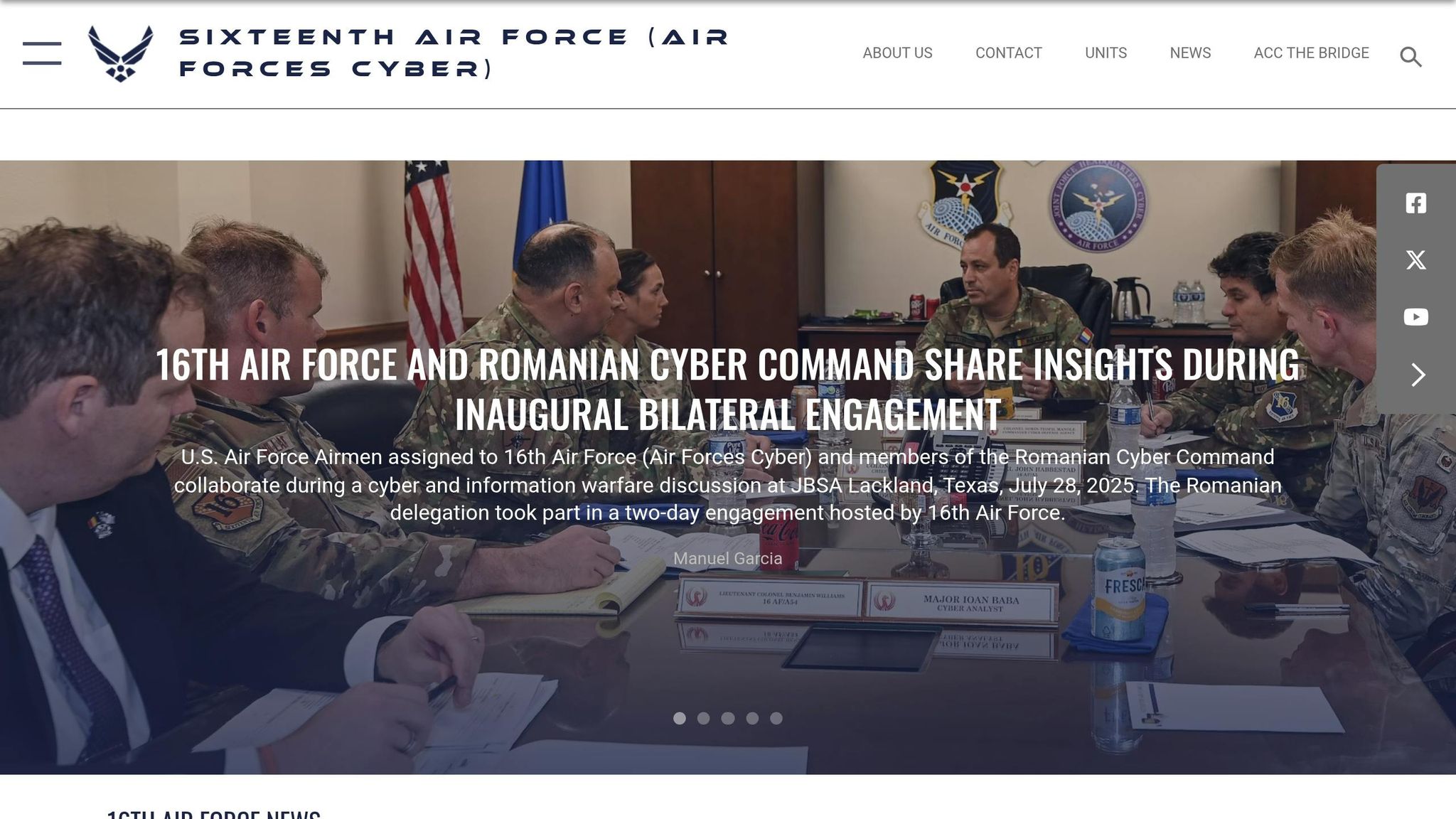
If you’re aiming for a career in cyber operations with top-level clearance, the 16th Air Force (Air Forces Cyber) offers some of the most impactful roles in the U.S. military. As the Air Force’s information warfare unit, the 16th AF combines cyber operations, intelligence, and electronic warfare to address national security threats. Here’s what you need to know:
- Roles Available: Cyber Warfare Operators (1B4X1), Cyberspace Officers (17D/17S), and cryptologic/intelligence support positions.
- Clearance Requirements: All positions require a Top Secret/SCI clearance, with some needing additional access levels.
- Training & Qualifications: Enlisted roles require ASVAB scores, military training, and certifications like Security+. Officers need a bachelor’s degree and specific leadership training.
- Certifications: Advanced credentials like CISSP, CEH, or CySA+ are often necessary for career growth.
- Career Paths: Opportunities exist for federal civilians, enlisted personnel, and direct commissioning programs for experienced professionals.
With a lower cost of living in San Antonio, competitive salaries, and high demand for cleared professionals, the 16th Air Force is a prime destination for building a career in cyber defense.
Types of Cleared Cyber Roles at the 16th Air Force
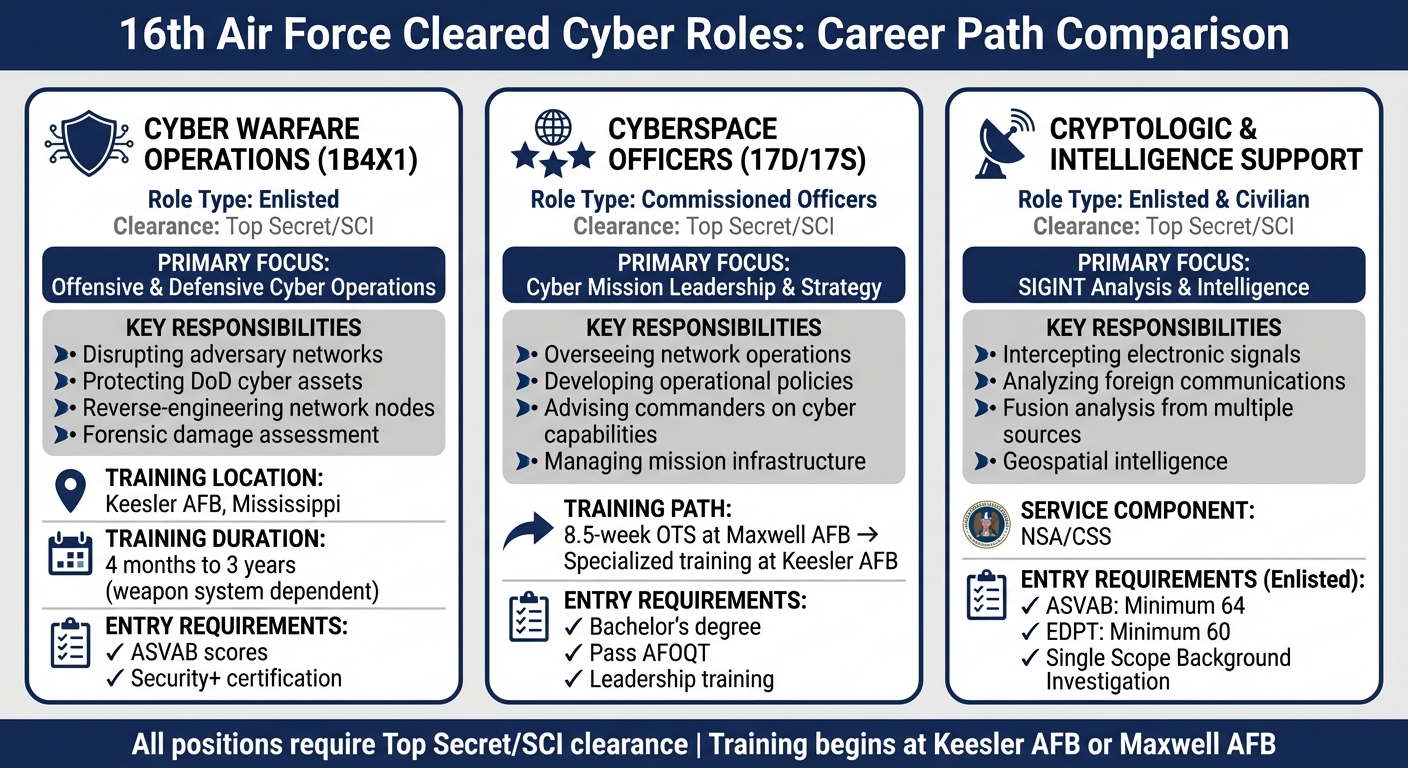
16th Air Force Cleared Cyber Career Paths: Requirements and Qualifications Comparison
The 16th Air Force offers opportunities for cleared cyber professionals across three main career paths. These roles cover everything from hands-on technical operations to strategic planning and intelligence analysis. Due to the classified nature of their work, all positions require a Top Secret/SCI clearance. Here’s a closer look at the different roles available.
Cyber Warfare Operations Roles (1B4X1)
The 1B4X1 career field is home to the Air Force’s cyber operators who handle offensive and defensive missions in cyberspace. These enlisted professionals play a critical role in disrupting adversary networks, causing ripple effects that can impact physical systems and vital infrastructure. On the defensive side, they focus on protecting Department of Defense (DoD) and allied cyber assets through proactive and reactive measures, ensuring operational continuity and data security.
Their work includes tasks like reverse-engineering network nodes, using forensic techniques to assess cyber damage, and providing direct support to command teams during operations. Brigadier General Brian Kelly highlighted the Air Force’s approach to preparing these operators:
"You join the Air Force, we’re going to give you all the training you need. They’re not going to be masters by the time they graduate, but they’re going to have enough skills to be successful in learning new things at that first base we send them to" [2].
Training for these roles begins at Keesler Air Force Base in Mississippi, followed by Initial Qualification Training that can last anywhere from four months to three years, depending on the specific weapon system. For those pursuing a commissioned officer track, additional training prepares them for leadership roles in cyber missions.
Cyberspace Officer Roles (17D and 17S)
17D (Cyberspace Operations Officers) and 17S (Cyberspace Effects Operations Officers) are the leaders behind the Air Force’s cyber missions. These officers oversee network operations, including attacks, defense, and support activities, translating high-level strategies into actionable technical plans. They also manage the systems and infrastructure that make these missions possible.
In these roles, officers are responsible for directing unit activities, developing operational policies, and advising commanders on cyber capabilities and readiness. Their work often involves collaboration with other military branches and international allies to ensure seamless joint operations. Candidates for these positions must hold a bachelor’s degree (or be close to completing one) and pass the Air Force Officer Qualifying Test (AFOQT) [3]. After completing an 8.5-week Officer Training School at Maxwell AFB in Alabama, they move on to specialized training at Keesler AFB. These officers work closely with intelligence experts to ensure mission success.
Cryptologic and Intelligence Support Roles
As the Service Cryptologic Component for NSA/CSS, the 16th Air Force employs a large team of cryptologic and intelligence specialists who directly support cyber operations. These roles include Cryptologic Language Analysts, Signals Intelligence (SIGINT) Analysts, Fusion Analysts, and Geospatial Intelligence specialists. Their mission is to intercept and analyze electronic signals and foreign communications to identify potential cyber threats.
These intelligence experts combine data from multiple sources to provide a clear picture of contested digital environments. This analysis supports both offensive and defensive operations. Opportunities exist for both enlisted personnel and civilians. Enlisted roles require an ASVAB score of at least 64 and a minimum score of 60 on the EDPT [5]. All candidates must pass a Single Scope Background Investigation to qualify for high-level clearance [6]. Together, these professionals ensure that the 16th Air Force remains a powerful force in securing U.S. interests in cyberspace.
sbb-itb-bf7aa6b
Required Qualifications and Certifications
Landing a cleared cyber job with the 16th Air Force requires more than just technical know-how. To support its mission effectively, candidates must meet strict eligibility standards. Beyond technical expertise, you’ll need to pass background checks, achieve specific test scores, and hold certifications that align with Department of Defense (DoD) requirements. Here’s a breakdown of what it takes to stand out.
Security Clearance Requirements
Every position requires a Top Secret/Sensitive Compartmented Information (TS/SCI) clearance, and some roles demand additional mission-specific access. Once you’re selected, your sponsoring organization will kick off the clearance process. To qualify, you must be a U.S. citizen and pass a Single Scope Background Investigation (SSBI), which delves into various aspects of your personal and professional history [6]. This process can take several months, and any issues could cause delays or disqualification. For some specialized roles, especially those tied to NSA or U.S. Cyber Command, additional clearances beyond TS/SCI may be necessary. After securing clearance, candidates must meet baseline training and qualification standards.
Training and Baseline Qualifications
For enlisted candidates, the journey starts with the Armed Services Vocational Aptitude Battery (ASVAB). Cyber roles like Cyber System Operations require a minimum score of 45 in General (G) and 60 in Electronics (E) [6]. If you don’t have a high school diploma or hold an alternative credential, you’ll need an Armed Forces Qualification Test (AFQT) score of 65 or higher [6]. Once accepted, you’ll complete 7.5 weeks of Basic Military Training, followed by technical training at Keesler Air Force Base in Mississippi [6].
All cyber personnel must also meet DoD 8570 baseline certification standards, with CompTIA Security+ as the standard entry-level credential. However, the DoD is transitioning to the DoD Cyber Workforce Framework (DCWF) under Directive 8140, which emphasizes role-specific qualifications. This new framework is expected to be fully implemented by fiscal year 2026 [8]. While foundational certifications are essential, advanced credentials can significantly boost your career prospects.
Advanced Certifications for Career Growth
As your career progresses, advanced certifications become crucial for moving up the ladder. For Information Assurance Technical (IAT) Level III roles, such as Senior System Administrator or Network Engineer, certifications like CISSP, CompTIA SecurityX (formerly CASP+), CCNP Security, and CISA are highly sought after [8][9]. For management positions at the IAM Level III tier, credentials like CISM, CISSP, or EC-Council CCISO are often required [8].
Professionals in specialized units like the 616th Operations Center commonly pursue Cybersecurity Service Provider (CSSP) certifications. For example, analysts and incident responders benefit from certifications like CEH, CySA+, and ECIH, while infrastructure support roles often require CHFI and CCNP Security [8]. Among these, the CISSP stands out as a versatile credential that meets multiple qualification levels [8][9]. Certified DoD cybersecurity professionals typically earn $15,000 to $35,000 more annually than their uncertified peers [9], making these certifications a solid investment in your future.
Civilian and Enlisted Career Paths
The 16th Air Force offers two distinct career tracks: federal civilian roles and enlisted positions. Each path is designed to support the branch’s critical cyber mission, with unique entry requirements and growth opportunities.
Federal civilian roles are primarily classified under the GS-2210 (Information Technology Management) and GS-1550 (Computer Science) job series. These positions are part of the Air Force Civilian Service, which includes a workforce of 170,000 individuals dedicated to air, space, and cyberspace operations [4]. Unlike military roles, these jobs typically require relevant IT certifications or specialized experience rather than military training. Civilians are hired through Direct Hire Authority or excepted service programs, which offer competitive salaries and comprehensive federal benefits.
Enlisted personnel, on the other hand, follow a more structured entry process. New recruits start with 7.5 weeks of Basic Military Training. From there, the length of additional training depends on the chosen specialty. For example, Cyber Defense Operations training lasts about 50 days, while Cyber Systems Operations training takes approximately 66 days [5].
For those with advanced cyber expertise, there’s an alternative path to leadership: the Cyber Direct Commissioning Program (CDCP). This program allows qualified civilians with degrees and experience in cyber-related fields to bypass the enlisted route and enter as officers, with ranks ranging from Lieutenant to Colonel. Entry rank is determined using Constructive Service Credit, which evaluates qualifications like advanced degrees in Computer Science or Data Science, hands-on experience in areas such as Malware Programming, and specialized training in Cloud Architectures [10]. Applicants must also meet specific AFOQT requirements, scoring at least 15 on the Verbal subtest and 10 on the Quantitative subtest [10]. To maximize entry rank, candidates should thoroughly document their cyber certifications, advanced education, and work experience [10].
For civilians, Direct Hire Authority simplifies the federal hiring process. Tools like Cleared Cyber Security Jobs make it easier to find opportunities tailored for professionals with security clearances. These platforms allow users to upload resumes, set up job alerts, and access resources for cleared positions. Whether you choose the enlisted path with its rigorous training or the civilian route with its competitive benefits, both offer a strong foundation for building a career in cyber operations.
How to Get a Cleared Cyber Job at the 16th Air Force
Now that you know the roles and necessary qualifications, here’s how to position yourself for a cleared cyber job at the 16th Air Force.
Networking and Referral Strategies
Building the right connections is crucial for accessing the hiring pipeline at the 16th Air Force. Focus your networking efforts on key locations like JBSA-Lackland, Fort Meade, and Joint Base Langley-Eustis.
The 16th Air Force collaborates closely with U.S. Cyber Command, the National Security Agency (NSA), and the Joint Special Operations Command [7]. Professionals in these organizations often move between agencies or work together on information warfare missions. Attending cleared community events in San Antonio or Northern Virginia can help you meet individuals familiar with the hiring process and team dynamics at these organizations. With a workforce of around 49,000 personnel [7], connecting with current employees can provide valuable insights into job openings and the workplace culture.
Resume and Application Tips
Keep your resume concise – no more than two pages – with a minimum 10-point font. Include dates in a month/year format and specify the hours worked for each role. Make sure your security clearance level, such as TS/SCI (Special-Sensitive), is prominently displayed, along with required certifications like Security+ (IA Level II).
Demonstrate your understanding of the 16th Air Force by referencing key units like the 67th and 688th Cyberspace Wings [1]. Highlight technical skills that align with cyber operations, such as managing secure networks, performing vulnerability assessments, or implementing zero-trust architectures. Clearly outline your core qualifications. Once your resume is polished, leverage specialized job platforms to streamline your application process.
Using Cleared Cyber Security Jobs Resources
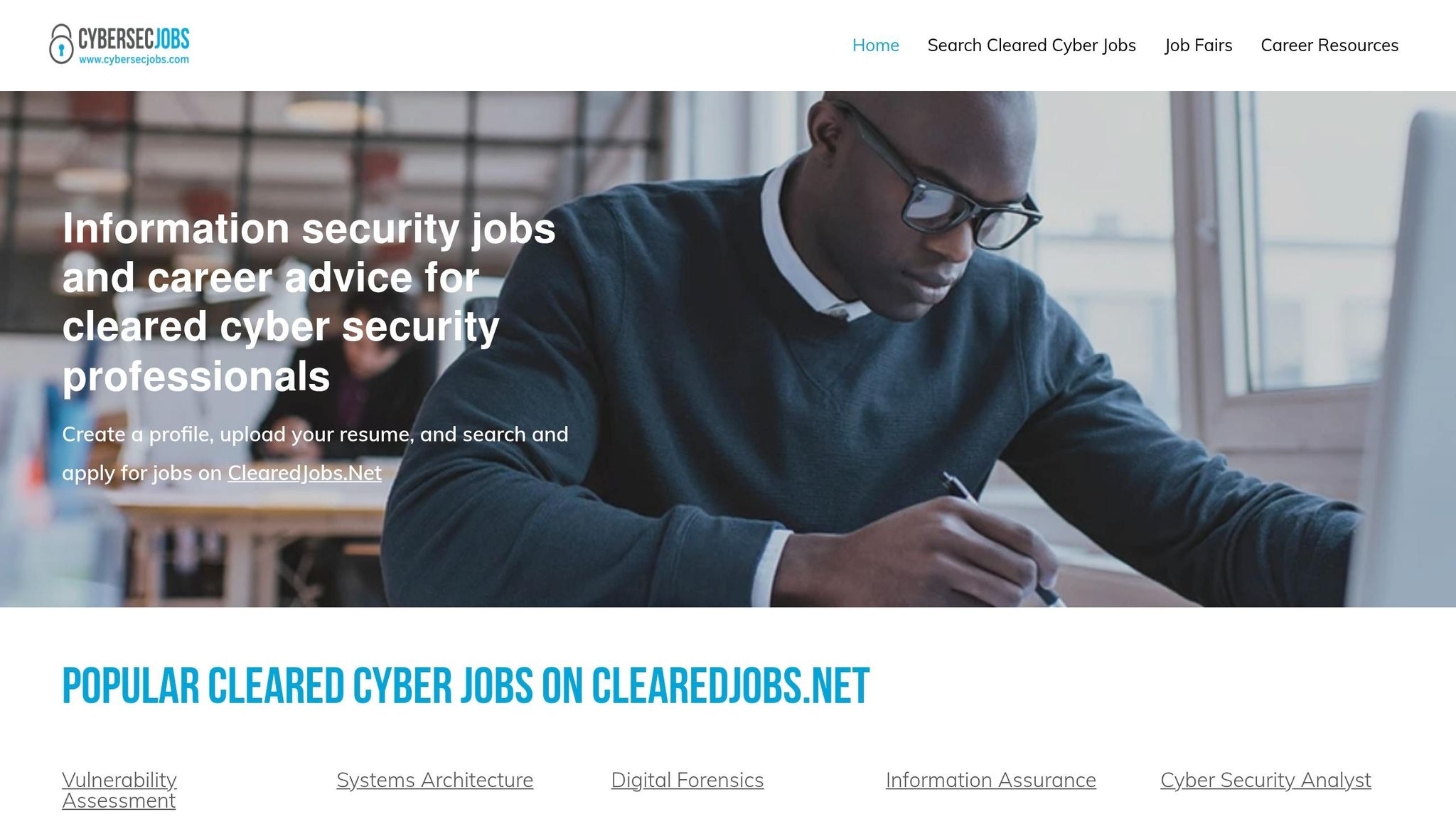
The Cleared Cyber Security Jobs platform offers tools tailored for professionals in the cleared community. Set up personalized job alerts to stay informed about new openings at the 16th Air Force or related contractor positions in San Antonio. You can also create a profile to manage applications and track postings for federal civilian and contractor roles [11][12].
This platform features opportunities with defense firms like Booz Allen Hamilton, which supports the 16th Air Force in areas like cyber technical program management and infrastructure engineering [11][12]. These tools ensure you remain visible to hiring managers actively seeking cleared cyber professionals.
Next Steps
Key Takeaways
The 16th Air Force offers some of the most sought-after opportunities for cleared cyber professionals. In San Antonio, the average cleared salary of $118,000 translates to $126,900 in purchasing power, thanks to a lower cost of living (index 0.93). By comparison, a $145,000 salary in Washington, DC is equivalent to just $102,100 in purchasing power [13].
Your clearance level plays a major role in determining your earning potential. A TS/SCI clearance can add an extra $30,000 to $45,000 annually compared to non-cleared roles. Adding a Full Scope Polygraph can increase that by another $45,000 to $65,000 per year, potentially boosting lifetime earnings by $900,000 to $1.3 million over a 20-year career [13].
Certifications also help advance your career. For entry-level roles, Security+ is a strong starting point. For management positions, CISSP is highly regarded, while OSCP is ideal for offensive security roles [13]. After obtaining the necessary certifications, submit your SF-86 form via the eApp system and start networking within the industry. These steps highlight the 16th Air Force’s unique position for professionals with security clearances.
Additional Career Resources
If you’re ready to take the next step, there are several resources to help guide your journey. Cleared Cyber Security Jobs provides specialized tools for security-cleared professionals targeting roles within the 16th Air Force. You can set up personalized job alerts for positions at Joint Base San Antonio-Lackland and track your applications for both federal civilian and contractor roles.
For direct assistance, you can contact the Air Force at 1-800-423-USAF or use their online career assessment tool to match your skills with available cyber opportunities [14][6]. Federal civilian job openings are listed on intelligencecareers.usajobs.gov, while afciviliancareers.com offers information on benefits and relocation assistance [14].
With 26% of the 514,000 cybersecurity positions nationwide currently unfilled, the demand for cleared professionals continues to exceed supply, making this an opportune time to pursue a career in this field [13].
FAQs
How long does it take to get TS/SCI?
The process of securing a Top Secret/Sensitive Compartmented Information (TS/SCI) clearance usually takes several months. For most applicants, it spans anywhere from 3 to 6 months or longer, influenced by factors such as the complexity of the background investigation and the workload of the agency handling the case. While reforms under Trusted Workforce 2.0 have been introduced to make the process more efficient, high demand and ongoing procedural updates can still lead to delays.
Can I apply before my clearance is finalized?
Yes, you can apply for cleared cyber jobs even if your clearance hasn’t been finalized yet. The process of obtaining and maintaining a clearance, which includes background checks and periodic reinvestigations, is usually completed after you’ve started the job.
Which 16th AF role fits my background best?
The right role within the 16th Air Force depends on your background and expertise. If you’re skilled in cybersecurity or cyber operations, roles such as Cyber Operations Planner or Cyber Warfare Operations Officer might align with your abilities. For those with a focus on intelligence or analysis, positions like Operations Intelligence or Cyber Warfare Operations could be worth exploring. If technical cybersecurity is your strength, consider opportunities like Cyber Security Specialist or IT Specialist (PLCYPLN).