

The GIAC Web Application Penetration Tester (GWAPT) certification is a hands-on credential designed for professionals responsible for securing web applications, especially in high-security environments like government and defense systems. It focuses on manual penetration testing techniques and validates critical skills such as SQL Injection, XSS, and session management. Recognized by the U.S. Department of Defense, GWAPT is a powerful tool for advancing your career in cybersecurity.
Key Highlights:
- Certification Details: 82–115 questions, 2–3 hours, 71% passing score, includes a practical CyberLive lab.
- Skills Tested: Manual testing of vulnerabilities (e.g., SQL Injection, CSRF), authentication attacks, and session management.
- Preparation: SANS SEC542 course, practice tests, hands-on labs (e.g., OWASP Juice Shop, DVWA).
- Cost: $999 exam fee; SANS training ranges from $5,000–$9,800.
- Career Impact: Average salaries of $102,000–$199,614; qualifies for roles like Penetration Tester, Cyber Security Engineer.
If you’re a cleared professional aiming to bolster your expertise in web application security, GWAPT can help you stand out with validated, practical skills.
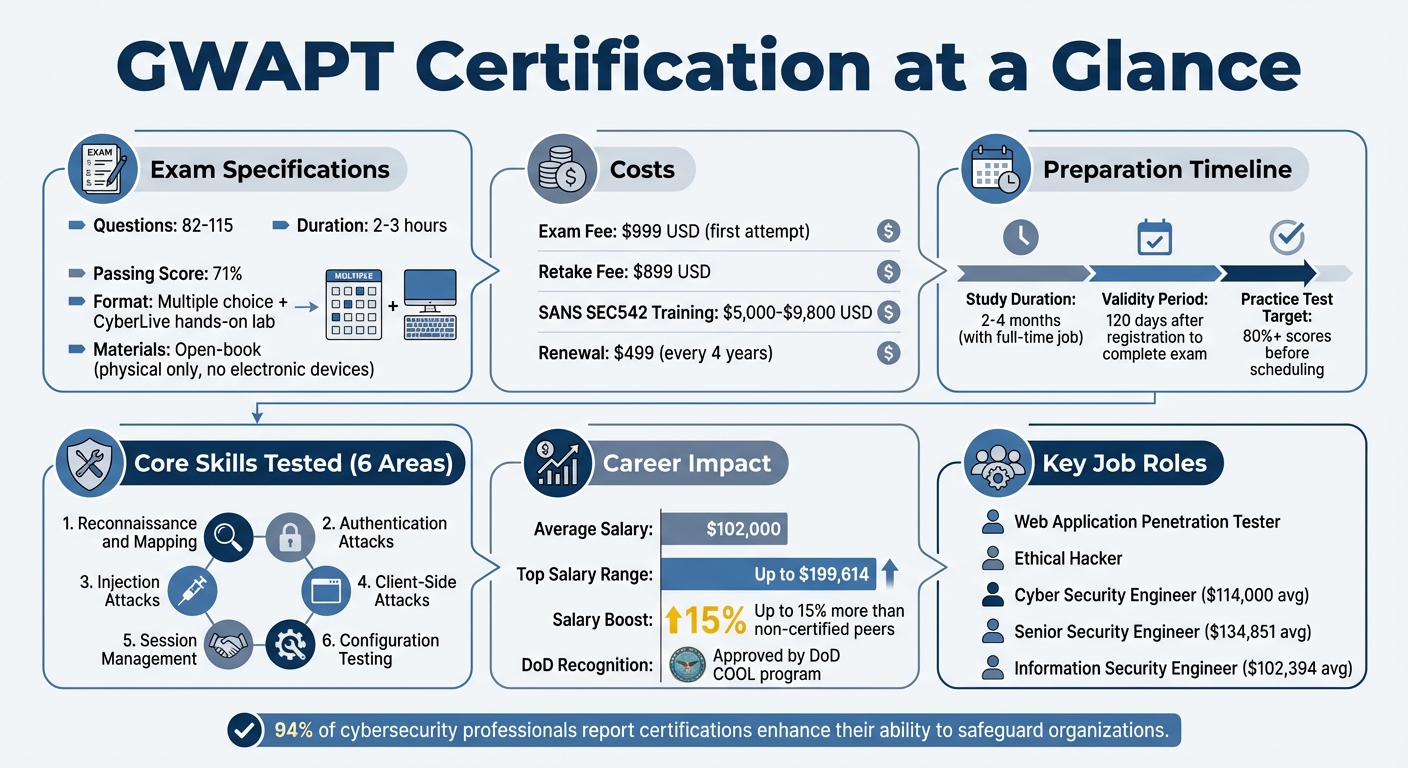
GWAPT Certification Quick Reference Guide: Exam Details, Costs, and Career Outcomes
Ultimate Guide to GIAC GWAPT Certification (2025) | Exam Format, Prep Tips & Study Resources
sbb-itb-bf7aa6b
What the GWAPT Certification Covers
The GWAPT exam consists of 82–115 questions and takes about 2–3 hours to complete. To pass, you’ll need a minimum score of 71% [4]. It’s not just a standard multiple-choice test – there’s also a CyberLive lab, where you’ll tackle real-world security challenges using virtual machines [4].
Core GWAPT Topics
The exam focuses on six key areas of web application security, ensuring you’re equipped to handle a wide range of vulnerabilities and threats.
- Reconnaissance and Mapping: Learn to map the attack surface by conducting port scans, identifying services, spidering, and creating application flow charts.
- Authentication Attacks: Test your ability to uncover weaknesses like user enumeration, bypassing multi-factor authentication (MFA), and exploiting flawed login mechanisms.
- Injection Attacks: Demonstrate skills in identifying and exploiting vulnerabilities such as SQL injection, command injection, Local/Remote File Inclusion (LFI/RFI), and XML External Entity (XXE) attacks.
- Client-Side Attacks: Focus on exploiting vulnerabilities like Cross-Site Scripting (XSS) and Cross-Site Request Forgery (CSRF).
- Session Management: Assess your knowledge in analyzing SSL/TLS, exploiting session states, and hijacking session tokens.
- Configuration Testing: Showcase your ability to audit both web application and server configurations for flaws in design or implementation.
To excel in these areas, you’ll need a strong grasp of web technologies, including HTTP/HTTPS protocols, AJAX, JavaScript, and server-side frameworks like Django or Node.js [4].
Hands-On Skills and Tools
Practical skills with industry-standard tools are a crucial part of the exam, especially in the CyberLive lab.
You’ll work extensively with Burp Suite Professional, the primary web proxy tool for penetration testing. Familiarity with other tools like OWASP ZAP, SQLmap, Nikto, and cURL is also essential [4].
Since the exam is open-book but prohibits electronic devices, it’s highly recommended to prepare a physical index of tools, commands, and techniques for quick reference. Additionally, a solid understanding of the Linux command line will be beneficial [4].
How to Get GWAPT Certified
Preparation and Study Plan
The GWAPT certification doesn’t require formal prerequisites, but having a strong grasp of certain technical skills is essential. GIAC suggests being familiar with the Linux command line (especially Kali Linux), networking basics like the OSI model, and web technologies such as HTTP/HTTPS protocols.
The SANS SEC542: Web App Penetration Testing and Ethical Hacking course is the main training path that aligns closely with the exam content. To prepare effectively, read the course materials multiple times to solidify your understanding. Pair this with hands-on practice by revisiting training labs and working in environments like OWASP Juice Shop, DVWA, and TryHackMe.
If you’re managing a full-time job, expect to dedicate about two to four months for preparation. During this time, take the two GIAC practice exams under realistic conditions – timed and using only physical notes. Aim for scores in the 80s before scheduling the actual test. Since the exam is open-book but electronic devices are not allowed, create a detailed, alphabetized physical index of your study materials. Include a section specifically for tool commands and syntax to quickly reference during the test.
Once your study plan is set, you can move on to registering and understanding the exam process.
Training and Exam Details
When you’re ready, register for the exam through the GIAC website. After your payment is processed, you’ll have 120 days to complete the test. The exam fee is $999 USD for one attempt, and retakes cost $899 USD. If you opt for the full SANS SEC542 training package, expect costs to range from $5,000 to $9,800 USD, which typically covers textbooks and the certification exam.
The exam itself is web-based and proctored, with two options: remote proctoring via ProctorU or onsite proctoring at PearsonVUE centers. Physical materials are allowed during the test, so having a well-organized index is crucial for navigating the 2–3 hour time limit. Plan to spend around 1.5 minutes per question, allocating an hour for the CyberLive lab. This structured approach ensures you’re prepared for the rigorous demands of certification in sensitive, high-stakes environments.
GWAPT Study Resources and Tools
Study Resources
The SANS SEC542: Web App Penetration Testing and Ethical Hacking course is the cornerstone of preparation for the GWAPT certification. It focuses on manual testing techniques that align with the certification’s objectives. To deepen your understanding and practical skills, additional resources can be incredibly useful. For example, the PortSwigger Web Security Academy offers free, interactive labs that cover vulnerabilities such as SQL injection, XSS, and CSRF. This makes it a fantastic supplement to your formal training.
For hands-on practice, platforms like OWASP Juice Shop, DVWA (Damn Vulnerable Web Application), WebGoat, Mutillidae, and Metasploitable provide safe environments to simulate attacks and refine your skills. Additionally, the OWASP Web Security Testing Guide (WSTG) is an excellent methodology reference, especially for areas like authentication, session management, and injection flaws.
To assess your readiness, take advantage of GIAC practice tests. These mock exams mirror the testing engine and help pinpoint areas that need improvement. Aim for practice test scores in the 80s before scheduling your proctored exam. Once your study plan is solid, shift focus to mastering the tools essential for web application testing.
Web App Testing Tools
Knowing how to effectively use key tools is just as important as understanding the theory. Burp Suite and OWASP ZAP are must-haves for intercepting and analyzing HTTP(S) traffic, fuzzing inputs, and testing application logic. While Burp Suite Professional is the industry standard, OWASP ZAP is a strong open-source alternative.
For automating SQL injection detection and exploitation, SQLmap is indispensable. Nmap is your go-to tool for reconnaissance tasks like port scanning and identifying services, while Nikto helps uncover web server misconfigurations and outdated software. Tools like cURL allow you to craft and analyze HTTP requests directly from the command line.
When it comes to authentication attacks, THC Hydra is effective for brute-forcing login mechanisms. Tools like John the Ripper and Hashcat are great for cracking encrypted passwords. For directory discovery and testing application logic, fuzzing tools such as Ffuf and Wfuzz are essential.
Since the exam is open-book but prohibits electronic devices, preparing a physical index of your course materials is vital. Include a dedicated section for tool commands and syntax to streamline your reference process during the exam. This preparation not only supports the CyberLive lab portion but also reinforces practical skills that are crucial for your career. Practice these tools in lab environments until you can perform common tasks confidently without needing constant guidance from your notes.
Career Benefits of GWAPT for Cleared Professionals
How GWAPT Validates Your Skills
The GWAPT certification sets you apart by requiring hands-on problem-solving through its CyberLive testing format. This approach ensures that you can demonstrate your skills in a virtual lab using actual code and tools, going well beyond theory-based certifications [1][4]. For cleared professionals working in high-stakes environments, this practical experience is a game-changer, as it shows you can handle real-world challenges where errors aren’t an option.
Adding to its credibility, the GWAPT certification is recognized by the U.S. Department of Defense through the DoD COOL program, making it especially valuable for government and defense contracting roles [4]. Hiring managers in cleared environments know that holding this certification means you’ve proven your ability to manually identify and exploit vulnerabilities that automated tools often overlook [4][7].
"The GWAPT certification validates a practitioner’s ability to better secure organizations through penetration testing and a thorough understanding of web application security issues." – GIAC [1]
This level of validation translates directly into career perks. Financially, GWAPT-certified professionals can earn up to 15% more than their non-certified peers. On average, salaries hover around $102,000, with top-tier roles reaching as high as $199,614 [4][5][7]. Additionally, a significant 94% of cybersecurity professionals report that certifications like GWAPT have enhanced their ability to safeguard their organizations [3].
Job Opportunities and Career Growth
The GWAPT certification doesn’t just boost your earnings; it also opens doors to specialized career paths. With this credential, you’re qualified for roles like Web Application Penetration Tester, Ethical Hacker, Cyber Security Engineer, and Information Security Engineer [2][4][5][8]. Many certified professionals move into advanced positions such as Security-by-Design or DevSecOps, where they integrate security testing into the development process in cleared environments [4][7].
The certification also positions you for leadership roles. As of April 2025, salaries for GWAPT-related positions reflect the demand for this expertise: Senior Security Engineers earn an average of $134,851, Cyber Security Analysts make around $114,000, and Information Security Engineers take home approximately $102,394 [8]. These figures highlight the value cleared employers place on verified web application security skills, especially in high-security settings.
To streamline your job search, consider using platforms like Cleared Cyber Security Jobs. This site connects you directly with employers looking for GWAPT-certified talent. It allows you to filter roles that require or prefer your certification and even set up alerts for new opportunities. Since the platform focuses exclusively on direct-hire roles for U.S. citizens with active security clearances, you’ll be competing in a highly targeted talent pool where your GWAPT credential stands out.
To further enhance your career prospects, update your professional profiles to emphasize your expertise in identifying OWASP Top 10 vulnerabilities and performing manual exploitations. These are skills that cleared employers actively seek [4][7]. If you’ve participated in SANS SEC542 Capture the Flag events during your training, make sure to include those achievements – they can serve as impressive talking points during interviews for high-security roles [4][7].
Conclusion
The GWAPT certification offers web application testers working in high-security environments a way to showcase their expertise in securing critical systems. To make the most of this credential, focus on thorough preparation and ongoing learning.
Consider enrolling in the SANS SEC542 training course to align your skills with the GWAPT exam requirements. Cleared professionals might qualify for funding options like the DoD COOL program or SANS Cyber Academy scholarships, which can help manage the financial investment [4][6].
Be sure to create a physical index and practice extensively with tools like OWASP Juice Shop and DVWA to refine your manual exploitation techniques. Aim for practice test scores in the 80s before committing to your exam date [1][4].
After earning your certification, update your professional profiles, such as those on Cleared Cyber Security Jobs, to highlight your GWAPT achievement. Use job alerts to find roles where this certification is a requirement, and be ready to discuss your hands-on experience with tools like Burp Suite Pro or SQLmap during interviews [4].
To keep your certification current, follow the renewal guidelines: earn 36 CPE credits or retake the exam every four years, with the retake costing around $499 [4]. Staying up to date with your certification ensures your skills remain sharp and relevant in the ever-changing landscape of web application security.
FAQs
What skills do I need to pass the GWAPT certification exam?
To earn the GWAPT (GIAC Web Application Penetration Tester) certification, you need a solid understanding of web application security vulnerabilities and penetration testing methods. This means being able to identify and exploit vulnerabilities such as SQL injection, cross-site scripting (XSS), cross-site request forgery (CSRF), and weaknesses in authentication mechanisms. You’ll also need to be skilled in reconnaissance, mapping web applications, and using various testing tools effectively.
This certification focuses heavily on practical, hands-on skills. You should be comfortable conducting penetration tests, analyzing security configurations, and addressing vulnerabilities. A strong grasp of web exploits, along with experience using tools and techniques common in penetration testing, will put you on the right track to succeed.
How does earning the GWAPT certification benefit your career and salary potential?
The GWAPT (GIAC Web Application Penetration Tester) certification is a sought-after credential in the cybersecurity world, especially for professionals working in security-sensitive environments. It showcases a deep understanding of web application vulnerabilities and the skills needed to identify and address them effectively. This expertise makes GWAPT-certified individuals appealing candidates for roles in penetration testing, security consulting, and cybersecurity management.
When it comes to earnings, professionals with a GWAPT certification in the United States average about $108,000 annually, highlighting the strong demand for this qualification. Beyond the paycheck, it can also open doors to more secure positions and higher-paying, specialized career paths. For those looking to advance in cybersecurity, obtaining the GWAPT certification is a strategic move that can significantly impact both career trajectory and financial growth.
What are the best resources and strategies to prepare for the GWAPT certification exam?
To gear up for the GWAPT (GIAC Web Application Penetration Tester) exam, a balanced approach combining hands-on practice, theoretical learning, and specialized resources is key. Begin by reviewing the official GIAC exam objectives, which outline essential areas such as web application vulnerabilities, authentication attacks, session management, SQL injection, and cross-site scripting. This step will help you understand what to focus on.
Practice exams are a must-have tool. They not only help you get used to the question format but also give you a sense of the exam’s difficulty. Look for resources that mimic the test environment and provide detailed feedback to pinpoint areas for improvement. On top of that, sharpening your skills with tools widely used in web application testing – like vulnerability scanners and penetration testing frameworks – can make a big difference.
To round out your preparation, blend practice tests with hands-on tool experience and, if necessary, formal training programs. Simulated environments offering real-world scenarios are especially helpful for building confidence and applying your knowledge in practical situations.