

In the cleared cybersecurity world, deciding between working for a prime contractor or a subcontractor can shape your career, pay, and daily work. Here’s what you need to know:
- Prime Contractors: Work directly with government agencies, manage entire projects, and oversee subcontractors. They offer job stability, direct client interaction, and broader career growth opportunities. Compensation includes salaries, benefits, and potential bonuses.
- Subcontractors: Focus on specific tasks under prime contractors. These roles often pay higher hourly rates but may lack long-term stability, benefits, and direct client access. They’re ideal for specialists seeking technical depth.
Quick Comparison
| Factor | Prime Contractor | Subcontractor |
|---|---|---|
| Job Stability | More stable, long-term contracts | Less stable, project-based |
| Compensation | Salaried, benefits included | Higher hourly pay, fewer benefits |
| Career Growth | Broader opportunities, structured paths | Focused on technical expertise |
| Client Interaction | Direct with government clients | Indirect, through the prime |
| Work Scope | Project management & strategy | Specialized technical work |
Key Takeaway: Choose a prime contractor for stability and growth or a subcontractor for flexibility and higher short-term pay. Your career stage and goals will determine the best fit.
Prime vs Subcontractor in Government Contracting (What You Need To Know)
Key Differences Between Prime Contractors and Subcontractors
Prime contractors and subcontractors play distinct roles in government projects, with differences in their responsibilities and relationships with government agencies. These distinctions influence everything from daily tasks to long-term career development, shaping how projects are executed and how professionals navigate the cybersecurity industry.
Understanding these differences isn’t just about grasping organizational structure – it’s about seeing how responsibilities and workflows impact collaboration, compliance, and career paths. Let’s break down how these roles differ in practice.
Roles and Responsibilities
Prime contractors bear the ultimate responsibility for a project’s success. They are directly accountable to government agencies, ensuring all requirements, deadlines, and compliance standards are met. This includes managing their own work as well as overseeing subcontractors’ contributions.
For example, if a prime contractor secures a $50 million Department of Defense contract to modernize cybersecurity systems, they must coordinate all teams, enforce compliance with strict security protocols, and deliver results. If any aspect of the project falters – whether due to their own work or a subcontractor’s – the prime contractor faces the consequences.
Subcontractors, on the other hand, operate within a more focused scope. They are brought in for specialized tasks and report to the prime contractor rather than the government agency. Their primary responsibility is to execute their assigned duties according to the prime contractor’s specifications and deadlines.
Take penetration testing as an example: a subcontractor might be hired solely to conduct these tests as part of a larger cybersecurity assessment. They don’t manage project timelines, client communications, or inter-team coordination – that’s the prime contractor’s domain.
These differing responsibilities create distinct work environments. Employees at prime contractors often juggle multiple stakeholder relationships, including government clients, internal teams, and subcontractor partners. They play a key role in aligning all parties and maintaining project momentum.
In contrast, subcontractor employees typically focus on technical, hands-on tasks. Their work is more specialized, allowing them to deepen expertise in a particular area without being involved in administrative or managerial duties. This setup appeals to professionals who prefer technical work over broader project management.
Contract Structure and Flow-Down Requirements
The structure of government contracts also highlights the differences between these roles. Government contracting relies on a cascading system where requirements flow from the government to prime contractors and then to subcontractors. This process shapes how responsibilities are distributed and enforced.
Prime contractors must include specific federal regulations in their agreements with subcontractors. These flow-down clauses ensure that everyone involved in a project adheres to the same standards, regardless of their position in the chain.
For cybersecurity professionals, this means subcontractors must meet the same security requirements as prime contractors. However, the prime contractor is responsible for monitoring and verifying subcontractor compliance.
A good example is the Cybersecurity Maturity Model Certification (CMMC). If a prime contractor bids on a project requiring CMMC Level 2 certification, they must ensure that every subcontractor handling controlled unclassified information also achieves this certification. The prime contractor cannot simply pass the requirement along – they must actively manage and confirm compliance.
This flow-down system also impacts how changes to contracts are handled. When the government modifies contract requirements, prime contractors are notified directly and can participate in discussions about implementation. Subcontractors, however, receive updates through the prime contractor and must adjust based on the prime contractor’s guidance.
The result is a difference in visibility and control. Prime contractors have a direct line to government priorities, budget considerations, and strategic planning. Subcontractors, by contrast, focus on their specific tasks with less insight into the broader project landscape. This layered approach ensures alignment across all contributors but creates distinct operational dynamics for each role.
Security Clearance and Compliance Requirements
Expanding on the roles and contractual structures discussed earlier, security clearance and compliance requirements play a critical role in defining the responsibilities of both prime contractors and subcontractors. These requirements aren’t just about dividing tasks – they shape how risks are managed and how sensitive government information is safeguarded. Both parties must adhere to the same basic security standards, but the accountability framework places unique demands on each.
Security Clearance Oversight
Prime contractors bear the primary responsibility for ensuring that their subcontractors meet all relevant cybersecurity and compliance standards, particularly when handling Controlled Unclassified Information (CUI) [1][3]. If a subcontractor fails to stay compliant, the prime contractor faces serious repercussions. These can include losing contracts, suffering damage to their Supplier Performance Risk System (SPRS) scores, and losing a competitive edge in future contract opportunities [1].
To mitigate these risks, prime contractors must require evidence-based proof of compliance from their subcontractors. This includes documentation such as System Security Plans (SSPs), Plans of Action and Milestones (POA&Ms), and SPRS scores. Relying solely on verbal assurances is not sufficient [1].
Prime contractors are also responsible for sponsoring subcontractors for Facility Security Clearances (FCLs) when necessary. If a subcontractor needs access to classified information for contract performance, the prime contractor can sponsor their FCL application. However, this sponsorship must meet the requirements set by the Defense Counterintelligence and Security Agency (DCSA) and must be justified with a clear, legitimate need [4][5].
On the other hand, subcontractors focus on maintaining their own compliance. This includes appointing a Facility Security Officer (FSO) to handle all security-related matters. These responsibilities ensure that federal regulations are effectively implemented across all levels of the contracting chain.
Federal Regulation Compliance
Prime contractors are required to pass down federal obligations – such as those outlined in the Cybersecurity Maturity Model Certification (CMMC) and Defense Federal Acquisition Regulation Supplement (DFARS) – to their subcontractors [1][2][3]. These requirements must be explicitly documented and integrated into subcontractor agreements [1].
Subcontractors, in turn, must uphold the cybersecurity standards assigned to them and demonstrate compliance to the prime contractor. They are also responsible for extending these requirements to any lower-tier vendors they work with. Meanwhile, prime contractors provide oversight to ensure subcontractors meet additional obligations, such as E-Verify compliance [6].
This rigorous approach to compliance not only reduces risks but also strengthens job security for professionals in cleared roles, as adherence to these standards is critical in maintaining trust and operational integrity.
sbb-itb-bf7aa6b
Prime vs Subcontractor: Career Factor Comparison
Choosing between a prime contractor and subcontractor role can significantly shape your career path, earnings, and work environment in the cleared cybersecurity field. The table below breaks down key career factors to help you decide which path aligns with your goals.
Prime vs Subcontractor Career Factors Table
| Career Factor | Prime Contractor | Subcontractor |
|---|---|---|
| Job Stability | Generally stable, supported by strong government ties and a mix of contracts. | More prone to changes based on contract assignments and flow-down adjustments. |
| Career Growth | Offers broader advancement opportunities and structured mobility across units. | Focused growth in niche technical areas, often with fewer advancement options. |
| Compensation | Salaried roles with benefits and potential performance bonuses. | Often contract or hourly pay, which can lead to higher short-term earnings. |
| Work Environment | Formal corporate structure with clear processes and protocols. | Smaller, team-oriented setups with a strong emphasis on technical work. |
| Client Interaction | Direct involvement with government stakeholders and strategic decisions. | Indirect client interaction, often managed through the prime contractor. |
| Project Variety | Exposure to a wide range of government contracts and agencies. | Focused on specific projects or technical areas tied to the prime contractor’s scope. |
Examples for Cleared Cybersecurity Professionals
For example, subcontracting roles with smaller cybersecurity firms often cater to specialists in areas like penetration testing, incident response, or compliance auditing. These roles typically reward deep technical expertise and may offer flexible pay structures.
On the other hand, prime contractors often provide stability by reassigning employees across different contracts, ensuring consistent work. Subcontractor roles, while more project-specific, can offer fast-paced growth opportunities when new contracts become available.
For those just starting out, prime contractor positions may provide a structured environment with diverse learning opportunities. Meanwhile, seasoned professionals seeking technical depth and flexible compensation may find subcontractor roles more appealing.
Choosing Between Prime and Subcontractor Roles
Deciding between a prime contractor or subcontractor role in cleared cybersecurity depends on aligning your career aspirations, financial goals, and preferred work style with the demands of the job.
How to Evaluate Prime vs Subcontractor Jobs
To make an informed choice, consider your career stage and priorities. If you’re just starting out, prime contractor roles might be a better fit. They often provide structured mentorship, exposure to a variety of projects, and clear pathways for advancement. On the other hand, if you’re a mid-career professional with specialized skills, subcontractor roles might appeal more. These positions often offer higher hourly rates and allow you to focus on specific technical expertise.
Think about the stability and length of contracts. Prime contractors usually provide multi-year agreements with options for extensions, offering a greater sense of job security. Subcontractor roles, however, are often tied to shorter project cycles, which could lead to gaps between assignments. When evaluating an opportunity, ask about the contract’s base period, renewal terms, and the employer’s track record for maintaining steady work.
Compensation is another critical factor. While subcontractor roles might boast higher hourly rates, it’s important to assess the overall package. Benefits such as paid time off, health insurance, and job continuity offered by prime contractors can sometimes outweigh the appeal of a higher hourly wage. Take the time to compare the total value of each role.
Consider the company’s relationship with government clients. Prime contractors often have established connections, multiple contract vehicles, and a steady pipeline of work, which can translate to more stability and growth opportunities. If you’re leaning toward a subcontractor role, inquire about whether you’d be positioned as a preferred partner for future projects with the prime contractor.
Lastly, review clearance requirements and sponsorship policies. Some roles may require clearance upgrades, and prime contractors typically have more robust processes and resources to support these needs. Smaller subcontractors may face challenges in this area, so it’s worth clarifying their capabilities upfront.
By carefully evaluating these aspects, you can identify the role that best fits your career trajectory. Now, let’s explore how Cleared Cyber Security Jobs can simplify your job search.
How Cleared Cyber Security Jobs Helps Cleared Professionals
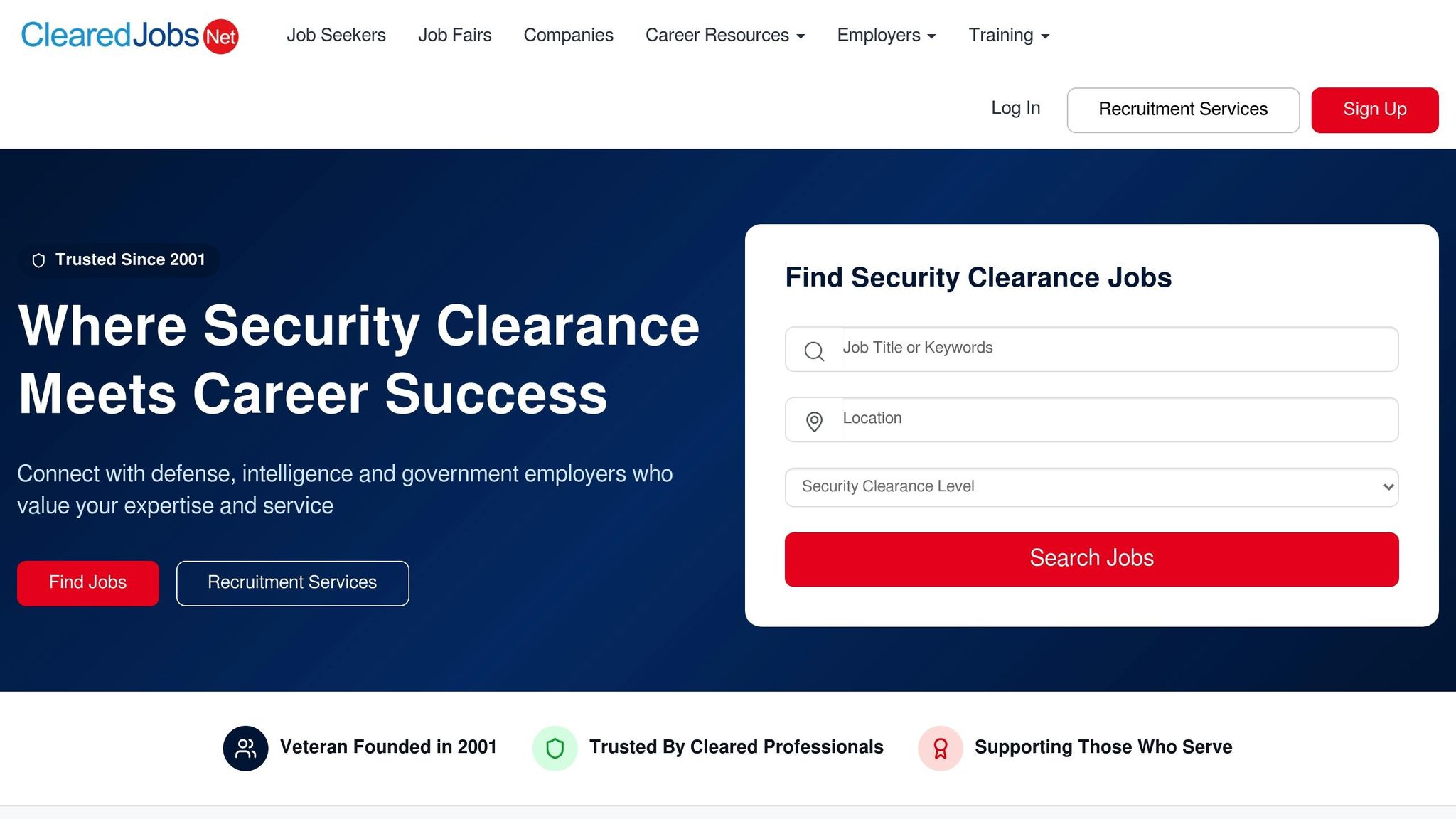
Once you’ve decided on the type of role that suits you, Cleared Cyber Security Jobs offers tools to streamline your search and connect you with the right opportunities. The platform’s job search filters make it easy to find positions based on contractor type, helping you zero in on roles that match your career goals.
With tailored job alerts, you can set specific criteria – like contract type, clearance level, or company size – and receive notifications about roles that meet your preferences. Whether you’re interested in positions at major defense firms or smaller cybersecurity organizations, these alerts keep you updated on relevant opportunities.
Cleared Cyber Security Jobs also hosts career fairs that bring together hiring managers from both prime contractors and subcontractors. These events offer a unique chance to compare opportunities, discuss company roles in the contracting chain, and ask about specific project details.
The platform’s resume database ensures your profile reaches employers directly. Since Cleared Cyber Security Jobs exclusively partners with direct-hire employers and avoids staffing firms, you can trust that the opportunities presented are genuine and geared toward long-term employment.
Additionally, the platform provides a variety of career resources to guide you through evaluating contract structures, understanding flow-down requirements, and negotiating compensation. As a veteran-founded organization, Cleared Cyber Security Jobs recognizes the challenges faced by cleared professionals, including maintaining active security clearances while transitioning between different types of roles. Their support is tailored to help you navigate these complexities with confidence.
Conclusion: Key Points
When deciding between a prime contractor or subcontractor role in cleared cybersecurity, it’s all about aligning your career goals with the opportunities each path offers. Prime contractors often provide greater job stability, comprehensive benefits, and clearer career advancement options, making them a strong choice for professionals looking for long-term growth and security. Their established government relationships ensure a steady stream of work.
On the other hand, subcontractor roles can offer higher hourly pay, but they typically come with shorter contract durations and fewer traditional benefits. This means professionals in these roles need to be proactive in managing their careers and finances during gaps between projects.
Security clearance processes are another important factor. Prime contractors often have the resources to handle these processes more efficiently, whereas smaller subcontractors may face limitations in this area.
When evaluating opportunities, consider the full scope of compensation. While a prime contractor role might offer a lower base salary, the additional benefits and job continuity could make it a better financial choice over time.
Your career stage also matters. For those early in their careers, prime contractor roles can provide invaluable mentorship, exposure to a variety of projects, and structured development opportunities. Meanwhile, mid-career professionals with specialized skills might find subcontractor roles more appealing, as they can leverage their expertise for higher pay.
Ultimately, these factors will shape your journey in the cleared cybersecurity field.
FAQs
What career growth opportunities are available for cybersecurity professionals working with prime contractors versus subcontractors?
Cybersecurity professionals who work with prime contractors often find themselves with more avenues for career advancement. These roles typically involve overseeing entire projects, which can help professionals develop leadership abilities, sharpen project management expertise, and enhance strategic thinking. Additionally, prime contractor positions often come with higher financial compensation and more diverse career trajectories.
In contrast, subcontractor roles tend to be more specialized, concentrating on specific tasks within a larger project. While this narrower focus might limit opportunities for upward mobility, it allows individuals to cultivate deep expertise in particular areas. This specialized knowledge can eventually open doors to leadership roles within niche fields. In essence, prime contractor roles offer a wider range of growth opportunities, while subcontractor positions provide a targeted path for those looking to excel in a specific skill set.
What are the differences in managing security clearances between prime contractors and subcontractors in the cybersecurity industry?
Prime contractors play a crucial role in managing security clearances, not just for themselves but also by ensuring that subcontractors meet all clearance and cybersecurity standards. This responsibility includes passing along specific obligations – commonly known as flow-down requirements – to ensure compliance with government regulations.
Subcontractors, meanwhile, are tasked with maintaining their own security clearances and adhering to the cybersecurity protocols set by the prime contractor. However, they are not involved in overseeing or managing the prime contractor’s clearance processes. Both parties must strictly follow government regulations to safeguard sensitive information.
What should I consider when choosing between a prime contractor and a subcontractor role for job stability and pay?
When choosing between working as a prime contractor or a subcontractor, two critical factors to consider are job stability and pay. Prime contractors often provide greater stability because they oversee entire projects and maintain direct contracts with clients or government agencies. This setup typically ensures a steady flow of work and reliable salaries.
Subcontractors, in contrast, might face less predictable job security since their workload depends on the success and duration of the prime contractor’s agreements. On the upside, subcontractor roles can sometimes offer higher pay on a per-project basis, which can be attractive to those prioritizing short-term earnings or seeking niche, specialized assignments.
Related Blog Posts
- CIO-SP3 Cybersecurity Positions vs DISA Encore III – Which Vehicle Drives Your Career?
- TS/SCI Salary Premium – The Real Numbers Behind Your Security Clearance
- Space Force Cybersecurity Contractor Jobs – The Colorado Springs Gold Rush
- CIO-SP3 Cybersecurity Positions vs DISA Encore III – Which Vehicle Drives Your Career?
Leave a Reply